I made a commitment to do the #30DaysOfDex challenge at the beginning of the year. Actually, I have been wearing a sensor continually since the beginning of December; so really, I am at about day 45 now.

I have a love/hate relationship with CGM technology. I adore it far more than I dislike it, but still, there have been times that when I simply can’t face wearing it. But that actually has nothing to do with the actual tech. I wear a device that I truly believe I can rely on – and I know that because calibrations are spot on. Even though I’ve been using this particular type of CGM for about 3 years now, I am still surprised at just how accurate – just how often – the results are.

No, the reason I don’t wear it all the time is because I have found it too burdensome when headspace is not right. When there is too much else going on or I am feeling overwhelmed, I just can’t face alarms and numbers and a machine that demands I be responsive to it.

But through some trial and error, I have found ways to lessen those demands, yet still use the device effectively.

Firstly, I’ve had to identify what I hope to achieve from wearing a CGM. Really, there are two aims: have fewer wild BGL swings and pick up hypos as early as possible with a hope of avoiding.

I also identified what I didn’t really care about and that included having a BGL sitting at 5.5mmol/l the whole time. In fact, I am not even aiming for BGLs between 4 and 8 the whole time. I raised the upper limit to avoid some alarms. I don’t want to hear screeching every time I hit 7 or 8mmol/l. At this stage, I am not interested in that. I don’t mind if I hit 10 or 11 after a meal, as long as it doesn’t sit there all day.

It’s not about the number values – for me it’s about fewer variables, because when I am all over the shop, I feel like crap.

So what have I found after a month and a half with this attitude? By and large, it’s been a successful experiment –  am far more responsive to the alarms that sound now and I don’t feel frustrated.  And I am able to find patterns. It is incredible how I was low or high at the same time each day without knowing it. Or rather, I probably did think it was the case, but with the data and graphs, there is no way of hiding it. I don’t log – it’s been a long time since I had – so I was relying on memory. ‘Was I low at 3pm yesterday as well? Maybe…. Was I? Or was I high?’

The thing that I have come to understand about CGM (and I may be a little slow to the party here) is that the ability to customise it means that I can find a way to benefit from it, even when I am feeling totally burnt out and can’t be bothered with the minutiae of my diabetes.

I don’t need to have a perfectly straight line for CGM to be considered successful. It’s not a waste of a sensor (and therefore a waste of money) if my BGLs do hit and play around at 10 or 11 for a while. This is kind of a breakthrough for me – I’m feeling quite proud!

Something else that has become clear while wearing CGM is that my BGLs are actually not as unstable as I think they are. Oftentimes, I am sure that I am really high, or moderately high or really high. I know that if I wasn’t wearing CGM and was feeling unmotivated, I would use that as an excuse to not check. ‘I know I am high. I don’t want to see a high number because it will make me feel worse. So I am going to bury this head of mine in this sand over here and forget about diabetes.’ Diabetes? What diabetes? Let’s build a sandcastle!

The reality is that of course my numbers are not perfect, but they are actually, most of the time, okay-ish. And I am generally okay with okay-ish! Okay-ish keeps me sane and keeps me happy.

CGM makes me think about my diabetes more.  It makes me in tune with it more and it does make it easier for me to manage. Perhaps I have taken a long time to work out how CGM works for me – maybe I have wasted some time or not worn it when I could have benefitted. But for now this is what works really well. And it’s a really good way to start the year.

When I look back at the numerous (i.e. far too many) encounters I have had with healthcare professionals, some stand out. Fortunately, a lot of the time it is because the care I have received has been outstanding and delivered by wonderfully caring and respectful professionals. But there have been times where the experience was no so good.

One of the stories I tell when speaking to medical students about what makes for good communication comes from a very difficult time. I was in hospital with terrible stomach issues. A new doctor had been referred to me and for the ease of this tale, we will call him Professor Poor Communication Skills – Prof PCS for short.

Prof PCS was an expert in his field and by the end of my time in hospital, I actually quite liked him. He was loud and direct and I appreciated his no-messing-around attitude. Plus, he worked out what was wrong with my stomach, stopped the pain and got me out of hospital.

However, it took a while – and a little bit of coaching – for me to come to like him.

When Prof PCS came to see me for the first time I had already been in hospital for about a week. I went through what had been going on and he ordered a few blood tests and x-rays. With that, he promised to return the following day with the results. I didn’t really mind the way that he blustered in and out in a flash and didn’t explain anything because really, there was nothing to explain! I didn’t mind that he didn’t give me details of the tests he was running because I could kind or work them out and figured I could ask questions the next day.

I didn’t really care for the way he had stormed in and not introduced himself. Or the way he didn’t make eye contact when he spoke.

The next day came and I waited for him to do his rounds. Late in the afternoon, I heard his booming voice in the corridor. I remember thinking that he was speaking terribly loudly to his patient about their test results and that everyone could hear.

As he rounded the corner into my room, I realised that he had been talking about my test results. By the time he was standing at the end of my bed, he was halfway through a sentence and announcing all sorts of things that didn’t make sense because I had kind of missed the beginning of what he had been trying to say.

I looked at the nurse who was standing slightly behind him. I was confused. And I was actually a little angry.

Excuse me,’ I said to him. And then repeated myself. ‘Excuse. Me.’

‘Yes?’ I don’t think he was used to being interrupted because he looked a little surprised.

‘Hi,’ I said. ‘Can we just stop for a second?’ I took a deep breath, collected my thoughts and started.

‘For this to work,’ I waved my hands between the two of us. ‘I need you to be in the same room that I am in. I need to be able to see you when you speak. I need to be able to ask you questions and be clear that you are speaking to me. I need to see your body language and your eyes and be clear about what you are saying. I do not want you to start your consultation with me whilst you are still in the corridor. Is that okay?’

He looked stunned and completely lost for words. The nurse smiled.

I can’t believe that I was the first person to have ever pulled him up on this behaviour, but when he left the room (after explaining things very clearly, answering my questions and telling me what I could expect next) the nurse said that she had never seen him look stunned before. She also said that other patients had commented on how uncomfortable they were with his ‘bedside manner’, but no one had ever commented on it directly to him.

I was reminded of this encounter the other day when I was reading about Kate Granger and her #HelloMyNameIs campaign.

Kate is a doctor – a geriatrician and a writer. She is also has terminal cancer.

When she was an inpatient, she noticed that many of the healthcare professionals looking after her did not introduce themselves. She had no idea who was speaking to her about her care. She (and her husband) decided to do something about it. This from the #HelloMyNameIs website:

‘…we decided to start a campaign to encourage and remind healthcare staff about the importance of introductions in the delivery of care. I firmly believe it is not just about knowing someone’s name, but it runs much deeper. It is about making a human connection, beginning a therapeutic relationship and building trust. In my mind it is the first rung on the ladder to providing compassionate care.’

It’s incredible how such a simple idea has taken flight. Events have been held throughout the UK and there have been over 800 million impressions on social media.  The more I have read, the more amazed I am at just how far-reaching this initiative is and how entrenched it has become in some places.

It is indeed wonderful.

However it is also kind of shocking that we need a campaign to remind people to introduce themselves and remember the importance of taking the time to connect with people at a time where they are possibly feeling very vulnerable and scared.

The next time I speak with medical and nursing students about effective communication, I will be holding up #HelloMyNameIs as an example of doing things right. And it will be the perfect anecdote to balance out the Prof PCS story.

Hellomynameis

Yesterday, we took the kidlet to her new orthodontist. We had been referred from her dentist and this was going to be the first discussion about the kid needing braces. She had a bit of nervousness about the whole process and wasn’t feeling all that great. She was also concerned that there would be pain involved. But, as I explained, this was just a chance for us to hear what was ahead and hopefully be able to ask any questions we might have. Plus she could meet the people at the clinic who she would be seeing regularly. And I also reminded her several times that if she didn’t feel comfortable with what she saw and who we met, we could go elsewhere.

The second we walked in, I knew that we would be staying with this clinic. The first thing we noticed on the wall was a white board which said ‘Welcome to today’s new patients’ and we spotted our kid’s first name up there with a few other names. The kidlet felt pretty good about that!

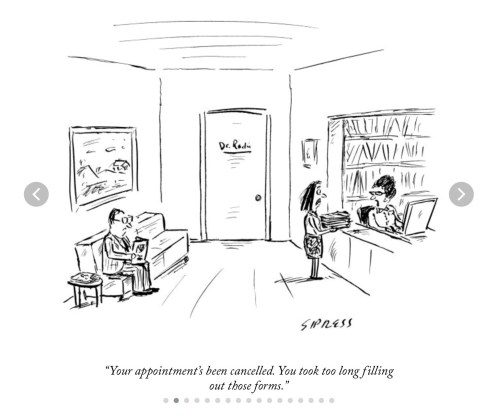
We walked to the front desk, and a lovely woman smiled at us all and turned her attention straight to the kidlet, saying hello and welcoming her to the clinic and introducing herself. She made eye contact the whole time with the kid before turning to hand me a clipboard. ‘Would you mind filling this in please? And, if it’s okay with you,’ she said turning back to the eleven year old, ’I’d like to show you around.’

The two of them went on a little tour of the practise and I heard them chatting away, the kidlet asking questions as each different space was introduced. When the kid returned to us in the waiting room, she was holding a clipboard of her own.  ‘I need to fill this in,’ she said, and took great care answering questions about her likes and dislikes and interesting things about herself.

A short while later, the dental nurse came into the waiting room and, again, went straight to the kid. ‘Hi, I’m K,’ she said holding out her hand. ‘Is this mum and dad?’ She asked turning to us.

‘Now, I need to take some photos – just in that room over there. The room is tiny – are you okay to come by yourself? Or you can bring mum or dad if you’d like.’ The kidlet jumped up and smiled, clearly very pleased at being asked directly what she wanted. ‘I’ll be fine,’ she said.

The rest of the appointment continued the same way. When we were shown into the treatment room, K explained exactly what would happen once the orthodontist entered the room. The orthodontist welcomed the kidlet first and then introduced herself to us. The kidlet was asked regularly if she had any questions and anything she did ask was answered efficiently and clearly.  She was congratulated on asking smart questions (mostly different versions of ‘is it going to hurt’) and no one tried to rush through things or to dismiss any of our questions.

The practical side of things – i.e how we would need a second mortgage to afford the treatment – was explained clearly to the grown-ups in the room and the ‘rewards’ system (a points program which earned gift vouchers) was explained to the kid. She looked delighted!

We left the clinic feeling very well informed. All our questions had been answered and we knew exactly what was going to happen next. The kidlet felt really positive about the whole experience too.

This is ‘patient-centred’ care at its best. It’s not just lip-service – it was far more than the staff all being overwhelmingly lovely. They were genuinely focused on ensuring that everyone knew what was going on and that the kid understood that this was all about her. She was given options – each of them explained to her – and then we were asked to think about them and make decisions, with the option of being able to ask further questions if needed.

So what does this level of care and attention take? It certainly took no more time that would be expected of a first consultation. There were no more staff members involved than at any other clinic offering the same service.

But what it did take is care and attention and an understanding of the ‘customer’.  And respect.  A lot of respect.

This post is dedicated to my husband who frequently jokes complains when I take photos of food and post them online. Every time I pull out my phone to take a photo he asks if it is for my (non-existent) food blog, which he thinks should be called ‘The art of mastication’. So that is the name of this post and it also marks the start and the end to my food blog. (Amen.)

So, my sister bought me a Veggetti. (Say it out loud – soft g – and get over your laughing. Actually, that might take a little longer; I still snigger every time I say or hear the word. Because: 12 year old humour.)

Anyway, the idea of the Veggetti (snort) is to turn vegetables into ‘noodles’ with just a twist of the wrist (chortle). Simply, you shove the vegetable in one end and out comes long spirals of zucchini or carrot or cucumber or whatever you have on hand in the veggie crisper that needs to be used. It takes no effort and is a tiny device, so you don’t need to clear bench space or cupboard space. (This is important if, like me, you have at one time or another found your cupboards overflowing with a popcorn maker/waffle iron/milkshake maker/ice cream maker/yoghurt maker/pie maker etc. etc. that was used once and then never again.)

I think that a lot of people using a Veggetti are trying to limit their carb intake and replacing regular spaghetti and noodles with vegetable noodles. This sounds ridiculous, because I love spaghetti and noodles, so my reason for using the Veggetti is more to make food look pretty.

This was the result of the Veggetti’s first spin:

Veggetti1

What we have here is zucchini ‘spaghetti’, chorizo, flaked almonds cooked in a basil-infused buttery-olive-oil sauce. I then threw in some al dente tagliatelle, because it’s not a pasta dish unless there are carbs in it!

Next night, I made rosemary and sea salt potato hash and dumped some aioli and smoked salmon on top. On the side was a salad made of cucumber ‘noodles’, snow peas and white nectarine, with a balsamic dressing tossed through it. Looked like this:

Veggetti2

Overall, I have to say it is definitely a healthy way of eating. I’ve certainly not cut out carbs, but I have found that overall I’m not eating as many (even when using potatoes) which has resulted in a more stable line on my CGM. Plus, I am using more vegetables in each meal I’m making.

Will I use it forever and ever? Probably not. I will most likely get tired of it and the novelty of spiral vegetables will get old. As will the Veggetti jokes (actually, maybe not).  But for now, it is a nice way to be using lots of fresh vegetables,and throwing together fun and delicious meals that photograph beautifully. And that, my friends, is the aim of the game. Pretty photos.

It’s no secret that I have had some problems with my local licensing authority (VicRoads). It’s also no secret that I have been annoyed and rather vocal about the Austroads 2012 Assessing Fitness to Drive Guidelines – specifically, the introduction in 2012 of the ridiculous section defining ‘satisfactory control of diabetes’ as an A1c of 9% (and the ensuing problems it caused!)

Austroads and the advisory group involved in putting together the guidelines a couple of years ago claim that this value was never meant to disadvantage people with diabetes; that it was there to simply trigger further, specialist treatment. And that it was never intended as an automatic suspension of a driver’s licence.

That may have been the theory. The reality was quite different. Many people with diabetes reported that their treating doctor did in fact interpret the guidelines as meaning that a 9% or above A1c was grounds for licences to be suspended. And that is what happened.

But here is some good news. The new draft guidelines – currently open to consumer consultation, and due for release later this year, have removed the A1c value defining satisfactory control of diabetes. It’s been a long process, but thanks to a lot of advocacy by Diabetes Australia, this is an excellent result for people living with diabetes in Australia.

One of the most enjoyable things about my job is the policy work in which I am involved, and I was pleased earlier this year when I was asked to join the working group reviewing and revising the diabetes chapter in the Guidelines. (Disclaimer: this is part of my work at Diabetes Australia and I was asked to represent the organisation on the working group. Diabetes Australia has received a significant number of complaints from people with diabetes who had been negatively impacted when the 2012 Guidelines were introduced and I have been involved in this work since then.)

 The outcome of the review has been that some parts of the diabetes chapter have been completely rewritten. The advocacy efforts led by Diabetes Australia and involving the ADS and the ADEA, resulted in the removal of the 9% (arbitrary) value being eliminated. This is an outstanding outcome.

So, now it is your turn to do a little advocacy.

If you have some spare time over the next couple of days, and you feel really strongly about this issue, now is the time to get on board and participate. The point of public consultation is that people who are directly affected can have their say. If you have diabetes, you are directly affected. If you are the parent of a child with diabetes who, at some point, will want a driver’s licence, you are directly affected.

All the details of the consultation can be found here, including how you can make a submission. I urge you to comment – even if that is to simply say that you support the changes which should ensure that people with diabetes are not losing their licence because for a reason without an evidence base. And you might like to also add that you support the Guidelines’ focus on hypoglycaemia which absolutely can and does affect safe driving. Quick sticks – the consultation closes tomorrow.

10012600_10152262321735789_1523429478_n


At the beginning of 2015 I wrote a post saying that while I don’t do resolutions, I would be focusing on three things: health, peace and happiness. I started off the year feeling that I had all three, and I ended the year feeling the same way.

Eschewing the plethora of ridiculous inspirational and motivational quotes filling all my SoMe feeds as 2015 drew to a close and 2016 started, I decided that if it ain’t broke, don’t fix it and that I would be going with the same three things throughout the new year.

A few things that have been occupying my wonderfully-blank holiday mind over the last couple of weeks:

Said inspirational quotes don’t work. It says so here.

American Girl, previously a place of fear and terror for our credit cards, has redeemed itself with the launch of the diabetes kit. Excited? Doesn’t even touch the sides!

There is a cure for diabetes and it is, of course, juice. Here you go! (Send cupcakes as gratitude.)

1453473_10153828162415789_5582661816205188658_n

Woolies, it’s January. Put away the Hot Cross Buns!

My sister has been talking non-stop about her Veggeti. And she bought me one (yet to use it). Just me, or could the marketing people come up with a slightly better name? Anyway, Veggetti recipes to come.

I decided that I needed a mermaid. Isn’t she beautiful?

(Click on image for details.)

(Click on image for details.)

I am doing the #30DaysofDexcom (or any CGM) challenge because: a/ saw a bandwagon, so I jumped on it, and b/ my BGLs are better when I use CGM. It’s just an undeniable fact that for me when I am sensing, I pay more attention to my blood glucose and am more in tune with ‘doing diabetes’.

If you don’t wear CGM, but are looking to do something similar, the good folk at MySugr have a #30DLogging challenge. My mate, the wonderful Scott Johnson is one of the poster boys! Check it out here.

And that’s about it. I am still on holidays for the remainder of the week and continuing to do very little other than hang out around the house, occasionally venturing to a local café and working on eliminating my sleep debt. It has been what I would consider a very successful ‘nothing’ break!

I’m on holidays and enjoying winding down from what can only be described as a crazy-busy year. We’re hosting Xmas lunch tomorrow, so there is a lot of prepping going on right now.

Thanks to everyone who has popped into Diabetogenic this year. You have no idea how much your love and support means as I try to navigate diabetes and all that it throws at me. I started this blog to connect with people and I am so lucky to have achieved that.

While it has been a tough year in some ways, it’s also been a wonderful one. I realise each and every day how fortunate I am to be constantly delighted and challenged and surprised by the work I do. The diabetes world is indeed diverse and I really love getting to play in this space.

I’ll be in and out for the next few weeks – mostly out. I am looking forward to spending time with my beautiful family, trying to stay cool in what looks to be a blistering summer and recharging my somewhat exhausted batteries.

But I’ll be back in full swing in 2016. May your festive season be truly magical and bright. My love and wishes to you all.

img_0021

The weather this weekend was punishing. Heat waves and diabetes don’t work together well at the best of times, and this was no different. It hit 42 degrees Celsius on Saturday (which translates to over 107 degrees for those of you who speak Fahrenheit).

My BGLs ranged from LO to 30mmol/l over the weekend. And today, with the temperature sitting in the far more respectable low 20s, I am drained, weary and exhausted.

I have started to really understand the way we deal with diabetes things changes over time. A weekend of horribly variable BGLs would always leave me feeling a bit battered, but not like this. Nasty hypos would need a little recovery time, but these days, that time stretches to longer and longer.

I am less able to bounce back feeling ‘back to normal’ takes considerably longer than it once did.

This is, I am sure, a combination of me getting older as well as my diabetes getting older. But when I feel my age most is when I am dealing with diabetes.

I’ve not had diabetes all that long – certainly not when measured against friends younger than me who have had it a lot longer – yet there is a change. Wide variability in my BGLs is draining, leaving me exhausted in ways I’ve never felt exhausted before. It is a bone-weary fatigue that overtakes my very being.

And the only way I know how to try to avoid those swings is to wear my Dexcom all the time. I have been really quite averse to this – I don’t like the constant alarms, I don’t like the look of the device on my body all the time and I don’t like having numbers available to me at all times. But it is the only way.

Because even when I am lacking motivation, I will do something – even something small – to respond to the alarms and the out of range numbers.

Tomorrow afternoon I head off on three weeks of leave and I will be wearing my CGM throughout that time. Having a break will mean that there is more of a chance for me to pay attention, respond to and catch rogue ‘excursions’ (sounds far more fun than they are!).

I know what will happen. I will see better numbers, which in turns makes me feel better, which in turn makes me feel more motivated, which in turn means that I take more care with everything; which in turn means I see better numbers, and Hakuna Matata, it’s the circle of diabetes.

The hot weather is only just starting here, opportunities for rollercoaster days will be many. But I have the tools at hand to try to stop them, or at least manage them as well as possible. And I’d be stupid not to.

We were a little excited the other day to discover that Kermit Ruffins has a holiday album. Disappointingly, it hasn’t been added to our collection yet, but here is a taste!

At the risk of sounding Grinch-like, there is one thing about Xmas that really, really annoys me. It’s Kris Kringle (sometimes called Secret Santa). We also do a version called ‘Bad Santa’ which is unusually cruel in that people are able to steal gifts they prefer from others.

I find them all a complete and utter waste of time and, quite frankly, money. All up, we (Aaron and I) spend about $120 on KK gifts each Xmas – four KK gifts at the limit of $30 per gift. Please understand it is not the total cost that annoys me. It’s the total waste of it.

At the risk of sounding ungrateful, I don’t need anything. And for $30 I struggle to find something that is fun (and different from the bottle of wine/designer tea/candle that I usually buy).

I have made this very clear to my family who, if reading this, please ignore my Scrooge-iness and let’s all have a nice Xmas dinner!

For a few years now, I have suggested that instead of buying gifts for each other, we pool our $30 each and make a donation to a charity. It actually would add up to a decent amount and has the potential to make a significant difference in the lives of people far less fortunate than us.

Of course, for me, there would be no better way to spend this money than on a charity that is improving lives of people living with diabetes. With the $120 that just Aaron and I spend on KK presents, we could provide life-saving insulin for two years for a child in a country where medication is prohibitively expensive.

I am sure that I will love the bowl or bottle of champagne or colouring-in book I receive from my KK this year. But really, it will make no difference in my life. It will not improve it. Again, I get that I sound ungrateful to the cousin or aunt who has purchased this gift for me, and while I don’t mean to, it is the way I feel.

It feels wasteful. And there are so many ways that the money could be better spent.

So, today I have made a couple of donations. I have made a donation to Spare a Rose, Save a Child, adding to the monthly contribution I already make. The money I have donated will go to the IDF’s Life for a Child program and provide insulin or BGL strips for 12 months to a child who would not otherwise be able to access these supplies.

spare a rose

And I am also making a donation to Type 1 International to help their work in ensuring people with type 1 diabetes around the globe have access to insulin, diabetes consumables and medical care.

T1international

If my KKs are reading this, please feel free to give me a handmade card with a little note telling me you have donated the amount of my gift to either of these charities – or another one that you support.  I promise that I will think it the best KK present under the tree, and I also promise to stop being a Grinch!

Our Xmas album collection is eclectic. One album that is on frequent rotation in the silly season is Bela Fleck and the Flecktones and their version of The Twelve Days of Christmas is different to say the least! Enjoy if you can.


Right now, it’s 36.6 degrees Celsius in Melbourne. By the weekend, we’ll have hit 40 degrees Celsius, and if it the Australian Tennis Open was on now, some tool sports reporter would be frying an egg on the playing surface to show you just how hot it gets in this part of the world.

The warm weather is not a friend of diabetes and I have been really struggling to get myself sorted while dealing with the heat. It took me a few days to work out just where my basal rates should be sitting. This was certainly not helped by the fact that I returned from very cold Canada to warmish Melbourne, which then turned ridiculously cold (we had the fire going last Friday night confusing the hell out of everyone – Xmas tree, carols and a fire is not normal in this part of the globe!) and is now insanely hot, hot, hot. And looks to be staying that way for the next couple of days at least.

But it’s not just basal rates that are affected by the heat.

It can be tough to sleep in the warm weather which wreaks havoc on all aspects of life – diabetes included. Nights were the temperature barely drops below 30 degrees Celsius do not result in restful slumber!

Perspiration means that CGM and cannula tape doesn’t have the sticking power. My most recent sensor lasted three days before the tape started to fray, and because I didn’t attend to it fast enough, it fell out completely after five days.

Loose flowing dresses with little camisoles underneath instead of bras mean that pumps get shoved in the top of undies only to fall out and dangle around my ankles. Or, strapless dresses with little boob tubes underneath give the ridiculous impression of a single square boob. (Too much information. You can thank me for sharing the glamour of diabetes with you)

Concentration flies out the window, a combination of poor sleep and general lethargy – which often means that I am thoughtless about remembering to check my BGLs or make sure my pump is full of insulin (and that I have my spares bag with me). And long periods of being low mean a fried brain that just refuses to function properly at all.

And this is JUST the start of it. We’re only half way through December – the real heat hasn’t even happened yet.

But there are ways to manage.

Lots of cool iced water – lots and lots and lots! Grapes thrown into the coolest part of the fridge or even the freezer offer a quick cool snack and also help to keep BGLs above the low range. Same goes for watermelon which I only ever eat in hot weather when trying to combat nasty lows.

Iced coffee replaces my regular lattes. I am not really a fan of ice-cream, so I just have a latte over ice. (Which would taste a hell of a lot better if we had Half and Half in this country!)

Taping down cannula sites – only ever necessary in the hot weather – becomes the norm, and CGM sites get taped down as soon as the sensor goes in, not as the tape starts to wilt.

Afternoon naps under nothing more than a sheet with a gentle fan on help with the fatigue and makes up for sleep lost overnight.

And when all else fails, it’s tools down for ten minutes – which is just enough time to eat a Frosty Fruit icy pole!

frosty


Follow Diabetogenic on WordPress.com

Enter your email address to follow this blog and receive notifications of new posts by email.

Read about Renza

Archives