I’ve been unwell. 

And so, I’ve had time to think. Mind you, I’ve found it difficult to form thoughts properly, thanks to the brain fog that is impacting my attention span and ability to think things through to a conclus…oh look! The leaves on the trees in the garden are changing. I should buy the last plums when I go to the fruit and veg shop, and bake a plum cake. That would be delici… Are mandarins in season yet?  Ooh, a puppy!

Anyway, back to trying to focus on what I’ve been randomly and messily thinking about. 

On my last day at ATTD in Amsterdam, I wound up with a very weird pain flare that meant I could barely move. I put two and two together, came up with the wrong answer and decided it was thanks to arthritis and spent the day before my flight desperately trying to sleep it off so I would be okay to navigate Schiphol Airport and get myself home. I did make it home, but not without wheelchair assistance at each airport, and in excruciating pain for the entire long trip home. 

Turns out, it wasn’t arthritis. It also wasn’t diabetes, but that didn’t stop me from trying to connect non-existent dots. 

The day before the paralysing pain flare, I woke at 3am with my Dex alarm wailing. I was low. Very low. For five hours. You know, one of those lows that just won’t quit. One of those lows that simply won’t respond to massive quantities of glucose. I ended up throwing up after force feeding myself jellybeans and guzzling juice from the minibar, which was all just lovely. (And yes – I realised I had some inhalable glucagon with me AFTER the fact … but in my low fog, forgot as I was just trying to stay alive with sugar.)

Of course, I was exhausted when I finally came back in range and felt like I’d been hit by a truck. But sure enough, I got up and had a frantic day at the conference centre, in meetings, giving talks and trying to appear functional while feeling absolutely wrecked. 

The next day, when I woke up unable to move because I was in pain, I thought that perhaps it was a result of overdoing things the day before, when I should have perhaps taken the morning off to recover from the hypo and the exhaustion that came with it. But of course I didn’t. Because when have I ever taken time off for diabetes? One time I had an evening black out hypo in a park requiring paramedic attention and I was in at work at my desk by 8.30am the next day. Because why wouldn’t I be? My weird and illogical attitude is that if I was to take time off to recover every time diabetes doesn’t play nicely, I’d be taking hours off each week. No one has time for that. At least, I certainly don’t.

And how very messed up that thinking is. I realise that. And I know what I say to friends with diabetes who tell me about their particularly crappy hypos, or when diabetes is kicking their arse/ass: ‘Take the time and let your body rest,’ I’ll say. ‘You’ve just been dealt a pretty shitty blow to your body and mind. Don’t overdo it,’ I’ll remind them.

And what do they do? They don’t rest. They don’t listen to their body. They overdo it. It’s what we do. 

It’s messed up and we keep doing it, even though we know better. Of course we know better: because we give good advice to others. But we then do that ridiculous thing where we think resilience is strength, where actually, resilience would be listening to what our bodies need and then doing it. We ignore symptoms and give ourselves imaginary gold stars for ‘pushing through’.

It took some weird virus that literally hampered my ability to walk for me to take time off work. Sleeping 20 hours a day was all I could manage. But you know what? I should have slept 20 hours the day after the five-hour low to recover too, but of course I didn’t.

Who am I trying to impress by soldiering on as though there’s nothing wrong? What am I trying to prove? Do I think we get extra points in some bizarre Hunger Games-like challenge? Is it that I worry what others will think of me if I say, ‘I need to stop for a bit’? Am I afraid of seeming weak? Lazy? Or am I – twenty-seven years later – trying to live up to the ‘diabetes doesn’t change anything’ line I was fed the day I was diagnosed, even though it changes everything?

I’ve been back home now for two weeks now and really just getting back to regular programming now. On Sunday I was able to stand up for long enough to bake a cake. That was a win. I also was able to walk to our local café – a five-minute walk away – but needed a lift home. Slowly, but definitely better. 

I’m not pushing myself – partly because I can’t, but also because I refuse to and that is something that is very weird for me. I’m home this week instead of flying to Bangkok to speak at the IDF Congress – the first time I have ever cancelled a work trip. Usually I push through. Usually I suck it up and pretend all is fine. Because I drank the ‘diabetes-won’t-stop-me’ Kool Aid when instead, I should have recognised that there is no shame in stopping to rest. I need to be better and do better about this. And listen to the advice I would give everyone else. Permission to take time out for diabetes. 

This post is dedicated to my darling friend and #dedoc° colleague Jean who also doesn’t know when to stop. Let this be a reminder to put down the Kool Aid!

Instagram story screenshot of me just before the #dedoc° symposium. I'm smiling and looking away from the camera.
Feeling good! Just before the #dedoc° symposium – a couple of days before feeling poorly.

Is it too late to say Happy New Year? Probably, but does anyone actually believe that social norms still exist in the world the way it is these days?

And so – happy New Year to you. I’ve been absent. Not that it’s important to acknowledge this. But I have been because headspace these days is non-existent because of (gesturing wildly) the world. 

But anyway, here’s an update no one asked for, (actually not true – thanks to all the people who have reached out and asked):

I made a resolution. Happy to hear that many of you have made a similar one. Smart, smart people! 

I also didn’t do things: I didn’t start some bullshit diet, because diet culture sucks and is harmful. I didn’t tell anyone what they should be eating, because no one needs that. I didn’t go away for the holidays, because I was so travel burned out that the last thing I wanted to do was jump on an aeroplane. 

Instead, I read some great books (Amor Towles, Jhumpa Lahiri, Paul Auster’s final words) and read some not-so-great books (Stanley Tucci – I adore you, but your latest book could have stayed as a personal diary and not been published, mate). Walked lots. Sat outside in cafes drinking barrel-loads of iced coffee. Saw some movies and binge-watched some TV shows (do we need to talk about Apple Cider Vinegar? Yes, yes we do.)

And I spent a lot of time complaining about my hands. My sore, achy, stiff, stupid hands. 

I now have arthritis. Is it because I am old? Or maybe just because I collect health conditions? Is it psoriatic arthritis or is it osteoarthritis? (Probably both.) Does it have anything to do with perimenopause? Is Mercury in retrograde? Did I walk under a ladder? Whatever the reason, it sucks. And it hurts. 

This diagnosis actually came last year, so I don’t really get to blame 2025 for it. It started in September. One day, I didn’t have pain in my fingers. And then I did. I spent the whole time I was in NY for the UNGA last year noticing that a lot of the time I moved my index fingers I felt a little twinge. Then the twinge moved to other fingers. By the time I was on the plane home there was pain any time I moved my hands. And even when I didn’t. So pretty much all the time.

These are the hands that type words, make divine cakes and pastries, roll out pasta dough, turn the pages of books, hold onto my loved ones, grasp microphones on conference stages and in media opportunities, press down on cutters as I shape biscuit dough, hold the cups containing the coffee that sees me through the day, doom-scroll through the latest update in the cesspit of the world, tickle the tummies of our dogs, pat the top of the head of our cat, point out the specific pasticcino at the pasticceria I want to eat, stir pots of delicious soups and sugo on the stovetop, tap out snappy responses to misogynists on the internet, are waved around as I talk… And all of these things cause pain. All of them.

Here’s something about me: I don’t deal well with pain. I had a little cry in my GP’s office at the end of last year. I cried because there isn’t something I can do to just fix this. Here’s the list of things I read that I should do to help improve arthritis pain: be a ‘healthy’ weight (because diet culture and we’re led to (falsely) believe that people who live in smaller bodies are always perfectly well. Bullshit), stop smoking, limit alcohol, eat healthily, walk and be active. I can’t start to do those things because I already tick each and every box. So what I am supposed to do? Sure, my activity involves little more than walking, but I do get in close to if not 10,000 steps a day, so I’m not completely sedentary.

I’m whingy about it all because the pain is always there, and I don’t get a break. And diabetes is always there, and I don’t get a break. And anxiety is always there, and I don’t get a break. Honestly, I’d take the pain not being there and keep the others any day. 

While I wait to see a rheumatologist, I am doing some things that may be easing the pain a little. I say ‘may’ because I don’t really know, and I don’t want to stop them in case it makes it worse. And I spend a lot of time annoying people by telling them my hands hurt. (Don’t believe me – see the 800 words in this blog post – thanks for reading!)

I know the world doesn’t work this way, but sometimes I think it would be nice if those of us already dealing with a shedload of health conditions could sit things out for a bit. By ‘things’ I mean new diagnoses. That would be fair, wouldn’t it? I don’t really want to add another health professional to my contacts list and dedicate more time in my calendar for regular check-ups. And I don’t want to have to learn the lingo of a new health condition, while training a new HCP to understand the way I like to be treated. I don’t really want to have to give more money to the pharmacist for more drugs. I don’t really want to use more emotional bandwidth worrying and thinking about what this means long term. I don’t want to think about being in pain all the time. I also don’t want to wind up not being able to wear the beautiful rings I own, and feel free to call me shallow while I completely ignore you. 

And so, that’s where I am right here and now. A mostly gentle start to the year. And sore hands. Very, very sore hands. 

Sore hands making gnocchi

Today, just as always on 14 February, my favourite vases are empty. It’s not that we forgot Valentine’s Day. It’s because in our house, it’s Spare a Rose Day.

The annual Spare a Rose, Save a Life campaign is about turning love (or lust, or ‘I kinda like you’) in action. Instead of giving flowers, we donate to the campaign that was founded in diabetes community advocacy to provide support to people diagnosed with diabetes in under-resourced settings. The equation has remained the same since the campaign started over ten years ago: for each rose we forgo, insulin is supplied for a month to a person with diabetes. $5 for one month. $60 for a whole year. 

All donations are made directly to Insulin for Life , an organisation doing vital, lifesaving work across the globe. Every cent counts and goes towards saving the lives of people with diabetes. 

It’s a really easy choice for us. Because no one chooses to live with diabetes. And no one chooses to live in a place where a diabetes diagnosis is a death sentence.

Since 2013, our remarkable diabetes community has measured love not by the roses we send, but rather by the ones we don’t. A single rose might fade in a few days, but the impact of sparing one, and making a small donation can be life saving.

If you can, please Spare a Rose today. Just $5 can save a life.

When the clock ticked over into 2025, I had no intention of even considering coming up with New Year’s resolutions that would shape my new year. But with all that is going on in the world, I’ve given myself permission to reconsider and do all I can to stick to it. And I’m encouraging everyone I know to make the same resolution. 

And that resolution is to do a health literacy check-up and to actively pushback against misinformation. There has never been a time when being health literate is more important. I thought that during the COVID years as we received a daily onslaught of misinformation about vaccines, bogus treatments (bleach, anyone?), outright lies (“it’s just a cold”) and conspiracy theories (“BigVax is behind it all”). But how naïve I was. Those days seems like just a warm-up for what is happening today.

I’m in Australia, but I don’t for one moment think we are immune to the madness sweeping the world. But if you are shaking your head and laughing a little when RFK Jr spews his anti-vax, anti-fluoride, anti-science agenda, or Dr Oz uses his latest pseudoscience claim as the foundation for whatever supplement he is selling, you’re not grasping the seriousness of what is going on. Before we Aussies get too smug, we should remember our own backyard isn’t devoid of charlatans, and it’s only a matter of time before someone like Pete Evans is taken seriously in public health discussions. Think I’m over-reacting? He already made a run for the senate. How long before a conservative party sweeps him into their fold?

I think it’s safe to say that we have moved beyond this sort of misinformation being a fringe issue amongst ‘crunchy’ parents, trad wives and ‘wellness’ influencers. And Gwyneth Paltrow.

Health misinformation is deliberate and it’s mainstream, and protecting yourself against it isn’t optional – it’s essential.

Up until now there have been guardrails in place to protect public health. Boards and regulatory agencies have existed to ensure medical safety and provide us with confidence that there are processes in place to determine the safety of drugs, devices, healthcare programs. Guidelines are based on robust and rigorous research and are developed using evidence and expert consensus. (Side bar: Have people with lived experience been involved in these practises? Absolutely not enough. Could this be better? Absolutely yes.) 

Critical thinkers understand that science is not static. We understand that science changes as evidence evolves. We also understand that we don’t have to follow guidelines blindly. We should understand and consider them. And then use them to make informed health choices. I repeatedly say this to anyone who questions off label healthcare (my favourite kind of healthcare!): ‘I understand guidelines and learn the rules so I can break them safely’. That’s what being health literate does – it gives me an understanding of risks and benefits to make decisions about my health and what works best for me. And it gives me confidence to spot and push back on misinformation.

Critical thinkers also know that questioning medical advice is not the same as embracing conspiracy theories. It doesn’t mean throwing the baby out with the bathwater as you hastily reject modern medicine in favour of snake oil salespeople. It certainly doesn’t mean denying the effectiveness of a vaccines. And it doesn’t mean trusting Instagram wellness influencers. 

More than ever, now is the time to do some questioning – to question who is spreading health information and consider their motives. What are they selling? (Case in point: Jessie Inchauspe who offensively calls herself ‘Glucose Goddess’ while selling her ridiculous ‘Anti Spike’ rubbish as she spreads fear about perfectly normal glucose fluctuations in people without diabetes). And a question that right now should be front of everyone’s mind: What power grab is behind the way someone is positioning themselves as an oracle of health information?

This post is about health literacy in general, but because this blog is called ‘Diabetogenic’ and I have diabetes, most people reading will be directly impacted by diabetes. And if there is any silver lining in this shitshow, it’s this: We’ve been dealing with health misinformation about our condition for decades, so in some ways, we’re probably ahead of the curve. We’ve had to wade through the myriad cures and magic therapies, the serums and pseudo-therapies. And the cinnamon – so much cinnamon! We’ve been standing up for science, challenging misinformation, and ensuring that diabetes health therapies are based on evidence, not fairytales. We’ve expected truth in our healthcare. It’s seemed the normal thing to do. Now it feels like a radical act to be a critical thinker. 

We are a crucial point because health is being weaponised more than ever. Someone told me the other day that my lane is diabetes and health, and I should leave politics out of it. It’s laughable (and terrifying) to think that anyone doesn’t understand that health is political. It always has been. And even more so right now. We are seeing in real time political figures (and rich white men who own electric car companies) weaponise health misinformation for their own agendas, and scarily people are listening to them. They are elevating unqualified voices and aligning with conspiracy theorists, giving dangerous misinformation legitimacy. (And if you think that it’s all eerily familiar, you’re right. It’s already happened with climate change.)

Your radical act is to be smarter, to be more critical, to question sources and motives; follow reputable sources, don’t share viral posts before fact checking (Snopes is super useful here). Don’t reject credible advice and information in favour of conspiracy theories. Stack your bookshelves with books by qualified experts (I’d recommend starting with Jen Gunter’s holy trinity – The Vagina BibleThe Menopause Manifest and Blood and Emma Becket’s You Are More Than What You Eat), including lived experience experts who base their healthcare on legitimate evidence. Follow diabetes organisations like Breakthrough T1D (JDRF in Australia) for research updates and community efforts and be smart about which community-based groups you join. If moderators are not calling out health misinformation, I’d be questioning just how the group is contributing to diabetes wellbeing.  

We know knowledge is power. But that knowledge base has to be grounded in fact, not fiction. Health literacy is critical because misinformation isn’t going anywhere, and neither are the people pushing it for profit and power. My resolution is to sharpen my critical thinking skills, ask questions, and refuse to let bad science set us backwards and cast a dark shadow over the health landscape. Who knew something so fundamental could be such a radical act?

I did ask them how…
Colour me unsurprised they couldn’t back up their claim with evidence.

The TGA has, once again, advised that Ozempic shortages in Australia are ongoing and in their brief statement they say this:

Sounds easy enough and it would be if only the issue of Ozempic prescribing was black and white and supremely simple which, sadly, it isn’t. There is confusion and frustration as people using Ozempic – both who do and don’t meet the criteria – find it difficult to maintain supply. People who don’t meet the criteria are sometimes being shamed for trying to access it and told that they are not deserving. 

Firstly, let’s get the disclaimers out of the way: I am not a healthcare professional. I am not providing medical advice. I am not endorsing any sort of therapy or treatment (on- or off-label.) I am a person with T1D who is inherently interested in access to technologies and medicines that make our lives better. And I am interested (and believe) in off-label use of technologies and drugs because my diabetes life and overall health have been greatly improved by using different therapies off label. Also, in case you need a reminder, pretty much all people with diabetes behave off label in some ways, and if you don’t believe me, just ask someone with diabetes when they last changed their lancet.

And a little reminder that I don’t work for any Australian-based diabetes organisations, so this is not in any way aligned, or affiliated with what organisations are saying, or not saying. This is me, an Aussie punter with T1D, sharing my thoughts. (As I have done in the 2,000 plus posts on here already.) 

Okay, with that out of the way, here are my thoughts – and my frustrations – with the latest on the Ozempic shortage saga. 

In Australia (and in other places, but I live here and therefore am confined by Australian prescribing rules), the TGA has indicated Ozempic is use for the following (and excuse the language – the TGA needs me to come back and give them a little #LanguageMatters update):

‘the treatment of adults with insufficiently controlled type 2 diabetes mellitus as an adjunct to diet and exercise:

  • as monotherapy when metformin is not tolerated or contraindicated.
  • in addition to other medicinal products for the treatment of type 2 diabetes.’

For people who meet these criteria, Ozempic is prescribed using a PBS prescription which means that the cost will be $31.60 (or $7.30 for concession card holders) for one pen. 

Does this mean that ONLY this cohort can have Ozempic prescribed for them? No, no it does not. Off label prescribing is not all that uncommon (not just for Ozempic, I’ll add). For people who do not meet the eligibility criteria, Ozempic is prescribed using a private prescription and the cost will be around $140 for one pen.

Is Ozempic being prescribed off-label? Of course it is. Increasingly so. 

Anecdotally, I hear from many, many friends with T1D in Australia, but especially in the US, who are also using Ozempic in their diabetes management arsenal. I have heard dozens of talks at conferences in the last couple of years where T1D management is moving further and further from being gluco-centric with an approach that looks at drug combinations that address insulin resistance, lipids, blood pressure, heart and kidney health. It makes sense. As people in higher income countries have access to highly sophisticated hybrid-closed loop systems which significantly increase our TIR, and have us easily reaching HbA1c targets, many of us are looking to see what adjunctive therapies can support our broader health. GLP-1s are shown to have CVD and kidney protective benefits – something that many people with T1D are keen to access. In a talk at the Australian Diabetes Congress this year, head of EASD, Professor Chantal Mathieu said: “These medications are organ-protecting agents”.

The TGA announcement fails to recognise in any way that Ozempic is being used for other purposes than weight loss, and that it can be beneficial to people with T1D. 

But let’s look beyond my own T1D bias for just a moment. There are many people with T2D who don’t meet the criteria set out by the TGA, yet who benefit greatly from Ozempic. Not only have they been denied accessing the drug at the PBS price but are also being denied supply completely for not meeting the criteria. Yet, many fear if they stop using Ozempic, they will find themselves meeting the criteria because their glucose levels will go out of range. This cohort feels like they are in complete and utter limbo and not being supported to use the medication that is drastically improving their glucose numbers and their overall health. A quick look in any online diabetes group will see conversations about this – because they are happening every day.  

And if we step out of the diabetes sphere, people living with obesity who have been told time and time again to lose weight to improve their health have found Ozempic to be hugely successful in addressing one of the modifiable risk factors of T2D. This is a prime example of damned if they do, damned if they don’t. This cohort is told to lose weight, but then the tools which support that are snatched away from them, and they are rapped over the knuckles for trying to access them. 

I understand that there are shortages and with that, there will be priority groups. But completely ignoring that there are other groups who are benefitting from Ozempic and not even acknowledging them seems odd. As does ignoring the difficulties – including stigma, shame and judgement – that these groups are facing when it comes to trying to access medication that has been prescribed by their healthcare professionals. In fact, some might suggest it shows a glaring lack of understanding of community needs and experiences. 

Postscript

I am aware that Wegovy is available in Australia and can be used by people for whom Ozempic is not indicated. Wegovy costs are at least double than Ozempic which means that it will be out of reach for people who are already being expected to pay private prescription prices for Ozempic. 

It’s also perhaps worth mentioning that the use and endorsement of adjunctive therapies – including GLP-1s – in T1D is not new and is detailed in the Consensus report by the ADA and EASD about the management of adults with T1D. As is often the case, regulatory bodies are taking their time in catching up to medical consensus. 

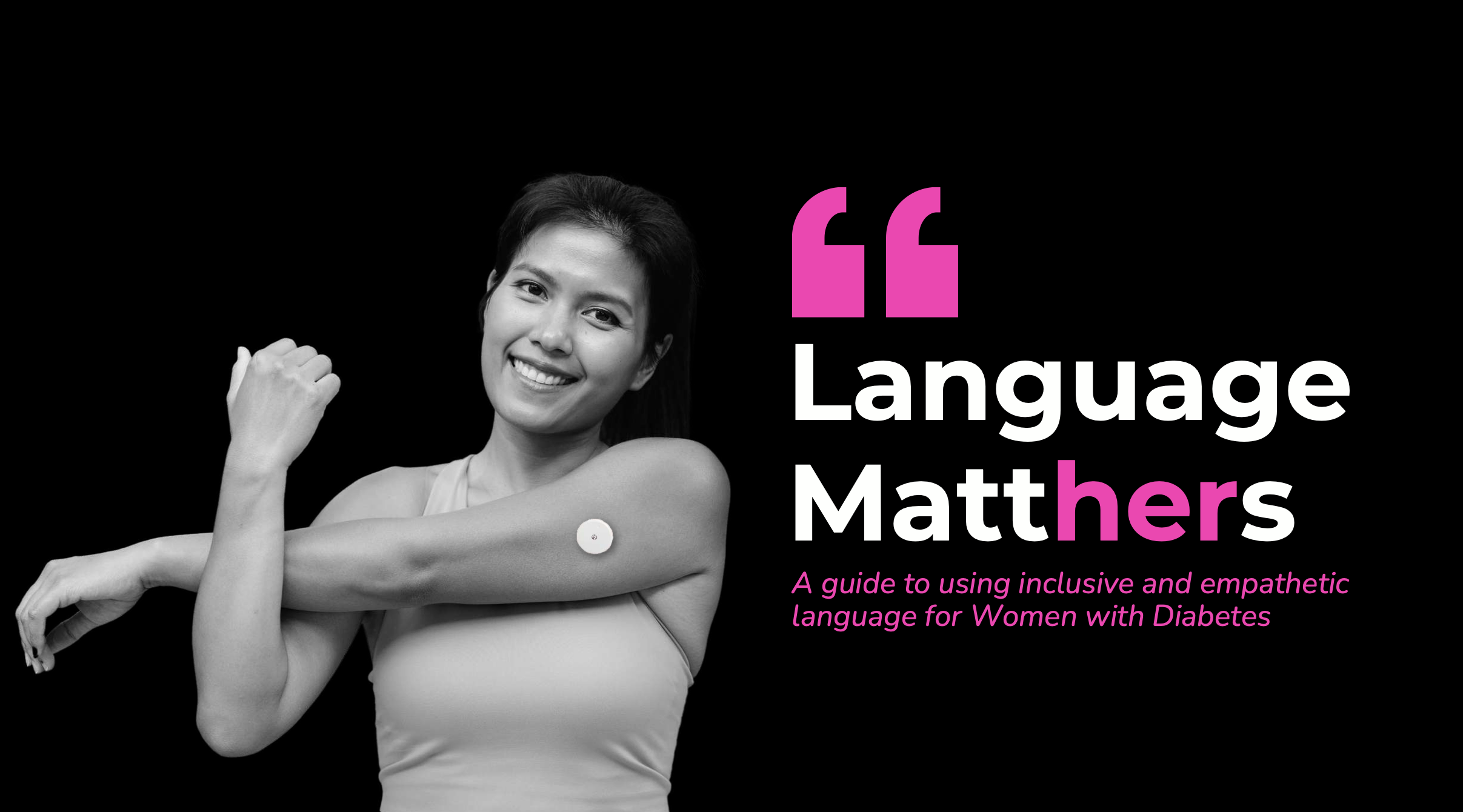
Last week, at the ISPAD Meeting in Lisbon, I was lucky enough to catch up with remarkable diabetes advocate Jazz Sethi and together, we launched a new resource about #LanguageMatters and women with diabetes. Jazz and her team from Diabesties conceived this idea and worked with a number of women in the diabetes community to bring this resource to life and add it to the ever-growing stable of #LangaugeMatters resources. I was one of those women. 

So, why do we need a specific document highlighting the challenges faced by women with diabetes, and how language can be used to help overcome these challenges? 

Let’s talk about gender bias in healthcare. 

Anyone who has even a mild interest in healthcare knows that gender bias is very real, and women do indeed face specific challenges. The situation is worse for women from different backgrounds, sexual orientations and gender identities.

This was the reason behind the International Diabetes Federation focusing World Diabetes Day activities on women and children back in 2017. 

Here is just some of the information from that campaign, explaining issues faced by women:

  • As a result of socioeconomic conditions, girls & women with diabetes experience barriers in accessing cost-effective diabetes prevention, early detection, diagnosis, treatment & care, particularly in developing countries.
  • Socioeconomic inequalities expose women to the main risk factors of diabetes, including poor diet & nutrition, physical inactivity, tobacco consumption and harmful use of alcohol.
  • Stigmatisation & discrimination faced by PWD are particularly pronounced for girls & women, who carry a double burden of discrimination because of their health status & the inequalities perpetrated in male dominated societies. 
  • These inequalities can discourage girls & women from seeking diagnosis and treatment, preventing them from achieving positive health outcomes.

Beyond diabetes, and more generally in the healthcare world, women’s health concerns are frequently denied, minimised, ignored or not believed. Women are gaslit into believing that symptoms are not real, pain is imagined and that we are overreacting. These attitudes can have serious consequences. Here’s just a sprinkling:

  • A Danish study of 6.9 million people showed that diagnoses for diabetes came four-and-a-half years later for women than men; cancer is diagnosed in women 2.5 years after it is diagnosed in men. 
  • This McKinsey Report showed that when it comes to gender-specific health conditions, diagnosis rates differ. Eight out of ten women are undiagnosed with menopause, and six out of ten are undiagnosed with PCOS. Meanwhile, only three out of ten men with erectile dysfunction remain undiagnosed. 
  • Want more? Okay, here’s something from the UK showing that women are underdiagnosed, undertreated and under-represented in clinical trials directed at management strategies for cardiovascular disease, making their results less applicable to this subset.

Pivoting back to diabetes, this from a Lancet editorial:

  • Compared with men, women with diabetes are disproportionately affected by depression and anxiety & have a lower quality of life, which can negatively affect attitudes towards self-management &, in turn, disease outcomes
  • Women with type 1 diabetes have a 40% higher excess risk of premature death than men with the disease, and those individuals with type 2 diabetes have up to 27% higher excess risk of stroke and 44% higher excess risk of coronary heart disease.
  • Women from high income countries are less likely than men to receive the care recommended by guidelines

And a recent study published out of Canada reported:

  • Women with diabetes may face additional challenges related to gender-based discrimination and its impact on depression symptoms
  • Stigma was more significantly perceived by women compared to men 

None of this will be a surprise to anyone who is familiar with gender bias in medicine. Actually, none of this will be remotely surprising to anyone who has listened women share their experiences in healthcare. 

And so, anything that can be done to address this is surely a good idea, right? 

Well, IDF Europe thinks so! In this article, one of their recommendations for addressing gender equality in diabetes is: The development of specific approaches to diabetes prevention, education and care for women and girls. In other words, targeted, specific, tailored information is frequently needed to ensure that messages get through and issues are addressed. 

Which brings us full circle to the #LanguageMatters and women with diabetes resource launched last  week. A resource specifically for women with diabetes, by women diabetes. It identifies the issues and provides practical solutions to address them and shines a light on gender bias in diabetes care, asking that women are treated with respect and all our concerns are believed.

You’ll see that nowhere in this article have I denied that men with diabetes face challenges, or that men with diabetes could benefit from focused information and resources.  And the new language resource for women doesn’t say that either. And yet, that was an accusation on the cesspit that is Twitter after a video was tweeted, where Jazz and I excitedly launched this new resource. Because ‘whataboutism’ is never far away.

Diabetes MattHERs has been widely shared on social media, with overwhelmingly positive responses. But here’s the kicker: the only backlash? Aimed at a woman. Men who shared it? Nothing but praise. Funny how that works. It’s almost as though there’s a different standard for women. Perhaps… I don’t know… could it be bias?

Photo of Renza and Jazz laughing. We are sitting down looking at each other.
If we didn’t laugh we’d cry.

The accuracy of the ‘180 decisions a day’ stat is somewhat questionable. Once, a long time ago in diabetes land, a blog post from Stanford University claimed a study showed that people with diabetes make that many health-related decisions each day. And it stuck and became folklore. It gets thrown around a lot! I’ve used it. Whole diabetes awareness campaigns have been built around it (guilty! I’ve co-designed them). And I couldn’t start to count the number of times I’ve seen the stat flash up in a presentation slide deck.

But, where is the evidence behind this specific number? Who knows‽ It’s murky.

While it does matter, it kinda also doesn’t. Accuracy is important (and no one knows the importance of accuracy more than someone dosing insulin). But so is the framing of what the number tells us. It says that people with diabetes face so much each and every day of our lives and with that, we are forced to make many decisions that people without diabetes simply don’t have to consider. Whether it’s 180 extra decisions, 120 extra decisions, 50 extra decisions – the number is … extra.

And while we could count and keep a tally of the specific decisions we make each day – the decisions of what, when, where, why, how to do things that impact our diabetes – there are decisions that go beyond being counted. Like the constant, underlying decision we make every single minute of every single day.

Everyday we make the decision to live. We do the things, we take actions that mean that despite what has been thrown at us we decide – deliberately – to live. We choose to live. Sometimes, things get in the way that make that choice almost impossible – the expense of diabetes, the lack of access to care, tech, medication and support all make it more difficult. But despite that, every time we do something to manage our diabetes, to treat our diabetes, to think about our diabetes, we are making the decision to live with diabetes using whatever is available to us.

The privilege to not have to make these choices is not available to people with diabetes. And because it is just what we do, it becomes normalised and becomes part of the fabric of our everyday. But I think it is worth recognising. The effort of making the decisions that mean we choose our life over and over and over again is quite remarkable. We may not really know exactly how many decisions it is each day, but, really, who cares.

After all, diabetes is about more than numbers. We keep telling you that!

Whatever the number…it’s extra!

I’ve been wondering how different diabetes would be if all we needed to worry about was the actual tasks of doing diabetes. ‘All’ doesn’t sound right, because I know it would certainly still be a lot. Diabetes tasks are many and constant. But if the noise disappeared and with it all the other factors that made diabetes more difficult, how much easier would it be?

If the gatekeeping disappeared and we could have access to what we need without having to jump through hoops to prove ourselves worthy, wouldn’t that make it easier?

If we had access to the best technologies and drugs when we need them, and could change as we needed, wouldn’t that make it easier?

If the judgement disappeared and we weren’t worried about how others perceived our efforts, wouldn’t that make it easier?

If the stigma vanished and we weren’t concerned about what others thought about diabetes in general, or felt that they had the right to comment on our diabetes, wouldn’t that make it easier?

If the shame and the blame wasn’t there, and we didn’t have the fingers pointing to us for getting diabetes or our diabetes outcomes, wouldn’t that make it easier?

If scare tactics were no longer deployed and we weren’t constantly being warned about all the things that could go wrong and how, if they did, it was our fault, wouldn’t that make it easier

If the fear arousal disappeared along with the numbers warning us that diabetes increased our chances of getting everything bad in the world or that we were burdening the health system, wouldn’t that make it easier?

If the not believing disappeared and we were listening to and believed and respected, so we didn’t feel that we were begging for what is even just basic care, wouldn’t that make it easier?

If the minimising of how we felt and what we were experiencing stopped, wouldn’t that make it easier?

If the grading A1Cs disappeared, so we weren’t being told that we were failing diabetes, or acing it, or oscillating between the two, wouldn’t that make it easier?

If mental health care was diabetes care and diabetes care always included mental health care, wouldn’t that make it easier?

If the idea that someone needed to speak for us and ‘be our voice’ was replaced with people with diabetes being platformed and amplified instead of silenced, wouldn’t that make it easier?

If peer support was routinely encouraged and peer-led education was normalised, wouldn’t that make it easier?

If the language around diabetes fostered attitudes of care and support, rather than bias and battles, wouldn’t that make it easier?

If claims of community engagement were real instead of nothing more than window dressing, wouldn’t that make it easier?

If we traded in hope rather than doom, and didn’t position diabetes as a battle or never-ending exhausting fight, wouldn’t that make it easier?

Because as it stands, diabetes is hard enough, but all the other things make it even harder. But the good news is that these things are often simple enough to address, simple enough to remedy, simple enough to change. 

I do wish that these were the things that were front of mind when strategies developed, campaigns designed, and policies changed. That’s actually an easy part. When people with diabetes drive the diabetes agenda, everything is better. And easier for us. 

So, ask yourself, are you standing in the way of making it easier for us?

Photo of a vase of red camellias. In the background is a slightly out of focus graphic print that says 'HOPE' in blue.

I would do almost anything to avoid a visit to the emergency department. The times it’s been unavoidable have never been fun. They’ve been chaotic, scary and generally involved some sort of battle about my diabetes. Sometimes it’s been a demand to remove my pump, or refusal to accept CGM data. One time, I was told that I needed to hand over my insulin (and pump) and that I was not allowed to ‘do anything diabetes’. The level of self-advocacy needed to simply be permitted to do the things I do every single minute of every single day was exhausting – on top of the reason why I was there in the first place. 

Emergency departments are overburdened machines, and when sharing my experiences, I’m not being critical. There are so many moving parts and the health professionals staffing them are not experts in diabetes. My frustration isn’t really about that lack of specialty; it’s that they refuse to recognise mine. 

So, imagine what it would be like to be able to have emergency department care with specialised diabetes care. And to make it even better, imagine you could get that care from home. 

Say hello to the Victoria Virtual Emergency Department – Diabetes Service (and a new acronym to add to the diabetes vernacular: VVED-Diabetes). This is not a unicorn, utopia or Camelot. It’s a real service that exists right now for Victorians with diabetes needing urgent care! It was launched last week during National Diabetes Week at an event that showcased not only this new brilliant service, but also the way that people with diabetes were integral to the design of the service. 

The VVED isn’t new. It’s been around for some time now. I first became aware of the service at the end of 2022 when I got COVID and was directed to the service from the Victorian Government’s COVID page. This Twitter thread gives an overview of my experience which was nothing short of stellar. I raved about the VVED to anyone who would listen, including family and friends, random people at Woolies and my poor pharmacist who started to look wary any time I walked into his store, lest I lecture him again about how he should be telling EVERYONE about it. 

The diabetes addition to the VVED is new, however. It’s has come together after a massive effort from some truly remarkable people. The process has been so smart because it’s been done in the most collaborative way with a number of different groups to make sure that every single emergency care base is covered. Northern Health, the Victorian Government, Ambulance Victoria, ACADI, Diabetes Victoria and the Victorian and Tasmanian PHN Alliance were all involved in setting up the service, and community members (independently, and also through their involvement in those organisations) provided the lived experience input. 

And that lived experience contribution was critical. We had some brilliant conversations when the guidelines for the service were being developed about the theory versus the practicalities of a PWD needing and emergency consult. I love that these guidelines differ from the generic guidelines in a regular emergency department because they are all about diabetes, and even more so, the person living with it! 

The idea is that using a smart device with a camera you contact the VVED (more details on the flyer below) if you have an issue that needs urgent care. You will speak directly with healthcare professionals who will be able to assess your situation and decide a plan of action. In many situations, they will be able to assist you virtually, saving a trip to and lengthy wait in the emergency department.  

Of course, in the situation of life-threatening conditions, call an ambulance urgently. 

This is the sort of service that goes a long way to making diabetes a little easier. How fabulous to be able to manage difficult diabetes situations at home, with the knowledge that you’re receiving expert advice and care. VVED-Diabetes is a service that provides the necessary expertise while also recognising the abilities and experiences of those of us living with diabetes, paving the way for a far better urgent care experience. When we talk about person-centred care, this is a great example. More please!

This flyer explains all about the service and click here to go to the VVED website

So often, there is amazing work being done in the diabetes world that is driven by or involves people with lived experience. Often, this is done in a volunteer capacity – although when we are working with organisations, I hope (and expect) that community members are remunerated for their time and expertise. Of course, there are a lot of organisations also doing some great work – especially those that link closely with people with diabetes through deliberate and meaningful community engagement. 

Here are just a few things that involve community members that you can get involved in!

AID access – the time is now!

It’s National Diabetes Week in Australia and if you’ve been following along, you’ll have seen that technology access is very much on the agenda. I’m thrilled that the work I’ve been involved in around AID access (in particular fixing access to insulin pumps in Australia) has gained momentum and put the issue very firmly on the national advocacy agenda, which was one of the aims of the group when we first started working together. Now, we have a Consensus Statement endorsed by community members and all major Australian diabetes organisations, a key recommendation in the recently released Parliamentary Diabetes Inquiry and widening awareness of the issue.  But we’re not done – there’s still more to do. Last week I wrote about how now we need the community to continue their involvement and make some noise about the issue. This update provides details of what to do next. 

And to quickly show your support, sign the petition here.

Language Matters pregnancy

Earlier this week we saw the launch of a new online survey about the experiences of people with diabetes before, during and after pregnancy, specifically the language and communication used around and to them. Language ALWAYS matters and it doesn’t take much effort to learn from people with diabetes just how much it matters during the especially vulnerable time when pregnancy is on the discussion agenda. And so, this work has been very much powered by community, bringing together lots of people to establish just how people with diabetes can be better supported during this time.

Congratulations to Niki Breslin-Brooker for driving this initiative, and to the team of mainly community members along with HCPs. This has all been done by volunteers, out of hours, in between caring for family, managing work and dealing with diabetes. It’s an honour to work with you all, and a delight to share details of what we’ve been up to!

Have a look at some of the artwork that has been developed to accompany the work. What we know is that it isn’t difficult to make a change that makes a big difference. The phrases you’ll see in the artworks that are being rolled out will be familiar to many people with diabetes. I know I certainly heard most of them back when I was planning for pregnancy – two decades ago. As it turns out, people are still hearing them today. We can, and need to change that!

You can be a part of this important work by filling in this survey which asks for your experiences. It’s for people with diabetes and partners, family members and support people. They survey will be open until the end of September and will inform the next stage of this work – a position statement about language and communication to support people with diabetes. 

How do I get involved in research?

One of the things I am frequently asked by PWD is how to learn about and get involved in research studies. Some ideas for Aussies with diabetes: JDRF Australia remains a driving force in type 1 diabetes research across the country, and a quick glance at their website provides a great overview. All trials are neatly located on one page to make it easy to see what’s on the go at the moment and to see if there is anything you can enrol in. 

Another great central place to learn about current studies is the Diabetes Technology Research Group website

ATIC is the Australasian Type 1 Diabetes Immunotherapy Collaboration and is a clinical trials network of adult and paediatric endocrinologists, immunologists, clinical trialists, and members of the T1Dcommunity across Australia and New Zealand, working together to accelerate the development and delivery of immunotherapy treatments for people with type 1 diabetes. More details of current research studies at the centre here.

HypoPAST

HypoPAST stands for Hypoglycaemia Prevention, Awareness of Symptoms and Treatment, and is an innovative online program designed to assist adults with type 1 diabetes in managing their fear of hypoglycaemia. The program focuses on hypoglycaemia prevention, awareness of symptoms, and treatment, offering a comprehensive range of resources, including information, activities, and videos. Study participants access HypoPAST on their computers, tablets, or smartphones.

This study is essential as it harnesses technology to provide practical tools for better diabetes management, addressing a critical need in the diabetes community. By reducing the anxiety associated with hypoglycaemia and improving symptom awareness and treatment strategies, HypoPAST has the potential to enhance the quality of life for individuals with type 1 diabetes. 

The study is being conducted by the ACBRD and is currently recruiting participants. It’s almost been fully recruited for, but there are still places. More information here about how to get involved. 

Type 1 Screen

Screening for T1D has been very much a focus of scientific conferences this year. At the recent American Diabetes Association Scientific Sessions, screening and information about the stages of T1D were covered in a number of sessions and symposia. Here in Australia. For more details about what’s being done in Australia in this space, check out Type 1 Screen.

And something to read

This article was published in The Lancet earlier in the year, but just sharing here for the first time. The article is about the importance of genuine consumer and community involvement in diabetes care, emphasising the benefits and challenges of ensuring diverse and representative participation to meet the community’s needs effectively.

I spend a lot of time thinking a lot about genuine community involvement in diabetes care and how people with diabetes can contribute to that ‘from the inside’. And by ‘inside’ I mean diabetes organisations, industry, healthcare settings and in research. I may be biased, but I think we add something. I’m grateful that others think that too. But not always. Sometimes, our impact is dismissed or minimised, as are the challenges we face when we act in these roles. I don’t speak for anyone else, but in my own personal instance, I start and end as a person with diabetes. I may work for diabetes organisations, have my own health consultancy, and spend a lot of time volunteering in the diabetes world, but what matters at the end of the day and what never leaves me is that I am a person living with diabetes. And I would expect that is how others would regard me too, or at least would remember that. It’s been somewhat shocking this year to see that some people seem to forget that. 

Final thoughts…

Recently when I was in New York at Breakthrough T1D headquarters, I realised just how many people there are in the organisation living with the condition. It’s somewhat confronting – in a good way! – to realise that there are so many people with lived experience working with – very much with – the community. And it’s absolutely delightful to be surrounded by people with diabetes at all levels of the organisation – including the CEO. But you don’t have to have diabetes to work in diabetes. Some of the most impactful people I’ve worked with didn’t live with the condition. But being around people with diabetes as much as possible was important to them. It’s really easy to do when people with diabetes are on staff! I first visited the organisation’s office years ago – long before working with them – to give a talk about language and diabetes. One of the things that stood out for me back then was just how integral lived experience was at that organisation. From the hypo station (clearly put together by PWD who knew they would probably need to use the supplies!) to the conversations with the team, community was in the DNA of the place. As staff, I’ve now visited HQs a few times, and I’ve felt that even more keenly. Walking through the office a couple of weeks ago, I saw this on the desk of one of my colleagues and I couldn’t stop laughing when I saw it. IYKYK – and we completely knew!

Photo of a pink jug with the words 'Drink you juice, Shelby!' in black cursive writing.

DISCLOSURES (So many!)

I was part of the group working on the AID Consensus Statement, and the National AID Access Summit that led to the statement.

I am on the team working on the Language Matters Diabetes and Pregnancy initiative.

I was a co-author on the article, Living between two worlds: lessons for community involvement.

I am an investigator on the HypoPAST study.

My contribution to all these initiatives has been voluntary

I am a representative on the ATIC community group, for which I receive a gift voucher honorarium after attending meetings. 

I work for Breakthrough T1D (formerly JDRF). 

Follow Diabetogenic on WordPress.com

Enter your email address to follow this blog and receive notifications of new posts by email.

Read about Renza

Archives