
You are currently browsing the category archive for the ‘Real life’ category.
Right now, it’s 36.6 degrees Celsius in Melbourne. By the weekend, we’ll have hit 40 degrees Celsius, and if it the Australian Tennis Open was on now, some tool sports reporter would be frying an egg on the playing surface to show you just how hot it gets in this part of the world.
The warm weather is not a friend of diabetes and I have been really struggling to get myself sorted while dealing with the heat. It took me a few days to work out just where my basal rates should be sitting. This was certainly not helped by the fact that I returned from very cold Canada to warmish Melbourne, which then turned ridiculously cold (we had the fire going last Friday night confusing the hell out of everyone – Xmas tree, carols and a fire is not normal in this part of the globe!) and is now insanely hot, hot, hot. And looks to be staying that way for the next couple of days at least.
But it’s not just basal rates that are affected by the heat.
It can be tough to sleep in the warm weather which wreaks havoc on all aspects of life – diabetes included. Nights were the temperature barely drops below 30 degrees Celsius do not result in restful slumber!
Perspiration means that CGM and cannula tape doesn’t have the sticking power. My most recent sensor lasted three days before the tape started to fray, and because I didn’t attend to it fast enough, it fell out completely after five days.
Loose flowing dresses with little camisoles underneath instead of bras mean that pumps get shoved in the top of undies only to fall out and dangle around my ankles. Or, strapless dresses with little boob tubes underneath give the ridiculous impression of a single square boob. (Too much information. You can thank me for sharing the glamour of diabetes with you)
Concentration flies out the window, a combination of poor sleep and general lethargy – which often means that I am thoughtless about remembering to check my BGLs or make sure my pump is full of insulin (and that I have my spares bag with me). And long periods of being low mean a fried brain that just refuses to function properly at all.
And this is JUST the start of it. We’re only half way through December – the real heat hasn’t even happened yet.
But there are ways to manage.
Lots of cool iced water – lots and lots and lots! Grapes thrown into the coolest part of the fridge or even the freezer offer a quick cool snack and also help to keep BGLs above the low range. Same goes for watermelon which I only ever eat in hot weather when trying to combat nasty lows.
Iced coffee replaces my regular lattes. I am not really a fan of ice-cream, so I just have a latte over ice. (Which would taste a hell of a lot better if we had Half and Half in this country!)
Taping down cannula sites – only ever necessary in the hot weather – becomes the norm, and CGM sites get taped down as soon as the sensor goes in, not as the tape starts to wilt.
Afternoon naps under nothing more than a sheet with a gentle fan on help with the fatigue and makes up for sleep lost overnight.
And when all else fails, it’s tools down for ten minutes – which is just enough time to eat a Frosty Fruit icy pole!
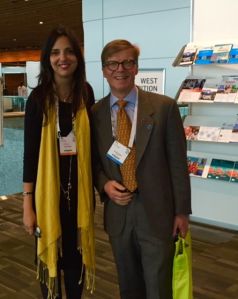
There were many highlights at last week’s World Diabetes Congress, but perhaps most impressive for me was the Living with Diabetes stream which sat proudly and comfortably amongst more traditional streams such as Basic and Clinical Science, Education and Integrated Care, Global Challenges in Health, Public Health and Epidemiology and Diabetes in Indigenous Peoples.
Including a consumer stream can be a tokenistic effort. I have seen that at conferences both here in Australia and overseas. But in Vancouver, the stream was completely embedded into the program and included outstanding consumer representation (from not only people with diabetes, but their loved ones too), as well as input from healthcare professionals, researchers and clinicians.
There were some real high points in the stream and over the next few days I will be exploring some of them in detail, but here is an overview of some of the killer sessions I attended:
- I sat in on two talks given by partners of women with diabetes. These were, in equal measure, beautiful and personally challenging for me to sit through.
- The session given by an adult daughter of a woman with diabetes was also difficult for me, but it looked at diabetes in the family from a very different – and rarely considered – perspective.
- Diabetes and the family dynamic was examined with sessions from parents and carers and two psychologists in a session I chaired that looked at how the age of diagnosis impacts someone with diabetes.
- The sessions on advocacy provided much food for thought as I heard about diabetes in places where things are really tough. (And although I didn’t hear her speak, I did meet with the inspirational Elizabeth Rowley from Type 1 International who is an advocate in every sense of the word. She is one of the IDF Young Leaders and is an example of the potential of this YLD Program. You can read more about Elizabeth in this interview she recently gave over at Six Until Me.)
- The light was shone – quite brightly – on diabetes organisations and how they can – and must – work more closely with people living with diabetes to ensure they are relevant. This was the focus of my talk and I will write about the soon.
- The power of social media and the DOC was given great attention with talks from some heavy weights in the community. Cherise Shockley from DSMA recounted the story of #Simonpalooza to illustrate how the community saves lives and Bastian Hauck from DeDOC spoke about an incredible initiative in Germany on World Diabetes Day and
- Peer support was also a focus with Ed Fisher from Peers for Progress speaking about the importance of peer support being included in national health policies and Jeff Hitchcock discussing the support offered by Children with Diabetes and Friends for Life.
(I’ll be writing lots more about each of these highlights over the next couple of weeks. Lots and lots more! Trying to get my head straight is proving to be a real challenge as it is completely and utterly full!)
The sessions in the Living with Diabetes stream were very well attended, and not just by the consumers at the conference. Several times, session chair, or the speakers themselves would ask for a show of hands to identify who was in the room. Diabetes educators were probably the most visible. It was terrific to have healthcare professional interest in this stream and I think that other conference organising committees could learn from WDC. While some conferences have a very clear remit as being aimed at HCPs, that doesn’t mean that consumers need to be removed from the conference. Teaming HCPs with PWD to illustrate certain issues is not only a great way to engage and involve consumers, but also bring home the ‘real life’, practical aspect of what is often being discussed at a very theoretical level. It makes it real.
Congratulations to Gordon Bunyon, Chair of the Living with Diabetes stream and his committee for pulling together such a fabulous program. I was honoured to be part of it.
On Sunday evening, I caught the last of the ABC miniseries ‘The Beautiful Lie’ – a modern day adaption of one of my favourite books, Tolstoy’s Anna Karenina. I didn’t love the series; in fact, I found it frustrating, and I distracted myself by reading excerpts from the book while watching the show.
But there, in the final episode, was a line that had me thinking. It came from Kitty, one of the characters who had lived with an eating disorder for much of her life. She had just given birth and was watching her beautiful baby boy and said to her partner: ‘You know, I spent so many years hating my body. All I could see was what it looked like and not what it could do.’
I wrote down her words quickly because they resonated so much. I too have spent a long time hating my body. As well as never being satisfied with how it looks, I focus on what it can’t do. I focus on the autoimmune mess that I’ve come to live with, and fertility issues and anything else that is wrong with it.
And in all that – in all the complaints and revulsion, I forget to acknowledge what it can do; what it has done.
When I complain about my faulty, broken body, or grumble about how I don’t like the way I look in a certain outfit, I am forgetting the good things it can do and that’s kind of disrespectful. Because it has done lots.
Today, our beautiful baby girl is eleven. I need to stop blinking, because each time I do, I look up and she is another year older and another ten centimetres taller. She is such a great kid and we are so utterly proud of her.
And my body conceived her and grew her and nourished her. And once she was delivered, it fed her, and it managed, through the lack of sleep and complete and utter new-baby fog, to look after her and keep her safe.
My body rolled around on the rug with her and together we rolled down grassy hills; it danced and we ran with scarves in our hippy creative dance classes at Mangala; it sat for hours on the floor of libraries and bookstores as we read; it chased her around playgrounds, pushed her on swings, caught her on slides; it climbed play equipment and trees; it’s answered a million ‘but why?’ questions; it walked for miles and miles and miles as we explored cities around the world.
And it has cuddled and hugged and kissed her beautiful little body, enveloping her in love.
Even with all the things that I complain about and the things that I hate – even with a health condition that sometimes needs immediate attention – my body has still done all those things. It doesn’t matter how it looks and it doesn’t matter about the things that it can’t do. I may not be able to make my own insulin, but I can act as a pretend pancreas pretty well and do a hell of a lot of other things too. It may not have given me as many children as I would have liked; but it did give me one wonderful little girl. And that is enough. So very, very much enough.

Birth day. So loved.
Last week, my body said ‘Stop’. Not in a friendly, ‘Hey, let’s sit down for a minute and maybe close our eyes and have a little nap’ way. No. This was a ‘You, you’re done. No more.’
There was no negotiating. No cajoling. My body just refused to body.
On Monday and Tuesday last week, I came into work and was back home by midday. (Staying home all day, both days would have been smarter.) My head felt like it was full of paraffin wax and I could barely concentrate. I had to stop on the landing halfway up the stairs up to my office to catch my breath. And when I finally made it to the top, I felt as though I had run a marathon. I dosed up on cold and flu meds to help with the low-grade fever and achy muscles. I felt pathetic. And frustrated and annoyed. And grumpy.
My BGLs were all over the place – high mostly, with the occasional crashing low after I rage-bolused because I was sick of the week being brought to me by the number 15.
On top of it all, I was trying to work with the kidlet to plan her birthday party which was last Saturday. In a moment of weakness (she knows how to pick it!) we agreed to a sleepover party and sent out invitations inviting the little munchkins to head over on Saturday afternoon and settle in for the night. And then, after sending out the invitations, did nothing until the day before the party. We started planning at 5.30 on Friday evening, exactly 24 hours before a drove of excited tweens would be descending on our house.
This is November exhaustion. It happens every year and every year I forget about it until I am in the middle of it. Most years, my body throws a tanty similar to the one it threw last week. Inevitably, there is a day or two where I just have to stop, take stock and recover. And more than that, I need to refocus on the health choices I am making and try to make better ones.
Because when I started to feel exhausted and poorly, I stopped making sensible diabetes decisions. Not enough BGL checks to really know what they hell was going on with the mild infection my body was trying to fight off; too lazy to reconnect a sensor after I ripped one out squeezing into my dress for the Research Australia Awards Dinner on Wednesday night; lousy food choices because I just wanted to grab whatever was easy and nearby, rather than planning and cooking foods that would nourish me while I was feeling below par; and not spending every spare minute asleep or resting, instead trying to catch up on all the things that had slipped while we were in the midst of World Diabetes Day festivities.
The thing is that what I perceive to be the easy way out ends up meaning that it takes longer for me to feel better. So, a week later, I am still feeling significantly worse than 100%.
This morning, I took stock. I am getting on a plane to Vancouver next Saturday for a very busy week of the World Diabetes Congress and realised that I really need to be better by then. I set alarms for regular BGL checks, I’ll put in a new sensor tonight when I get home and I’ve planned meals for the week. I hate that it takes a downward slide before I am jolted into doing what is best for me. But it just goes to show – yet again – that when the going gets tough, my health is the first thing to take a backseat. Until it can’t any longer.
I am a truly wonderful friend. You really want me around because I never make you do things that will in any way cause your body pain. With me, it’s all about sitting back, relaxing and being around food and drink.
The value of my friendship was once again proven last night when I was chatting with one of my nearest and dearest friends, Kath. We’ve known each other for nearly thirty years; we have a shared history of six years of Catholic school that bonds us in ways that only those taught by nuns will understand; we have lived through (and come out the other end of) bad haircuts and school formal dresses of the early 1990s.
Over the past few months Kath has had some issues with her hip and has had to see a few different health professionals to sort things out. Now, I always considered ‘hip problems’ to be in the same category as ‘cataracts’– things that happen to people waaaaaay older than us. But my eyes sport brand-new-non-cloudy lenses, and her hip causes her pain, so perhaps I need to reconsider my thinking. Or admit that we are not the same pre-teens we were when we met.
Anyway, Kath was telling me about the latest in her hip saga – and the good news is that she doesn’t need surgery as previously thought. We celebrated with Pimms!
The cause of her hip pain is, of course, exercise. Kath is a runner and plays golf and rows and does other things that make me twitch internally and run stroll screaming to a patisserie. She catches up with friends (who are not me) for a run around a park or a swim or some sort of non-sitting-in-a-café activity. She is super fit and I suppose that is admirable. And I expect her cardiovascular health is excellent. So, perhaps there are some benefits to this exercise thing she has going. Except, of course, she has a very sore hip.
‘See,’ I said to her. ‘This is why you need me as a friend. Nothing I do with you makes you hurt. Nothing I do aggravates your hip injury. In fact, nothing we do together has caused your hip injury. All we do is drink coffee, eat doughnuts, drink Pimms and have dinner at Marios. All of these are positive things. The Pimms probably numbs the pain, so really, our friendship CURES your problems.’
And then I remembered something.
‘Oh! When we did try to do something healthy, it ended badly. You had to call an ambulance and I was unconscious. And I am still worried that the incident has traumatised you for life. No good comes from exercising.’ I was referring to the short-lived thing we did, where we walked around Princes Park a few nights a week. Which was fun until a hypo knocked me out (and possibly made Kath question whether our friendship was worth the drama). After that, we went back to exercising our right to drink as much coffee as we wanted. And that was pretty much it.
See? This is why you want me around. I can’t promise to make you get fit. I can’t promise to help you beat your personal best in a half-marathon. But I can promise marathon chatting sessions and justifying anytime you want to eat a doughnut. That’s just the kind of friend I am. (And here’s some Randy Newman.)

We have a taqueria just around the corner from our place. As is the norm in our suburb, it’s very hipster – staffed by people far-cooler-than-I’ve-ever-been with bemusing facial hair that I understand to be ironic, but in my mind just reminds me of either a lumberjack, Salvador Dali or someone from a barber shop quartet.
But I can overlook all the posing, because they serve a kick-ass mojito and awesome tacos. Plus, it really is a three minute walk from our place.
We went there the other night. We were kid free (yay for camp!) and within minutes of jumping out of the cab after getting home from Brisbane, we were making our way there. I had been low for much of the two hour flight, my CGM emitting a piercing ‘You’re low, treat it’ alarm and me hissing ‘Shhh. Pay attention to the jelly beans I’ve just eaten’ at it, making me appear a slightly crazed women muttering to a box down her shirt. I also set a temp basal rate, certain that I’d regret it later and would be high as a kite by the time the plane landed. I was wrong.
I was still eating jelly beans in the cab, but at least my CGM line was steady and by the time I paid the driver, it was sitting at 3.9mmol/l and the arrow was straight across. So when we were walking to the restaurant and I could feel the low alarm continuing to vibrate, I was pretty confident that the sugar would kick in soon (like, now!) and all would be right. And the temp basal rate was still active, so not only didn’t I have any insulin on board, but I’d had hardly any basal insulin delivered for two hours.
 We threw our things down at a table and went to the bar to order. Thinking it better to be safe than sorry, I ordered an orange juice alongside my mojito and drank it quickly as soon as it was placed in front of me. I swilled the ice around, making sure I got every last bit of the available sugar.
I could sense that I was really low again, but even through the fog, I knew that a lot of glucose had been consumed in the last hour or so. I subconsciously reached under my top and disconnected my pump, and could feel my skin was slick with sweat.
At this point, I was feeling a little confused because at what I thought was the middle of a conversation, Aaron stood up and walked away from the table to the bar. I couldn’t work out what he was doing (my vision at this stage was unreliable at best). Eventually, he returned with another glass of juice – this time, no ice – and gently put it in front of me.
I drank it in one slurp (graceful) and sat back, reaching into my top to silence the alarm, which was helpfully telling me that I was still low. My mouth was buzzing, my lips and tongue feeling slightly numb.
‘You were really low,’ Aaron said to me later on.
‘Really? How could you tell?’’ I honestly thought that I was doing a perfectly good impersonation of carrying on a conversation, and the hypo was not on show for all to see.
‘You started a sentence five times. And never finished it. You just sat there in silence after saying a few words. And eventually would start another sentence. Or the same one. And not finish it.’
I had no idea.
I can’t pin point why I was so hypo. I didn’t ignore the impending low – as soon as my pump alarmed to suggest I was at the low limit (which is set above hypo level so that I do something before actually being low) I started treating. I continued to treat and monitor. I set a temp basal rate. I did everything by the book.
But still, it was a sticky low that wouldn’t quit. There was no shocking rebound – I reconnected my line when we left the restaurant and my CGM was reading 7mmol/l, and the next morning, I woke up feeling fine.
And when I think back to it now – and when I reviewed the CGM graph the next day – I am reminded just how crap diabetes can be at times. It’s certainly not the worst low I’ve ever had, but it was awful.
With the weather changing, I find myself starting to rethink what we are eating at home. The delicious and warming braises and casseroles that have been a staple of the cooler months are replaced with lighter options such as salads and grilled chicken or steak. The oven is rarely turned on – instead we need to think about buying a barbeque for the back garden so we can grill and eat outside.
My trusted and well used Le Creuset heavy-based casseroles seldom come out from their cupboard. But large salad bowls and platters are on frequent rotation, piled high with lighter food.
Fruit is no longer stewed, instead cut up and eaten fresh. The selection in the fruit bowl and in the fridge moves from mostly citrus and apples and pears, to stone fruits – nectarines, peaches, mangoes. Grapes get popped in the freezer; melons are cut up in Tupperware in the fridge for easy-reach snacks and we start to count down until cherry season hits.
And fruit is also thrown into salads – mango mixed with chicken, avocado, walnuts and rocket; white nectarines sliced and sprinkled over platters of cooled freekah, fresh tomatoes, herbs, artichoke hearts and prosciutto.
If only I had a green thumb, I’d get into planting vegies too. Alas, an overflowing pot of basil is usually all I can manage – meaning an easy meal of fresh pesto stirred through pasta is never more than 10 minutes away!
Mimicking the change of seasons with a change of our menu is one of the most wonderful things about food. It reinvigorates meal planning which can get in a rut and helps keep things interesting. And it’s easy for me – with easy access to farmers’ markets, fresh food stores and the Queen Victoria Market just across the road from work.
I’ve been thinking about this a lot recently because, as many of you may know, the IDF’s campaign for World Diabetes Day this year centres on healthy eating and, more specifically, access to fresh and healthy foods.
Because the food we eat does impact on the ability to manage our health. And diabetes is part of our health.
Some people with type 1 diabetes are a little pissed off at this message. They are banging the ‘type-1-has-nothing-to-do-with-what-you-eat-and-this-is-mixing-up-the-messages-and-what-I-ate-had-nothing-to-do-with-why-I (-my-child) –got-type-1’ drum and have been annoyed that the IDF is daring to suggest that there is a link between food and the wellbeing of people with type 1 diabetes.
But the food we eat does impact on our diabetes management, something that sometimes does get lost in our ‘but-I-can-eat-anything’ protestations.
Of course we can eat anything. We have tools to help us to do that and to do it safely. We can bolus for the doughnut we choose to eat for lunch, just as easily as we can bolus for the sandwich we eat.
But that’s not the point. No one is saying that. What this campaign is about is how the food we eat contributes to healthy living. We need insulin to survive, tools to manage our BGLs and access to food to treat lows, sustain energy and be healthy.
In just the same way that there are people in some parts of the world who do not have access to insulin or diabetes consumables, there are places where there is no access to affordable, fresh, healthy food. Of course all of this impacts on a person’s ability to live well with diabetes. It impacts on their ability to live well. Full stop.
The IDF is strongly suggesting that healthy eating is a right, not a privilege. And no one can disagree with that. Surely.

Last night – as a last hurrah to pie weather (and the need to use up the leftovers from a roast chook) a final pie was baked. With a little maths-nerd humour thrown in for fun.
I am all about facts. So when writing to the Commonwealth Health Minister, Sussan Ley, asking her to make CGM available to Australians living with type 1 diabetes choosing to use this technology, I left the emotion behind and concentrated on the realities. I can’t say that it has saved my life, because I don’t know that is the case. I do know it makes my life easier, better, happier and healthier. And that has to count for something. This is my letter about my real life with diabetes and how I choose to use CGM. I urge anyone else who believes this technology should be available more broadly to write to the Minister and share your story. My post on the Diabetes Victoria Blog from last week has some tips about what – and how – to write.
_________________________________________
Dear Minister Ley
On Tuesday, I attended an event at Parliament House about type 1 diabetes and new technologies. The aim of the night was to highlight the importance of developing pathways to ensure that new technologies make it onto the Australian market in a timely manner (in the first instance) and, once approved, are available and affordable to as many people as possible.
Unfortunately, you were unable to attend; however, I did spend some time speaking with one of your advisors and shared a little about my experience of using CGM.
This is not new technology. It has been available in Australia for the better part of the last decade. And yet, it is still out of the reach of most people living with diabetes. This needs to change.
Availing this technology to people with type 1 diabetes who want it is well overdue. Please understand, however, there will be a lot of people not interested in using CGM. But it should be a choice for everyone.
I have worn a CGM on and off for the last eight or so years. There are many reasons I don’t use it all the time. Fortunately for me, I can afford the $5,000 or so it takes each year to use CGM. The reasons I don’t use the technology continually include not feeling like I need the constant data feed, or simply not wanting to use the technology all of the time. Sometimes, I feel it won’t benefit my diabetes management.
Other times, however, I wouldn’t be without it. If my BGLs are more variable than usual (such as when I have an infection or am particularly stressed) or if I am travelling alone, having a CGM provide me with information is very important to me. It keeps me safe, it improves how confident I feel about my diabetes and it means that I stay as healthy as I possibly can.
For me, wearing a CGM is not so much about saving my life. It is about living my life the best I possibly can – despite diabetes; it is about being able to identify, react to and remedy impending high or low blood glucose levels; it is about having information that means diabetes impacts far less than it otherwise would.
Minister, we need sensible pathways that ensure diabetes technology is available equitably. But even more so, we need consistent and transparent processes that expedite the release of new and emerging diabetes technologies onto the Australian market.
I am grateful to use CGM alongside my insulin pump. I believe that it has certainly assisted me to live a healthy and productive life. It is not a luxury. It is a necessity in my arsenal of living well with type 1 diabetes – in the same way that insulin, other devices and their consumables, access to healthcare professionals, and support from my friends and family are necessary.
Minister Ley – it is time to make this technology available to any Australian child or adult with type 1 diabetes who chooses to use it.
Thank you
Renza Scibilia
‘How’s that working for you?’
‘Sorry?’
I’m at Parliament House in Canberra preparing for a type 1 diabetes and technology event being held later today. Walking through security, three security staff honed in on my upper arm.
‘Your patch, is it doing the trick?’
I was confused. ‘I’m sorry. Excuse me?’
‘Are you an ex-smoker?’
‘Oh! This? It’s not a nicotine patch. It’s a continuous glucose monitor. I have diabetes.’
I don’t know if they believed me. I gathered my bag and moved on through the security area. ‘Diabetes,’ I said again. ‘It checks my blood sugar.’
My invisible illness is pretty visible today.
I made the decision yesterday morning to site my sensor on my upper arm rather than my stomach. The last two sensors I have worn left my skin slightly irritated, so I though I would give the skin around my belly a rest. I also haven’t been thrilled with how long the sensors have lasted – the last two survived a mere 10 and 12 days which is not great when I have been known to get closer to three weeks. (I know, I know, they are meant to work for 7 days. But at over $80 a pop, I do everything in my power to make sure they last as long as bloody possible!)
Before I got to work yesterday morning, three different people had asked what the thing on my arm was. Once I got into the office, another couple of people asked (…don’t even want to remind you all that I work for a diabetes organisation…)
Waiting for a coffee at my local this morning, the barista asked about it and yesterday, at the cafe near work, I could see the people around me looking at my arm and heard them guessing what it was.
At the airport today, a security guard asked if it could be removed and then wanted to engage in a conversation about it, and the woman sitting next to me also asked about it.
It’s been very confronting.
I have never hidden my diabetes. I used to inject at the dinner table before starting pump therapy. And since using a pump, I pull it our from under my clothes to bolus, or see my CGM graph without a second thought. I check my BGL whenever and wherever I want.
But while these diabetes chores occasionally attract a comment, it is nothing like the last two days.
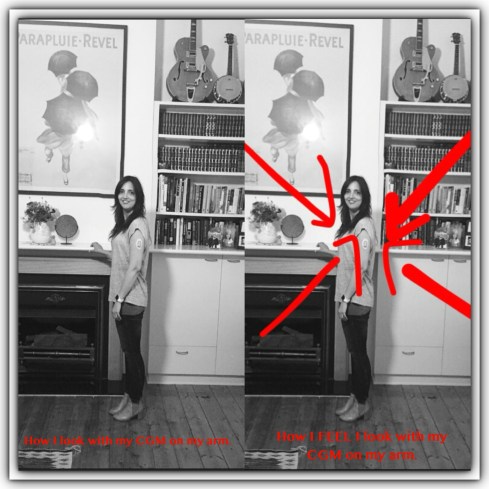
I found myself sitting at lunch today with my right arm cupping the transmitter and sensor to hide it from view. I’ve been cursing the beautiful weather that means I don’t need to wear long sleeves to cover the device. And I’m terrified that people think I am wearing it on my arm to attract attention.
I have always been able to see the pros and cons of having an invisible health condition. Sometimes, the fact that there are no obvious signs of diabetes means that people don’t understand how significant a role it plays in day to day life. But the flip side is that it can be neatly packed away; it can be private. I actually love that about it.
But right now, I don’t have that luxury. Right now it is out, loud and proud for all to see. And I am not comfortable with it at all.





 Diabetogenic