You are currently browsing the category archive for the ‘Real life’ category.
With my most sincerest apologies to Neil Gaiman, this is gentle reminder that I really needed today. Happy Wednesday, everyone.

Recently, I heard myself saying to a friend with diabetes that she really didn’t need to – and shouldn’t – apologise for diabetes, specifically, for needing to stop to check her BGL while we were mid-conversation.
‘Don’t apologise,’ I said to her. ‘It’s just part and parcel of diabetes.’
And then, I heard how often I do it.
‘Sorry – I just need to treat this low.’
‘Sorry, darling. Would you mind just grabbing me a juice box from over there?’
‘Sorry – I had a lousy night with crap high BGLs and hardly slept. Would you mind repeating what you said? I missed it. Sorry.’
‘Sorry – my pump is wailing at me. Let me just see what it wants.’
‘Sorry – my CGM is alarming. I need to calibrate…hang on a sec…’
‘Damn. I’m out of insulin. Sorry. I just need to refill my pump.’
‘Sorry for munching on these glucose tabs. I’m okay – just trying to ward of a low.’
‘Sorry. My brain is foggy! I think I might be low….’
Sorry. Sorry. Sorry. Sorry. Sorry. Sorry. Sorry. Sorry…
Why am I apologising for my messed up beta cells? I didn’t destroy them. (Actually – technically I guess that’s not true. My own body did kill them off. But it wasn’t deliberate on my part…This is all getting rather confusing, so let’s just agree that it’s not my fault that I have diabetes.)
Why do I say sorry for having to treat or manage or address the health condition I live with all day, every day, and do things that I only do to keep me well…and alive?
I’m not alone here. Many others do the same. I’ve sat in rooms with friends having nasty lows and heard them apologise over and over again as they treat and will their glucose levels to rise. We do it amongst ‘friends’ – others from our pancreatically challenged tribe who get it better than anyone else, and we do it with those who are not living with it.
When I apologise for my diabetes, I am making it sound like I have done something wrong – intentionally or accidentally. And that is never the case. I’ve never intentionally been low or high. And even if it could be considered an accident or something I could have prevented – perhaps over- or under-bolusing or forgetting to refill my reservoir before leaving home – it was never done with the aim of being disruptive to others. Or myself for that matter.
What I am also doing is apologising for diabetes inconveniencing others. And I am also saying it is something shameful. But I can’t do anything about having diabetes. And it is not shameful. I am certainly not ashamed of having diabetes.
I wonder if it is a case of good manners going too far. Manners are very important to me – I have instilled this in our kidlet who is frequently complimented for her beautiful manners. But manners are about courtesy and respect – and that respect is for yourself as much as others. I think I am actually being quite disrespectful to myself when I apologise for having to ‘do diabetes’.
My body, which really doesn’t like itself, is not a reason for me to say sorry. I do enough managing diabetes without having to feel the need to repent all the time. So I’m not saying sorry anymore. Well, I’m going to try, anyway!

The other night, I drove through the pouring rain to Geelong to speak at an information session for healthcare professionals about CGM technology. The event was run by AMSL, the distributors of Dexcom here in Australia (the disclosure song and dance can be found at the end of this post).
I sat on the panel with Dr Natalie Harrison, a terrific local endocrinologist (oh – how’s THIS for a bit of disclosure – we went to kindergarten together!!) and paediatrician and diabetes technology champion, Dr Peter Goss. I was there to bring the overall IQ of the panel down, share the ‘living with CGM’ story and be the point of difference between the glossy information presented by the CGM company.

On the left – the numbers of all readings in the glossy propaganda (it’s about 6.2 in our language). On the right – real life.
Both presentations by the doctors on the panel were enlightening. They clearly showed how CGM could be used in a number of different scenarios. The thing I particularly enjoyed was how both speakers are using this tech as tools of empowerment for the adult or child with diabetes – not for any other reason. Both repeatedly said that although in most of the cases they presented, there was a reduction in HbA1c, the biggest benefits to the PWD was improved quality of life. (I may have done a little fist pump each time they mentioned that!)
Examples included shift workers, tradies working on construction sights, exercise nuts, kids, adults, teens – demonstrating a terrific cross section of the diabetes community who may – and indeed have – benefitted from the technology. There was also a discussion about how CGM is useful in specific target groups and situations, with a considerable time of the discussion being about low carb diets and CGM. (And can I say just how refreshing it was to have this discussed with little judgement from the speakers. Too often LCHF or just LC is dismissed by healthcare professionals without any willingness to accept that there are many people who are using this as part of their diabetes management and achieving excellent results.)
Dr Goss also mentioned how useful CGM tech can be for families where ‘dead in bed’ is a real concern because it can show families just how stable glucose levels usually are overnight, and therefore may help reduce a lot of the anxiety parents feel. (There was also a discussion about the significant emotion around DIB and how it is frequently overplayed. This is really important because while one person dying from DIB is one person too many, it is thankfully a very, very rare occurrence (as shown in all local and international literature). The fear and the risks need to be in perspective and unfortunately, that is not the case at all times, and the anxiety it is causing is unnecessary.)
After the official, smart speakers finished, I stood up. At this stage, the AV equipment had called it a night, so I put aside the few slides I had developed, and shared a few things.
I spoke about why I love this technology and why I choose to use it pretty much all the time. But I also spoke about its limitations – specifically the emotional and psychological barriers that are of concern. I raised the point that reluctance to use CGM by PWD could be for myriad reasons and to never assume what that reason is (this was in direct response to the suggestion from one of the speakers that often PWD refusing to wear CGM have something to hide). I suggested that for some, it is a huge step to agree to wear something attached to one’s body all the time – something that provides a lot of confronting information, beeps, alarms and can be downright annoying. This is not a small consideration – it is big!
I also spoke about the necessity to customise just how PWD use the technology. I explained how I turn alerts on and off, depending on how engaged I am with my care. I could see that didn’t sit well with everyone so I tried to explain that being able to deal with – and respond to – a couple of alerts, is better than having the all on and doing nothing because it is too overwhelming. Or simply not wearing the technology at all.
And I also spoke about how what I do to make CGM work for me, even if it is against the direct advice of the company – and HCPs. Case in point, my sensor and transmitter are on my arm at the moment. I have found that recently, I get better readings and the sensors last longer if that’s where I site them. I also leave the sensors in for a lot longer than the suggested 7 days. (Peter Goss concurred with both those statements saying that most of the children and adolescents he sees prefer to wear sensors on the upper arm. And there was a bit of a ‘who leaves their sensor in the longest’ discussion, with Dr Goss sharing that the record in his clinic is 26 days. I did disclose that while I have a mental block about going beyond 21 days, I know people who have doubled that!)
This is why it is important to hear directly from people who use the technology. While both doctors shared case studies, the focus was really on how CGM helped smooth out glucose lines. And of course that’s important. But equally important is the way we manage the technology in our life, because if we can’t find a way to get it to work for us, we won’t wear it. After the presentations, a couple of HCPs thanked me for being there and said that I had raised a number of things that they just had not considered before – all things that are usually missed when a PWD is not part of the discussion.
And it served as a reminder again that even though it is terrific to have people with diabetes represented in some ways in presentations at these sorts of events (or conferences, meetings etc.), the only way to hear the real story is to hear it from someone living it.
Thanks to AMSL for inviting me to speak, but more so, for putting a person with diabetes up there on the panel. We belong there.
Disclosure
I was invited to speak at this event by AMSL Diabetes, Australian importers and distributors of Animas and Dexcom. I was provided with product to speak at this event…. The team from AMSL did not hear or see my presetantio prior to the evening and the only direction I was given was to share my experience of using Dexcom. Which I did – the good, the bad and the ugly.
(For the record, although not really relevant, but I’m disclosing the crap out of everything here, I also use an Animas pump. That was wholly paid for by my private insurance company whose premiums I pay each fortnight through clenched fists of frustration as their premiums continue to rise. I also pay for the ongoing consumables needed to drive said pump.)
In one of my #DBlogWeek posts last week, I wrote that for the sake of my own mental health, I have learnt to not compare myself with others.
I was thinking of this the other day when I was involved in a conversation with a woman newly diagnosed with diabetes. She told me that she was really upset at the response from a close family member who, when told about the diagnosis and how distressed she was, responded with ‘It could be worse. At least it’s not cancer.’
I’ve had that said to me. Several times. And it is one of the most offensive things I have heard. I don’t really know how to respond to it, because it’s true, I don’t have cancer. But I do have diabetes and that is pretty bloody horrible sometimes. (For the record, I equally dislike the idea of responding with ‘At least it’s not cancer. There is a chance of remission with cancer; type 1 is for life…’)
I get just as annoyed when it happens in our community. ‘At least it’s not type 1,’ is something I have heard said to people with type 2, diminishing the challenges they may face.
When I was anxious about my impending cataract surgery a few years ago, I was told ‘It’s nothing. At least you don’t have to have laser or have your eyeball injected.” Again, that’s true. But I was still terrified and had every right to be.
When discussing a nasty hypo ‘At least you didn’t lose consciousness and wake up to a roomful of paramedics.’ Sure, I remained conscious throughout the low I had last week. But I needed help to treat it and it happened in front of my kid. She was scared which really upsets me and makes me feel guilty.
When our experiences are belittled or minimised, it means we may stop sharing them. No one wants to be told they are being a drama queen and that it could always be worse. Of course it could be worse, but that doesn’t mean what you are dealing with doesn’t suck.
I have had diabetes for 18 years now. I have not had to deal with debilitating complications. I have not had to spend weeks in hospital because of my diabetes. But does that mean that my fears and concerns and anxieties are any less relevant than someone whose experiences are different?
And that’s why you will never hear me say to someone newly diagnosed ‘At least you have just been diagnosed. Just wait until you have had diabetes as long as me and <this or that> happens,’ because everyone’s experience is different and that newly diagnosed person may have their own concerns at that particular time. Or not. Which is also fine.
I had a healthcare professional once tell me that at least I didn’t have diabetes ‘too terribly’, because I worked, had a child and travelled. It was one of those (incredibly rare) moments where I was stunned into silence. I was torn between wanting to say ‘Well, surely that makes what I’ve achieved all the more incredible‘ and stabbing her with a fork. I said (and did) nothing.
There is no ‘at least...’ when it comes to diabetes. There is no discussion about how it ‘could be worse’. Because the truth is, it could be a whole lot better. I could NOT have diabetes.

I have now been wearing the Freestyle Libre flash monitor for ten days and have some initial thoughts to share.
I wasn’t sure what to think of the Libre before using it. I had heard stories of people absolutely loving it and other tales of people not really being all that impressed. I was certainly excited to try it, as I am with any new technology and was interested to see how my experience compared with friends who had already had a go.
I went in with a very open mind, albeit a mind that has been completely and utterly won over by Dexcom and CGM technology.
Overall, I love this device and can see why, where and how it would be brilliant for some people and now, after a week and a half, have a better idea of where it fits in my diabetes management.
The Good
The insertion was simple. I could go into a whole lot of detail about how it works and what it looks like, but a very clever young lady has made a very cool video of it and she is far cuter than me. You can see it at the end of today’s post. (The caveat to this is that Ms Pumplette in the video is under 18 years and, at this stage, the Libre only has TGA approval (i.e. in Australia) for adults.)
I will just add that it was completely painless for me. As in: Did. Not. Feel. It.
The device is discreet. I have mine attached just under my upper arm, so it is completely hidden, even when wearing a short-sleeved shirt. This placement also means less likelihood of ripping it off on a doorframe or similar. The profile of the Libre sensor is fabulous – tiny, flat and completely unobtrusive. (But if you would like to pimp it, of course there is a cottage industry making lovely patches to stick either over the top of the white disc, or to augment the tape around it.)
I have found the device to be incredibly accurate – when compared with both my BGL meter and Dex. We were warned that new sensors could take up to 24 hours to start to read accurately, however I found the new Libre sensor to sync with my devices as soon as the 60 minute warm up period was over.
Obviously, one of the biggest selling points of the Libre is its convenience and there is a lot to be said for the incredible ease of just scanning a device over my arm rather than doing a BGL check.
I had a couple of Dex-less days and found that the Libre was brilliant, especially considering that within 2 hours of my last Dex sensor dying, I had a horrid hypo that left me feeling vulnerable and scared and more than a little fragile. I had the Libre scanner in my back pocket (replacing my iPhone as the reader for my Dex) and was scanning every 30 minutes or so which was very reassuring.
The less good (I am reluctant to use the word bad here)
The cost is going to prove prohibitive, with sensors coming in at $95 each, which is above both Medtronic and Dex sensors. Being factory set, there is no possibility of extending the 14-day sensor-life. I’ve not used Medtronic sensors for a while now, but from what I read, most people get a max of 14 days out of theirs. I get about 21 days from a Dex sensor – at which point I rip it out because I start to get a little grossed-out. (But I do know people routinely leave theirs in for longer.)
The reader/scanner for the Libre is $95 and is rechargeable. This is certainly a point of difference when comparing with CGM transmitters, which have a battery life of either 3 or 6 months (depending on the product you use), and cost significantly more. (Add a CGM receiver to the cost and the price goes up a whole lot more.) This is where the affordability of the Libre runs rings around the CGM devices.
I just want to quietly flag supply issues which I hope will not be a problem here in Australia. The Libre is not quite available for purchase here in Australia, but is only weeks away. At DX2Sydney, I asked if there are any supply concerns similar to those that plagued the product’s release in the UK and EU and was assured that there really should not be here in Australia. I suspect that part of the reason the launch was not immediately after TGA approval was to make sure that there would be product available.
The verdict for me
So, is this a product I would continue to use? Well, yes. And no.
I really like and I trust the Libre. Accuracy for me is THE most important measure when it comes to any diabetes device (whether that be measuring my glucose levels or delivering insulin). From that perspective, I found this to be a winner.
But the lack of alarms is a problem for me. As someone with impaired hypo awareness, being able to catch those lows is important and I can’t do that without a system that warms me. The Libre doesn’t do that.
HOWEVER – this is not a CGM device and therefore, I understand I need to frame it in that way. This is a replacement for BG monitoring and BG monitors do not alarm and I have no expectation that it will. Despite being a sensor, the Libre is meant a substitute for finger pricks and meters. Currently, I check my BG twice a day to calibrate my Dex. If I was not wearing CGM, I would absolutely use Libre over a BGL meter any day.
Pumplette talks Libre
DISCLOSURE (again!!)
DX2Sydney was being coordinated and run by Abbott Diabetes Care. The costs for me to attend the two day event (travel, accommodation, meals and transfers) were covered by Abbott. All attendees received Freestyle Libre products (one scanner and two sensors) so we could trial the new device.
There was no expectation that I would write about the event or my thoughts of the device. Abbott may have paid for me to attend, but they did not pay for my words on this blog, social media activity or anywhere else. I like to share, so that’s why I decided to write about my experience.

It’s day 2 of Diabetes Blog Week, and the silver lining of being awake at 5am this morning was that I managed to catch up on most of the posts from day 1. This week comes from Karen Graffeo who, as she commented on my blog yesterday, I’ve not met. But we will be remedying that very shortly so I can hug her and say thanks for this. And make her buy me a coffee to help manage the sleep I’ve lost each year (and am yet to make up!) since taking part in #DBlogWeek.
Today’s prompt: We think a lot about the physical component of diabetes, but the mental component is just as significant. How does diabetes affect you or your loved one mentally or emotionally? How have you learned to deal with the mental aspect of the condition? Any tips, positive phrases, mantras, or ideas to share on getting out of a diabetes funk?
Just this morning on Twitter, I was having a conversation with a few people and eventually I found myself commenting on the emotional side of diabetes. The discussion was specifically relating to someone who had recently started using an insulin pump and I made a comment about how the learning curve could be steep and to take it easy.
Someone jumped in and said that he found the learning curve to not be steep at all (which is great and also highlights the different ways different people respond to diabetes). He commented that he thought it was pretty straight forward and that most people should be able to follow some basic principles – such as timing of glucose checks and understanding what happens around food and insulin (a movable feast as far as I am concern – there is no understanding, just watching with confusion at why something worked yesterday but not today….).
This may be true. There probably are some principles that could be consistent for most people. However, this was not addressing everything I was referring to which may contribute to the gradient of that learning curve.
Matters such as insulin dosing, timing of glucose checks and counting carbs are, just like working out which buttons to push on the new device, technical. But I believe this is certainly not the only side to diabetes.
I pointed out that it was more than just the technical side to a pump start and commented as such, adding ‘…emotional concerns of ‘attachment’ can be difficult for some, explaining in my next tweet that the term attachment was referring to being connected to something 24/7. (This is something that almost everyone I have ever spoken to has mentioned as a real barrier to starting on a pump or other wearable device – the idea of a constant, attached to the body reminder of diabetes. It was even a discussion last Friday at #DX2Sydney.)
Too often, some forget that diabetes is not about only about operational matters. The equation of ‘you eat, you take insulin to cover the food and then you are all good to go’ does not hold true. In the case of technology it is not, ‘you learn to press buttons and then you are fine.’ Just as I am much more than my diabetes, my diabetes is so much more than food, medication and devices.
When people ask me what I find the most difficult about living with diabetes, I am able to answer without hesitation. For me it is a combination of the relentlessness of the condition alongside the way in permeates all aspects of my life. It is particularly disturbing and distressing for me when it impacts my family who shouldn’t have to deal with diabetes.
I don’t have the answers or know how to fix these troubles. But I do know that there are a few things that help.
- I have learnt to be kind to myself.
- I have learnt to not compare myself with anyone else.
- I have learnt that this too will pass – even the darkest diabetes moments have had light somewhere.
- I have learnt to rely on the people around me who love and support me.
- I have learnt that the moment that I get complacent and think I have this diabetes thing sorted, I absolutely don’t.
- I have learnt that looking to the DOC provides me with a million things I’ve not thought of, and one of those things may work for me today.
- I have learnt that sometimes I need to draw a line in the sand, call it a day, and admit that diabetes is winning right now. But that doesn’t mean it will tomorrow.
- I have learnt that when all else fails, the things that make me feel best are a hug from Aaron and the kidlet, a message to one of my far away diabetes friends, a perfectly made coffee or a glass of Prosecco, and something to take my mind off diabetes.
- I have learnt that even though I have really had some dark emotional days with diabetes, I get up and do it again tomorrow. Because that is the only option.

In the last week, I have had no fewer than six women contact me with the same question. All of them are about to start using a pump and they are concerned about the most important and worrying aspect of wearing a life-saving medical device. ‘Where and how do I wear my pump?‘ they have all asked.
Wearing one’s pancreas on the outside of one’s body has its challenges. There is the challenge of having to explain what the beeping, vibrating, clicking box is all about. There is the challenge of mixing the pump with door handles and anything else protruding (the pump will usually come off second best). There is the challenge of finding a delicate, inconspicuous and subtle way of removing the pump from under clothes to use it.
And, there is the challenge of where to wear the bloody thing. Pumps do nothing for the line of one’s clothing. A square, hard box is lousy for smooth, uninterrupted lines, so I usually tuck my pump into my bra.
But what about for times when one is not wearing a bra? I have found that simply popping my pump in my pocket will inevitably results in a tube tied around a door handle, a yelp (from me) and a pump failing to do what it is meant to do (i.e. deliver insulin and keep me alive).
My walking-in-the-door routine includes high heels kicked off into a corner, pencil skirt removed and bra ripped off which means that my pump is suddenly free flying. Where does the little external pancreas go without the threat of bungee-ing to the floor and hitting the cat on the head?
Today, over at ASweetLife, there is a list of innovative and terrific designers who are solving this (obviously first world, but nonetheless important) issue. Finally, there is cute, attractive and sexy underwear that provides a solution to the ‘where to wear’ question.
It doesn’t surprise me that so many people are anxious about where to wear their pump, in fact it is one of the most frequent questions from people (usually women) who are considering a pump. When giving talks about pump use, I usually stand there and ask the audience if they can see where I am wearing my pump. Most are surprised that there is absolutely no sign of it, even though I often am wearing tight-fitting clothes.
I understand why this is such an important issue for people who are thinking of starting on a pump. Suddenly having something attached to your body 24/7/365 can be quite confronting. Wanting to know that it will work with our clothes should not be dismissed as a frivolous or pointless concern. Our insulin pumps become part of our body, functioning as an organ, albeit one that we have to drive ourselves. Finding ways to accommodate our external pancreas in a way that is beautiful and comfortable is incredibly important. Thanks to the designers finding a way to do that.

Perfect start to Mother’s Day. Just need to work out how to make this happen every day!
I had a gorgeous Mother’s Day yesterday, which included, amongst other things, breakfast in bed, a big family lunch at our place and, after everyone had gone home, an afternoon nap. It was quite glorious and I felt incredibly spoilt by my little family and fortunate to be surrounded by our extended family.
So it is with some guilt that I admit that in with all the happiness and celebrations and gifts and cards and flowers that I had moments of quiet sadness – both yesterday and in the lead up to the day.
Mother’s Day for me is about celebrating my mother who is, quite simply, the best mother in all the lands. There is no doubt about that in my mind.
It is also about being a mother and thinking about how much I love that. But in there, mixed up with the loveliness of it all, I feel pain and sadness.
I feel guilty about it because I do feel so lucky. I have a daughter and she is wonderful. I am a mother and I am so grateful. But I feel that I am missing something – or someone.
In the lead up to Mother’s Day, I was talking with a friend about how I felt and she said to me ‘At least you have your beautiful girl. A lot of people would be so thrilled with that.’ And I am thrilled with my daughter – of course I am. Feeling sad about the babies I lost does not mean that I don’t celebrate what I do have.
I ache sometimes for what could have been. I feel ungrateful even writing this, because I know and try to understand how difficult it is for women who do not have children. I read the stories about how hard Mother’s Day and other occasions are for people who don’t celebrate – for whatever reason and know that it sounds like I am ignoring how lucky I am and being greedy for wanting more.
Those quiet moments of wonder don’t stop hurting. I think about the baby that would have come before my daughter, but mostly, I think of the little ones that would have come after. I think of the one I lost two years after out little girl was born and think about how different our daughter’s childhood would have been if she had a sibling so close in age to her.
And still with so much rawness, I think of the one who would have been three now and how our family would have been turned completely on its head with the arrival of a new baby only a couple of years ago and we would still be muddling through the toddler years.
I had a dream the other night of Mother’s Day morning with Aaron and our daughter, and another little child – a three year old. I couldn’t see if it was a boy or a girl, but there was a bundling little kid also jumping on the bed, helping me unwrap my gifts and bringing me my carefully made breakfast. I kept trying to reach out for the child so I could hug him or her, but I couldn’t. The little one kept wriggling just out of reach, not showing me his or her face.
 I don’t understand these feelings. I don’t understand how I can move – almost in a heartbeat – from feeling like the luckiest mum in the world to feeling pain. But it happens and it especially happens on these days.
I hugged my girl very tightly yesterday. She is the one that my body decided to hold on to and keep; the one I was able to nourish and embrace and watch grow up. She is the reason I am someone’s mother on Mother’s Day. I truly do believe that she is so very much enough. But that doesn’t stop me from wondering ‘What if…?’
Growing up, when I infrequently visited our family GP, he was always referred to by his first name. I do remember when we were really young putting a ‘Doctor’ before his first name, but we never referred to him by his surname. He was always ‘Dr Sam’ until he became just ‘Sam’.
Since being diagnosed with diabetes and becoming a frequent flyer of healthcare services, I have only ever addressed HCPs by their first name. (Except my endo who frequently gets referred to by her first and middle name together, but that is because my kid has the same middle name (named for my endo) so when speaking to and of each other, we use both names..)
When meeting a new HCP, I will walk into a first appointment, hand extended as we do our introductions. I always say, ‘Please call me Renza,’ although I don’t know that I have ever had a doctor not call me by my first name in the first instance. In fact, usually, when called in from the waiting room, they do so by using my first name.
So it’s probably not surprising that I found myself prickling a little as I read this article from a couple of months ago, written my an oncologist from the US. James Salwitz MD tells the story of a new patient – an elderly man who attended with his adult son. The son insisted on calling Dr Salwitz* by his first name which, apparently, was a little unnerving for the doctor. He referred to it as a cultural faux pas, suggesting that it was being done to… ‘diminsh the power and value of my experience, control and guidance.’
Now, I know it is possible that there are some cultural differences here. In Australia, we seem to have a far more relaxed attitude about being formal. And we also don’t necessarily consider that using someone’s first name shows a lack of respect as suggested by Dr Salwitz and some of the commenters at the end of the piece.
I asked a few people – also regular users of healthcare – and most said they used only first names. A few said they would always refer doctors by their titles, but nurses by their first names. This raises another point about the hierarchy of healthcare professionals. I’m not sure why one would be more inclined to use Dr Diabetes for the endo, but not Ms/Mr Diabetes for the nurse.
I treat and regard my healthcare team with nothing other than respect. I speak to them with respect, I respect their time and how busy they are, and I recognise their professional expertise. How I address them does not diminish this respect, nor undermine their qualification.
What was not clear in the article I read was how Dr Salwitz addressed the person he was treating (or his son). If there was an expectation from doctors that they are addressed by their professional title, then surely they should demonstrate the same courtesy (if that is what it is) and address their patients by their title and surname.
Any discomfort can be solved at the first greeting. This is one of the reasons the #HelloMyNameIs campaign is so important. Clear introductions from the beginning establish how people would prefer to be addressed. If unsure, the question ‘Is it okay for me to call you by your first name’ can be asked by both physician and consumer.
Feeling comfortable in our medical appointments is necessary if we are to get the most from the limited time we have before our HCPs. And for that to occur, there needs to be mutual respect and no imbalance of power. I feel very fortunate to have that with my team.
*Thought is best to refer to Dr Salwitz by his title throughout this post.
Business cards seem a little out of date these days. In our digital world, I more often than not now tell people to ‘Find me on LinkedIn’ rather then reach into my bag and locate a probably dog-eared business card. Although, with a name like mine, sometimes it is easier just to hand over something that has all my details printed clearly to avoid the song and dance of spelling my name (‘…no I-B; not I-V….’). So, I had some new cards printed when I started my new job and they are tucked away ready for use at conferences and meetings.
However, there are days that I wish business cards were more reflective of what is going on around me and could be used to explain how I am feeling or even suggest how someone might like to respond to my mood.
Here are some that I have found recently (and a couple of golden oldies) that would be particularly handy.
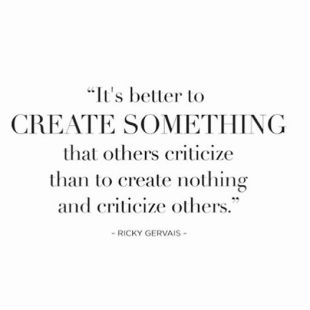
This one came across one of my SoMe feeds yesterday and I felt that Ricky Gervais was speaking directly to me. (We’ll workshop the ‘I hear Ricky Gervais speaking to me through the computer issue another time perhaps.) The constant arm-chair complaints from people about anything and everything, just for the sake of complaining is draining. This couldn’t have come at a better time or been more relevant to the crap I have been dealing with recently. Thanks Ricky!

Useful to hand out to those with ridiculous cure claims (carry a white Sharpie and replace cinnamon with whatever else is being recommend as required).

My family is Calabrese, not Sicilian, but the sentiment works nonetheless. This is from one of my all-time favourite movies, ‘The Princess Bride’.
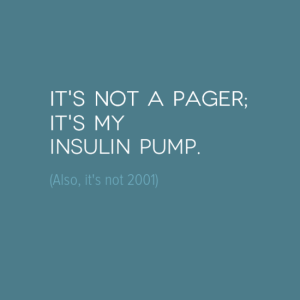
For technophobes.

A useful card to hand out to people trying to drag me into their mess.

Always good advice!

For people who insist on sprouting motivational quotes at me, here is a pretty response.

When I am rendered completely speechless (it may happen….), this card explains what I probably need to get moving…

Exasperation in a Gilmore Girls quote.
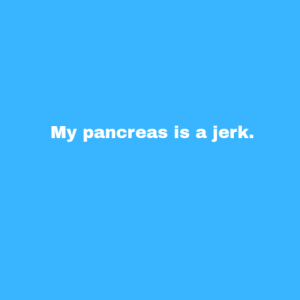
Useful for explaining diabetes in five words.
And finally, this one has an explicit language warning and as my kid reads my blog (but hopefully won’t click), you’ll have to go to this link for what is fast becoming my favourite saying. (Do not click if offended by the C word – and in this case, I am not talking ‘compliant’.)





 Diabetogenic
