You are currently browsing the category archive for the ‘Peer support’ category.
I was very lucky to be invited to attend the Roche #DiabetesMeetup held at ATTD in Vienna. About 60 advocates were brought together on the thirty-fifth floor of a building high above Vienna. I reconnected with friends and fellow advocates from Italy, Sweden, Germany, Belgium and welcomed UK advocates for the first time to the blogger group. The dynamic in this room is electrifying – these are smart, passionate, funny, outspoken, opinionated people with high expectations when it comes to their diabetes management experience – exactly the sort of people you want around you when you are developing diabetes technology solutions.

Elena from Italy.
I remain fascinated – and impressed – by these Roche events, even though this is the fourth one I’ve attended. I have a level of frustration at times when attending similar events because instead of them being used as an opportunity for engagement and interaction, they become sales pitches, with attendees being spoken at. I have sat in other events feeling as though I am being told what and how I should feel about my own diabetes with those speaking at me making all sorts of assumptions based on some ridiculous market research that involved anyone other than real people with real diabetes!
By and large, these #DiabetesMeetup events are the very opposite of that.
As I have said before, I am not naïve. I am fully aware that we as bloggers and patient advocates are worth a lot to industry. We blog, we Instagram, we Tweet, we Facebook. We have a voice and we use it. We have a platform – however big – that means we are very privileged to be able to speak about our experiences and have people listen.
By engaging with us in this way, we have become part of Roche’s – a very big drug and device company – 21st century marketing and communications plan. We are part of their PR machine. And I am absolutely okay with that. I can leave at any time. I can not write about what goes on at these events if I don’t want to.
I have also said before that it would be worse for us to not be part of their plan – or if they were stuck in the 20th century and refusing to actually work with people with diabetes.

Ute Volkmann from Roche Global doing a stellar job running the day.
The reason these events continue to leave an impression is because they are absolutely not an opportunity for Roche to lecture us and do a big whizz bang display of their technologies. Of course we see what they’re up to. But then we tell them what we think. (At the first Roche #DiabetesMeetup I attended in Munich, we were shown their in-development CGM device. The feedback wasn’t all that favourable. I have not seen or heard anything more about this product, and can only imagine that their R&D team had a lot to think about after rather negative reviews from the people who were hoped to be using the device.)
Previously, I have refused to attend advocate sessions in the past because there was an expectation that all attendees would be using the company’s product, and if not, we were expected to hide away any competing devices . Not once at these events has anyone asked me what I use, tried to give me a Roche product or suggested I use one of their devices. (For the record and full transparency, the only Roche product I use is my lancing device which I paid for myself and the lancets that come with it. I’ve not needed to buy more lancets because I think the lancet device came with about 10 of them, so I’m good until about the middle of the century.)
The big ticket item in Roche’s diabetes tech bag at present is the Eversense XL. The announcement at #DibetesMeetup that the implantable sensor now has a lifespan of 180 days. To illustrate the point, we heard that if you inserted a sensor while there was snow on the ground, you would need to replace it in the height of Summer.
Annie and I can always be trusted to bring down the overall tone of an event.
I am all for continued innovation in sensor development, and I can certainly see the appeal of the Eversense. I spoke with a couple of people at the event who were wearing them and their experience had been super positive. I’ve not worn the device and am most interested in the real life experience: how does it feel on?; how annoying is the transmitter and does it fall off?; the tape required for the transmitter to adhere to the skin – does it irritate? I am also keen to see how Eversense will be able to integrate with existing diabetes tech. And, I’m ever mindful of expected cost to the person with diabetes because I want to know if this is something that will be available and accessible to many people, or just a lucky few.
Roche followed up the blogger event with a symposium on the Friday of ATTD. It was here they announced they would be supporting JDRF’s Open Protocol proposal (which I discussed in yesterday’s post.)
While the formalities are all interesting, it is often the discussions that happen outside the official program that have real impact. I had a couple of very robust conversations about the role PWD have when working with industry. We know there are people in the diabetes community who have a complete and utter aversion to any interaction with device and drug companies.
My position on this is and has always been clear: our role is to be part of every single discussion about diabetes and every level and every step of the way. My only insistence is that there is transparency. I always disclose when I have been funded to attend an event, if I have been given product or working with any company on a project.
I was also involved in a brilliant conversation about the whole idea of sharing CGM data with loved ones. Some people were completely against the idea, unable to consider a single time when they would ever want anyone else to see their CGM numbers or find it useful. Others are big fans of share capabilities, because it makes their families feel safe when they are away. I see both sides to this story.
I had lots of chances to hear what people had been up to and how their advocacy efforts were playing out. One of the wonderful things about coming together every six months or so is that there has been time for projects to grow, blossom and show results. It is always great to hear people doing so well in their endeavours to provide support to others with diabetes.
In a connected world where I see most of these European diabetes advocates online at least every week, it is undeniable that these face-to-face opportunities provide an extra level of support and engagement. I am extraordinarily grateful to have that opportunity – to see, learn from and work with such a dynamic group of people I am fortunate to call friends.
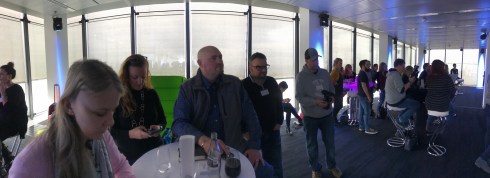
What’s the collective noun for a group of dynamic diabetes advocates?
DISCLOSURE
Roche Diabetes Care (Global) covered my travel and accommodation costs to attend their #DiabetesMeetup Blogger event at #ATTD2018. They also assisted with providing me press registration to attend all areas of ATTD2018. As always, my agreement to attend their blogger day does not include any commitment from me, or expectation from them, to write about them, the event or their products.
New year, new jumble. And lots of saved links from the last few weeks to share.
#OzDOC 2.0
Did you know that after OzDOC had it’s ‘final’ tweetchat at the beginning of December last year, it’s had a reboot and is now continuing to go at a great rate. David Burren (AKA Bionic Wookiee) kicked off the chat but is looking for people to volunteer to the moderators’ roster. There’s a brand new Twitter account to follow (@OzDOC_host), but the #OzDOC hashtag continues to shine brightly.
Same #OzDOC time, same #OzDOC channel. (i.e. Tuesdays at 8.30pm AEDT)
And while we’re talking tweetchats…
…make sure you keep an eye out on the #GBDOC tweetchats, which also had a bit of a restart last year and are going absolutely brilliantly. Follow @GbdocTChost for topics and moderators.
Now is a great time for Aussies to participate in #GBDOC because with the time zone difference, the chat is on Thursday 8am AEDT…which is actually quite pleasant. (It all goes to pot and becomes more difficult when daylight saving kicks in/out in respective hemispheres in coming months, but for now, it’s certainly manageable!)
Jane’s profile
It’s no secret that I’m a huge fan of Professor Jane Speight and I make no apologies for mentioning her so frequently on this blog. She is truly a champion for and of people with diabetes and her pioneering work on diabetes and #LanguageMatters, and social stigma are changing the landscape for those of us living with diabetes.
Last week, a profile of Jane and her work was published in The Lancet. Congrats, Jane. I can’t imagine a more worthy recipient of this attention. Please keep on keeping on. I for one am very grateful to have you on our side!
Read the article here – it’s free, but you will need to register/log in to access it.

(Click photo for source)
Dear ‘patient’
I was really interested to read this BMJ Opinion piece about medical letters, with the writers suggesting that instead of addressing ‘report letters’ to referring (and other) doctors and HCPs, that they should be addressed directly to the person, CCing in the doctor who would ordinarily have been sent the letter.
I love that idea! My endo generally copies me in on anything she sends out to my other HCPs to keep me in the loop, but I think that actually writing directly to me is even better.
HCPs would need to completely reconsider the language they adopt, the terminology they use and the overall tone of the communication, and I believe that there is nothing that should be shared with another HCP about me that shouldn’t be shared directly with me.
Interesting idea. And interesting to see if it has legs…
Writing for Grumps
After writing for me a few weeks ago, I returned the favour and wrote a post for The Grumpy Pumper. (I think the deal he made was something like ‘I’ll show you mine if you show me yours’, so I had to come up with the goods.)
This is all part of Grumps’ attempts to get people with diabetes speaking about #TalkAboutComplications in an open and honest way to help reduce the shame that seem to go hand in hand with a complications diagnosis.
Get ready for Spare a Rose spam
This year’s campaign is about to kick off. And if you want to know why I support this campaign, here’s just one reason.
Hospital admissions and T1D study
Rebecca Munt from Flinders University is currently enrolled in a PhD at Flinders University and is looking for participants in her research.
The focus of her study is to explore the experiences of self-management for adults with type 1 diabetes in the hospital setting (when T1D is not the primary admission diagnosis). If you’re interested in participating in Rebecca’s study, have type 1 diabetes, are over 18 years of age and have been admitted to hospital within the last two to five years (not for diabetes), please call Rebecca on (08) 8201 5749 or email rebecca.munt@flinders.edu.au
(The project has Social Behavioural Research Ethics Committee approval from Flinders University.)
Future of medical conferences
I have been very vocal in recent years about the shortcomings of diabetes conferences, specifically the lack of involvement and engagement of people with diabetes as part of the planning, running and presenting of the conference. So this piece really resonated about why medical meetings need a revamp, and some ideas for what could be done differently.
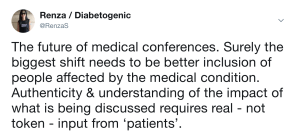
(Click for original tweet)
Because #NothingAboutUsWithoutUs.
Does the story we know and love about Banting need a rewrite?
I was fascinated to watch the short documentary shared in this story which suggests that the frequently-told story of the discovery of insulin is missing out a critical part.
It was the best of times, it was the worst of times…
This blog post by Sue Robins detailing two vastly different medical appointments is compelling – and quite heartbreaking –reading.
More D Merch
Totally true!
Click image to get your own!
Towards the end of last year, I wrote about some things happening online trying to encourage people to openly and freely speak about being diagnosed and living with diabetes-related complications.
When conversations about diabetes complications are brought into the public domain, often two things happen.
Firstly, people start to talk. That whole cornerstone of peer support – reducing isolation and sharing stories – flings doors and windows wide open, and people, often gingerly at first, start to offer their own experiences. Inevitably, someone will say that they don’t speak about their complications because they fear the judgement that will follow. Or that they believe they are the only one their age facing complications because they have never met another person, or read a blog post from another person sharing a similar experience.
Secondly – and most damagingly – there is judgement. And it comes in spades, often sending some of those who had started to open up retreating back into the depths of diabetes taboos. This is not helpful for anyone.
So I wasn’t surprised when, during a useful discussion starting online about living with diabetes related complications – which resulted in some people willingly talking about their own experiences – the horribly judgemental comments started infiltrating the conversation.
I shared this post that I wrote almost five years ago about why we need to reconsider the way we speak about diabetes complications as I thought it was relevant to the current online conversation. In fact, everything I wrote in that post was still true because diabetes continues to be a terribly stigmatised condition and, within that, those of us living with complications seem to face additional stigma and judgement.
If for one second anyone doesn’t believe that statement, here are just some of the comments that I received (on LinkedIn and Twitter) after sharing the post:
‘If considering that many people who are type 2 diabetic quite simply exercise too little and eat too much fat…… which has immense financial consequences for the provision of healthcare…….. how else do you propose to get these people to lose weight and stop emburdening (sic) themselves on our NHS? If you take away the need to shame them you take away the most powerful way of making them take responsibility for their health.’
‘Sorry Renza but if we get complications of diabetes then we have failed. We are each responsible for own health and must try to maintain it at all cost.’
‘Diabetic complications do not happen with ‘perfect’ blood sugars. I agree that we must be supportive and sympathetic and the insulins available don’t help but it’s still the patient’s responsibility and not the doctors. Sorry if this doesn’t bode well with you.’
Is it any wonder that people are reticent to speak about developing complications if people are thinking like this?
I have written before that I believe diabetes has an image problem, because I can’t think of any other health condition that, if a treatment does not get the desired outcome, the person living with that condition is blamed. I have never heard someone being blamed if the cancer for which they are being treated does not end up in remission. I don’t know of anyone with rheumatoid arthritis who is blamed if their pain increases or their mobility decreases. I’ve not heard of someone with psoriasis being accused of not caring for themselves if their skin flares up.
But all bets are off when it comes to diabetes and fingers are pointed fairly and squarely in the face of the person living with diabetes if they develop complications.
Diabetes complications happen. It is, unfortunately, a reality for many people living with diabetes. I’m not trying to be negative or scare people, but we know that the longer we live with diabetes, the more likely we are to develop complications.
In this post, The Grumpy Pumper says: ‘Complications are a hazard of what we have. Not a failing of what we do.’ Maybe if we take that as the starting point we can take away the blame. And maybe if we take away the blame, we break down the stigma. And maybe if we break down the stigma, we can start having a real discussion about how we treat complications if they develop, and get to treating them.
And maybe if we stop thinking that developing diabetes and anything that happens after living with it is a shortcoming we can stop feeling so judged and shamed, because others will stop judging and shaming us. More to read on this topic:
Riva Greenberg shared this one.
Sarah K from Sugarbetic wrote this.
I was thrilled and honoured to speak in the symposium at #IDF2017 all about peer support. I shared the program with Chris Aldred, better known to all as The Grumpy Pumper, and advocate Dr Phylissa Deroze (you can – and should – find her as @not_defeated on Twitter).

Speakers in the peer support symposium at #IDF2017
When we were putting together the program for the symposium, the idea was that it would offer an overview of what peer support can look like, beginning with how diabetes organisations and community health groups can facilitate and offer a variety of peer support options, and rounding up with the perspectives of people with diabetes who provide and participate in peer support.
I spoke about how diabetes organisations in Australia, through the NDSS, offer a suite of peer support choices, urging the audience to think beyond the usual face-to-face or, increasingly, online peer support group. Activities such as camps for children and adolescents with diabetes, information events, education sessions (such as DAFNE) are all avenues for peer support. Peer support need not only take the form of a group of people sitting in a (real or virtual) room talking about diabetes in a structured or unstructured way. It can happen just by putting people with diabetes in the same space.
I’d never met Phylissa before, but I quickly learnt she is the definition of the word determined. She spoke eloquently about her own type 2 diabetes diagnosis which was anything but ideal. Instead of feeling beaten and overcome by how she had been let down by the healthcare system, she turned to her peers, finding a group that not only helped her diabetes management, but also gave her confidence to live well with diabetes.
Phylissa now facilitates an in-person support group for women with diabetes in Al Ain in the UAE, and is a huge supporter of, and believer in, the power and importance of peer to peer engagement and support in diabetes management. You can read more about Phylissa’s work on her website here.
Grumps, in true Grumps style, gave a talk about how his approach to peer support is more organic and certainly not especially structured. Although involved in some more planned peer support, he believes the most effective way he can support others with diabetes is on an individual, more informal way. Kind of like this:

Click image to see tweet.
And as if putting into practise his talk at the Congress, last week he started a conversation on Twitter about his own recent experiences of being diagnosed with an ulcer in his foot opening the door for people to speak about diabetes complications.

Click image to see tweet.
The way we speak about diabetes-related complications is often flawed. The first we hear of them is around diagnosis and they are held over us as a threat of the bad things to come if we don’t do as we are told. They are also presented to us with the equation of: Well-managed-diabetes + doing-what-the-doctors-say = no complications.
Unfortunately, it’s not that easy.
From then on, complications are spoken of in hushed-voices or accusations. Blame is apportioned to those who develop them: obviously, they failed to take care of themselves.
And because of this, for many people, the diagnosis of a diabetes-related complication is accompanied by guilt, shame and feelings of failure when really, the response should be offers of support, the best care possible and links to others going through the same thing. Peer support.
Back to Grumps’ raising diabetes complications on Twitter. After sharing his own story, suggested that we should not be ashamed to talk about complications.
That was the catalyst others needed to begin volunteering their own stories of complications diagnoses. Suddenly, people were openly speaking about diabetes complications in a matter-of-fact, open way – almost as if speaking about the weather. Some offered heartfelt sympathies, others shared tips and tricks that help them. But the overall sentiments were those of support and camaraderie.
The recurring theme of the peer support symposium at the Congress was that we need to find others we can connect with in a safe space so we can speak about the things that matter to us. It’s not the role of any organisation or HCP to set the agenda – the agenda needs to be fluid and follow whatever people with diabetes need.
END NOTE
While we’re talking peer support, how great is it to see that the weekly OzDOC tweetchat is getting a reprise this week, with Bionic Wookiee, David Burren at the helm. Drop by if you are free at the usual time: Tuesday evening at 8.30pm (AEDT). I’ll be there!
Disclosure
I was the Deputy Lead for the Living with Diabetes Stream, and an invited speaker at the 2017 IDF Congress. The International Diabetes Federation covered my travel and accommodation costs and provided me with registration to attend the Congress.
Last week, I received an email informing me that the weekly #OzDOC tweet chats would be coming to a close. Obviously, I thought of it as a sad announcement, but what a fantastic five years and five months of weekly conversations and support!
It takes a lot of dedication to run a diabetes support group, and the regular tweet chat format of #OzDOC meant that it was a once-a-week commitment, requiring a roster of interesting and engaging topics, and someone to direct the conversation and make sure that there was someone welcoming anyone who wanted to participate each and every week.
It takes work, time and effort, and, in most cases, support groups are run by volunteers who already have jobs and busy lives and families. The support group administration and activities are run in someone’s own time.
But despite what it takes – the planning, the commitment and the energy – there has been someone there since the beginning, taking responsibility to make sure that the #OzDOC tweet chat bus kept going. And that person is Kim Henshaw.

Kim talking #OzDOC at last year’s #MayoInOz meeting.
When the #OzDOC tweet chats started, there were three of us involved: Kim, Simon and me. We took it in turns each week to moderate the chat, come up with the questions and run ideas by each other. But circumstances change, and first I, then Simon needed to step back from being part of the moderating team.
Kim stayed on and has been the one responsible for herding the #OzDOC kittens and creating a safe, fun, supportive, reassuring online space for people in the Australian diabetes community to come together on Twitter each week. With a team of moderators, the chats continued.
Kim’s commitment to #OzDOC could never be questioned. In the very first tweet chat, back in July 2012, she was sent to Twitter jail for tweeting and retweeting too many times in the hour! She wanted to share as widely as she could, acknowledge as many comments from others as possible and encourage conversation at every turn. Until she was cut off from Twitter:

Oops…
Kim never wavered from her pledge to build and support the community. I shared the power of #OzDOC every chance I had – any time I was speaking about diabetes peer support, #OzDOC got a mention; I’ve written about it here over and over and over again. And I defended online channels and Twitter as a support platform, using #OzDOC as an example of just how a community could be developed.
But times change, and with Kim stepping aside and no one else available to take on the coordination of the group, next week will be the final time that the @OzDiabetesOC account is used for the #OzDOC hour of power.
I wanted to say a huge thank you to everyone who has been involved in the OzDOC tweet chats for the last (almost) five and a half years. I have met some incredible people through the chats, made some wonderful friends and learnt so, so much.
And mostly, I wanted to say thank you to Kim for delicately, dedicatedly and devotedly running the group. What a wonderful thing you created, Kim. Well done! Enjoy your quiet Tuesday nights – you deserve it!

On Tuesday night, I finished my World Diabetes Day at an event at the Western Hospital. It was an event for people with type 1 diabetes, and the topic was diabetes technology, including DIY systems.
There were probably about eighty people in the auditorium. I recognised some – a lot of – familiar faces as the usual suspects (or frequent flyers) who attended Type 1 in the City events from when the series was run up until a couple of years ago.
I’m not going to write too much about the actual content of the event, but I do want to commend the Western Hospital for providing a safe and friendly place to discuss new technologies. When there is a diabetes educator like Cheryl Steele involved in organising a diabetes information session – someone who has always been at the absolute forefront of diabetes technology, and is now a ‘Looper’ herself – you can bet that the program would absolutely include THE LATEST technology, not just approved technologies.
It makes sense for her to feel this way. As more and more people start to investigate Open APS and Loop, and decide to try it for themselves, healthcare professionals in all settings will come across people using it. Denying it exists is ridiculous – does anyone truly believe that if HCPs don’t talk about it to their patients, no one will know about it?
Instead of turning their backs on DIY technologies, the Western Hospital opened their doors to people talking about it, and having HCPs in the room to be part of the discussion. It’s important to remember, the Western Hospital and their staff are not endorsing it, (just as my employer is not endorsing it when I speak about my personal experiences, or the ‘DIY movement’). But they are acknowledging it’s there and that #WeAreNotWaiting for regulatory processes to bring commercial products onto the market.
One of the speakers at the event was Dr Barbora Paldus who is involved in the current Medtronic hybrid-closed loop studies in Australia. Her talk was terrific and she gave great clarity about not only the trial she is involved in, but also closed loop trials around the world. She was clearly interested to hear about DIY APS, expressing her nervousness, but still open to discussion. She had a lot of questions, mostly about how to bring HCPs along in our decision to build our own loops. She wanted to know how we would encourage open dialogue with our HCPs so they better understood.
The discussion was lively. I felt that for most people in the room, they truly had just discovered a whole new part of diabetes treatments and technologies. Some people said that it wasn’t for them – and that’s fine. But they know something else open to them – something they may not have otherwise come to know about.
I got home at about 10pm and walked in the door. ‘How was it?’ asked Aaron. ‘It was brilliant.’ I said, realising that I was actually really quite emotional. ‘I miss these sorts of events. It was like the old days and the small community events at Royal Melbourne Hospital. We got kicked out of the auditorium so security could lock up!’
These days, I mostly attend events for HCPs, presenting at conferences and meetings. I enjoy this part of my work because it means I can provide a PWD perspective of what happens at those events. And I get to be the human face of the topics being discussed. I do love it.
But here I was amongst my people again – my tribe. And it was great to be there.
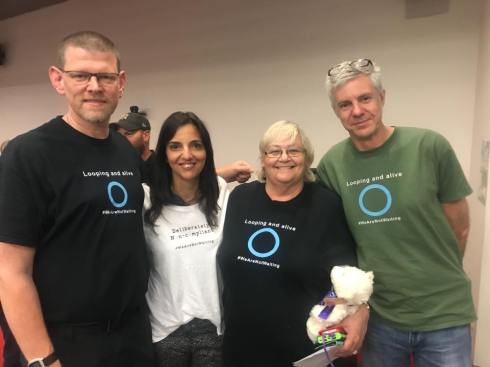
Looping, alive and deliberately non-compliant.
Click here for where to buy one of these David Burren designed t-shirts.
I really tried to switch off from the external diabetes world during my recent holiday. (I would have liked to have switched off from my own diabetes too, but apparently this diabetes gig doesn’t work that way.)
But now, I’m back and playing catch up on all the things I book-marked and planned to read later. Join me!
PLAID
Do you read PLAID Journal? It’s a truly terrific open access peer-reviewed research journal full of interesting articles and research news.
The latest edition is out now, and it includes a little piece I wrote about day to day diabetes.
PROPORTIONAL
My friend Hope Warsaw alerted me to this graph which was tweeted during the recent MedX conference. I like-y very much!

WORDS AND MUSIC
Gee I have some talented friends! Melissa Lee, (there are truly not enough adjectives to describe her aweseomess), has been recording D-Parodies for a number of years now. In recent efforts to raise money for Bigfoot Biomedical’s recent JDRF walk team, she enticed people to donate with promises of new tunes. And boy did she deliver. You can see all of her parodies via her YouTube channel.
But start here for a gorgeous diabetes-themed rendition of Fleetwood Mac’s Landslide – obviously renamed ‘Lancet…’
COVERAGE ON ANIMAS
There has been A LOT written about the recent Animas announcement that they will be ceasing business in the USA and Canada.
If you’re looking to catch up, here are some things I’ve found to be particularly useful:
This comprehensive update from Diabetes Mine.
This great piece from Georgie Peters reminding us how personal these devices are to those of us wearing them.
This piece from Diabetes Wookiee, David Burren, urging Roche to step up with their pump which is still available in Australia despite no longer being in the US market.)
And just a reminder of the situation in Australia: Animas is not going anywhere yet, with disruptor AMSL’s update that it’s ‘business as usual’. Unlike our US and Canadian friends who need to make a decision quickly about changing pumps, there is no suggestions that we need to do the same. Animas is still in the Australian pump market – along with Medtronic’s offerings, the Roche Accucheck Spirit Combo pump and (from 1 November) Cellnovo.
HAVE ANOTHER COFFEE
Presented at EASD – the results of a ten-year study that showed people who drink coffee regularly are less likely to die of diabetes. Another latte, please.
How’s this? A free 5-day diabetes summit that anyone can attend. The online Diabetes Empowerment Summit is the brainchild of Danielle Hargenrader.
Read all about it and get your ticket here.
YOGA FOR DIABETES
More from talented friends! Rachel Zinman is currently on a book tour in the US promoting her new book – Yoga for Diabetes: How to manage your health with Yoga and Ayurveda.
THROW OUT THE FAX!
I was delighted when Scott Johnson included this slide in his presentation about MySugr at the recent Roche Blogger MeetUp at EASD:
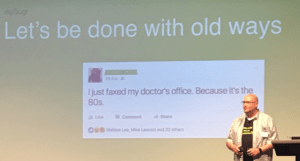
Clearly I’m not alone in my frustration at the insistence of some HCPs to continue to champion (and only use) fax machines!
PEER SUPPORT SESSION WRAP UP
I wrote about the peer support session at ADS-ADEA, and my talk in the symposium. Here’s the wrap up from the ACBRD – the organisers of the symposium.
ALSO FROM THE ACBRD…
If you live in Australia or the UK, please take part in the yourSAY quality of life study. Have your say about the impact living with diabetes has on your life.
Click here to take the survey.
BINGO!
I couldn’t help but laugh when Melinda Seed developed this neat little bingo chart to be used at diabetes conferences. She tweeted it out at the beginning of EASD, just as I was lamenting that questionable language being used by presenters at the conference.
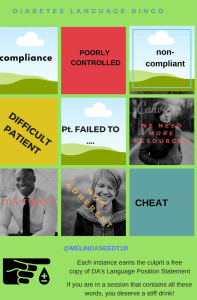
Unfortunately, I couldn’t play during talks. I would have spent far too much time shouting Bingo at inappropriate moments. Come on, people; do better!
I flew into Lisbon, arriving at my hotel just after midnight on Monday. I get that Australia is a long way from everywhere, but the 38 hours’ transit was a record for me and as I tumbled into bed, I dreaded the alarm that would sound a mere 6 hours away.
However, I’ve done this enough times now to know a sure-fire way to overcome jet lag is to organise a relatively early morning meeting that involves coffee and local pastries. (Hello, Pastelaria Versailles and thank you for your beautiful baked goods.)
The main reason for this trip was to attend the Roche #DiabetesMeetup. (Disclosures? Yep-all at the end of this post….) This is the third one of these meetings I’ve attended (read about the first one at EASD2016 here and the next at ATTD2017 here) and, as always, it was great to see the familiar faces of dynamic diabetes advocates doing dynamic diabetes advocacy.
This year, there were a whole lot of new faces, with over 60 diabetes bloggers from across Europe having been invited to become part of the conversation. As well as attended the dedicated satellite ‘consumer’ events, the bloggers are all given press passes to attend all of EASD.
This is astounding. It means that it is impossible to walk around the conference centre without seeing other people with diabetes. Arms adorned with CGM or Libre are not startling – they’re everywhere. The beeps and vibrations of pumps can be heard in sessions, causing heads to bob up, and knowing glances to be shared. Our presence here is undeniable.
On the first official day of the EASD meeting, the third annual #DOCDAY event was held. While Bastian Hauck (the event organiser) starts by inviting bloggers to the event, he warmly and enthusiastically extends the invitation to HCPs and industry too.
On Tuesday, the room was full of people, discussion and enthusiasm
#DOCDAY has become a platform for anyone who attends to take the stage, and five minutes, to share what they’ve been up to in the diabetes advocacy and support space. I stepped down from my usual language soap box, proving that this pony does indeed have more than one trick.
Instead, I spoke about the role of people with diabetes at diabetes conferences. I couldn’t think of a more appropriate time, or a more suitable room to plead my case, even though I knew that I was preaching to a very converted choir!
Two weeks ago, in Perth, there were a few of us wandering the #ADSADEA conference as part of the Diabetes Australia People’s Voice team. And at one point, on Twitter, where our presence is felt more than anywhere else, an interesting, frustrating and downright offensive (if I’m being honest) discussion started.
It was said that diabetes conferences are the safe place of diabetes healthcare professionals and that perhaps a day at the start of the conference could be dedicated to people with diabetes, but the delegate program (delegates being only HCPs) start the next day.
As you can imagine, that didn’t go down too well with some of the diabetes advocates in attendance.
I am actually unable to provide you with the arguments offered as to why people with diabetes should be excluded, but I think it included reasons such as HCPs need a space to be among peers, these are scientific conferences, HCPs need lectures without people with diabetes (not sure why – are we really that terrifying?).
I’m not into preventing people with diabetes attending diabetes conferences. Melinda Seed’s vision of 1000 people with diabetes at the conference is far more aligned with mine. We are not asking that the conference we ‘dumbed down’. I don’t want the sessions to be any different than they are now (with the exception of having PWD as part of the speaker list – but that is regardless of who is in the audience).
Here’s the thing. Organising a team of three consumers to attend (as happened in Australia) required someone to provide funding and coordination. That was Diabetes Australia and I’m really proud that the organisation I work for created this initiative.
To have over sixty advocates supported takes a commitment. I won’t for one moment suggest that I am naïve enough to believe that we are part of industry’s marketing strategy. But we absolutely should be part of that strategy. I am more than happy to give Roche the shout out and kudos they absolutely deserve for bringing us all together. I don’t use any of their products at the moment (although, in the past have used their meters), so I’m not in any way spruiking their devices or suggesting you go and update your meter with one of theirs.
But I am grateful that as part of their engagement with people with diabetes involves bringing us together at a diabetes conference.
What’s the role of people with diabetes at diabetes conferences? Our role is to share from inside with those not here. We’re here to remind attendees that using language that diminishes us and our experiences and efforts in living with diabetes is not okay. We’re here to tell industry they’ve messed up when they design is not spot on, or their marketing misses the mark. We’re here to challenge the idea that we should be quiet, ‘compliant’ and do what we are told.
As I said at #DOCDAY, we have a responsibility to share what we learn. I acknowledge – every single minute of every single conference day – that I am privileged to be here. And that comes with responsibility to share what I see, hear and learn.

DISCLOSURES
My flights and accommodation costs to attend EASD2017 have been covered by Roche Diabetes Care (Global). Yesterday I attended the Roche #DiabetesMeetup (more on that to come). Roche also provided me with press registration to attend ATTD. My agreement to attend their blogger day did not include any commitment from me, or expectation from them, to write about the day or their products.
Last week, I was invited to speak as the consumer in a peer support symposium at ADS ADEA. My talk was called ‘People like me’ because more and more, I’ve come to understand that the real value for me in peer support is the combination of the masses with diabetes – as accessed through the DOC – as well as those who form a part of my ‘inner circle’, or tribe.
So, obviously, my first slide was this one:

And then, I introduced the audience to my tribe from last week:
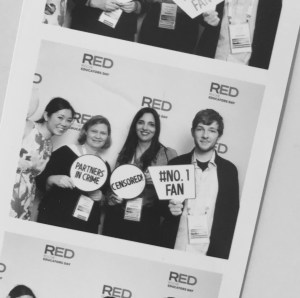
People like me! The #DAPeoplesVoice Team (L-R) Ashley, Melinda, Renza, Frank
The peer support symposium was coordinated by the ACBRD. Last year, they produced this report for the NDSS. They brought together four speakers, each speaking about different considerations of peer support.
After I gave my personal perspective on the peer support that works best for me, Professor David Simmons from Western Sydney University spoke about the evidence. The idea (as outlined in the symposium abstract) was to ‘…identify ways in which they are in synergy and/or tension with one another’.
David began by speaking about the Peers for Progress model, highlighting its four core functions of peer support:
- Assistance in daily management
- Social and emotional support
- Linkages to clinical care and community resources
- Ongoing support, extended over time.
I can only speak for myself and my own experiences, but the peer support I have carved out for myself meets all these points. While points 2 and 4 are probably the most relevant to me, I certainly have used my peers to assist with the day-to-day grind of living with diabetes and have also found connections with clinical support through my peers.
My experience is certainly not structured or formal in any way, however, for me, it works and it works superbly. Which was another point that I made – we need to find the right sort of peer support and that may be different for different people.
Some PWD may prefer to have something that is very organised. I prefer a more ad hoc, dip-in-and-out-as-I-need-it approach, and focus my energies on what I require at specific times. I also love the online community and the support it offers because it meets many of the things I’m looking for: flexibility (there’s not a meeting on the first Monday of each month to attend and if I can’t make that, I miss out); broad reach and a variety of people (which means that I will always find someone to provide support, no matter what the issue; diversity of experiences so my own understanding of what is going on with others is constantly growing, evolving and, often, challenged; all over the world allowing me to connect with people whatever the day of day – or wherever I happen to be (speaking of which…anyone in Lisbon next week?).
Another discussion point during the symposium was to do with the need for evidence to strengthen the case for peer support, which will ensure adequate funding to run programs. I find this a slightly double edged debate, really. I understand that with limited funding, those holding the purse need to know that money is going to go to programs that are known to work. But equally, I know peer support works. People with diabetes know peer support works. Melinda Seed, clearly frustrated (as am I) at the constant need to defend the value and importance of peer support, posed an interesting question, here:
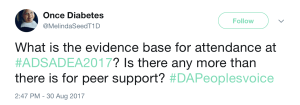
Now, I don’t doubt for one moment that HCPs get a lot of benefit from attending diabetes conferences. Of course they do – they hear from leading experts, learn about the latest research finding, network with colleagues, speak with industry about new diabetes technologies and treatments. The leave feeling inspired, have improved knowledge, feel supported by others doing what they are doing, and have new tips and tricks up their sleeves top improve their practice. They know that. We all do. And yet where is the evidence to support it?
(For the record, someone did point out on Twitter to Melinda that the difference is that conferences are privately funded and therefore do not stand up to the same scrutiny that programs seeking public funding do. Melinda responded (quite correctly) that this argument doesn’t really hold water as many attendees there attend on the ‘government dime’. It is an interesting discussion….)
I think one of the problems we might have is that we narrow the definition of peer support sometimes, and perhaps some people think that it’s too fluffy and feel-good, and just about sitting around someone’s kitchen table and chatting. But as I said in my talk, there is much more than mere ‘tea and sympathy’, (although, I’m reticent to dismiss the power of such interactions because I know that sometimes those moments do produce a lot of support from people who are otherwise feeling very isolated and alone.)
I am speaking at the World Diabetes Congress at the end of this year and will be challenging the notion that peer support is all about group meetings. It is more than the traditional ‘support group’ model. One example I gave was the Pumpless in Vienna story (yeah – I’ll tell that whenever I can!). It was through peer connections that my friend Jo found a pump. It can also be seen and found in other ways – camps, information sessions, structured education programs. Peer support can be found in a lot of places, even if that’s not the term we give to it.
CEO of Diabetes Australia, Greg Johnson, and me talking peer support after last week’s symposium.
Disclosures
Roche Diabetes Australia has covered my travel and two night’s accommodation for my stay in Perth as I am a presenter at the Roche Educators Day (RED). There is no expectation from Roche that I will write anything about the RED, but I expect I will because it’s always such an interesting and enjoyable day!
The remainder of my time in Perth is part of my role at Diabetes Australia.
There’s lots happening, but I can’t look away from my Loop app at the moment because I’m so damn excited and obsessed! (I’ll be writing something about it sometime this week.)
But if I wasn’t doing that, I’d be (re)reading these things…
Why it costs so much to see a specialist
I’ve always paid to see my endos privately. In fact, I generally ‘go private’ for all my healthcare needs – I can’t remember the last time I was bulk-billed for a medical consultation.
It does cost a lot, and I am grateful I can afford it, but the excessive costs often discourage people from seeking the right care they need. Of course, we do have excellent public health in Australia. My choice for seeing HCPs privately include wanting continuity of care, and not being subject to frequently very long waiting periods.
This piece in The Conversation looks at why specialist care is so expensive. And what can be done to reduce costs.
Lookiee! A diabetes Wookiee!
For those who participate in OzDOC (and other DOC activities) you may have come across David Burren. I met David last week to talk all things tech (actually, I just fired questions at him about Loop and he patiently answered them without rolling his eyes even once). He’s started a diabetes blog all about diabetes and technology and, thankfully, it is in language that even I can understand.
Check out David’s Bionic Wookiee blog here.
Statues are like tumo(u)rs.
With all the nonsense going on in America at the moment, this piece from McSweeney’s most adequately explains why the ridiculous idea that statues commemorating less than favourable moments in history need to remain. Here’s my favourite part:
I view this tumor as an important symbol of your body’s history and heritage. Removing the tumor would be yet another example of misguided medical correctness in today’s liberal America. I protest this surgery and refuse to whitewash your rich medical history. The tumor must be kept prominently displayed inside your body.
Do better, America. We all know you can.
More on what’s on the inside
Mel Seed’s blog about normalising mental healthcare in diabetes follows on from DX2Melbourne and is well worth a read. Read it here.
Diabetes is just…
This…
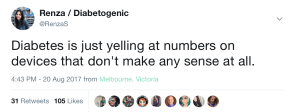
Faster insulin coming to Aus
A couple of weeks ago, I shared on my socials the exciting news that ultra-fast insulin, FIASP, had received TGA registration. No actual ‘launch’ date info as yet, although next week is the ADS ADEA Annual Scientific Meeting, so we may hear more then.
And in news that we already know…
Apparently, CGM is not just for abdomens anymore… File under ‘No Shit Sherlock’.
Swear-y
My blog emails keep getting blocked by the profanity filter at my husband’s work. Every now and then, he forwards me the message he’s received which states that the email was not delivered due to ‘offensive language’. #SwearyWife
This Twitter account definitely wouldn’t make it through, but it’s one of the best things I’ve seen on the interwebs for a while. I’d like to print THIS up poster size and put it on the wall of my office/wear it on a t-shirt, but perhaps that’s not appropriate.
D-parents and sharing the scary parts of their child’s diabetes online
I’ve linked to Moira McCarthy’s writing before because I think that she gets it right every single time she writes about the role of parents in their child’s diabetes.
This piece asks parents to consider if sharing their child’s scary and dramatic diabetes stories online is doing more harm than good. (I rather clumsily explored a similar issue last year in this post.)
Read her piece at ASweetLife here.
4Ts on Diabetes Mine…
Last month, during National Diabetes Week, in an endeavour to get our 4Ts message out as widely as possible, the good folks at Diabetes Mine allowed me to write a little about our campaign. You can read that here.
Living and loving someone with diabetes
As much as I think I am the most delightful and easy-to-live-with person in all the world, I have to admit that diabetes can and does impact on all relationships… and makes me perhaps not the most delightful and easy-to-live-with person. Aaron and I chalked up 23 years together yesterday. Diabetes has been part of the equation for over 19 of those years.
Diabetes advocates Nicole Johnson and Lorraine Stiehl have written a new book which has been called a practical guide to loving a person with diabetes. I’ve ordered a copy and will be leaving relevant pages open for my loved ones to read.
You can get a copy of What To Do When Your Partner Has Diabetes: A Survival Guide from Amazon.
Meme-y and true
There are a lot of diabetes memes out there, but sometimes I see one that just hits the mark so perfectly. Such as this from a TuDiabetes community member:





 Diabetogenic