
You are currently browsing the category archive for the ‘Health’ category.
So, today I had a moment and completely lost it. Tears – big, fat tears – sobbing and ugly, snotty crying. I didn’t even try to hide it, which is what I would usually do. There’s no hiding anymore now that we are all living in confined spaces and pretty much on top of each other all the time. (Sorry to the neighbours if they heard too. Inner-city living means not much space between house boundaries…)
I felt a lot better afterwards. Lighter and less overwhelmed. I realised that being all peppy and positive was weighing me down – perhaps that annoying Pollyanna-ish exterior was becoming like an armour.
I really try to not do the whole ‘what if’ stuff. This was something that I worked on for a long time with my psychologist. Catastrophising diabetes isn’t a great idea at the best of times. Adding a pandemic to the ruinous thinking isn’t especially fun.
It’s not surprising that people with diabetes are talking more about how our mental health is faring in the current situation. Living with a life-long condition that is so demanding and has the ability to mess with our minds in the most insidious way already makes us susceptible to feeling distressed. Now, it feels like that has been turned up to eleven.
I’m trying to remember how I learnt to move from thinking ‘what if <insert whichever scenario was terrifying me at that moment>’ to ‘what if it never happens’. It took me a long time to understand how to do that, with varying levels of success. There were always scenarios that made me feel extra level anxious, and it was a struggle to try to be rational. I found that by allowing myself to think about the most worrying, scary and uncertain things for a set amount of time – giving permission, I guess, to the worry and concern – I could then move on.
It turns out that pandemics bring out the catastrophising. The end-of-days thinking is not especially good for one’s already stressed mental health. Thinking about the things that are happening or that could happen is hard. Hard and scary and terrifying.
This week, I’ve kept coming back to how the Diabetes MILES study showed that the number one problem area for people who participated in the study was worrying about the future and development of diabetes-related complications. There is so much fear of the unknown in diabetes. We just don’t know how it will all play out. We do what we can, we assess and try to minimise risk, we do the best we can with the situation we are in. But we don’t really know what is around the corner.
COVID-19 is that all over again. But with diabetes thrown in for good measure.
Today, I gave permission for the worry and concern to come out because pushing it away wasn’t working. It flooded over me and weighed me down. And then I allowed the tears and the sobs. I didn’t try to stop it, I didn’t try to hide it away. And then…then I could breathe again, and work on the things that help me feel lighter.
So, I’m breathing so deeply. I’m standing in the sunshine. I’m watching our littlest dog run around in circles because she (still) hasn’t realised that she’s not a new puppy anymore. I’m listening to my husband play music. I’m listening to my kid’s laughter because it’s my favourite sound.
And I’m still muttering to myself that this too shall pass. Not yet, and maybe not for some time, but it will. This. Too. Shall. Pass.
Who wants to get out of a warm hotel bed and wander through the freezing streets of Busan to the BEXCO conference centre on the last day of an exhausting conference to be ready for an 8.30am session on diabetes and sexual health?
As it turns out, a lot of people do (including a few people who may have been doing karaoke until just a few hours earlier).
The symposium was in three parts. I started by talking about the female perspective of diabetes, sex and sexual health, followed by Grumps (Chris Aldred) giving the male perspective. Brilliant physician and academic, Fauzia Moyeen, closed out the session by highlighting current research in this area of diabetes.

Introducing Fauzia Moyeen to the stage.
My session at the IDF Congress focused on the recurring themes I hear from women living with diabetes. These themes were evident in responses to the blog post I wrote a couple of weeks ago asking women to share their experiences, and reinforced the messages I’d received after previous posts I’d published about diabetes, women and sex.
As much as I had wanted to present a variety of different experiences, the messages I heard from women was not especially diverse! Women from countries considered more liberal and open to discussions about sex said exactly the same things as out sisters from countries where you would expect limited information about sex and sexual health.
Over and over and over again, women echoed that they had never spoken about this issue with a healthcare professional, and if they had raised it, they were told diabetes does not impact on sex.
Some of the quotes were absolutely heartbreaking. Women shared stories of how their relationships ended because sex had become so painful and uncomfortable after their diabetes diagnosis and they had not been able to get help. One woman was told ‘…get used to it because that’s how it is’, another was told the pain was not real.
The emotional impact of feeling that yet another part of our bodies is letting us down and not doing what it is meant to is never considered or discussed. We are left to flail around with these intense feelings and concerns. It’s not even a matter of being able to get help – we don’t have anyone signal to us that this could be an issue.
Then there is the mess of adding hypos, or fear of hypos into sexual activity, or trying to be intimate when we’re hyper and our bodies feel leaden and achy. There is so little that is sexy about diabetes, and that may be especially true when we are trying to be our sexiest!
And then there is the whole contemplation of how to introduce a new partner to devices stuck on bodies and scars on skin, and the worry about how that will make them see us.
Discussion after my talk was lively, with HCPs asking some great questions. One wanted to know how to bring up the topic, which is really important. Many people are not comfortable talking about sex and sexual health. Not everyone is happy to share when they are experiencing problems. Cultural considerations come into play here as well. Having a HCP of a different gender speaking about sex makes some people very uncomfortable. One HCP said that when he has raised the topic, he’s been told that it’s none of his business.
I had some suggestions about normalising discussions about sex, while remain sensitive to people with diabetes, allowing them to dictate if this is a topic for discussion.
I believe it is essential that the person with diabetes is the one who decides whether or not sex and sexual health are to be topics of discussion. Now that doesn’t mean HCPs don’t get to ask at all, leaving all responsibility to the PWD. They can provide prompts. Perhaps have some brochures in the waiting room that can be accessed by women. (Yes! There are such things and you can see them here.)
Also, list sexual health and sex as something that may be affected by diabetes in general diabetes discussions. Think about it as a complication of diabetes and address it as you would any other complication. Just mentioning it plants a seed for the PWD to understand that this may be something that needs attention.
I borrowed a suggestion I heard Sarah Le Brocq during her language and obesity talk at the DEEP Summit earlier this year. Sarah shared how one GP practise has a little form for people to fill in before they go to see the doctor. There are a list of different issues and the person can tick the topics they are comfortable having discussed in the appointment. (This, she said, is a brilliant idea for people living with obesity, because often that is the first and only thing the doctor wants to speak about, even if the reason for the appointment is a sore finger or something irrelevant to the person’s weight).
Translated for diabetes, develop a checklist with potential topics, with sex as one of them. If the box had been ticked, that would signpost to the HCP that this was a topic that the person with diabetes wanted to discuss.
Another question came from a doctor who asked how to make discussions about sex a priority when he needs to focus on diabetes-related complications. ‘If a person is dead from a heart attack, sex won’t matter,’he said.
The response from people with diabetes was the same. Consultations need to focus on the issues that matter to people with diabetes, not tick the box exercises so HCPs feel that they are getting in all the things theywant to speak about.
Yesterday, I wrote this in my post:
‘… sometimes the chasm between what people living with diabetes want and need and what HCPs and researchers think we want is gulf-like.’
I felt that keenly after my talk. Women had told me that relationships had ended because of how diabetes had impacted on their sex lives. Others said that the discomfort they felt having sex meant that they just didn’t want to, and it had become a constant source of tension between them and their partner. Other women felt that they were failing themselves and their current or potential partners. One woman said that she refused to have sex because she didn’t want anyone to see how diabetes had marked her body.
To me, these sound like issues that need to be addressed, as much as, if not more so, than trying to adjust basal rates. They are just as important as making sure someone is doing their foot checks. They are far more important than knowing a current A1c. Dismissing the importance of sex in a woman with diabetes’ life as less critical than other aspects of her diabetes care clearly is doing us no favours.
The feedback following the session was really positive and I hope that we start to see similar sessions on programs at other diabetes events. Let’s get the dialogue happening so that women can feel comfortable talking about diabetes and sex. And get the help we may need.

DISCLOSURE
I was the Chair of the Living with Diabetes Stream at the IDF Congress in Busan. My flights to Busan were covered by Ascensia Global (in order for me to get to Busan in time to co-facilitate their Social Media Summit). Flights home and accommodation were covered by the IDF.
Firstly, let me start this piece by saying #NotAllHealthProfessionals. There: I got it out there upfront because I know that what follows is likely to garner response from a shedload of healthcare professionals that they would never do the sort of crap I am about to write about.
Sure – I know that there are lots of great ones out there. I get that there are champions for our cause; HCPs who genuinely walk alongside us and truly listen to what we say and what we need.
But here’s the thing. It takes more than that; more than just doing the right thing in your own little world. It takes guts and leadership to take a stand, and it takes standing up to colleagues who are not getting it right. And sadly, even the good ones don’t do that enough.
Last week, I shared a pathetic image from a Facebook page that is, allegedly, a satire site. It seems to be administered by HCPs and most of the comments appear to be from HCPs. (You can see it here if you are on FB. I don’t want to share the image on my blog.)
I shared the image with these words: ‘This isn’t funny. it’s not smart. It’s not clever. Even less funny is that it appears this is a page for and by healthcare professionals. The comments are disgraceful. HCPs are not our allies when they do this sort of shit. Instead, they’re contributing to the distress and shame that many PWD feel.’
The thing that upset me most wasn’t the pitiful attempt at humour. Let’s be honest – there was nothing in there we had not seen before. A million times over. This sort of ‘humour’ is in the DNA of every stigmatising diabetes ‘joke’.
What upset me were the comments that followed. At last count, there were about 1,000 of them, most of them applauding the image. Here’s just a selection from the first few:
‘Brilliant – but no one ever heeds this advice.’ (From a nurse who claims 30 years of nursing experience.)
‘This is how I label things.’ (Pharmacist.)
‘Should be on every diabetes med.’ (Exercise physiologist.)
‘The things you wish you could say to patients without losing your job.’ (Nurse.)
‘Love that!’ (Med student.)
‘Hahahah!’ (Podiatrist.)
‘Legit needs to be on boxes.’ (Nurse.)
‘Sorry…I can’t read that small print on account of my sugary eyes.’ (Doctor.)
‘Hahahah. Great quality labelling.’ (Pharmacy student.)
‘Accurate.’ (Physiotherapist.)
‘I love this so much.’ (Doctor.)
‘Damn, should’ve mentioned patient’s McDonalds intake as consideration for Contrave (a weight loss drug).’ (Doctor.)
‘If only we could write that!’ (Nurse.)
‘Control your diabetes or you’ll lose your feeties.’ (Doctor.)
There were more… a lot more. Predictably, the very few of us who questioned just how this was meant to be amusing were told that we needed to lighten up/see the funny side in it/understand it was satire. Or people doubled down to tell us that we were wrong and then went on to school us with further myths about diabetes. Seriously, these people need to get just a touch of originality and try to come up with a stigmatising meme we’ve not seen several million times already, and then come back at us with inventive comments.
I am willing to bet that pretty much every single one of those HCPs will claim to be all about ‘patient-centred care’. I am sure that they believe that they are truly there for what their ‘patients’ need. If pressed, they would probably say that they would never, ever say something like this in front of a patient – because they care about us so much.
That’s bullshit.
A healthcare professional who is truly there to champion PWD would have called that meme out for every shade of stigma that it is. They would not have shared it amongst their colleagues or wanted to print it out for the tea room (as a couple of people said they had done). They wouldn’t have found it funny; they would have found it offensive, stigmatising and downright wrong. And they would have said that, trying to put a stop to hundreds and hundreds of comments.
And those HCPs who realised that it was a load of bullshit and said nothing? They need to look at themselves too. The standard you walk past is the standard you accept. When you say nothing, you’re implicitly saying that it is okay.
It is not okay.
Who remembers the outrage from HCPs last year when #DoctorsAreDickheads was trending on Twitter? (Here you go: I wrote about it here.) Doctors were outraged, offended and irrate, and urged patients to counter the horror stories that people were sharing with positive stories of their own doctor experiences. And what happened? People – patients – did that. Even I defended my HCP team when I wrote my blog post. And I even prefaced this post with a disclaimer, because I know that some HCPs will read this and be all indignant. If that is your response to this… respectfully, get over yourself!
Because, where are those HCPs now? Where are the doctors getting angry and outraged every.single.time we have to endure another stigmatising, cruel, demoralising and downright wrong ‘joke’ or comment? Where are the HCPs standing up at conferences when a presenter makes some comment about how PWD ‘fake’ our BGL results or ‘forget our meters’ for download or whatever other behaviour gets us a non-compliant mark against our name?
So, here is what I want to say to HCPs – every single one of you.
Please, please be an ally. Stand up for us. Listen to us. Don’t talk over us. Don’t tell us that our experience is wrong or doesn’t matter. Don’t walk by when your colleagues do this sort of crap. Don’t minimise or delegitimise us by saying that it’s ‘just a joke’ or promising us that you wouldn’t do this. Because enough of your colleagues do. (Also, don’t @ me and tell me how much better you are because you are a leader and don’t do this kind of shit or do call it out. That’s great. And thank you. This isn’t about you. But you still can do something.)
We need you to do this for us. Or rather, along with us. Because when we do it alone (and most of the time, it is us doing it alone), we are dismissed as being too emotional or not being able to understand the humour. As much as I wish it was enough for our comments to resonate, it isn’t. So, we need allies. We need you.
It takes courage and leadership. But if you truly, truly want to be there for us for what we need, then you need to step up. Please be an ally. Please.

P.S. There were a couple of HCPs who commented on the FB page that obviously, this meme was about type 2 diabetes and not type 1 diabetes. If you are one of those HCPs who insists on doing things like that, ask yourself just how much you are contributing to the misinformation and stigma about type 2 diabetes. We know that T1D is autoimmune/not preventable, but when you use a broad brush to correct comments about diabetes with ‘You mean T2D‘ you are not really helping. In fact, you’re just adding to the misinformation by suggesting that all T2D is preventable and that is not true. You know that. Do better.
Catching the end of Women’s Health Week, revisiting this post from last year about all things girls, women and diabetes. Today, on the final day of the campaign, Jean Hailes for Women’s Health is suggesting that we take some time to think about our mental health. That sounds like a good idea anytime, but I’m really pleased to see that the organisation is highlighting this important, under-researched and misunderstood health issue. Check it out at their Women’s Health Week website.
I’ve really appreciate today’s messages – they couldn’t have come at a more opportune moment! But that’s not to say that the rest of the week wasn’t just as terrific. Have a look at each day’s theme – there is lots of important information to read through.
And have a read (or re-read) through this post which was all about a lot of the things we don’t talk about enough. When I published it last year, a number of women reached out and said they used this as a conversation starter with loved ones and HCPs. That might just work for you too…
It’s Women’s Health Week here in Australia and once again, Jean Hailes for Women’s Health has been doing a stellar job of talking about women’s health issues that are rarely (if ever) spoken about in the public sphere. As usual, this year’s campaign is presented in a clear, no-nonsense way. Just as it should be.
Shining a light on women’s health issues is critical for a number of reasons. There is still too much stigma associated with women’s sexual and reproductive health, so finding a way to easily speak about the realities of women’s health just makes sense.
Not all women’s health issues necessarily seem relevant to diabetes. But, as ever, diabetes has a way of complicating things, so it makes sense that they are on the list of things covered when speaking with our HCPs.
I honestly can’t remember the last time my GP spoke with me about any sexual or reproductive health issues. Some women see gynaecologists regularly (I see mine every couple of years for a pap smear), but that may not be the case for most women. Surely conversations about contraception, periods and other things should be part of a regular check-up alongside other ‘tick the box’ issues such as blood pressure, cholesterol and weight.
I wish that I had seen an endo from the beginning who had spoken to me about women’s health stuff. I know that it wasn’t until I found the endo I see now – one who I sought out specifically for her expertise in women’s health and pregnancy – that issues such as contraception were even mentioned.
So, here is a (non-exhaustive) list of things that women with diabetes may want to consider chatting to their HCP about – and that HCPs may want to consider speaking with PWD about. (There are links at the end of the post for where to go for further information.)
Periods. To be honest until I was trying to get pregnant, I really didn’t think much about my period. I thought of my lack of regular periods (as in, I would get my period sporadically maybe four or five times a year) as a blessing, rather than something to be concerned about. Of course, once I was trying to get pregnant, I was desperate for a monthly period that I could set a clock to.
No HCP had ever spoken to me about how diabetes would impact on my period – or, probably more importantly, vice versa. I had no idea about how different times in my cycle might affect my glucose levels. In fact, I think it wasn’t until I started wearing CGM and could really see what was going on that I learnt how to manage my insulin doses at different times throughout the month. (And it also explained the two days each cycle I was so freaking low I pretty much took no insulin. Apparently that’s how MY body deals with ovulation..)
If I was diagnosed today, I would be asking a lot of questions about diabetes and menstrual cycles and the best way to adjust my management methods depending where I am in my cycle.
Sex. When I’ve written about diabetes, women and sex before, I’ve noted how at diagnosis no one spoke with me about how diabetes could impact on my sex life. It wasn’t until I started speaking to other women about it that I realised that this is an issue for a number of us.
We need to start talking about women with diabetes and sex in a non-threatening way that normalises the discussion.
UPDATE for this revisited post: Check out this brilliant resource that came out of the research led by UK health psychologist, Professor Kath Barnard. This is one of those projects that I was just so damn pleased to be involved in!
Contraception. No one mentioned contraception to me when I was diagnosed. I was twenty four, engaged to be married. Surely both the endo and CDE I saw the day I was diagnosed realised that I was having sex, or considering it after I was married. (I really, really hope that they didn’t think that they didn’t need to speak about it with me because we weren’t married yet…because it was only 20 years ago and there’s no place for puritan attitudes in healthcare. Plus, that ship had sailed. A long time before.)
At the time, I was on the pill, but there was no discussion about the best form of contraception for me relating to diabetes, (was there a better pill to be on?), and I didn’t know to ask. Surely, all women of child-bearing age should be asked regularly about contraception, especially as women with diabetes are so often told about the importance of avoiding unplanned pregnancies.
Pregnancy. Thankfully, these days finding information about diabetes and pregnancy is relatively simple. If you know where to look.
But twenty years ago, when I was diagnosed, the only thing I was told about diabetes and pregnancy (and I think it was only because I asked) was ‘You need to have all your kids by the time you’re thirty’. (Not sure if just scraping in three days before I turned 31 counts there. Probably not. Looks like this deliberately non-compliant palaver has been happening for a while….)
Talking pregnancy and diabetes needs to be done delicately, but it needs to happen. And, ideally, it needs to happen long before pregnancy is even being considered.
Back in 2003 when I was at Diabetes Vic, I coordinated the first diabetes and pregnancy info evening. Over 100 people were squashed into an overheated room in the basement of the old Royal Women’s Hospital. At the end of the night, I was walking around speaking with as many of the people who had come along as possible to see if they had found the evening useful. I walked up to one woman and thanked her for coming. ‘I hope that you found tonight helpful,’ I said to her. She nodded at me, and I noticed she was holding onto a copy of the ‘Can I Have a Healthy Baby?’ booklet that Diabetes Victoria had published with Realty Check and ADIPS the previous year. ‘My daughter has T1D,’ she said to me. ‘She’s only 8, so obviously this isn’t something that is relevant now. But I wanted to know so that when she asks questions I can answer them. I feel really reassured that she can have a baby if she wants one if it’s planned.’ I remember reaching out to her and hugging her (I have no boundaries). ‘Your daughter is so lucky to have you in her corner,’ I said to her. ‘Thank you for coming!’
Fertility. This isn’t the same as pregnancy. It’s not an easy subject – ever – but it is one that needs to be discussed openly and safely. I can honestly say that no healthcare professional has ever discussed fertility with me unless I have raised the issue.
My experiences around fertility have been complex, emotional and quite painful. It took me a while to get pregnant the first time. My irregular periods needed to be addressed (fortunately, that was easy enough with only Chlomid needed), but even once I was having monthly cycles, and apparently ovulating regularly, I could not get pregnant.
When finally did, I miscarried. Miscarriages are common. I know that. But it still sent my spiralling into a really difficult period which took a lot of time and effort to emerge from. I got pregnant and had a baby, and thought that from there, fertility issues would be a thing of the past.
But I think that because miscarriages are so common that sometimes it can be forgotten just how traumatic they can be. My first miscarriage ended my first pregnancy, and the two other miscarriages I had ended those ones. It’s clear that while I seem to be able to get pregnant, keeping those babies growing, safe and alive is not something my body does well. I wanted that explained to me – or at least for someone to speak with me about it.
Diabetes and fertility was never, ever discussed with me, except that I was reassured after each of my miscarriages that I could not blame diabetes for losing the baby. That was a double edged sword because I wanted to know what it was that was stopping me from being able to continue my pregnancies. I would have liked to be able to point at something. Because the alternative is that it’s just another thing my body can’t do properly.
PCOS. I was diagnosed with polycystic ovarian syndrome when I was about 26. I’d been referred to an OB/GYN by my endo because she wanted me to have a gynaecological check-up because we’d started seriously talking babies. My lack of regular periods was flagged as something that needed investigating and an internal ultrasound showed a number of small of cysts all over my ovaries. I had no other symptoms of PCOS, but that was enough for my OB/GYN to speak with me about potential fertility issues once we were ready to start trying for a baby. I had a laparoscopy and they were removed.
Both type 1 and type 2 diabetes can increase the risk of PCOS (more so type 2 diabetes) so this is definitely something to discuss with your healthcare team if you are in any way concerned.
Body image. I don’t even know where to begin with this because body image is such a huge, huge concern for so many women, and I really do believe that diabetes amplifies those concerns. Whether it is the physical signs of diabetes (tech that we wear on our bodies), the psychological side of being diagnosed with a life-long health condition or the emotional toil of having an allegedly invisible condition that we can’t help but see every day, living with diabetes significantly affects how we feel about our bodies.
This is one of the reasons that having a psychologist as part of our HCP team is important, because we need people who are able to ask the right questions and offer support and solutions for dealing with how we see our bodies.
Eating disorders. Diabetes and food; food and diabetes. It’s impossible to separate the two, and for some people, the relationship is complex and very, very difficult. Women with diabetes do have an increased risk of developing an eating disorder, and of course, there are diabetes-specific eating disorders. And, unfortunately, this is another issue that is not spoken about openly.
Menopause. At my last appointment with my endocrinologist, I raised something that I’d not raised yet. ‘What can you tell me about diabetes and menopause?’I asked her.
I’m not going through menopause – I’m not even peri-menopausal yet. But I don’t need a magic mirror into the future to see what lies ahead. And I like to be prepared.
So, there’s something you should know about how I came to see the endo I have been seeing for the last almost-17 years. I was searching for someone who could help with what I really needed, one of them being an expertise in T1D and pregnancy. She was absolutely the right endo for me then. And continues to be now, because recently, she has become an expert in menopause. (I know! It’s like she is a few years ahead of me in her areas of interest and expertise!)
If I’m honest, I’m a little stressed and worried about what menopause has in store for me when it comes to my diabetes, mostly because I know nothing about it. We’ll see how that plays out…
Self-care. Why do women find it so hard to prioritise our own care and take care of our own wellbeing? We do need to get better at fastening our own oxygen masks before making sure that everyone else on the plane has theirs in place.
This might be another reason to consider seeing a psychologist to ask for some tips for how to make sure that we remember to look after ourselves in a way that is healthy, consistent and achievable.
Pelvic floor. Diabetes, as the gift that keeps on giving, can mean our pelvic floor isn’t as strong as it could be. Just as nerves in other parts of our bodies can be affected by our diabetes, so can the ones in our pelvic floor.
(You’re doing your pelvic floor exercises right now, right? Yep. Me too.)

Looking for more info? Have some links…
Here’s the Jean Hailes for Women website for Women’s Health Week.
The rather awesome Mindy from There’s More to the Story has been writing about diabetes and sex over the last couple of months and her posts are a must read. I wish I’d had something like this to read when I was first diagnosed.
Some information about diabetes and PCOS. This article is about type 1 diabetes and PCOS. And this one is about PCOS and types 1 and 2 diabetes.
The NDSS Diabetes and Pregnancy website is an absolute goldmine of information about pregnancy and planning for pregnancy. There are different sections for women with type 1 and type 2 diabetes, HCPs and loved ones of women with diabetes.
The NDSS Type 1 Diabetes and Eating Disorders booklet can be found here.
Lots of valuable information for PWD and HCPs at the Diabetes and Eating Disorders Awareness website.
My favourite answer to give when someone asks me how I went at any diabetes-related medical appointment is ‘Nothing to report.’ I love being able to say that things are boring. If there is ever a time in my life that I want to be unexceptional and routine, it is when I am hearing or sharing news about my diabetes.
For as long as I live with diabetes, I want to forever be told ‘It’s nothing,’ or ‘There’s nothing.’ I want there to be nothing there when my eyes are screened; nothing to report when I have my kidney function checked; nothing new, nothing scary, nothing to worry about.
The thing is: to get to nothing, we put in a lot of effort. We push ourselves and do things over and over and over and over. Because we’re told if we do all the things, all the time, nothing will happen.
But sometimes, despite all that effort, it’s not nothing; it’s something.
We have done everything possible – everything we possibly can – and we walk in and expect to hear another nothing. But instead, this time we’re told there’s something and we can’t help but wonder why we didn’t do more.
That’s just how diabetes works. There is no rhyme or reason. There is nothing fair about it. But we keep doing it – whatever we can manage at that particular moment.
And we ask and hope for nothing – absolutely nothing – in return. Except our health.
Which, as it turns out, is absolutely everything.

Hoping for nothing.
This post marks one thousand posts here on Diabetogenic*. That’s a lot of senseless rambling, ragey-moments, times celebrating and despairing about diabetes, and links to brilliant ideas and post… or to things that have either amused, frustrated, delighted or annoyed me.
A thousand posts in and diabetes is still a constant in my life (damn it). And I remain not good at diabetes…and I have many of those thousand posts to prove it.
There are clearly some recurring themes that I write about. I say that I am a one trick pony, but perhaps that’s not completely true. I seem to have a few tricks up my sleeve, really. And now I’m confused, because ponies don’t usually have sleeves and my metaphors are very, very mixed.
Here are the things that seem to have taken up a lot of writing time and words over these thousand posts…
 Most of the time, I am pretty positive about living with diabetes. Let me be clear: that doesn’t mean I love it, or even like it. But I feel that generally, I know where it belongs in my life and it seems to fit in that place as well and happily (begrudgingly) as it can.
I know that one of the reasons that I feel this way is people in the diabetes world I am lucky enough to call friends and peers. Online friends, in real life friends and those who cross both boundaries are a critical part of my living-well-with-diabetes strategy. Knowing that there are only a very few places around the world where I couldn’t find someone from this community to have a coffee/tea/prosecco/mojito with gives me an incredible sense of comfort. (And reassurance in case of diabetes emergency…)
I say that my peers with diabetes help me make sense of my own diabetes and that’s true. Knowing people who understand innately what it is like to share a body with diabetes means that I never feel alone. Diabetes is so isolating at times – even for those of us surrounded by great people who support and encourage us. As much as I need those people and am grateful for them, it is others living with diabetes that help me realise that I am never, ever alone in dealing with the ‘diabetes things’.
The diabetes online community is made up of lots of people and not all have diabetes. We each bring our own experience and perspective to it. I’ve learnt so much from those living arounddiabetes and how they incorporate it into life, because it comes with its own set of challenges and victories. That is why the community is so valuable – its diversity and range of experiences and perspectives.
I regularly talk about the value of community and diabetes peers and finding our tribe. It can take time to settle into just who and what that looks like, and it changes because there are always new people around. But it is so worth it. My tribe? I love them so hard.
 I am not the tattooing type but if I was, I think that I would have this phrase inked on my body somewhere (or maybe I’d be really pretentious, and have it written in Latin: Nihil de nobis sine nobis, according to Google translate.) It remains a frustration of mine that this isn’t the starting point for pretty much anything and everything to do with diabetes care. The fact that we still need to fight for a seat at the table – or a ticket to a diabetes conference – is, quite simply, not good enough. Having others speak for us, on our behalf thinking they know what we need, is offensive. It should never be the case that non-PWD voices speak for us or over us. Ever. Our stories are powerful, but they are ours and we should have the platform to tell them in our own way; in our own voice. Tokenism is rife and sometimes, that frustrates me even more than when we are completely excluded. The delusion of inclusion is, I think, worse. Whilst there may have been some strides made to true co-design and inclusion, we have not come far enough and until we get this write, I’ll have a lot of content fodder for this blog.
I like food. I write about it a lot. And I want to be Nigella. That’s really all I have to say about it right now…
Waffles in Brussels. Both were excellent.
 Apparently, stating the obvious is still necessary in diabetes. We are more than numbers; our A1c does not define us; our worth is not wrapped up in our glucose levels. We have been saying these things for years…decades…and yet there are still times that this is what we are reduced to.
New treatments, devices, drugs, education programs are measured in reduction of A1c. Perhaps this is because it can be measured, but talk about only getting part of the story. I can’t help but think that if PWD were part of establishing research protocols, there may be far more than numbers to assess the success of a treatment or therapy. (See also: nothing about us without us…)
 In recent years I’ve written about the issues specific to women, health, sex and diabetes a number of times because there is so little out there about it. And it seems it resonated with a number of women who wrote to tell me (and the HCP who saw me in the fresh produce section at my local Woolies and yelled how she loved my idea of giving lube in diabetes event bags).
Anyway…talking about the stuff that may not be the easiest is important. It’s the only way we get remove stigma and encourage people to share their stories. Which helps others. That’s why I have openly written and spoken about miscarriages and infertility. And eating disorders. (I know – not an exclusively women’s health issue.) There is nothing shameful or embarrassing about these topics. Other than we don’t speak about them enough.
Learning from and supporting others
 The Interweb Jumbles I write are my favourite (and cheat’s) way of pulling together all the things I’ve seen that have interested me and leaving them in future place for (my) future reference. Plus, I love sharing what others in the diabetes community and world are doing.
I have always benefited from the generosity of others in this community who have shared my work and I pay that back whenever and wherever I can. Supporting each other is critical.
There’s so much going on in the diabetes world all the time and I highlight the things that resonate because I think that if they mean something to me, they may mean something to someone else, too.
 From pseudo-science rubbish, to ridiculous made-up diabetes cures to anti-vax delusions. How much writing material have they provided!
I live in hope that one day – and may that day be soon – we won’t still have to read about these charlatans trying to convince us that all that ails us can be cured with fairy dust and positive thought, or that vaccines are evil and cause diabetes, or that ‘wellness warriors’ are the true experts and professionals when it comes to diabetes.
While a lot of what I write is spent mocking these fools, there is an underlying seriousness to it all. Who can forget little Aiden Fenton who died after his parents stopped giving him insulin, instead leaving him to be treated by a ‘slap therapist’?
Anyone who is sprouting any treatment that is not based in science when it comes to diabetes or perpetuating anti-vax rubbish is as barbaric as the man who was charged with Aiden’s death.
 Diabetes happens because of something not working properly with our pancreas. But it affects every single part of us – something that astoundingly still seems to surprise some people.
Considering our mental health and emotional wellbeing is critical when assessing just how diabetes impacts on our every day. For some, diabetes seeps into every single part of us and for others, we keep it at bay and manage around us. For most of us, there is an ebb and flow of just how that works.
And while we’re talking about the whole person, diabetes-related complications may be specific to a particular body part, but those body parts remain connected to the rest of us.
For so long, we get metaphorically chopped up with as only bits of us get attention and focus. But nothing in diabetes is ever in isolation. That’s just not how it works.
 The trick this (however-many-trick) pony is most known for is #LangaugeMatters and you know what, I’m happy to wear that. I really am. If I was to stop this blog today (thought about it…1,000 has a nice rounding off feel to it), and never spoke about diabetes ever again (oh, if only), I would not be disappointed if this was what people thought of when they thought of me and this blog.
Language matters. It does and I refuse to, for a moment, believe that it doesn’t. I am certainly not the only person playing in this space and I am so grateful to have a tribe of language matters peers and colleagues can rise above the small details to understand just why this issue does really matter.
___________
Thanks to everyone who has read one or more of these thousand posts. Thanks especially to the people who keep coming back. I can’t promise that there are going to be a thousand more posts. And I can’t promise that I will learn any new tricks other than the ones that I seem to have on repeat at times. These issues remain important to me and perhaps to you too.
* At EASD, my mate Bastian Hauck gave me a head’s up that I was getting close to publishing the 1,000 post on this blog. I’d not have had a clue otherwise. Thanks, Bastian!
It’s that time of year in Australia. The weather is cooling down, leaves are turning, daylight saving ends over the weekend, and we are reminded that soon it will be time for our annual flu-vax.
This has coincided with a significant number of different pieces in the media about vaccines. Some of them are well written and well informed pieces focusing on the science behind why vaccines work. Some of them are not. (Cheat sheet: science-based pro-vaxx stories good / crazy no-science anti-vax stories bad.)
There often seems to be a groundswell after some celebrity chef, wellness blogger, person famous for being famous or, (as we’ve seen recently) WAG comes out and explains why vaccines are the devil and we should all rely on ionised water, sunshine and pixies rather than evidence and science.
So, today, I thought I’d share some of the things I’ve seen recently which support the vaccination message.
No platform for anti-vaxxers
I’m going to start with this. Meet Zubin Damania, MD – or as he’s known on YouTube, ZDoggMD. I know – I cringed, too. But he speaks sense and the first time I watched this video, I was nodding in agreement. ZDogg (cringe again) has decided that he is not going to in any way entertain any discussions with anti-vaxxers anymore. He’s not going to enter debate, he’s not going to try to show them the science or the facts and debate them. Instead, he’s going not allowing them a platform on any discussion he is involved in. Where he has previously permitted anti-vaxxers to share their views, he won’t be doing that anymore.
I like this approach. Previously when I have written about this topic, people disagree and put forward their ridiculous hippy-dippy delusions about the dangers behind vaccines. Not any more. I will be deleting any anti-vaxx comments on this blog from now on. This is a pro-vaccine place only. I believe the science. So science we shall speak.
What’s it going to take to stop anti-vaxxers?
According to this piece from the New York Times there is no stopping the anti-vaxx brigade because they are not willing to listen. Instead, they believe in conspiracy theories and their own ‘alternative’ facts with no foundation in science.
When a doctor advises against childhood vaccines…
This piece from Melbourne writer, Van Badham, is heartbreaking. Her mother had been advised by their family GP to not give Van the measles vaccine. Van caught measles at 17 and almost died.
Can I just add here, if your doctor is sympathetic to anti-vaxx views, find a new doctor (or nurse or any other HCP for that matter).
Measles in Europe
A recent piece in BMJ explains how measles cases have tripled from 2017 to 2018. That’s one year. More than 80,000 people in 47 European countries had measles in 2018.
A fall in type 1 diabetes and the rotavirus vaccine
A new study by Melbourne Researchers says that the drop in the number of children aged 0 – 4 years diagnosed with type 1 diabetes could be associated with the introduction of the rotavirus vaccine of Aussie infants. It’s the first time we’ve seen a fall in diagnosis rates since the 1980s.
Record-breaking measles cases in NSW (this is not something to be proud of)
Just this week, this article appeared in the Sydney Morning Herald telling of two babies contracting measles. They were too young to be vaccinated. There have been 29 cases of measles in Sydney since xmas and NSW is looking to have the highest rates of measles in five years. Measles – a vaccine-preventable disease.
Show this article next time you hear an anti-vaxxer selfishly claim their children are ‘perfectly healthy & don’t need to be poisoned by toxic vaccines’.
Ten year study shows that MMR vaccinated children LESS likely to develop autism
From Denmark: a ten year study which examined data on over 650,000 children showed that not only is there no link between MMR and autism, but children who were vaccinated were seven per cent less likely to be diagnosed with autism than children who were not vaccinated.
You think flu is not serious?
Dr Jen Gunter wrote this great piece where she shares her own experience of ‘flu as well as those from others who commented on twitter. The ‘flu is not a cold. It is not a little inconvenience. It can and does kill.
Smart kids; foolish parents
But perhaps my favourite story about vaccines lately is this one which tells of rebellious children defying their anti-vaxx parents by getting vaccinated. Let’s just remember that most of those parents preventing their children from being vaccinated probably didn’t have foolish parents and are, in fact, vaccinated themselves. But they think nothing of exposing their children to vaccine-preventable diseases, and putting others in the community at risk.
These teens are amazing and good on them for believing the science and fixing what their parents didn’t. Maybe there is hope…
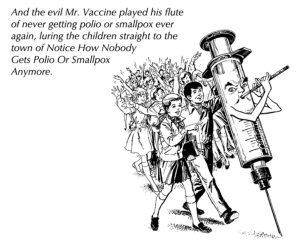
Evil Mr Vaccine…
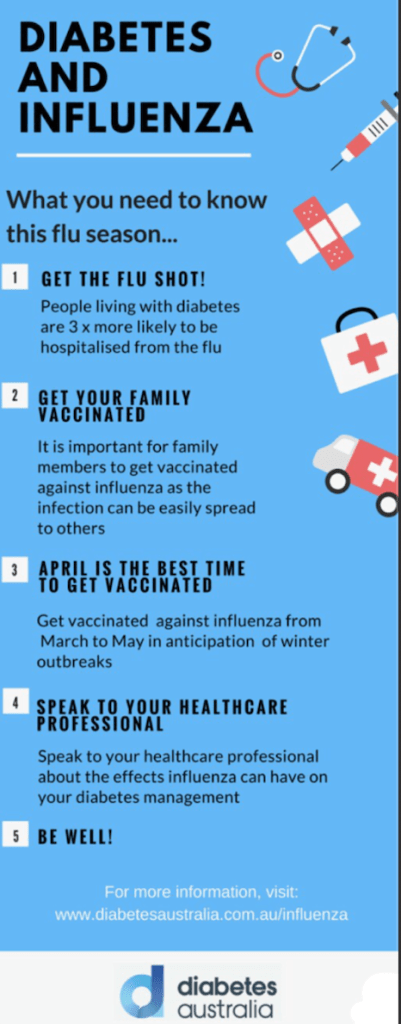
Diabetes and the flu-vaccine. It’s time.
I hate that almost every week scientists have to come out and debunk the latest claims made by some completely hopeless anti-vaxxer: some footballer’s wife is running workshops highlighting the (made up) dangers of vaccines and is telling anyone and everyone who’ll listen that she will not be vaccinating her unborn child; a former swimmer says that people should weigh up both sides and make up their own mind; a celebrity chef endorses anti-vaxx campaigners, (while at the same time advises against using sunscreen).
And every time something like this happens, scientists have to stop doing their important science work, and go on breakfast radio and TV to explain patiently why these comments from these village idiots are rubbish, and then defend their own work and the work of their colleagues.
There are very few people in our community who for medical reasons cannot be vaccinated, and the rest of us need to be to protect them, and other vulnerable populations. Herd immunity works. And so do vaccines. Just vaccinate. There is no debate.
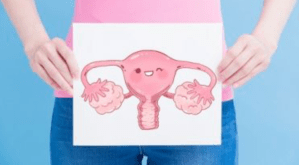
Today I’m talking about cervical screening checks. Because yesterday, I had mine. (Oh, did I mention that I’m an over-sharer?)
Let’s be honest. No woman ever gets excited about having a cervical screen. At least, no woman I’ve ever met. Maybe if they handed out lollypops at the end, (or something more applicable for the area being screened?), we might get more excited, but as things go, rocking up for our scheduled cervical cancer screening is not really one of those things we anticipate with glee. (Or maybe you do. And if so – good for you!)
My OB/GYN – who is now purely my GYN because the OB part of me has shut up shop for good – called me (well, his receptionist did) while I was in Berlin. The call came at some ridiculous hour of the night, so I ignored it, rolled over and went back to sleep, making a note to return the call when I got back to Australia.
I knew that was I was well overdue for a check-up – I’d been thinking I needed to make an appointment and was also a little confused about the new screening procedure and process. It’s changed since my last screening. I knew that pap smears were a thing of the past and that a new cervical screening check had replaced it.
But I didn’t really understand about the change to timeframes or just what the new check was all about. So, I made, and prepared myself for, the appointment.
I’ve known my gynaecologist for a long time now – about seventeen years. He knows diabetes and pregnancy which was why I started seeing him. He was the one who I went to for all my pre-conception care and then he was my OB each time I was pregnant. He has seen me at my absolutely lowest as I dealt with the heartbreak and trauma of recurrent miscarriages. But he also was the one who handed me our daughter the day she was born, so he has seen me at my most elated, too.
This time, I walked in with absolutely no intention of talking about babies, other than mentioning that mine is now fourteen which obviously makes no sense because surely I am still only 36 and I had her when I was three days shy of 31. (This is a lie. No one believes it.) I was there to talk about how hopeless I was because I’d completely neglected thinking about needing a cervical screening check. And have the said check.
There is a reason that I continue to go back to the same doctors for seventeen years. It’s because they don’t judge, and they treat me as though I have a life outside the body part in which they specialise. (Which is good when seeing this particular doctor, because I am more than my vagina.) Before getting to the reason I was there, he asked me how I was and what I was up to. We spoke about the work I was doing. He asked specific questions about my health and asked me how I found the Dexcom that was clearly visible on my upper arm. We started to talk about DIYAPS, and how that was working for me. He wanted to know about my family and how they were, and what sort of a kid the tiny baby he delivered on that day back in November 1998 had become. (She reads a lot more now. And has more sassy opinions.)
Then I mentioned that I had been a little remiss in organising my cervical screening check and started to say how I was usually a lot better at this and that I always, always make sure my diabetes screening was up to date and that I NEVER miss an appointment with my ophthalmologist, but that this one had slipped through the cracks. He didn’t shake his head and tell me to be better. Instead he said, ’It’s great you’re here today. Life is busy and there is a lot going on.’ It may not be healthy to love your gynaecologist, but after that comment I remembered why I had always been so fond of him.
He then explained how the new screening worked, and why the changes were made. He spoke about what was involved today and how long it would take for me to get the results. ‘We call you whatever the result,’ he said and I realised that was a really useful piece of information. If I had a missed call from his rooms in seven to ten days’ time, not knowing that calling everyone was routine, I would have worried that something was wrong until I’d been able to speak to someone.
He started by taking my blood pressure. ‘Is your blood pressure usually okay when you have it checked?’ he asked. ‘Yep. Always fine. Why? Is it high?’ My heart rate was slightly elevated, and I was anxious. (See point above about no one wanting to have this particular screening check.) ‘A little,’ he said. ‘But I know that you’d be anxious about this. It’s nothing to worry about if you have recently had your BP done and it was okay.’
I have always appreciated how this doctor, when asking questions, explains why he is asking them. ‘Any changes to your period, bleeding in the middle of your cycle, or bleeding during or after sex?’ He asked, going through what each of these things could mean.
The rest of the examination took all of about 5 minutes. He explained everything that was going on, and I distracted myself during the bit where I had a piece of cold metal inside me by asking about the HPV vaccination.
I’m not sure if that was necessarily the best time to have a conversation about why it’s important to have this vaccine (there’s more about it here, including who the vaccine is for and when they should have it). He told me it protects against the types of HPV that cause around 70% of cervical cancer, as well as other cancers (vaginal, vulval, anal, throat and penile), and protects against genital warts.
We then both had a lot to say about our frustrations with anti-vax lunatics and their anti-science idiocy, and why Pete Evans should be sent to an island (one other than Australia) and left to his paleo devices where he can’t harm anyone else. (Thankfully the cold metal instrument has been removed, and I was covered up by a sheet again by this stage. We were both getting a little ranty and I was waving my hands around; being completely exposed could have made that awkward…)
When I was dressed and sitting opposite him again, he asked if I had any questions. I had a few, and he answered them clearly. I mentioned again that I would make sure that I had future checks as scheduled and he suggested I be less hard on myself.
He’s right, of course. Diabetes alone puts so much pressure on us – as well as all the screening we need to keep on top of there is the daily stuff too. (I love that he understands diabetes and realises just what it takes to deal with it.) Add to it the other things we need to stay on top of – such as screening of our lady bits – and it’s no wonder that sometimes something will slip through to the keeper.
And of course, there are a number of other reasons that we delay or postpone having this particular check done. For some women, there can concern or embarrassment. Even if we know that the actual procedure takes only minutes, it’s not especially comfortable. And then there are concerns about the state of our lady garden. According to a 2018 survey by a British cancer charity, a third of women won’t make an appointment for a cervical screening if they haven’t waxed or shaved their pubic area, and are embarrassed about how their vulva looks. I could scoff and say how ridiculously shallow, but you bet that I have had that concern too.
I know that this, as with all screenings, is important because early detection of any changes means early treatment and that is always the best approach. And so, I’m trying to stop beating myself up for the fact that I was overdue getting this done and instead pat myself on the back for actually having made and kept the appointment. I’ve done my bit. I now wait for the results and then take it from there.
More information about cervical cancer screening here.
Click for source of image.





 Diabetogenic