You are currently browsing the category archive for the ‘Guilt’ category.
OzDoc tweetchats are fertile ground for posts on this blog! Often, as soon as the chat is over, I start to write because some that was discussed has triggered a wave of ideas, or thoughts or, as was the case after last night’s chat, wanting to know more.
This week’s chat was all about food – one of my favourite topics in the world, and one that I could, quite honestly, speak and write about full time. I think about food a lot. A. Lot. I have been known to ask the question ‘What will we have for dinner?’ as we sit down to start to eat lunch. I have rushed home, desperate to turn on the oven and bake a cake and then sit in front of the oven, watching it cook.
There is a lot to love about food. But clearly, from last night’s discussion and from many discussions with others, food is not all about bowls of cherries. (I am counting down until November when cherry season is upon us again….)
Guilt and food are two words that are frequently used in the same sentence. This is not only for people with diabetes. It is entrenched in our way of thinking.
We are almost conditioned to feel guilt when we eat certain things and this in turn forces us to think that what we are eating – and could be enjoying in the moment – is a bad, bad thing.
I’ve written about how language and food get intertwined and mixed up. But what I really want to know is where the guilt comes from. Why do we feel it? How did we learn to feel that way?
I don’t ever feel guilty about what I eat. Ever. I’ve no idea why – I just don’t. (There’s plenty of other stuff I feel guilty about, so I don’t feel guilty about not feeling guilty about food!)
Is it what we hear from those around us? Cutting comments from family members, shaming comments from friends or judgemental comments from health professionals can all take their toll.
I have heard them all. I have had family members comment on what I am eating (especially when I was younger and ate like a proverbial horse). I have been asked if I should be eating that. I have had healthcare professionals judge what I eat (when I bothered to tell them).
But besides annoying me, (and visualising hitting them on the head with a spoon I have recently been using to scoop Nutella directly from the jar), I’m not bothered. No long lasting effects and certainly no feelings of guilt.
That’s not the case for everyone. And that’s what I am interested in. Why is it that in some people guilt-inducing comments are like water off a duck’s back, yet for others, result in hours of anguish, hurt, tears and stress?
I watched the response to last night’s chat with great interest. The questions were all very thought provoking and generated a lot of discussion. But not once, was the word ‘guilt’ mentioned in the questions. And yet a lot of answers did.
It seems that the two just do go together for a lot of people. I know that is the case for people without diabetes. But undeniably, it is worse for many of us who do live with it.
I tried to hide my diabetes from our kid for a long time. I didn’t want her involved in any way; I didn’t want her to know about it and I certainly didn’t want her to see it.
But as her inquisitive little mind grew and she started asking questions – lots and lots of questions – it became harder to hide things from home. I became an expert at deflecting. If she asked ‘What is it like to have diabetes?’ I would suggest we took a walk. When she asked if she would get diabetes, I would struggle to breathe and, instead of answering her question, would offer to read her a story.
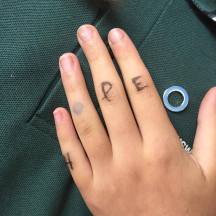
The kidlet went to school the day before WDD this year with her hope in her heart and on her hand, set to do some awareness raising of her own.
These days, I try to shield her from the truly nasty sides of diabetes (even though my nasty is comparatively quite mild) and I certainly still hide from her any fears I have. But as an eleven year old, she has an extraordinarily sensitive understanding of diabetes and she has become quite the little advocate.
All of this was playing on my mind last week as I say down to hear a presentation from Kara Maliszewski whose mum has type 1 diabetes. In the abstract to her talk, Kara says her ‘normal’ was ‘…needles in the kitchen, candies and blood sugar monitoring equipment in the handbag, insulin in the refrigerator, pump infusions in the bathroom and the constant voice in my head “insulin to treat a high, sugar to treat a low”’.
Kara spoke about how from a very young age she was involved in her mum’s diabetes care. She was taught to give her mum a spoonful of jam or a glass of juice. I am not sure what Kara meant by ‘very young age’ but it did appear from her talk that Kara’s involvement was significant from when she was very small. I felt uncomfortable about this, thinking back to my own experience of trying to protect the kidlet from all things diabetes. It is only in the last year or two I have asked her to get me a juice box from the fridge if I am really low. Even though her understanding of diabetes is excellent, I have been resolute about not giving her a part in it. Why? Because I don’t want to concern her.
But Kara said several times that her contribution to her mum’s diabetes care actually lessened the fear rather than added to it. This was at odds to my thinking – I have had the idea that by not showing the kidlet the nasty things that she simply wouldn’t know they were even there – there would be nothing for her to be afraid about.
Clearly the effects of understanding and being part of her mother’s diabetes are significantly more far reaching than just knowing what to do in the case of low blood sugar. In fact, as this tweet from Kelly Close shows, Kara believes that her contribution to her mother’s diabetes care has impacted in other ways.


The kidlet’s thoughts at the #IWishPeopleKnewThat Diabetes stand at FFL this year.
I love this about her. Is it because she is living with a parent who is dealing with a chronic health condition? Is it that AND the work I do that has increased her awareness?
I don’t know. But I do know that I spent a lot of the long flight home thinking about my motives in trying to hide my diabetes from her. Clearly I am not doing it because I feel ashamed. I think, perhaps, the motivation is selfish. I try to alleviate the guilt I feel by bringing diabetes into our family by not sharing it with Aaron and our daughter. I try to own it and hide it and keep it to myself as much as I can, because inevitably there are times I can’t do that and they have to be part of it.
What is becoming more and more apparent as she gets older, (and what was clear in Kara’s talk), is that our kids actually want to be involved – and invited to help – in our diabetes care. These kids are magic in so many ways. How privileged am I to be able to call her my own?
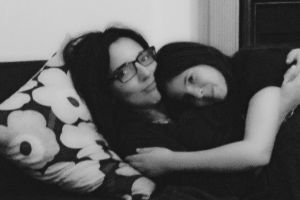
This kid. How lucky are we?
Two and a half minutes. I reckon that’s how long it took before the tears started.
I walked into my endo’s office and we exchanged pleasantries. I’ve been seeing her for over thirteen years now and there is an easy banter that we fall into.
I sat down and said, ‘I’m going to need tissues. Where are the tissues?’ And that was all it took. No one had even said the word ‘diabetes’ yet.
‘I’ve got no idea where to start. Things have been terrible. I’m all over the place. I feel like I have dropped the ball – really dropped the ball and I don’t know what to do to get back on top of things.’ I briefly explained the burnout, the rough couple of years, the grief I still feel shrouded in at times following the miscarriage. ‘Even when I feel like I am seeing some light, I fall too easily back. My self-care gets forgotten very easily. Very quickly. I can’t seem to get over my miscarriage and there are days that I feel so weighed down by the loss.’
She listened without interrupting, letting me blurt out what I needed to, sniffling my way through grottily. And then she waited. So I filled the silence.
‘I know that I am being too tough on myself,’ (there was a tiny, barely noticeable nod from her at this point). ‘And I know I would be quick to point out to anyone else saying these things that they need to be a little kinder to themselves. But I don’t give myself the same breaks. I feel like I’m letting myself down.
‘I don’t know where to begin. I didn’t get my blood work done before coming here. I just didn’t have it in me. I don’t want to see any results. But I am so angry at myself for not having it done and for not keeping on top of my complications screenings – I have never, ever been behind on this before. I’m even scared to have my BP taken because I am terrified that it is going to be high. And then I’m catastrophising that into equalling kidney problems, and eye problems. Even though I know my eyes are fine. That is one thing that I am up to date with. But I am anxious about my kidneys. I don’t know why.
‘I wrote about this yesterday on my blog. I don’t want to be here. I don’t want to see you. And I really like you! But I don’t want to be here and having to think about my diabetes – and how little I’ve been thinking about my diabetes.’
The words dribbled out of me, sentences running into each other. Until I stopped. I wiped my eyes with a tissue and took a deep breath. We spent a while not talking about diabetes – instead discussing other things. We chatted about our trip to New York, the kidlet, my work. My tears had dried, the scrunched up, soggy tissue deposited into my bag.
‘Okay. Jump up on the bench and I’ll just check your BP,’ she then said. And I did. And it was fine. In fact it was better than fine. I asked her to repeat the numbers to me and a lump formed again at the back of my throat, and tears pricked my eyes, but I wiped them away. They’re just numbers. I know they’re just numbers. But they were not scary numbers. They were numbers that gave me a little confidence to find out more.
‘I suppose I should get weighed,’ I said. ‘Actually, do I need to?’
‘No. Not unless you want to.’ This led to a discussion about being weighed and how fraught that is. I decided that I wasn’t really ready to get on the scales. There was nothing I needed to know or do about my weight and it would make no difference to anything.
‘I need an A1c. And a coeliac screening too,’ I said.
‘We’ll run all the usual things and take it from there,’ she said.
When I walked out of her consultation room, I felt relieved. The insurmountable ‘I need to get back on track properly’ that had been my mantra in the lead up to the appointment had subsided and was replaced with a gentle list of a few things that I could do in the short term. I had some goals, I have some plans. I have another appointment in four weeks.
I drove home and walked into the house. ‘How was your appointment?’ asked Aaron. He knew how anxious I had been feeling about it. ‘It was good. My BP is awesome. I’m going back in four weeks.’ I changed the subject. That was all I needed for today. I didn’t want to speak about it anymore.
This week, I wrote a personal piece about an extended bout of diabetes burnout. (Whoa – that’s a lot of words with ‘…out’ in them….)
I have been overwhelmed by love and support from the diabetes online community, and people outside the community as well. Seriously, completely and breathtakingly overwhelmed – and wish I could reach out to every single one of you who has reached out to me to thank you and give you a Nutella cupcake.
I wrote about this for one simple reason – it is my real life with diabetes, and that is what this blog is meant to be all about. Sugar-coating (ha ha – whatever) life with diabetes does no one any good and there is no point pretending it is all fun and games.
Talking about the times things are going well is really easy. Being humorous and looking at the bright side is easy too – and as a person who really does usually see her (champagne) glass/coffee cup as being half full, it is easy for me to seem positive about things all the time.
But the problem with that is that we don’t talk enough about the tough things. And that leads to feelings of shame, which, in turn contributes to stigma.
One of the reason I am such a huge supporter of the Australian Centre for Behavioural Research in Diabetes (ACBRD) is because, apart from being a bunch of fabulous, smart, funny and lovely people, their work means we are talking about the emotional wellbeing side of diabetes. Thanks to the immense body of work they are doing, diabetes is being seen as far more than a numbers game. The quality of life implications of living with this chronic condition are being considered and we are getting a better understanding of distress, anxiety and depression that is related to diabetes. Even more importantly, we are talking about it. And even more importantly, there are strategies being developed to address these things.
I’ve been writing about mental health and diabetes – and wellbeing and diabetes – for some time now because we need to be able to discuss it freely, free from judgement, devoid of stigma.
It’s the same reason that I have written so openly about my miscarriages. I don’t do it because I want people to feel sorry for me or pity me. I do it because it is part of my story. And I do it so that others can see that it is a perfectly normal thing to happen and that there is no shame in it. After I had my second miscarriage, my mothers’ group met. We were sitting around in someone’s living room with our young kids toddling around, playing quietly. It had been a while since we’d caught up and we were going around saying what we’d been up to.
‘Oh, things are their usual crazy self,’ I said. ‘But I had a miscarriage last month, so have been dealing with that too.’ It was the first time I had told anyone, apart from my immediate family and very close friends.
One of the other mums looked up sharply. ‘What? Why didn’t you say something? Why didn’t you let us know? I had a miscarriage three weeks ago. I don’t know anyone else who’s had one. I really need to talk about it, but didn’t know who to turn to. I really wish I had known.’ And she burst into tears, coming over to give me a hug. We sat there and discussed our experiences and how we were feeling and how we were dealing with things. We both felt guilt and shame. We both felt we had somehow failed ourselves and our partners and our families. We both felt the same way – yet were telling each other that we were wrong to feel that way.
It was at that point, I decided that I would no longer hide my story. Because hiding it – when I am usually such an open person – suggests it is something to be ashamed about. Because that’s what happens when issues go underground, we feel shame. I don’t want any woman to feel ashamed because she has had trouble carrying a baby. I don’t want any person to feel ashamed because they are feeling overwhelmed or depressed or in distress because of their diabetes.
There is no ‘fault’. And there should be no guilt. So when we open up and talk about the not-so-good things, we see and accept that this is part of life. It normalises things. It allows for open and easier discussion. And it helps us connect with others who are sharing the same experiences.
Because I can promise you, my story of burnout is not unique. Absolutely not.
I’ve decided that my two favourite words in the world are not ‘coffee, please’ or ‘shoe sale’. No. They are ‘me too’.
Apparently, it’s snowing in New York! So the Brian Setzer Orchestra, live at the Rockefeller Centre with ‘Winter Wonderland‘ seems more than a little appropriate today!
Today is #dblogcheck day. The idea is to ‘check in’ by commenting on any diabetes blogs you read today. The hope is that by commenting, you’ll be reminding people that they are not alone. I love this idea! Thanks to Christopher Snider (@iam_spartacus). Look for the #dblogcheck tag to find some #dblogs to read. You may find a new favourite!
I make dozens of diabetes choices every day. From what I will eat, to the dose of insulin I take, to how many times I’ll check my BGLs, these are all choices that I make. Sometimes they are made with careful consideration. Other times, I barely give them a second thought.
But regardless, I stand by these decisions and their consequences – good or bad. Generally, the outcomes impact me and me alone: too little insulin, a BGL of 20mmol/l means I guzzle water, rage bolus and feel like crap until I get back in range; too much insulin, a low that is usually managed with a juice or a handful of jelly beans. Most of time, I manage to ‘fix the damage’ and move on without involvement of anyone else.
But sometimes, that’s not how it pans out.
One of the burdens of diabetes is how it affects those around us. On the rare occasions I need assistance I experience incredible guilt afterwards. I know I shouldn’t, and I’m never made to feel guilty, but it is how I feel.
I have never heard anyone in my family complain or even comment on their role in my diabetes. I know that doesn’t mean that they don’t get pissed off by my AWOL beta cells (being woken up in the middle of the night and then having to get up to grab me a juice or put on some toast is, whilst a rare occurrence, certainly not fun for my husband), but I never hear complaining.
To date, my daughter’s involvement has been minimal. There have been a handful of times, perhaps, when I have asked her to grab me my lolly jar. For her, I suspect the biggest inconvenience is having to explain to her friends why said lolly jar is out of bounds for their grabby (grubby?) fingers, and the times where we’ve had to briefly postpone whatever we’re about to do as I wait for my BGLs to come up to a safer level.
Last year, when a friend needed to call an ambulance after a particularly nasty hypo, I worried for a long time (I still do!) about how she would feel about my diabetes. For a while, it felt that she was watching me very closely every time we went out to make sure that I wasn’t going to collapse on her again.
I can’t imagine how scary it would have been to have me suddenly pass out. She did such a sterling job of managing this situation (right down to warning the paramedic that I was going to be seriously annoyed when I ‘came to’ and start asking a million questions), and I couldn’t have asked for a more sensible or thoughtful person to have around for this. But still – I worry that it was a choice I made (or didn’t) that resulted in her having to take an active role in dealing with my diabetes. She didn’t sign up for that when she and I became friends back when we were teenagers.
While I try to make choices that yield results that impact me and me alone, I think a lot about how others feel about my diabetes. What I want those around me to know is that I’m sorry when they have to get involved. But also, I’m so grateful.
My insulin pump, CGM and BGL meter all talk to me. (I just reread that statement and realised how weird it sounded. Thankfully – hopefully? – this is an audience that understands I’m not hearing voices and having conversations with devices.) They alarm and alert and let me know when they feel they need some attention.
And then last week, out of nowhere, my mobile phone got in on the act. I started receiving alerts at 11am each day, providing little reminders and prompts to help me live better with diabetes. At least that was what it was promising.
Somewhere, I must have signed up for this. As smart as my phone may be, it’s not likely that it signed up itself. Nor that my smart pump or smart meter made a call and hooked up with my phone. On one of the health apps or websites I use, I must have ticked the box that said ‘please send me annoying updates. At 11am. When I want to eat a doughnut. Telling me to NOT eat a doughnut. Which just makes me want a doughnut more. Now, where do I find a doughnut?’
The first day I received my 11am alert, I was a little surprised. It was a lovely, gentle ‘you’re-a-ok’ kinda message that made me feel quite loved, really.
The second day, it reminded me that breakfast was the most important meal of the day and linked to some ideas to start my day right. Disappointingly, my breakfast of nothing with a coffee chaser was not on the list.
The third day, it reminded me that checking my BGLs two hours after eating would allow me to correct any high BGL following the healthy breakfast (from the previous day’s list) I would have eaten that day.
The fourth day, it reminded me that carbohydrates are an important way to get energy, but not all carbs are created equal, and linked to a table that showed the best carbs to eat. Once again, I was disappointed. My favourite carbs (Nutella, anything containing Nutella and doughnuts. Filled with Nutella) were not on the list.
The fifth day, it reminded me that regular visits to my HCP and complications screening are important.
We ended our relationship that day. I don’t need an 11am complications screening reminder. Ever.
I found the healthy living (the diabetes healthy living) messages intrusive. Rarely at the moment I received the alert would I be thinking of diabetes. Instead, I’d be in the middle of something at work and suddenly I was torn away and reminded that a lot of my choices are not really healthy. I felt guilty. Guilty that I hadn’t eaten breakfast (except for a milky coffee), hadn’t eaten any carbs of value in the last 48 hours, hadn’t been checking post-prandial BGLs and that I was a couple of months late with my comps screening.
But more than that, it didn’t make me want to make any changes. It just added to the alerts and alarms and white noise. It was distracting and not actually achieving anything. So I stopped it. Most of the time, diabetes intrusions can’t be stopped or turned off. But this one can. The best thing to have come out of this little exercise was how I felt when I unsubscribed. I felt in control.

I like THIS white noise.
‘I’ve been compliant,’ I said to my ophthalmologist with great pride. ‘Compliant’, I said again and smiled at him and waited for a pat on the back. It didn’t come. So I tried again, emphasising my point. ‘Four times a day; both drops in my eye. Just like you said. Didn’t miss a single drop. I was com-pli-ant.’
If there is a word that is evokes rage in me it is compliant. When used in terms of diabetes management, it makes me see red and start imagining the painful things I’ll do to the person using the word. Actually, it’s usually used with the prefix ‘non’ to give the word noncompliant which is even worse.
At the World Diabetes Congress last year, Twitter nearly broke thanks to a group of DOC renegades sitting in a lecture given by a doctor who insisted on using the term ‘noncompliant diabetics’ to illustrate the point that some of his patients were having difficulties following their diabetes treatment plans. There we were, non-compliant diabetics because we couldn’t keep our BGLs perfect and follow the rules and do the things we ‘should’ do and, you know, do it all with a smile. Bad, bad, BAD diabetics. This photo shows how happy I was:

So with this hatred of the word, why was I bandying it about in front of my ophthalmologist like there was no tomorrow? And saying it so proudly? And frequently?
The answer is quite simple. Following the treatment plan I’d been given after my cataract surgeries was easy. Two different eye drops; four times a day; for 4 weeks. Then it was over. It was something that, for me, was manageable. There was a point where it would stop and then I wouldn’t have to think about it again.
The complete opposite of living with diabetes where there is no end point and no time where a box can be ticked and it will all go away. It was so lovely to be able to do something that was predictable, easy, knowing that there would be a time when it didn’t have to happen again.
Understanding the relentlessness of diabetes management is difficult to communicate. I don’t really expect people to truly appreciate what it is that is so frustrating and annoying and challenging. But I do expect a little respect and a little acceptance when things are not going to plan. I also think that using judgemental words that suggest that there is a deliberate attempt to ‘break the rules’ is unfair and lacks any sort of comprehension about a condition that never goes away.
Perhaps my delight in announcing so loudly and proudly to my ophthalmologist about how clever and bright and shiny I’d been with my eye drops was because for once I felt like I was actually doing something right when it comes to my healthcare. Perhaps I needed recognition (probably more from myself than anyone else) that I could follow directions and get the desired results. Perhaps I just needed to believe that I was doing something that would result in predictability and a satisfactory outcome. Diabetes doesn’t ever provide any of those things. No matter how compliant you are.




 Diabetogenic