You are currently browsing the category archive for the ‘DOC’ category.
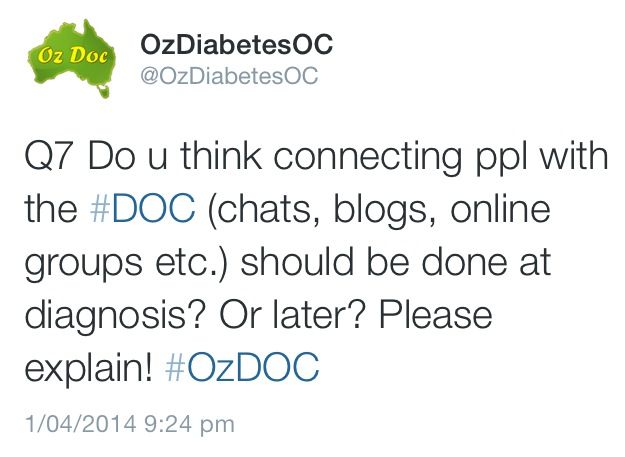
In last night’s OzDOC tweet chat, this question was asked:
Obviously, I am a huge fan of the diabetes online community. I am honoured and lucky to have met so many amazing people both online and in real life. And many of these people, I truly consider to be friends.
But when I was diagnosed, I certainly had no desire to meet anyone else living with diabetes. Surely having nothing more than a faulty pancreas in common wasn’t the basis for lifelong friendships. And that is the truth. When I look at the people in the DOC who I am friends with, we have far more in common than a need to carb count and inject insulin.
While diabetes may have brought us together, it certainly isn’t what has held us together. The reasons the friendship has developed into something more than exchanges on Twitter include similar attitude to life in general; the same (often questionable) senses of humour; a mutual like of travel; kids the same age (many of my friends and I were planning pregnancies at the same time); sympathetic political views; a love of Nutella.
Today, I wouldn’t be without my friends from the DOC. I have been kept company many nights, unable to sleep, by many of my northern hemisphere friends. Our discussions span far more than diabetes, and the advice, comfort and friendship offered has seen me through difficult times as I feel the embrace of those many thousands of miles away. This community has become my extended family.
We can’t force the DOC onto people. But what we could consider is making sure that people newly diagnosed are at least aware that there is a dynamic and supportive community out there. We can provide the connections and the networks. We can provide the ‘how to’ and allow people to dip their toe in gingerly and remain in the background. But it needs to be up to the individual to decide if and when they want to make the approach. And when they do, we will greet them with open arms and welcome them.

MIMI
I’m Mimi.
Daughter. Sister. Granddaughter. Friend.
Wannabe vet & farmer.
Frustrated horse rider.
Reluctant pianist.
Enthusiastic singer.
Elegant ballerina.
Thrill seeker.
Animal lover.
Trainee pancreas.
Which is the last thing you need to know about me. Because I’m not just a T1D diagnosis.
I’m a 10yo girl.

Diabetes Tales is a new thing I’m trying out at Diabetogenic. If you’re interested in taking part, let me know!
It’s Friday evening and the end of a busy week.
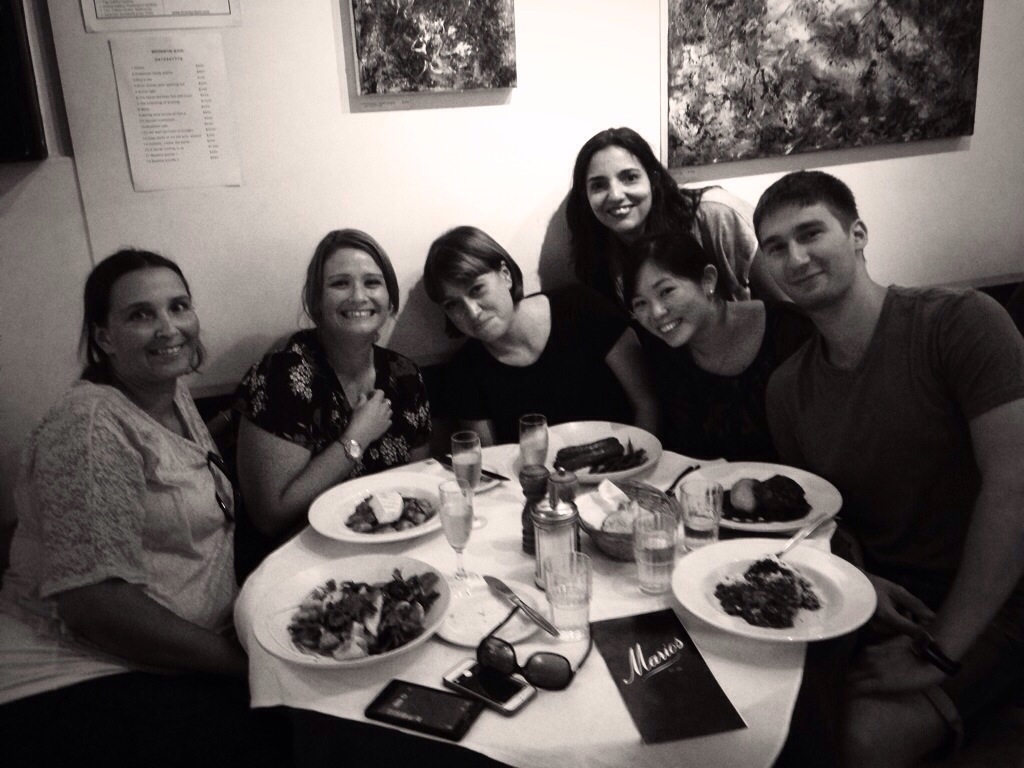
But before arriving home for an early night of not-very-much, I detoured to one of my favourite cafés, Marios, for a DOC meet-up.
Coming together, a few regular OzDOC-ers, a GBDOC-er we’re now calling one of our own and a delightful representative from the South African DOC.
Thanks, Twitter, for bringing us all together!
I couldn’t be more excited to receive this in the mail today:
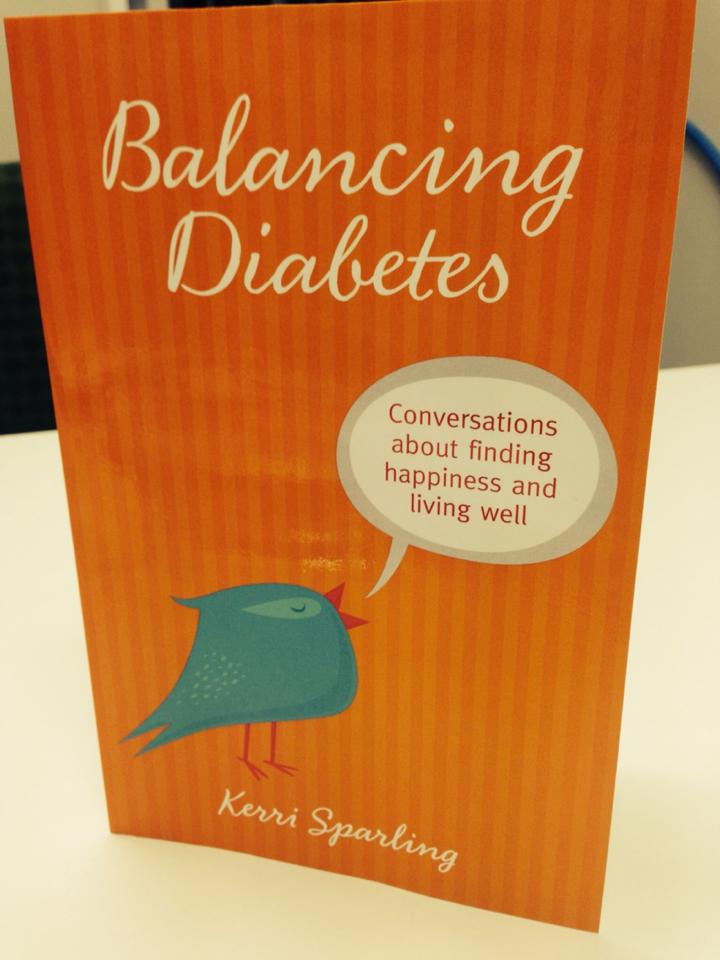
And I couldn’t be more proud of the wonderful Kerri Sparling who I am lucky enough to call my friend.
Run, don’t walk, to order your copy of Balancing Diabetes now!
Today is Diabetes Art Day. The last time I took part in Diabetes Art Day was in 2012 when, instead of making art, I looked at it. We were in Rome and spent the day wandering around the Sistine Chapel. But this year I decided that it was time to actually produce something. I’m not a great artist. In fact, our daughter overtook my drawing abilities when she was about…oh, maybe 12 months old. However, Diabetes Art Day isn’t about producing perfect works of art. It’s about thinking about how diabetes can be represented in ways other than words (I kinda missed the brief as you will see below).

So in an endeavour to do something quiet and cool (and indoors) to escape yesterday’s sweltering heat, my family sat around our kitchen table and made some art. Out came coloured paper, crayons, textas, colouring pencils, stencils, stamps and anything else in the craft basket that looked like it might be fun.
And then we drew and collaged and stamped. I decided to use lots of different colours and place the blue circle over the top. I liked the idea of a rainbow-esque kaleidoscope of bright and not-so-bright colours because to me, that’s how diabetes is. And while the elusive pot of gold at the end of the rainbow may be a cure, there is still hope in between even if we never actually find it.
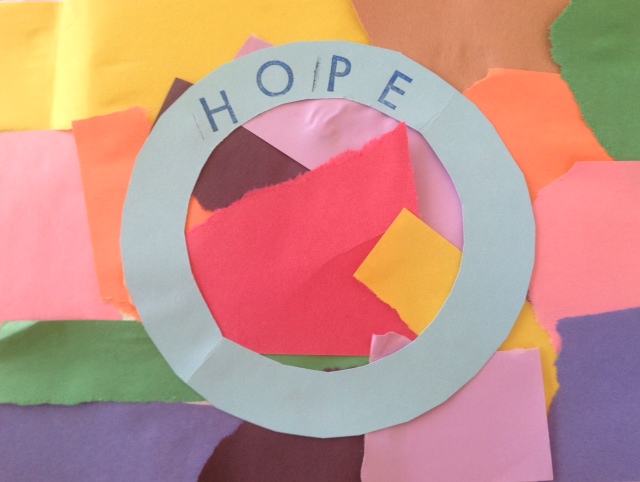
Hope. For me, there always needs to be hope….
And the kiddo and Aaron came up with these gorgeous pieces.

Is that a Twitter bird I can see?
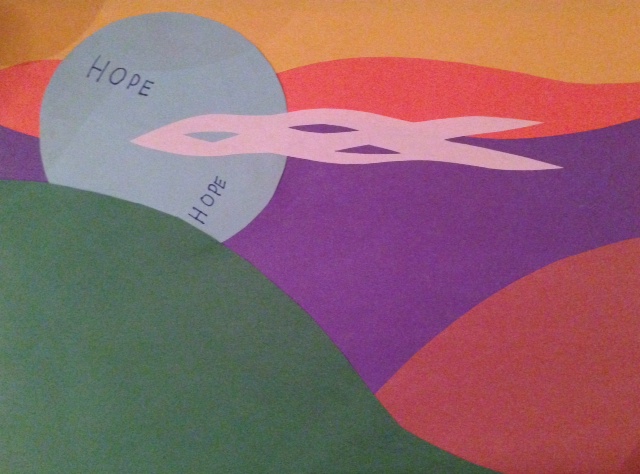
More colours and a blue disc of hope.
So, here is our family’s contribution to Diabetes Art Day. I’m going to frame the pictures and put them up in my office so that I can be reminded that sometimes it helps to look at diabetes in a different way.
Postscript:
And then I got a little carried away with the stamps and did this:
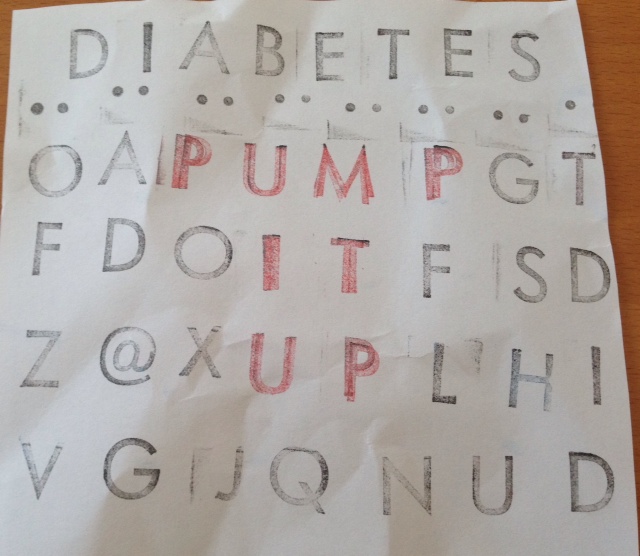
Follow Diabetes Art Day on Twitter: #DArtDay
One of the reasons social media is so powerful is because of the way it connects people. By removing all the constraints that would normally prevent people from sharing, we form connections based on shared experiences and familiar stories. We know that in the Twitterverse, there are no boundaries or territory lines to divide us. Last year, this blog was read by people from over 90 countries around the world. (Seriously, I couldn’t name 90 countries, so I’m going to have to take the word of the clever WordPress fairies on this one.)
There are so many examples of times when I read something and feel a pang of familiarity because the story mimics my own experience. And I’m always touched when people tell me that my posts ring true to them. There can be real solidarity when you are part of an online community. In today’s diabetes online community, I am fortunate to say that I feel I was welcomed from when I first hesitantly put up my hand and waved hello. The reluctance came because in a previous attempt to participate in an online diabetes site, I was condemned for having an opposing opinion to the moderators. I meekly retreated, insulin pump dragging behind me, and never went back for another play.
It saddens me when I see stories of internet trolls who deliberately upset people and consider it fair game and sport to have a go at those with differing opinions. The cowardice and manipulation shown be some who use anonymity as a screen to hurt people can be terrible.
There are billions of stories in the world and when we find people we connect with, we reach out and want to hold on. I know that’s how I feel about the DOC – I hear familiar stories and want to grab onto them and the people who wrote them (metaphorically, not literally; that would be creepy) because they help make sense of my diabetes life.
We’re not all the same and that is so okay. Perhaps the reason that online communities like to DOC work is because rather than looking for differences and calling each other out on them, we look for the similarities instead. We search for the things that connect us and build our community on that. And that makes me want to keep coming back for more. And more.

They’re both red.
Focusing on the things that connect us.
World Diabetes Day is drawing to a close across the world. The clock is about to turn over into 15 November but it seems that blue lights will burn brightly for some time to come.
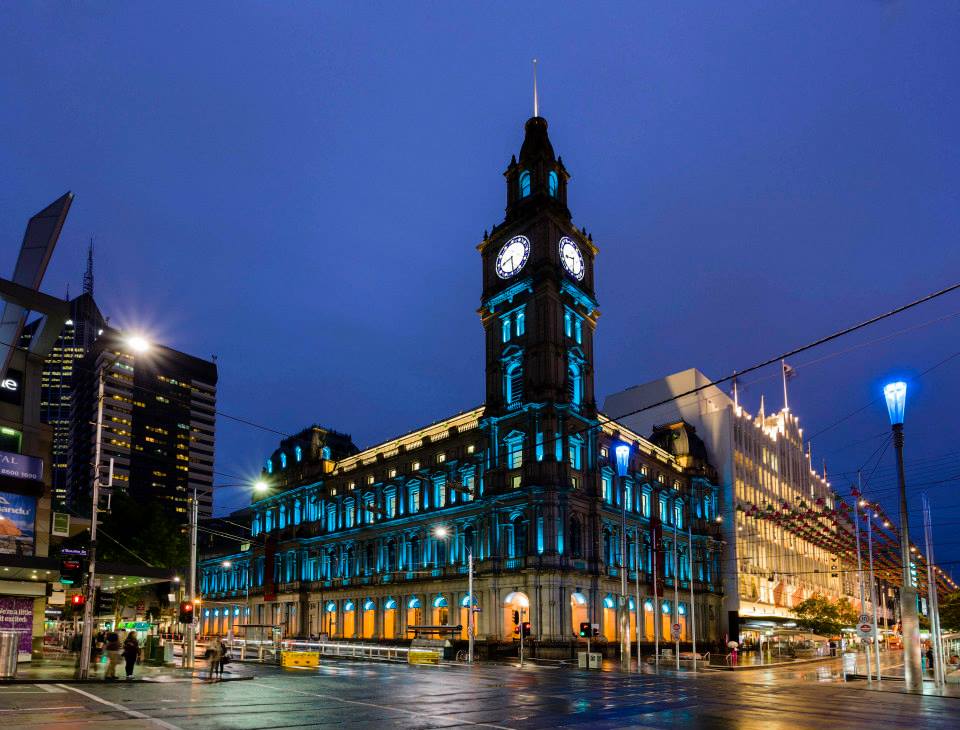
Melbourne’s iconic GPO gets its blue on for WDD13
My WDD started on its eve with an important event for diabetes research. The 2014 Diabetes Australia Research Trust awards presentation gave 22 Victorian researches grants. Many people aren’t aware of the commitment Diabetes Australia makes to research each and every year. This year alone over $3million dollars was given, including the $150,000 Type 1 Millennium Award which is specifically for research into type 1 diabetes.
After the awards, I found myself in the Melbourne drizzle wandering down to the GPO. As I approached, I saw it lit in blue. It looked splendid! Staff from Diabetes Australia – Vic and some of the Diabetes Australia Young Leaders donned blue ponchos and held all manner of lit-up blue things (I got a wand!! I’m just like Hermione!!) and stood in the glow of the GPO. This is part of the IDF’s global light up a monument campaign. You can read here for other iconic buildings and monuments that have been washed with blue. It was some fun for an important awareness-raising activity. And now, I have a blue wand!
On WDD proper, I found myself up just after 4am and on a 6am flight to Sydney to answer some questions about diabetes on a new breakfast television show. Studio 10 ended its morning with a discussion about World Diabetes Day and I was asked about life with type 1 diabetes. It was an opportunity to bust some myths which I’m up for pretty much any time! You can see the interview here.
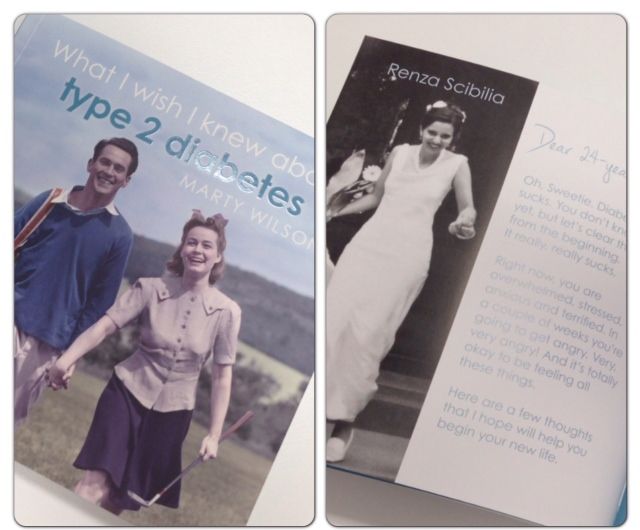
What I wish I knew…..
Next up was the launch of a new book called What I wish I knew about type 2 diabetes which is a collection of stories of people living with diabetes (all types – not just type 2 despite its title) and health professionals working with PWD. This gorgeous little book by Marty Wilson tells wonderful tales of people who have lived with diabetes for many years. It also includes one of my previous blogs. Look out for the book – it’s definitely worth a read.
World Diabetes Day is an important day for the diabetes community. It is our day to talk about diabetes and have others thinking and talking about it too. Whether it be international organisations like the IDF who yesterday released new global diabetes statistics in their Diabetes Atlas, or local and national diabetes organisations like Diabetes Tasmania who attended Government House for an event with some of their Young Leaders, or community events and activities like the global 24-hour diabetes Twitter chat, it’s a day where diabetes is front and centre. My Facebook and Twitter streams were full of blue and family and friends commented on my posts and even posted on their own pages about diabetes. (A shout-out to my sister who got TOTALLY in the WDD-spirit by wearing blue circle earrings and plastering her Facebook wall with WDD messages. Thanks, Toots!) I even pinned blue circles onto our real estate agents’ very suave suits as they came to do an open for inspection for our house sale last night. Everywhere I looked I saw blue.
Diabetes may not be understood by everyone. But yesterday was a day where we could talk about it and hopefully give people a little more understanding about what life with diabetes means.
Of course, it doesn’t end here. The WDC is in just two weeks. Let’s keep the conversation going. And don’t forget the OzDOC get together on 3 December as part of WDC!
I am very fortunate that my job allows me to do a bit of interstate and international travel. Working for a not-for-profit means that while there are some opportunities for attendance at conferences, finding sponsorship is necessary if I want to attend all the conferences and meetings that are worthwhile and beneficial to my job.
Last month, Johnson and Johnson kindly sponsored my travel to Barcelona for the EASD conference, specifically to attend its second annual European Bloggers Summit. As the only person from Diabetes Australia lucky enough to be given an opportunity to attend the conference, I knew that I would be waving the Australian flag enthusiastically as I spoke about our experiences with diabetes social media and blogging. I searched out all the relevant, social media-focussed sessions and made sure I could get to them.
The day after arriving, I attended an IDF symposium about how social media can improve the lives of people with diabetes. The symposium was on the Sunday before the Tuesday start of the EASD meeting, so unfortunately, it wasn’t as well attended as I fell it should have been.
Given my recent presentation at the ADS/ADEA conference, I was very interested to hear this session – especially the presentation by Claire Pesterfield because as well as being a PWD, she’s also a diabetes nurse. Claire made some really interesting and valid points about how difficult it is for HCPs to jump on the social-media-as-support bandwagon when in most hospitals sites such as Facebook and Twitter are blocked by the hospitals’ IT people. It’s not really all that easy to tell people about great online support networks if the ‘red screen of death’ pops up every time you try to log on to one of them. I’ve been told that this situation is mimicked here in Australia.
We also heard Paul Buchanan (moderator the GBDOC tweet chats) speak about his recent (ridiculous, crazy, lunatic) arrival in Barcelona. From Brussels. On a bicycle. Paul and his group Team Blood Glucose were part of the Mobile Health Grand Tour – made up of a group of people who forgot that there are planes, trains and automobiles available to assist in the 2,400km journey from Brussels to Barcelona. Paul spoke about how social media and new diabetes technologies were employed on the ride. Interesting stuff!
 The Euro Bloggers Summit ran on the Tuesday and Wednesday. It was a couple of days of workshops and presentations which covered how we could improve the numbers of people reading our blogs and ensure that we have the right ‘look and feel’ to them so that they were attractive to readers.
While the formal presentations were interesting and provided me with a lot to the think about, the thing that was the most valuable was the time spent speaking and networking with the other bloggers. There was a common theme in the room. While we like to think that there are people reading our blogs, it’s not really about the numbers. The real reason we all do what we do is because we are trying to connect with others who are going through the same things. We’re hoping that someone will read what we write and say ‘I thought I was the only one. But I’m not. I don’t feel so alone anymore’. We are telling our stories and sharing our fears and hopes while we look out for people who can share their stories with us.
Social media has the ability to remove all the things that get in the way of us feeling connected. We don’t worry about geography and thanks to translating software, language barriers can be broken down. Even pesky time-zones differences seem easily surmountable.
Being in the room with people who are doing the same things as me is an incredible privilege. Getting to hear about their work and their lives is an honour and I am grateful for every opportunity I get to learn from them. We need to start creating more opportunities like this in Australia. The World Diabetes Conference is the perfect chance for that to happen. Please take advantage of the fact that this significant diabetes meeting is being held in Melbourne and that there is discounted registration available to consumers. I’ll be there and I really hope to see some of you too!
Disclaimer
Johnson & Johnson covered my travel and accommodation costs so I could attend the Animas European Bloggers Summit. They were also kind enough to cover registration costs to the EASD meeting. There was no expectation that I would write about the Summit (or them). As part of this arrangement, I will be presenting for them at their booth at the World Diabetes Congress in Melbourne in December. You should come along and heckle me!
Support comes in many shapes and sizes. When it comes to life with diabetes, I have always been lucky to have a support network village that consists of family, friends, a brilliant healthcare team and Nutella.
In the last few weeks as I have been dealing with more than just diabetes I have realised just how wide my support system really is and it’s surprised – and humbled – me.
Obviously, publishing an incredibly raw and honest piece on a news forum that gets over a million hits per month means that there are a lot of people out there who now know what I am living through. But then, I’m an oversharer, so ‘puttin’ it out there’ has never been something I’ve shied away from.
When it comes to diabetes, having that network to lift you up in times of frustration can mean the difference between sinking into a period of serious burnout and feeling like you have ways to cope. Knowing that there are people there to help you out – no matter the time of day – can be the difference between feeling isolated and feeling that you have someone’s shoulder to lean on. (I will once again send out a message to the DOC who has been that difference on more occasions than I could mention.)
One thing that I have learnt in my years having diabetes and when faced with particularly challenging times is that having someone say ‘Are you okay?’ or ‘I know this must be a hard time for you. I am here for you.’ helps more than words can say. Just knowing that people care and are thinking of you gives incredible solace.
We don’t always know what to say and we sometimes worry that our words may unintentionally hurt. So we say nothing. We think that it’s the better option. And perhaps we worry that if we ask someone how they are going, the chance of them dissolving into uncontrollable tears is something we just don’t want to risk. But personally, I’m always ready to take that risk, because I want people to know that they are being thought of and cared for.
Not everyone is comfortable talking about their life and not everyone is happy to ask for support. Sometimes we try to be stoic and strong for ourselves and those around us and sometimes we just want to pretend the crap stuff isn’t happening. Often, we don’t like to let people know we’re not coping or dealing with something particularly difficult. And in the time of Facebook when we only put forward our very best self (‘look! I’m on holidays/at a cool new café/eating Nutella’) we hide the tough stuff.
But when we do talk about it, it’s so wonderful and reassuring to have people reach out – it makes us feel safe. Right now, I feel so very safe and protected thanks to the many people who have reached out. And I want to say thanks.





 Diabetogenic