
You are currently browsing the category archive for the ‘Diagnosis’ category.
Being fiercely independent about my health is something that I cherish. I have a strong need to own my own health and well-being and direct the course taken to manage my diabetes as best as I possibly can. I do this with full disclosure that the mess ups are mine as much as the successes. The buck starts and stops with me.
But sometimes – always, actually – it helps to know that there is support at hand when needed.
That help might be in the form of someone to accompany me to appointments (thanks dad, who has chauffeured me to almost every single ophthalmologist appointment I have been to in the last 17 years), someone to meet me afterwards over coffee so I can debrief and share what happened, or someone to actually sit alongside me whilst in the consulting room, taking note of what is being said. Having a second set of ears is always a great idea, especially if what is being covered off is challenging in any way.
I usually attend appointments with my endo alone, although sometimes, my mum may be with me to keep my company. We use it as an excuse to then catch up for coffee and cake. Other times, when there has been something ‘big’ to discuss, Aaron comes along and listens intently, rarely commenting unless he can see that I am uncertain about something. And then we go for coffee and cake.
I pretty much always see the GP alone, but truly, my GP appointments are always super quick and about something so specific – and usually simple – that I don’t need to take someone along for the ride.
Most of the time, I am happy to be on my own. I relish the time in the waiting room – all alone, nice and quiet, and usually a trashy mag or two to catch up on.
The day I was diagnosed with diabetes, I was squeezed into an end of day appointment with an endocrinologist. I asked Aaron and my mum to come along to help me understand what was happening. The next day, as I saw the dietitian and diabetes educator and endo again, they were there, and together we took in all the new information, letting it swirl around us and settle uncomfortably. A new health reality that involved needles and numbers and thinking about food in a different way. This needed a team approach.
It was incredibly useful to be able to ask them questions about things I had only half heard or half understood as my mind tried to take in all I was being told. I found myself turning to mum for suggestions around food, and to Aaron about how I was feeling and what I was worried about.
As I got used to ‘having diabetes’ I asked fewer questions and learnt to focus on what I needed to know. These became the things that we would discuss in appointments and afterwards, blocking out the ‘white noise’ of the things we didn’t need to know.
I have people around me who know a great deal about diabetes; people I can call on when I need to for advice and company and a friendly face in the waiting room. Someone on my side; someone by my side. My own personal wingmen.
Today, a piece I wrote about diabetes-related eating disorders has been published on The Glow (which is Mamamia‘s health and beauty sister site.)
I’ve written before about this topic, and, following some research i did as part of a work project, have presented findings at conferences. The study we did focused on young women with type 1 diabetes. One of the things that kept coming up again and again was how many of these women thought that they were the only one manipulating insulin for weight loss and, as a result, felt ashamed and unsure of where to turn for help.
Help is available. But we need people to be aware of it. We need to be talking about diabetes-related eating disorders – often referred to as diabulimia. I am really pleased that The Glow has published this (they also published one of pieces during National Diabetes Week) and I think it’s great that this condition is being discussed in mainstream media.
‘You have brittle diabetes,’ the diabetes educator told me, regret in her voice.
Brittle. It’s such a sharp sounding word – all edges to cut yourself upon.
I first heard the term ‘brittle diabetes’ about three years after I was diagnosed. It was handed to me as a grave diagnosis within a diagnosis. Not just diabetes for me. I had brittle diabetes. I heard it, thought about it, said the words a few time together, jarring at the sound.
I was given this ‘diagnosis’ during a really rough period. My diabetes was all over the place thanks to a totally unrelated stomach issue. There were thoughts it may have been gastroparesis or, for a moment there, thanks to the significant weight loss I was experiencing, an eating disorder.
I became terrified to eat because every time I did, I was in extreme pain. At times I threw up everything I ate, other times I didn’t. My blood sugars were all over the place and the delightful insulin regimen which at the time involved Protophane was incredibly hopeless at doing anything other than send me plummeting low, or sky-rocketing high. It was a very tough few months.
I was seeing doctor after doctor after doctor. And all anyone could think about was my diabetes. My brittle diabetes. I was told: ‘This is what your diabetes is like. Sometimes there are no answers and we can do nothing to better manage things. This is it for you.’ There was an undertone of ‘get used to it, love’.
I wasn’t prepared to just accept it though. I wanted to have a baby and I knew that there was no way that I could even consider going down that path while my health was all over the place.
I finally sacked all the health professionals I was working with and sought out someone – something – else. I refused to believe that this was how I was going to be forever. I knew there were answers; I just didn’t know how to find them.
I found a new endo and when I walked in I told her that I had brittle diabetes. ‘I can’t be fixed, apparently. Give me everything you’ve got!’ I thought silently.
‘I don’t like that term,’ she told me gently. She wasn’t rude about it; she just explained that she thought we could work out why things weren’t going so well. And then, she went about finding answers. And we found them.
It took time and it took a lot of thinking outside of the square. It took putting diabetes to the side and not thinking that it was the only reason for all my health problems. Once I got sorted and my stomach was sorted and I spent some time talking things through, my diabetes was much easier to manage. I know that a big part of getting through was not only addressing the physical side of things. There were mental health issues I needed to address, mostly dealing with the grief I was experiencing about having to let go of my life before diabetes.
I too came to not like the term ‘brittle diabetes’. When I hear it now, I want to ask what else is going on. And I can’t help wonder where I would be now if I had just accepted that as my lot in diabetes.
Want more? Mike Hoskins wrote this interesting post on Diabetes Mine last year.

A montage by photographer and Marios waiter Massimo di Sora.
Today, my all-time favourite café turns 28 years old. Marios café (named for its two owners, Mario Maccarone and Mario De Pasquale, hence no apostrophe) is celebrating its birthday and remains the ultimate in Melbourne café culture. It’s unapologetic (still doesn’t serve skim milk, although did succumb a couple of years ago and started to offer soy) and reliable (never had a bad coffee!).
I’ve been going to Marios for pretty much all of its 28 years – first with my parents and then with friends. Once I left school, meeting up with people at Marios was the epitome of cool! Great jazz on the stereo, a gorgeous changing art display showcasing local talent, and the best coffee in Melbourne. Plus tablecloths on the tables, smartly dressed waiters and breakfast served all day. There have been many times that I’ve ordered scrambled eggs or a blueberry bagel at 10pm!
Back in my uni days, it was the location for many first dates and I could always tell if there would be a second date by whether or not the guy knew of Marios when I suggested we meet there. In any relationship break up in the division of cafes and pubs and places we’d hung out, I always got Marios!
Marios is where I take overseas friends when I want them to have a truly Melbourne café experience. DOC friends from home and abroad have been taken there and just a couple months ago, a group of us got together to catch up. It’s where I meet up with friends who have moved overseas when they come home for a visit. My beautiful friend Shannon who moved from Melbourne to Hong Kong and then the UK over 15 years ago and I have a standing date any time she’s in town so she can get a fix of Marios lasagne! Recently, I caught up with a long-lost friend and there was no doubt about where we would meet.
There have been many memorable visits to Marios including the night before my daughter was born, where I checked my watch every ten minutes, counting down until the time I would meet her, and the day she came home from hospital, where a pit stop was made to show her off to the waiters.
I’ve laughed, cried, and had some of the most serious conversations of my life in Marios. I’ve said goodbye to friends and welcomed them back into my life. I’ve met up with people for difficult, heartbreaking chats because it’s always felt safe.
I can still remember my first trip to Marios after I was diagnosed with diabetes. It was only a week or two later and it was the first time I was eating out. It was where I did my first ‘public injection’ and I can remember my heart racing as I pulled my insulin pen out of my bag and tried to jab my stomach secretly. I was sure everyone was watching me, judging me, waiting to jump on me and tell me to put it away. No one noticed and if they did, said nothing. I searched the menu for food that the ridiculously old-school dietitian I had seen would approve of and I wondered if it would be okay for me have chocolate sprinkled on top of my cappuccino. I fought back tears as I asked the waiter for sugar substitute and then explained why I was asking. My coffee was on the house that day.
Now, I don’t hide away my BGL checks or pulling my pump out from under my clothes when I am out, and it was at Marios that I realised that I had nothing to be ashamed about when it came to ‘public displays of diabetes’. Marios normalised eating out with diabetes – the new reality of my life.
I felt safe there. I knew I would not be questioned. I knew that I would still be the old me there and Marios would never change. It felt like it always did. It felt like home.
Marios Cafe
303 Brunswick Street Fitzroy VIC
(03) 9417 3343
http://www.marioscafe.com.au
On April 15, 1998, I was inducted into the world of diabetes. I had no idea what lay ahead of me and it was a year where I really didn’t have time to be diagnosed with a chronic health condition. At the time, I was 24 years old, in the middle of wedding-planning, trying to buy a house, changing careers and moving. Diabetes wasn’t part of the plan. It still isn’t, come to think of it, but I don’t really have a say in the matter now.
Today, I’m reposting a letter I wrote to my 24 year old self about what I could expect. I’ve made a few little changes (you can read the original post here) , and the reworked one below:
Dear 24-and-a-half-year-old-me
Oh, sweetie. Diabetes sucks. You don’t know that yet, but let’s clear that up from the beginning. It sucks. It’s not fun and it is a pain in parts of you that you didn’t even know could hurt. But figuratively more than literally.
Right now, you are overwhelmed, stressed, anxious, scared and terrified. In a couple of weeks you’re going to get angry. Really angry! It’s OK to be feeling all these things.
You will be fluent in a new language within the next few weeks. Words that you’d never heard of become part of your vernacular, and you become incredibly conversant in anagrams. BGL, CSII, HbA1c, DA-Vic, CGM, ADEA…. And you will delight in the fun way mmol/l rolls of your tongue. (I promise – that will make sense!)
Believe it or not, you are going to be absolutely fine about sticking a needle into your skin four times a day. And you’ll find that actually, it doesn’t hurt. You won’t be quite as comfortable about the jabbing your fingers what feels like a million times a week to find out what your blood sugar is doing.
But things get better. The lancet device you have now is pretty horrendous and in a couple of years, you’ll get a new one that doesn’t make quite as nasty a clunking sound, and will hurt less. Also, the first meter you have will take 20 seconds to count down to tell you your BGL. Wait until you get one that takes five seconds! You won’t know what to do with all that extra time in your day! And one day you’ll get a meter that plugs into your iPhone. (And one day, you’ll know what an iPhone is!)
Find out everything you can about insulin pumps. Speak with people using one. In three years you will have one and it will change your life. I want you to hold on to that over the next couple of years when things are not going as you’d like with your diabetes management and you think that you’ll never work it out. You do. And your pump is a huge help. Technology that you have no idea about is going to become an integral part of your life. Don’t be afraid of it – embrace it. But remember that these tools are there to help YOU manage your condition. Don’t become a slave to the data and don’t feel that you can’t take a break and go back to basics if that’s what you need.
(Also, perhaps tone down the evangelical pump attitude you develop. You become a little zealot-like. Yes, it worked for you, but it may not be for everyone. BUT INSULIN PUMPS ROCK!!!! As for CGM – let’s just say that your mind will be blown!)
Can we just talk about guilt for a minute? Diabetes comes with a lot of it and you’re going to learn that really quickly. Here are some things that you absolutely should not feel guilty about:
- The fact that you don’t change your lancet EVERY time you check your BGL
- Ditto goes for pen needles, and after three years, pump changes
- What you eat. Food does not have a moral compass.
- When you feel overwhelmed and completely ‘over’ having diabetes
- Not wanting to be a diabetes advocate ALL THE TIME
- Accepting that saying ‘that’ll do‘ when it comes to your diabetes doesn’t make you a bad person; in fact, it makes the whole diabetes palaver more manageable!
As you are in the middle of your wedding plans, here are some things I want you to know about that day so you can relax a little. It is a fantastic day. Your dress is stunning, your hair looks fine and you find the shoes you have been searching for. Diabetes comes along for the ride, but it’s in the background and no one mentions it on the day except for your mum asking quietly if your BGL is OK. When you think back to your wedding day, look at the photos and watch the video, you won’t be thinking about diabetes. You’ll remember the song that was played as you walked down the aisle and the faces in front of you. You’ll remember dancing the tango at the reception and the band playing Stevie Wonder as ‘gli sposi; were introduced to their friends and family.
(Also, the cars will be running late, but they’ll get there; and deliver you to the church inside Aaron’s ‘you’ve-got-fifteen-minutes-or-I’m-heading-to-the-pub’ timeframe.)
Oh, and when you meet your endocrinologist for the first time, he is going to tell you that diabetes will not stop you from having babies, as long as you have finished having your family by the time you are thirty. And you are going to wonder how it will be possible for you in the next five and a half years to fit in all the things you planned AS WELL as have a couple of kids. Don’t stress. Soon, you will find an endocrinologist who sets you straight. And when you are three days shy of thirty-one you will have a daughter. She’s a delight.
He will also show you some scary pictures of amputated limbs, kidney failure and tell you that you may go blind. Please, please, please don’t be shocked by what he says. The scare tactics that are used on you by him and other diabetes health professionals you will meet in the next couple of years will actually make you angry and determined. This is a good thing. As you seek out information, you will learn that complications are not inevitable and you will do everything possible to minimise your risk. And you will also come to understand that the guilt associated with complications is not fair.
You are going to meet some incredible people in the next few years – some of them become some of your best friends. Having a support network of people living with diabetes will inspire you, help you. Seek them out! And you have no idea what this means, but when, in 2011, you decide to get on Twitter, embrace it like there’s no tomorrow. Your mind will be opened up to a world of amazing, inspiring, caring, funny people all over the world who, like you, live and love with diabetes. You will call these people your friends and you will be part of a global community that makes you feel accepted and safe.
So 24-and-a-half-year-old me. The future isn’t as grim as you think it is right now. Your life isn’t life with diabetes. Diabetes isn’t the central part of it and I know that right now you wonder how it can be anything other than that. But it’s not. There will be times where you feel that it is all consuming and taking over everything, but by and large you manage to keep it in its place. You will get to forty and be healthy and surrounded by the people who love and support you and while you will have encountered some of the most difficult times, you will also have encountered some of the most wonderful. Diabetes is only part of your life.
Also, go and eat a cupcake today – just because you want to. It’s what I am going to do right now!
Much love from your much wiser, 40 year old self.

ASHLEY
I felt my life shatter when I was told I had diabetes. I didn’t know much about it then, and felt so alone, scared and broken. It took me a long time to accept it and find beauty in cracked glass from the Diabetes Online Community.
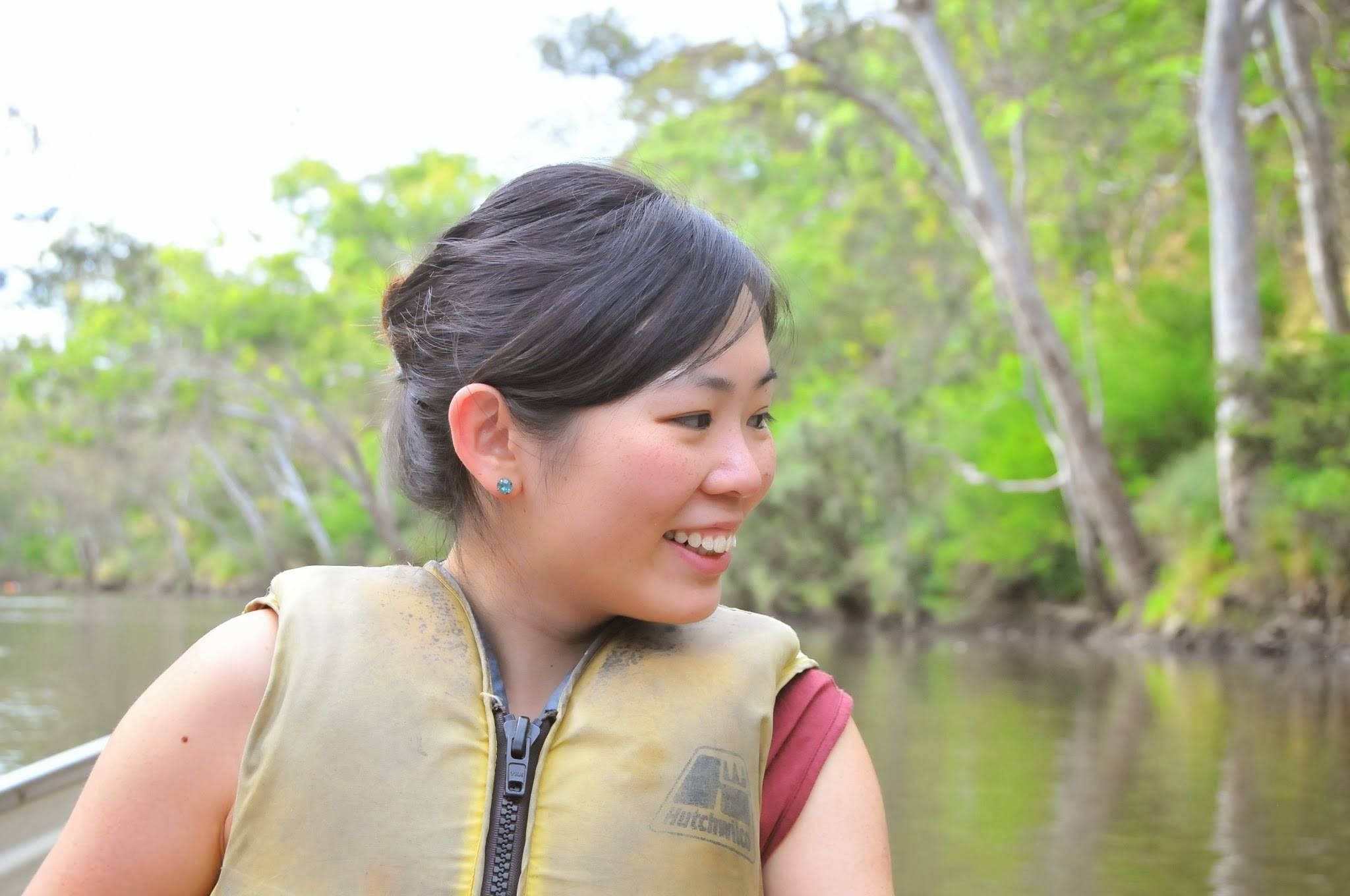
You can read more from Ashley at her blog, Bittersweet Diagnosis.
Diabetes Tales is a new thing I’m trying out at Diabetogenic. If you’re interested in taking part, let me know!





 Diabetogenic
