
You are currently browsing the category archive for the ‘Diabetes’ category.
It’s been one of those days – a nothing day. The roller-coaster BGLs started overnight and haven’t stopped. Nausea hit around 11am only to be replaced with numb lips at 3.30pm just in time for an afternoon hypo.
I hate diabetes on days like today. It makes doing just the most simple, boring tasks difficult and right now after my BGLs have lurched between 2.8 and 22.4 I feel like my head is filled with molasses and my limbs are heavy with lead. I can’t see straight and I can’t think straight.
This is when I want diabetes to bugger off. If I could pack its bag and ship it to a farm, I would. It’s days like today that the silver lining is really hard to find and I am unable to think of anything remotely useful or decent to come out of having been diagnosed with diabetes. It’s days like today that I wish I was ignorant of diabetes and had never heard of it.
This isn’t burnout. This isn’t diabetes distress. I’m generally doing fine with my diabetes at the moment – regular checks, counting carbs, remembering to bolus, paying attention to CGM alarms etc. This isn’t where I do the I’m-so-over-it-I-can’t-deal-with-this-anymore-so-I’ll-pretend-I-don’t-have-diabetes dance which is frequently followed by the head-in-the-sand tango. No, this is just a nothing day where I want to pick up my diabetes, scrunch it in a ball and throw it a long, long, long way away.
It’s for these days that the term ‘invisible illness’ was coined. I’m at work, doing all the things that are expected on a Tuesday. No one is the wiser. Except me. The days that make me feel alone and tired because I can’t hold something up and say ‘look at this – it’s why I feel crap’. These are the days – the nothing days – that it feels like diabetes wins.
Myths to do with diabetes frustrate me as much as the next person. I want people to get it right when they are talking about diabetes; I want the media to report diabetes correctly and I want facts presented in a clear, non-threatening, easy-to-understand way. Of course, this is relevant to all types of diabetes.
What annoys me is people who are furious about one myth, but more than happy to perpetuate others.
Some people in the type 1 diabetes community are outraged if they are lumped in with people with type 2 diabetes. Campaigns and petitions have been developed to change the name of type 1 diabetes to avoid confusion between the two conditions. The thought of being thrown in with people who ‘brought this on themselves’ (that, by the way, would be another myth and completely unhelpful) results in Facebook posts, Tweets and blog after blog after blog.
Me – I couldn’t really care less. I have type 1 diabetes, I know it and I’m happy to educate anyone who has no idea about autoimmune diabetes. I’m also too tired and just plain over this discussion, so I try to avoid it. I do acknowledge that if it wasn’t for the significant number of people with type 2 diabetes, I’m pretty sure that the 120,000 of us with type 1 in Australia would get lost when it comes to funding and media attention.
But, for some it is a real issue and they get angry and do anything they can to make sure that they are seen as different from the majority of people with diabetes in Australia – the type 2 diabetes community. And that’s fine. If that’s what your thing to get angry about is, knock yourself out. (My thing changes every day. Today it was that I didn’t get a cup of coffee in me until after 11.30am.)
There are many other myths about diabetes and they annoy me more. Here are just a selection that I’ve come across in the last couple of days:
- If you use an insulin pump you have diabetes ‘really bad’ (wrong and rotten grammar!)
- If you have diabetes, you can’t eat sugar
- If you weren’t so lazy you wouldn’t have type 2 diabetes (genes anyone)
- Diabetes isn’t really serious
- Cinnamon cures diabetes (okay – it was me banging on about that, but I was just trying to justify in my own head eating an apple cinnamon muffin.)
- You can catch diabetes.
- You grow out of type 1 diabetes (blood. starts. boiling.)
I immensely admire and respect the work done by the Juvenile Diabetes Research Foundation, but using the term ‘juvenile diabetes’ just fuels the myth that this is a condition that only affects kids. Focusing on children who have diabetes is incredibly important, but those kids are going to grow up and hopefully live long, healthy, happy lives. Where is the awareness and focus on adults with diabetes? The reason the term juvenile diabetes isn’t used anymore is because it doesn’t accurately represent the broader type 1 diabetes population.
Of course I’m being somewhat self-serving. I was diagnosed as an adult and my experience of life with diabetes is through the eyes of someone who has lived with it since my mid-twenties. But during that time, I’ve needed information and services and programs that just weren’t there. Information about pregnancy, body image, parenthood, work life balance – things that are relevant to me at this stage of my life – was quite thin on the ground!
I completely agree and believe that there needs to be programs and activities developed specifically for kids with diabetes. Diabetes in day care and school settings is a critical issue to be addressed; camps for kids with diabetes are brilliant. But this is an ages and stages condition. Why is there not as much of a focus on other periods? Whilst some attention is being given to transition from adolescent to adult health care, what about for men and women with diabetes in their thirties and forties? Where is consideration of women going through menopause or for people at retirement age? Why is no organisation focusing on older adults with diabetes in aged care?
If people want to make sure that the world understands that type 1 diabetes is different to type 2 diabetes, then surely they also want to break down other myths about type 1 diabetes. This is not a condition that only affects children. Half of those diagnosed with type 1 are diagnosed as adults. The majority of people in Australia living with type 1 diabetes are adults.
Break down the myths. Educate people about what type 1 is all about. Just don’t do it at the expense of all the facts.
Is there a myth about diabetes that annoys you?
Each and every day I make dozens of diabetes decisions. I decide how many carbs I will eat and how much insulin I need to inject to cover those carbs; I decide how much glucose I need to treat a low BGL; I decide if it’s the day to change my pump line (or try to get an extra day out of it); I decide whether or not to eat something before taking a walk. All of these decisions impact on my BGL and my diabetes management.
And I prick my finger up to 10 times a day and based on the number displayed on my little machine I often decide how much of a potentially lethal drug I will inject into me.
That is the reality of life with diabetes. I say it not to be dramatic. It’s just part of what I do.
And I say it because if you ever think that the numbers displayed on that little machine are not important, think again. Close enough is not good enough.
In talks I give, I often say that how our diabetes paraphernalia looks is important and anyone who thinks that we are being shallow or vacuous because we want a pink pump or a pretty meter case doesn’t understand the monotony of life with diabetes. The fact that my meter case is pink and red and has poppies all over it and is from a Finnish design company makes me less pissed off every time I have to reach for it to stab my finger and check my BGL.
BUT! The most important thing of all is that I can trust what the meter and strips housed in that bright case tells me. Because I make regular decisions based on the number on the screen. I treat low BGLs if the number is below 3.5mmol/l; I decide if I’m happy to go to bed and sleep without any carbs if the number is at or around my bedtime target; I decide if I need to eat some carbs before I exercise; I decide if I’m happy to get behind the wheel of my car and start to drive. I decide if I am going to give myself a correction dose of insulin. All of these things have the potential to go wrong if that number isn’t accurate.
I may want my new meters to come with a gorgeous case or to have a light where the strip goes in for ease of use for night-time testing. I like the idea of meters that tell me of daily BGL patterns or those that use cartridges of strips to help avoid the inevitable strip detritus that decorates every room I’ve been in. I like that it takes only 5 seconds to give me a result and that less and less blood is needed on the strips. All of these things are great, but pointless – completely pointless – if I can’t trust the result. Accuracy. THAT’S what’s important. Most important.
Have a look at what’s going on in the USA with the fabulously named Strip Safely campaign.
 Today, things got a bit fancy with a visit to Government House for the annual Kellion Victory Medal Award Ceremony. The Kellion Medal celebrates people who have lived with diabetes for 50 plus years with awards given at 50 years, 60 years, 70 years and even 75 years. This year in Victoria, twenty-one people received 50 year medals and an additional fourteen were given their 60 year award.
I have written before that this is my favourite day of my work year and it really is! I am so honoured and privileged to be able to sit in a room with this remarkable group of people and hear their stories of long, full lives despite diabetes.
When it comes to diabetes, I am a mere teenager. With only 15 years under the hood, my Kellion medal is a long way off. But I love this day so much because I leave feeling positive and hopeful and encouraged.
If you’re looking for inspiration, this is the place to come. Interspersed with tales of boiling glass syringes and sharpening needles are the attitudes and the approaches that have seen these people not only live, but live well with diabetes.
Here are just some of the things I heard today.
Marjorie (50 year recipient) has given herself over 50,000 injections in her lifetime.
Judy (50 year recipient) says ‘I don’t feel sorry for myself, but it makes me happier if I can say sometimes that it’s crap to have diabetes’.
Kevin (60 year recipient) says he’s ‘led a good normal life’ but is frustrated there is not yet a cure.
Plus some great tips such as the one from Guy who received his 60 year medal today. ‘Never give up your sense of humour!’
Garth (60 year recipient) believes that ‘Common sense and a positive attitude are invaluable tools. The best way to treat diabetes is to lead a normal life.’
And the fabulous Peg, who is a DA-Vic Board Member and has run a support group for people with diabetes for many years says, ‘Join a local support group so you can meet others with diabetes, to exchange ideas and experiences. Never let diabetes stop you from experiencing life!’
I also learnt that even though there has been amazing progress when it comes to diabetes management tools and technology, some things never change. At diagnosis 60 years ago, Kevin was told there would be a cure in 5 years’ time. That old chestnut seems to have been around for a long, long, long time!
A bit fancy? Maybe. But if anyone deserves a special morning tea and a bit of ceremony it is people who have lived with diabetes for so long. It is people like this who we should be celebrating and throwing ticker tape parades for (and I say this not only because in 35 years I’m expecting ticker tape!). We should be looking to these people and acknowledging that surviving diabetes for such a long period does deserve awards, tributes and accolades. I want to be just like them when I grow up!
At the beginning of the school holidays, we hugged our teary eight year old good-bye and left her in the more than capable hands of her grandparents. For two weeks, we would be overseas without her. Yes, I had a conference to attend, but her father and I willingly tacked on a week following the close of the conference to holiday in Morocco. Mother guilt? I’ve got it in spades.
Guilt. I feel enveloped by it at times. Add up the fact that I’m a mum, from an Italian background and was brought up Catholic and it’s no wonder I always feel guilty about something. Throw diabetes into the mix and there’s no escape.
Working mum, so I am always missing special events at my daughter’s school? Tick.
Regular overnight travel for work means bedtime stories are regularly missed? Tick.
Left home BEFORE I got married and lived with boyfriend, thus breaking every ‘good Italian girl’ rule in the book? Tick.
I don’t go to church (except for when being a tourist) and don’t really believe in what I was taught at Catholic school. I blaspheme constantly and leave the field blank when asked for my religion when filling in official forms. Catholic guilt? Huge tick!
That’s a hell of a lot of guilt to deal with before starting with the diabetes.
Out of range numbers; chocolate cake for breakfast; no breakfast apart from three coffees; half a block of chocolate after dinner; a day of few (or no) BGL checks; a feeling of being over it; fear I’ve passed on my defective immune system to my daughter. Tick, tick, tick, tick, tick, tick, tick!
One of the problems with diabetes is the word ‘should’. As in ‘You should check your blood sugar ten times a day’. Or ‘You should exercise for 60 minutes every day’. And my personal favourite, ‘Should you be eating that?’ The media loves to play the blame game – especially when referring to people with type 2 diabetes.
If we develop complications it’s because we didn’t do enough to prevent them. So, not only is it enough that we have to live with the complications of diabetes, we also need to feel guilty for letting it happen.
Everywhere we turn there is a finger pointed; a head shaken; a disappointed glance. It’s hard not to feel bad, to blame ourselves when things aren’t going to plan, to feel guilty.
A question I frequently ask myself (and pose when giving presentations) is ‘Why isn’t it enough?’ If we are trying the best we can – and that best will be different for each and every person and vary at different times in our lives – why can’t we say that it’s more than good enough? Why do we need to have the emotion of guilt to a situation that no one ever decided that they wanted to be in? No one wanted to develop diabetes – not matter what type. No one chose this as their lot in life. So instead of feeling guilty about how things are going, shouldn’t we just try to arm ourselves with the best resources at our disposal and do the best we can?
I struggle with this regularly and I wonder how I would cope if I actually did something questionable that may really warrant or even deserve feelings of guilt. Perhaps it’s one of the reasons that I have a strong moral compass. I don’t say that to sound ethically superior, it’s just that I have enough guilt in my life with the things that I didn’t choose, that I avoid knowingly doing anything that would make me feel like I am a bad person.
Putting guilt where it belongs is a constant battle in life with diabetes. Remembering that a messed up pancreas is something we are forced to deal with is the first step in learning to keep the guilt in check and not let it take over our life.
And it also helps to remember that life is far too short to feel guilty about eating a cupcake. Really.
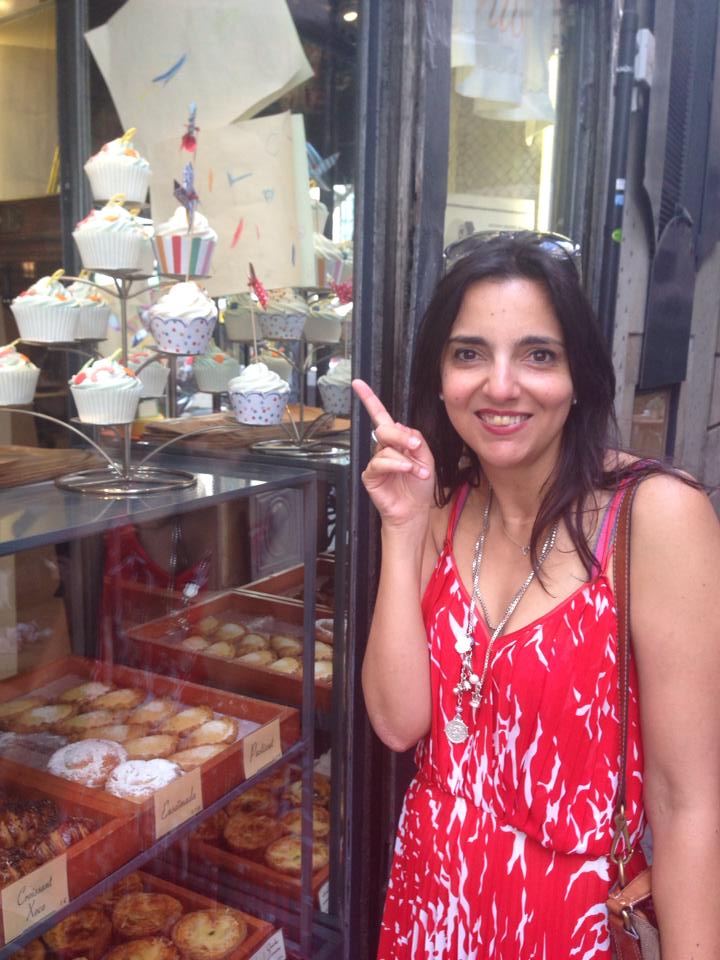
Instructions.
Eat cupcake
Enjoy
Do not feel guilty.
On Saturday, we hosted our latest Type 1 in the City event which covered one of the almost-taboo topics of diabetes – complications. As a diabetes organisation, we seem to at times be scared of speaking about this issue and when we do it’s in hushed tones. Despite being one of the most requested topics on our event feedback forms, we’re reluctant to put it on our ever-growing calendar of events.
As a person living with diabetes, I don’t like talking complications. In a stupidly superstitious way, I feel that if I do I’ll make them come true. (Yep – me and logic. Best friends!) But after 15 years of living with diabetes, I am, for the first time, having to face complications head on. The cataracts that have been threatening to cause vision problems are now at the point where I can no longer ignore them. At my six-monthly ophthalmologist check-up last week, I decided it was time to bite the bullet and schedule the surgery to have them removed.
I’m not okay with this and it’s more than just being a complete and utter wuss when it comes to eye things. Although it’s likely that I was going to develop cataracts, my diabetes is probably the reason why they first appeared when I was 28 year old and that I will be having surgery for them at 40.
I believe that at Diabetes Australia – Vic (where I manage Community Programs) we have a responsibility to put discussions about diabetes-related complications on the table. We should be talking about them. As soon as a topic becomes taboo, there is shame and stigma associated with it. And that shouldn’t be the case. For many living with diabetes, complications are a reality. We should be providing not only information about how to reduce the risk of developing complications, but also information about continuing to live well if complications do eventuate. And we should be doing this in a safe way that doesn’t cause shame or feelings of failure.
Maybe we need to start to rethink the way we speak about complications. Time and time again we hear that if we ‘take care of ourselves’ we won’t get complications. But we know that is not the case. It suggests failure on our part if we do get complications. Sometimes people do their very best with what they have access to, and complications still happen. If we reframe the discussion and make sure we consider the role luck or genetics may play, will that mean that people are less inclined to ‘do the right things’ because they think the result is pre-determined? Or will people actually feel better knowing that, if they do develop complications, they feel confident they’ve done the best they can with the tools available to them and the capacity they have.
My dear friend who does live with some diabetes complications is my go-to person when I want to ask questions about living with such challenges. She has some really strong and valid views about how we should be discussing diabetes complications. She says, ‘Discussions about complications shouldn’t be used as a threat. We don’t need to be showing the horror stories, but we do need to have available real, factual information about complications for those who would like to find it.
‘Also we need to make people aware that complications are not the end of the world. There are lots of people walking around with complications, living their lives. I work with others with diabetes and I don’t want to be the constant, visual reminder of what ‘can happen’. But I hope that they see that even with complications life can go on.’
One of the things that my friend mentions is that at times she doesn’t feel connected to the diabetes blogs she reads.
‘Sometimes when I read blogs like yours I think that you are doing it easy. It seems like you are doing really well with it. I don’t mean that with any disrespect, but my experiences are really different to yours. I’ve never read any blogs about people with diabetes who have had the same experiences as me.’
So what do we need when we are talking to people who have complications?
‘We need peer support – whether in a group situation or one on one or on the phone or online. While having treatment for complications, I was not given any offer of support like this and I think perhaps it would have been good for me.’
I feel incredibly lucky to have this particular friend in my life. I know that she worries that hearing about her diabetes life may scare me, it does the exact opposite. I know diabetes complications may occur – they were shown to me in all their gory detail the very day I was told I had type 1 diabetes and I was terrified. But speaking to her, watching her live a rich, full life (despite being a Collingwood supporter) doesn’t terrify me. It reassures me. It helps me understand that if complications are part of my diabetes future, they don’t signal the end. And that has given me hope. She’s pretty damn amazing!
It’s a gorgeous day in Melbourne today; my BGLs are sitting pretty and there is a nice straight line on my CGM. Sometimes, it feels easier to live in hope…..
A couple of weeks ago at the ADS ADEA conference, I spoke at one of the Symposia about how healthcare professionals can get involved with diabetes social media. Today, social media has the ability to connect people like never before and is something about which I am passionate. I speak and write regularly about the power of the diabetes online community (DOC) as a way to bring together peers; my presentation at the Doctors 2.0 and You conference in Paris back in June discussed how social media can be used to connect four of the players in healthcare – patients, healthcare professionals, healthcare organisations and industry.
I was a little nervous about discussing this topic because I know how reticent a lot of HCPs are when it comes to social media and its value to people living with diabetes. Because of its very nature, social media is unregulated. There is just so much out there; how is anyone meant to know where to direct people? And equally, what should be given a very wide berth? (For the record – anything claiming that cinnamon cures diabetes is a crock and should be ignored!)

With thanks to the clever people at Diabetes.Daily.com
But actually, that wasn’t what my talk was about. My talk was about why people with diabetes turn to social media; what (and who) we look for and what we get from an online community of peers that we can’t necessarily get from our HCPs. I then moved to discuss how HCPs can engage with the very same things we are using.
My presentation was gentle – a lot of the people in the room had never considered using Facebook as a tool to provide support and connect with others living with diabetes. Whilst there is a general understanding about the value of peer support, that view is often out-dated and focuses on a more traditional picture – face-to-face support groups.
I discussed how health professionals around the world use social media as a mechanism to connect with other health professionals and how crowdsourcing diagnoses works. I suggested the audience look up Bertalan (Berci) Meskó and consider enrolling in his online Social MEDia course.
I explained how Twitter is about far more than finding out what Kim Kardashian ate for breakfast and discussed weekly diabetes tweetchats, urging the HCPs to check in, lurk for a week or two and then take part.
Social media works for people with diabetes because it feels like a safe place. I know that idea is completely contrary to what many HCPs believe – they see it as anything but safe! But I know that I can log on to Twitter or Facebook at any time of the day or night and there will be someone there who can say to me ‘I know how you feel’. There will never be judgement; there will never be accusations of not trying hard enough. But there will be support.
And I guess that’s the crux of this. We know our community and we feel safe there. In his TED talk, Berci Meskó discusses how crowdsourcing works when you know your audience and your social media networks.
The final thing I discussed was diabetes blogs. There are two ways HCPs can use blogs. The first is for themselves; they can read them; they can take in what people are saying. Because it’s by reading the blogs of people living with diabetes that the real-life stuff comes through. It’s a way for them to get a good understanding of the things that we don’t talk about in our appointments with them, but the things that are important and impact on how we manage not only our diabetes, but our every day lives.
Also, they can use them for their patients. If ever a patient says ‘I feel so alone’, I suggested that they direct them to a well-known diabetes blog. There will probably be a post somewhere in the diabetes blogosphere that will address the same issues the PWD are experiencing.
The diabetes social media world does not need to be scary and regarded with suspicion. The role of HCPs is not under threat because PWD are using social media – that’s not what it’s for. It is just the 2.0 version of peer support.

Don’t forget – weekly #OzDOC Twitter chats are on Tuesday at 8.30pm (eastern time).
DISCLAIMER
The Can Technology Cure Healthcare’s Future symposium was sponsored by Sanofi. My travel costs were covered by Sanofi, however I did not receive any payment from them. Sanofi had no input into my presentation. Good on them for supporting such an important topic!
There are times that I am dismayed at what I read on Facebook about people navigating diabetes care for themselves or their child. Today, I was asked for my comment on a situation where a child with type 1 was being threatened with the removal of her pump because her HbA1c was higher than target.
This really gets my blood boiling for a number of reasons. Let me count the ways!
- A pump is not a luxury. It is a way of delivering insulin. Let’s be clear about that. It is a tool that we use in the management of our diabetes.
- The only person who has the right to determine how their diabetes will be managed is the person with the faulty pancreas (or their parents in the case of young children).
- HCPs are there to work with us and be guided by what we need and what we are asking for. Equally, we look to them for support, education, advice and information about our diabetes management. We do not look to them to be told off or judged.
- Punishing a PWD by removing a management tool is just plain stupid. Like it or not, I need to give myself insulin and I choose to use a pump to do that. If I’m feeling a little unmotivated and don’t have the capacity to be checking my BGLs, taking away my pump is not suddenly going to give me an injection (bad, bad pun) of motivation.
- Scare tactics DO NOT WORK. I’m going to say that again. Scare tactics DO NOT WORK. Also, scare tactics DO NOT WORK.
- The person in charge at all times is the person with diabetes. Let’s be clear about that too. The PWD is up front, directing traffic. HCPs, diabetes organisations, friends and family are there to support the person in charge.
- This is going to sound crass, and I don’t mean it to, but HCPs need to remember that they are being paid to do our bidding. They are providing us with a service. And that means, if we don’t like the service, they get sacked and we find someone who will give us the service we need.
- Threatening to remove a pump is bullying behaviour and it absolves the HCP of any responsibility in the management of their patient. I will never blame my HCP if my A1c is out of range or I am not checking my BGL. I would ask that they don’t blame me and threaten me.
- Deciding to take away a pump because HbA1c is too high is placing far too much importance on the value of the HbA1c! It’s just a number that gives an average. But not much more.
- Also, by using results of an HbA1c check as a reason to threaten to remove someone’s pump is forgetting about the considerable emotional impact of diabetes. Just as an out of target A1c is not a reason to rap someone over he knuckles, an in-target A1c is not necessarily an indication that everything is A-okay.
I know that it is not always easy to be your own advocate, but it’s times like this that you really need to be able to stand up for yourself (or your child), or bring along someone who can. Being clear about what you want and need is important – and that includes being clear about what you won’t accept.
TV’s Dr Gregory House repeatedly says ‘Everybody lies’. He believes that doctors can’t and shouldn’t believe what their patients are telling them because they will omit key points about their health – intentionally or not. Diabetes makes us liars. Not big liars, but it’s easy to tell a white lie here and there.
‘I have NO idea why my BGL is 32.5’ (conveniently forgetting two serves of cheesecake)
‘My last A1c was 7.3%’ (actually, it was 8.3%, but what’s one percentage point between friends?)
‘Of course I bolused for lunch!’
….. etc etc etc
These are small lies and in the scheme of things, really don’t matter. But we do need to ask ourselves, who are we really lying to and why do we feel the need to bend the truth?
I have been seeing the same endo for almost 12 years. After three and a half years of endo-hopping and endo-shopping, I finally found ‘the one’. I admit – the not-so-great relationships with the previous endos where partly my fault. I found them judgemental and I dealt with that by not being completely honest. I didn’t want the admonishing looks or the exasperated sighs from them when they saw my above target numbers.
So, I made things up.
This did me no favours and did nothing to foster a relationship based on trust with them. The relationships were doomed from the start when I think about it. I’m sure they knew that I was lying (they were pretty stupid if they didn’t!) and it was pretty disrespectful of me to think that they were dumb enough to believe what I was saying.
When I started seeing my current endo I made a promise to myself: I would tell her the truth. Now, the fact that she isn’t at all judgemental, is kind and caring and has the best communication skills of any health professional I’ve ever met certainly has helped me keep that promise. Her response to me saying ‘I’m over this and really don’t care about diabetes anymore’ is not head shaking, tut-tutting and telling me off. She wants to know why, how she can help and to know what I believe I can manage to do that will make ME happy. She makes me want to be honest and tell it like it is.
And I hope that because it’s always been that way that she doesn’t doubt what I am saying. I hope she knows that it’s the truth when I say things have been tough, or that I really don’t know why my sugars have been all over the place, or that I really have been checking my BGLs six times a day. I hope that because our relationship started with honesty she knows she can trust what I say as the truth and never doubts me.
A relationship with your health professional that is based on trust, honesty and just telling the bloody truth is rewarding. Starting off that way is critically important. I think that when you feel you can be that way – and it does open you up to feeling vulnerable – that you have found the right match.
But if you start with lies, there is probably no chance that either of you will be getting what you need from the relationship. If you feel you need to lie to them, ask yourself why. Equally, if they know that you are not being honest with them, they need to wonder why that’s the case. No one wins when we are dishonest about our diabetes.
Dr House may believe that everybody lies, but I believe we can start with honesty. My relationship with my endo is rewarding for me because that is how we started. I trust her implicitly and she has no reason to doubt me. It was a good starting point 12 years ago. And it’s still working today.

I’ll take any excuse to look at Hugh Laurie!





 Diabetogenic