
You are currently browsing the category archive for the ‘Diabetes’ category.
You may not have noticed, but the festive season is upon us. (Actually, according to Woolies, the festive season has been upon us since the first week of September which was when I first saw mince pies on their shelves. And as Louden Wainwright III says ‘It’s a season, it’s a marathon….’ Sorry; digression.)
Anyway, it’s the festive season and with it comes lots of messaging about eating with diabetes during this time of the year. Now, I’d like to leave my diabetes behind whilst eating during the holidays, but I’ve come to learn that diabetes is a shit and doesn’t work that way. Because, diabetes IS for Christmas….and every other bloody day of the year as well. Happy holidays!
I saw an article this morning about how to keep your eating and drinking in check during Xmas and other parties, and by the time I finished reading, I was weeping uncontrollably and wanted to shoot myself. (Except not really because I’m a huge supporter of gun control and don’t own a gun.) I also wanted a drink, but it was 6.45am and I was feeling the judge-y eyes of the writer staring at me and the Moscow Mule I was about to make for breakfast.
All articles about diabetes and festive-season-eating demand limiting everything – alcohol, food, happiness. Quite frankly, limiting alcohol at family gatherings is not an option for many people, which seems to be lost in the horrific and laughable suggestion of taking your own water to water down drinks. (I lost the will to live at that suggestion.)
Obviously, a blow-out is best avoided, but that is wise even if you don’t have diabetes. There is nothing worse than feeling as though you literally cannot move from the sofa – mostly because it means you could be stuck sitting next to a distant relative who wants to tell you, in detail, about their recent adventure in passing kidney stones, or (worse) about their neighbour who died from diabetes complications. Diabetes – the gift that keeps on giving.
So, here are some of the things I’ll be doing to survive the next few weeks.
- Acknowledge that this time of year is about food and that is okay. This is definitely the case for my family, and I am already counting down the days until I gorge myself on my mother’s freshly made zippoli.
- Throw any thoughts of guilt out the window (along with suggestions of BYO H2O).
- Make a game out of my CGM by seeing if I can spell out any swear words in the ain’t no mountain high enough/valley low enough trace.
- Remember that even though I have diabetes, I have every right to enjoy whatever I feel like eating. Or don’t feel like eating. The low(er) carb thing may or may not stick over the festive period. Obviously, my mother’s zippoli are carb- and fat-laden parcels of perfection, so the low(er) carb thing can fuck right off once they are set down in front of me, but I probably will still avoid other carb-y things because dealing with high glucose levels or inadvertently overdosing on insulin does not a festive occasion make.
- Seriously, give me a huge bowl of cherries for dessert and I am a happy chicken. (The non-watered-down alcohol has probably helped get me to that state, but cherries also make me undeniably happy.)
- Brush up on my responses to ’Should you be eating that?’, which (thankfully) I probably won’t need to use anyway. Funny how I only ever needed to hit someone once over the head with a spoon after they asked me that…
- Find red and green Sharpies and write ‘My Diabetes; My Rules’ in festive script on the inside of my hand to remind me to do whatever works for me. And to shove in the face of anyone who does actually ask ‘Should you be eating that?’
- Thank the Xmas angels that Brunetti in Carlton is open on Xmas morning, meaning that we can make the ten-minute dash there, drink coffee and eat pastries before the onslaught of family, food and festivities.
- Make a donation to a diabetes-related charity because not everyone gets to decide if they will use extra insulin to cover the second slice of passionfruit pav. Here are three ideas:
This blog is not about giving advice, but I am going to give some now as I believe this is possibly one of the best ways to survive until the end of the year:
Don’t read any articles telling you to eat nothing but cardboard or watered-down grog. Or suggesting you take your own plate of crudités to parties. I don’t care that it’s a French word, it just means carrot sticks. And having spent the festive season in France, I can tell you no one was serving carrot sticks for the family Xmas dinner. Plus, if I’d taken my own, I probably would have been mocked in French, and not been allowed to drink any of the delicious non-watered-down red wine or bûche de Noël for dessert.
Here’s some Louden Wainwright III. He makes everything better. (Bonus points if you know his character in M*A*S*H…without consulting Dr Google for the answer!)
Last week, my Timehop app reminded me of this snapshot in time.
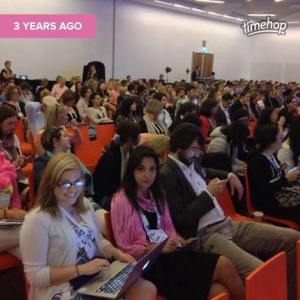
This photo was taken at the 2013 International Diabetes Federation’s World Diabetes Congress in Melbourne, and that look on my face is of pure anger. I was listening to a speaker – a doctor – referring to ‘non-compliant diabetics’ as he was telling of the ‘poor outcomes’ of ‘patients’ in his practise.
The old language chestnut came up again on the second day of the #MayoInOZ conference during the innovation showcase was held. In this session, nine speakers were each given five minutes to present how they are using social and digital tools to improve healthcare. (This is where Kim spoke about #OzDOC and how healthcare professionals use the hourly tweetchat as an opportunity to engage and learn from people with diabetes.)
The final speaker in the innovation sessions was a late addition and it was great to see diabetes again being represented. I know I am biased, but I do always get excited when I see diabetes on the program!
Andy Benson from Coffs Endocrine and Diabetes Centre presented on the project she has been working on: telling the story of diabetes in a series of documentaries to be screened on the BBC.
So, first things first. I love this idea. I am a huge fan of having diabetes out in the ‘public’ space, pulling it out from diabetes groups and diabetes-specific forums, because in most of these cases, we’re preaching to the converted. It’s one of the reasons I love writing for Mamamia Women’s Network where I know that most of the readers probably don’t already have a connection to diabetes.
If these documentaries are screened on the BBC, imagine the audience! It is so refreshing to see people thinking outside the box and looking for ways to present to a new audience – and to tell stories, real stories of real people who actually live each day with diabetes.
Andy showed two short video clips from the still-in-development documentaries. As healthcare professionals on screen spoke about diabetes, I automatically prickled, my language and stigma sensors being alerted straight away.
I wasn’t the only one. In a room with two other diabetes advocates – Kim, Melinda Seed (Once Diabetes), as well as several very vocal health advocates and activists, there was a sense of discomfort at what we were seeing.
I inhaled – maybe ‘gasped’ is a better word – when one of the HCPs used the words ‘diabetes plague’ in his introductory words. There was an undeniable sense of blaming the person with diabetes in the words being used and the sentiments being expressed.
The Twitter conversation from both people in the room and those following along was honest and candid. And, quite frankly, it was uncomfortable too. Andy had disclosed that she has type 1 diabetes, and I didn’t want to be actively criticising the work of a fellow PWD.
However, I could not keep quiet either. When Andy came over to chat after her talk, we had a very open discussion. I was probably quite blunt in my comments.
It is not okay to use language that is stigmatising. The format of the information being presented (i.e. unscripted interviews) doesn’t preclude anyone from being courteous and respectful, and I don’t believe that PWD were being treated either courteously or respectfully in the way about which we were being spoken.
I understand that there is a desire for authenticity and genuineness when interviewing documentary ‘talent’, however it is possible to be clear from the outset that language needs to be respectful at all times. Not sure where to begin with this? How about the Diabetes Australia Language Position Statement which actually provides suggestions for inclusive, non-stigmatising language?
I think it is really important to acknowledge that the road to satisfaction in the way we use language that is inclusive and non-stigmatising is a very, very long one. Also, I genuinely don’t believe that there was any malice intended on the part of the film makers or the interviewees.
We also need to acknowledge that the language used in what has been (and many would argue continues to be) a patriarchal health system is entrenched in the thinking of many – it was part of their training and is a habit that will take time to break. But by acknowledging it, we are not saying it is okay.
As I said, I love the idea that diabetes is a topic for a documentary that is being made for a non-diabetes-specific audience. However, if those people walk away thinking that my healthcare condition is a burden to society (and therefore I am too!) or that they believe it is okay to continue to use words that stigmatise, then there is the potential for this work to do more harm than good.
And finally, a call to not only the coordinators and owners of this work, but to all who are developing any sort of health information using any sort of platform: talk to people with the condition. Lots of them. It is not okay to have one token consumer representative; there should be many – as many as (if not more than) any other expert being consulted.
I’m reading a fabulous book at the moment. It’s called In Other Words, written by one of my favourite writers, Jhumpa Lahiri. My sister introduced me to her writings a couple of years ago, and I have read most of what she has written now.
The backstory to the book is quite lovely: the writer wanted to learn Italian – really learn Italian – and after years of study, moved her family to Rome. While there, she started writing only in Italian, retraining her brain to speak and think in Italian first.
The book is presented in both Italian and English. When the book is open, the left-hand page is in the original Italian and the right-hand side is in the translated English. As someone with basic Italian, I’ve been enjoying reading the Italian words, saying some of them out loud to feel them roll around on my tongue.
I start by reading the Italian side and work my way through, understanding as much as I can. What I find is that I get the general gist of what is going on, but there are gaps. The detail is completely lost at times, but I am able to piece the story together and understand what is going on. When I read the translation, all the gaps are filled in, the detail is there – adjectives provide description and narrative and help round out the story.
I cover up the English page so that I can only read the Italian, but try as I might – as I rack my brain to remember what a word means – there ends up being a lot missing from the story. But there is the safety net of being able to remove the paper hiding the translation when I simply can’t work out the holes in the story, resulting in a satisfying – and full – understanding of the beautiful story.
Yesterday, I spent the whole day feeling like I was living in the Italian side of my book. I trudged through, with a general idea of what had happened overnight, but there was a lot missing. I’d had a hypo in the middle of the night – a terrible, terrible low. I can’t really say much more because I don’t know what happened. Parts of it are really clear, but a lot of the particulars are completely missing.
Aaron has filled in some of the gaps – how he knew I was low from the way I was moving around in my sleep; how he managed to get me to drink some juice, and then some more before I was fully able to understand him and the situation; how when he reached out to me I was drenched in sweat.
I’ve filled in the gap of the no sensor alarm – problems with the Dexcom app at the moment meant that when I grabbed my phone, angry that we had both missed the alarms, I was greeted with the message ‘Transmitter not found’. That explained why I’d not been alerted to the impending low, allowing me to treat before things turned nasty.
Because of the app problems, there is no data showing how long I’d been low, or the trajectory of my glucose levels. I know that I was sitting in range when I went to bed, and had been for some time. But that was at 10.30pm and this was three hours later. A lot can happen in three hours.
My bedside table was littered with three empty juice boxes and a couple of other wrappers in the morning, letting me know exactly what was consumed until I felt safe again.
I have a pain in my ribs. When I stood up and felt the painful twinge, I thought perhaps I’d had a seizure during the hypo, but Aaron was able to assure me that didn’t happen. The reason for the pain is a mystery, but I know it wasn’t there when I went to bed, yet was when I stood up to change out of my sweat-soaked t-shirt.
I’ve spent the last couple of days trying to piece together what I do know as I endeavour to search for the missing parts of the story. I close my eyes, desperately searching in my mind for a little hint as to what happened before Aaron realised I was low and sprang into action. Or the way I moved that now means it hurts when I breathe. I wish I could pull away a curtain – or piece of paper – and that would expose the full story.
But there is no safety net here. All I have is what I can remember and what Aaron has been able to tell me. The gaps cannot be filled in; the detail is completely lost. I feel incredibly unsatisfied, and the uncertainty also means that I am feeling very vulnerable and exposed. If I don’t have the full story, how do I understand it all?
And how can I possibly stop it from happening again?

On Saturday, we gathered the family for an afternoon tea to celebrate the kidlet’s twelfth birthday.
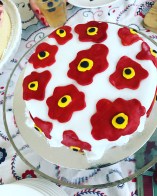 My sister arrived with the most beautiful and delicious cake. She always makes my kid’s birthday cake – has done for pretty much every party. Now, Toots has come up with some amazing cake creations over the years – 3D representations of Mary Poppins, Wizard of Oz, fairies under toadstools, teddy bear picnics, beachside parties. This year, the cake was decorated simply with the Marimekko poppy pattern – my daughter’s (and my) favourite design ever. It was the simplest, least elaborate cake Toots had ever made. But it was, in my mind, the most beautiful.
As I laid the cake on a platter, I was reminded that simple, most basic, things can have a huge impact.
Once, during a tough time, someone asked me if I was sleeping and eating, and I looked at them and shook my head. ‘Not much,’ I said. ‘It’s on the list, but there are two things ahead of it – I need to breathe and I need to hug my kid. I know that she is getting plenty of hugs so I feel that I am getting that right. And most of the time I don’t have to remind myself to breathe, although there are times that I find myself staring into space, holding my breath and I have to concentrate on exhaling. I eat a little; I sleep a little. But I breathe. And I hug her and that has to be enough. That is enough. There is no space for more.’
I have come to learn about finding space for the basics and not beating up myself for things that don’t get done. Of course, sleeping and eating matter, but I worked out that doing the minimum of those things got me through. I did what I could until I was at my limit. And then: there is no space for more. Six words of permission accepting I was full. Nothing fancy – just do the basics.
Understanding this has become essential to my survival – even when not going through a crisis period. I focus on what there is space for and that is usual the most basic and simple things. There is space for love and the people who support and value and encourage me. They understand the ebb and flow of what can be managed.
I have space for work that is fulfilling and enjoyable and challenging and I am fortunate that, almost twelve months into what I am still calling my new job, my work is all of these things; the decision to jump without a safety net is justified each and every day.
I have space for small things that bring great joy, remembering that it’s not necessarily the grand gestures or big events that necessarily have the greatest impact.
It was my birthday on Sunday and it was, quite possibly, one of the best birthdays I’ve ever had. It involved a sleep in, breakfast at our favourite place, a late lunch of dumplings, wandering around with my family and then sitting at home watching Gilmore Girls. It could not have been simpler or quieter. And it was perfect because it was exactly what I had space for.
Diabetes and happiness – do they go together? On Tuesday night, the #OzDOC tweetchat asked that very question and I’ve been thinking about it a lot.
The longer I’ve lived with diabetes, the less inclined I am to be positive about it. I spent a lot of time in the first fifteen years being very ‘rah-rah-rah-diabetes-won’t-stop-me’ about it all, but in the last few years, I seem to feel that there are two words that more than adequately sum up how I feel about diabetes:
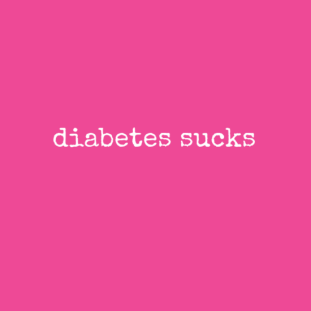
I am not an unhappy person – I’m annoyingly chipper and perky most of the time. I just don’t feel that any of my happy nature can in any way be attributed to the fact that my beta cells are AWOL.
Maybe I’m burnt out – diabetes burnout, end-of-year burnout, thank-fuck-diabetes-month-is-nearly-over burnout. I’m exhausted and trying to think about how happiness and diabetes fit just made me realise how they don’t.
So to put a positive spin on things, I’ve tried to come up with a list of things about diabetes that do make me happy. It wasn’t easy, but here we go.
Diabetes happiness is:
- Day five of a pump infusion set
- Working out that even with the low cartridge warning, there is enough insulin in my pump for the night and I don’t need to get out of bed, find insulin, refill old or fill new cartridge, rewind pump, load and prime cartridge and infusion set… (AKA delay much needed sleep)
- Sitting down to a meal of mystery carb content food, closing my eyes, SWAG-ing a bolus and winding up under 7 two hours later
- A healthcare professional calling my name at the exact time of my appointment, resulting in no need to sit in a waiting room flicking through Readers Digest circa 1984
- The sound of silence – no Dex alarm for five or more hours
- Naked showers – days where the planets align and I need to change both my infusion set and sensor on the same morning, standing in the shower with absolutely nothing on my body at all
- Finding a couple of rogue glucose tabs at the bottom of my handbag when I am stranded in the middle of nowhere and get a ‘fall rate alert’ alarm on my Dex
- Diabetes in the wild
- A night of no disturbances – no alarms, alerts, treat-me-now lows or need-to-pee highs
- Walking through a crowded room and not having anyone say ‘What’s that?’ while pointing to my arm
- Catching an impending low and treating it perfectly
- No.Rebound
- Seeing complete strangers wearing blue on Fridays and thanking them for raising diabetes awareness without even knowing it
- ‘Renza, I see no sign of diabetes-related eye problems’
- A door handle that doesn’t get in the way
- Bras that fit perfectly and perfectly house my pump
- Diabetes friends who swear as much as me
- The end of stupid lists about diabetes.
Our beautiful girl turns twelve years old today. It’s both a lifetime and a minute in time and I sometimes look at her and still cannot believe that she is here.
When I was pregnant, I kept an online diary for a diabetes website. That site is no longer there, but I still have the diary and have been waiting for the right moment to publish it here on my blog.
Today is that day. It’s a long read – a short entry for each week of the pregnancy – but it takes me back to exactly how I was feeling and coping throughout the pregnancy. My favourite part is the last part – our baby’s arrival – which I wrote when she had been home for only days and my head was in a new-parent fog and I was desperate to try to put in words what had happened and how I felt on the day. It’s funny, because it was starting to get murky then, but today, I can remember everything about it.
We tell our daughter her birth story occasionally – often around her birthday. And in there amongst the way we felt when we first heard her cry and saw her face for the first time, is the story of how much she is wanted and the path we took to actually make that happen.
It’s all here, so please have a read if you’d like. Yesterday, when giving my talk to some healthcare professionals one of them asked if I would mind sharing how I felt when pregnant and what a diabetes pregnancy is like.
And I said: It was the most difficult thing I have ever done emotionally. It was the most intensive time of diabetes care I have ever experienced. I saw my healthcare professionals more frequently than I saw my friends and family. I was checking my BGL over 20 times a day – there was no CGM here then. I had never felt such anxiety or fear as I did at that time. But equally, it was the most magical time because in amongst all the diabetes stuff, was my daughter and now – now all I think about is how it was the best thing I could ever have done.
Twelve years old and growing up into such an amazing young woman. I could only have hoped on the day she was born that she would be as wonderful as she is today. Happy birthday to our magical girl. I never thought I would be able to love her more than I did the day she was born and yet, somehow, that love just keeps growing. We’re so excited to see what you do next darling. And we’ll be right there alongside you, continuing to cheer you on.

Today, I gave a talk to healthcare professionals at a hospital in outer Melbourne. I was invited months ago after the organisers heard me speak at another event, and they wanted me to speak about living with diabetes.
As I said in the introduction to my talk, I am dead boring. Plus, I am only one voice. So, to create some balance and some interest, I reached out through Facebook and asked this:

As usual, the online community didn’t disappoint. I had over forty responses and weaved them into my presentation, adding real impact to what I was saying, reinforcing my comments with the comments of others walking a similar path of life with diabetes.
I started by asking the audience a question…
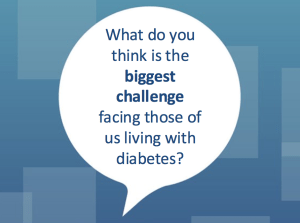
And then I said that I would be talking about life with diabetes. Except, I reminded the audience that life with diabetes was very different depending on where in the world you were diagnosed and that my story is about my ‘first world diabetes’ and I checked my privilege almost as a disclaimer.
I used that point in my talk as an opportunity to speak about those who cannot access or afford insulin and how this is simply, not okay. I could sense the surprise in the room as I said that people are dying because of lack of access.
Then I spoke about what diabetes is to me and here is what I said:

It’s boring and tedious and frustrating.

It’s made me an expert. And that we need our HCPs to acknowledge the hours and hours and effort we put into managing our own brand of diabetes and the expertise we develop from living so closely with this condition.

It’s about humour – because laughing is a tool I use to get through this and that’s okay.
 It’s about words, because language matters and sticks with us forever.
It’s about stigma. I asked if they could think of another condition that was so stigmatised and surrounded by blame – and that while we experience it with type 1 diabetes, I said that I believed my brothers and sisters with type 2 diabetes have it so much worse.
It’s invisible – despite the bright blue patch surrounding my Dexcom, most of the time it is hidden away and not on show for all to see.
It’s about people and community and the DOC and the people that are like the air I breathe – without whom I would not be managing at all.

It’s about my family. And then I explained, fighting back tears, that this is the hardest part of life with diabetes for me. I’ve written about it a lot, spoken about it often. But thinking about how diabetes impacts on Aaron and the kidlet breaks – absolutely shatters – my heart into pieces. The worry I cause my parents makes me feel guilty and resentful. And every day I regret the time I told my sister that my life expectancy had been cut thanks to my type 1 diagnosis because I will never forget the look in her eyes indicating the pain I had just caused her.
I answered a couple of questions and then my talk was done. I thanked the audience for listening, stepped down from the stage, took a deep breath. Someone came up to me as I was gathering my bags and said that she learnt more about real life with diabetes in that talk than in all her years nursing.
This is the power of story telling. The comments I read out and shared have so much power in them. We need to keep telling our stories, turning the way we talk about diabetes on its head. It’s not about the numbers, the tools or anything else. It is about people.
Thank you so much to everyone who shared their comments with me on my Facebook post yesterday and today.
In the lead up to our daughter being born, I was told that it was most likely that she would need to go to the special care nursery immediately after she was delivered because of low blood sugar. This had been the case for most of the dozens of other women with type 1 I’d spoken to beforehand, and I was resigned to the fact that there would not be many cuddles for a day or two.
The reality was a little different. As soon as she was delivered, her heel was pricked and her blood glucose was checked. ‘She’s good to go straight to your room,’ said the paediatrician charged with making sure our precious baby was all okay. He placed her in my arms so I could drink in the beautiful little munchkin
‘No; wait. She needs to go to special care. I have diabetes, remember?’ I said, as I lay on the table being stitched up after the C-section, looking in awe at the wriggling, full-cheeked munchkin who had just been lifted from my body.
‘Her blood sugar is fine,’ the paediatrician smiled at me. ‘Aaron can take her to your room and as soon as you are out of recovery you can join them. Lots of cuddles this morning – skin to skin contact is good for you both! We’ll keep an eye on her and do hourly BG checks to make sure she is okay.’
An hour later, I was stitched up, out of recovery and wheeled back into my room where Aaron was sitting holding our new daughter. He stood up and brought her over to me, positioning her on my chest and I pulled away my hospital gown and her swaddling so I could feel her against me.
With the help of a wonderful nurse, we started to learn how to breastfeed. There in my arms was our daughter. I couldn’t stop staring at her and couldn’t believe she was finally with us.
My endo walked into the room to meet her, and see how I was doing at the same moment another nurse walked in to do the first BGL check. As I held our baby, I cringed at the lancet going into her tiny, tiny heel and the tiny, tiny whimper she made.
I looked at the nurse and saw her turn white. “She needs to go to special care. Now. Her BGL is really low.’
My ever-calm endo, looked at the result. ‘I don’t think that is right. Can you check again? Maybe using Renza’s meter?’
‘No!’ said the nurse, starting to panic. ‘She needs to go right now.’ And she snatched the baby from my arms, put her back in her crib and headed quickly out of the room.
‘Go with her!’ I said to Aaron, but he was already on his feet scurrying after our baby girl.
I was in shock. What had just happened? Our baby had been peacefully snuggling with me, drinking in some of the tiny bits of colostrum she could manage. What was the problem?
In the special care nursery, Aaron watched as the doctors and nurses tried and tried and tried to get an IV line into our tiny newborn baby before they finally decided to just give her some formula.
As it turns out, her BGL was fine. They needn’t have bothered trying with the IV. The meter used on the ward was probably faulty. She could have stayed with me and all would have been okay.
But I wasn’t upset – or surprised – because I understood exactly what I was seeing. This was hypo anxiety from healthcare professionals and I’d seen it before.
When in hospital having my appendix out, a nurse walked in when I was checking my BGL. When she saw the 4.2mmol/l on the meter, she insisted a drink two glasses of juice and eat a sandwich, despite my protestations that I was fine and a few jelly beans would more than do the trick to keep me in the safe zone. She stood there watching me as I forced the juice and food down my throat.
In A&E once, an emergency doctor wanted me to disconnect my pump, because it was sending me low, even though my BGL had been sitting pretty in the 5s for most of the time I was there.
Another time, at work, a diabetes educator jumped up to grab me juice and almost shoved a straw in my mouth when she noticed by CGM trace heading downwards, even though my BGL was still 6 and I had plenty of time to treat before going low.
And it’s not just HCPs. In a meeting once, a senior staffer I’d worked with for over two years asked me if I needed a nurse to ‘help me’ after I excused myself for eating a couple of jelly beans because I was preventing a low. ‘A nurse,’ I said. ‘Why?’ I was confused at what was going on. ‘Because you are hypo. To make sure you are okay.’ And then I was more confused because what possible would have ever suggested that this very easy-to-treat hypo would need the assistance of a nurse?
There is a lot of anxiety around hypoglycaemia. Fear of hypos in people living with diabetes and their loved ones can be paralysing. I know that after a particularly nasty or sticky hypo, I get anxious about lows and I see my loved ones watching me more closely.
But I also work really hard to try to keep some perspective about managing them. And those around me know that keeping calm while I’m low and gently asking if they can do anything is helpful, but panicking is not. Interestingly, no one with diabetes has ever been flustered when they see me going low (nor I when around one of my friends having a hypo).
In each of the situations I described above, I needed to do a lot more to settle and reassure the person panicking than to manage my own low blood sugar. Having to calm down the anxieties of others is not really what I want to do while low.
Unfortunately, low blood sugar is a reality of diabetes for many people. I see it as a short term complication – something I do all I can to minimise, and treat as well as possible – that just needs to be managed. Of course, it can be scary. But doing all I can to keep calm yields far better results: I tend to not over treat and eat the whole kitchen when I am calm.
But what I want to know is why so much anxiety from those around us? If we know that the best way to manage a hypo is calmly, rationally and with measured treatment, why the panic? What are HCPs being told about hypos that send them into a spin so they overreact? And what could be done better to ensure those around us help rather than make things worse when we are low?

Calmly. Quietly.
What a week. World Diabetes Day (WDD) is over for another year, but there is still lots going on in the diabetes space and in my life in general. Here are just some of the things making my brain a minestrone soup of dot points.
Mayo Clinic in Oz
I was lucky enough to win a scholarship to attend the Healthcare and Social Media Summit run by the Mayo Clinic earlier this week. I haven’t even started to pick apart all the amazing things I learnt during those two days, but there will be more to come soon.
Crown
Downtime is bloody hard to come by these days (because: November). BUT!!!! Binge watching a new show helps with some mindless entertainment and winding down at the end of the day. And Netflix has come to the rescue with The Crown. I admit that this is just a space filler until the REAL EVENT…But in the meantime, it will do and is actually super enjoyable.
Talking diabetes without being rude
We often see ‘Things to not say’ lists. I wrote one here where I suggested the only thing to say to someone living with diabetes was to offer them a Nutella cupcake.
I still stand by that advice, however thought I’d use WDD as an opportunity to write a more comprehensive list and it was published on the Mamamia Women’s Network. You can read it here – and may want to consider sharing it widely.
One of the things that we need to aim for is talk diabetes OUTSIDE our diabetes world. This article was not written for people affected by diabetes – we already know to not say most of these things. It is for those who say the annoying things because they don’t really understand diabetes.
So – have a read. And then share it around. And add your own ideas in the comments section on the Mamamia page. Let’s see just how far this can go to stopping some of the comments we hear over and over and over again!
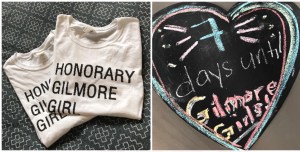
Gilmore Girls
One week to go. We are ready!
WDD Twitter Marathon
The force of nature that is Cherise Shockley managed to pull off (once again) a 24 hour tweetchat for World Diabetes Day that included moderators and participants from all over the globe with an impressive variety of topics.
There was a bit of national Aussie pride in there with 4 hours of the chat being moderated by advocates from Down Under. I moderated an hour – with a focus on diabetes stigma – at 5pm ET which was 9am (Wednesday 15 November) AEDT, meaning I was into hour 27 of WDD when it was my turn to ask the questions.
Blue fatigue
My hand is a pretty damn good indication of how I am feeling right now. Still hanging in there with the whole ‘go-blue-diabetes-awareness-rah-rah-rah’ thing, but only just. Half way through Diabetes Awareness Month; World Diabetes Day is over and I am really feeling a lot of blue fatigue.

It seems that I am not the only one. Kerri wrote this on Six Until Me the other day and it resonated with a number of people, me included.
But the people; the people!
I was lucky enough to spend World Diabetes Day with some great diabetes people. We had house guests from Germany with us and my neighbour Jo popped in for a bit too. And my Amazing family were also there and, you know what, we hardly spoke diabetes at all!

It reminded me that my diabetes world is about people – those I’ve met; those who support me through it all; those I connect with online and in real life. And I know that I couldn’t do this without them to help me through.
#IFLGseesawchallenge
And finally, diabetes is such constant balancing act, and I don’t know about you, but I rarely manage any semblance of equilibrium!
So, I love the Insulin for Life Seesaw campaign – as both a metaphor for diabetes and also as a way to raise funds for an important cause.
Get involved by uploading your photo depicting the seesaw challenge of living with diabetes. Add the tag #iflseesawchallenge to your pic and Medtronic Australia will donate $1.25 to Insulin For Life Global. $1.25 is the amount it costs to transport a week’s worth of insulin to someone in need in a developing country.

Yesterday, I went to the fridge and pulled out a fresh vial of insulin. I used it to refill my insulin pump and then placed the mostly-full vial in my bag. As it was the second to last vial from my current prescription, I called my local pharmacy and asked if they could order me in a repeat of my prescription.
And then I wandered to a favourite café for breakfast and didn’t think about it again. I knew that the following day I’d receive a call from the pharmacist telling me that my insulin was waiting for me and I’d go in on my way home from work, fork over $40 and be set for another three or so months.
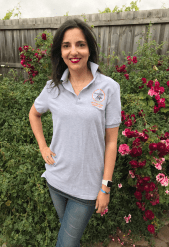
Rocking my new Insulin for Life Global tee. So honoured to be an ambassador for this worthy cause.
That’s not how it works in a lot of other places around the world. And it’s why when I was contacted by Joanna Sader from Insulin for Life Global asking me to be an Ambassador for the organisation, I didn’t hesitate before answering ‘Of course!’
Insulin for Life has been around for a long time. I remember when I was very new to the diabetes organisation world hearing all about it from the organisation’s founder Ron Raab. And then, a couple of years ago, I saw a wonderful documentary, Sweet 16, about the program, made by a young woman from Canada.
The organisation has continued to expand over the years, and today, on World Diabetes Day, is launching Insulin for Life Global (IFL Global). The organisation contributes to international efforts providing insulin to people unable to afford or access insulin or diabetes supplies in developing countries.
IFL Global, through its country affiliates, collects in-date and unneeded insulin and diabetes supplies, distributing them to developing countries, where they are distributed free of charge. It also fundraises to support transport costs, which is the biggest barrier to keeping the operation going.
You can learn more about the program by going to their new website and by watching the video below.
How can you help? Glad you asked! There are many ways you can get involved including making a one-off or regular donations, promoting their work through your networks or donating unused, in-date insulin and diabetes supplies. Details about how you can contribute to IFL Global can be found here.
I write a lot about remembering to look outside our bubble of privilege. Insulin for Life Global is another player in the space reminding us that diabetes drugs and supplies are not a right for all. And we can – and should – do something to help. Our diabetes brothers and sisters around the world do not deserve to die because they cannot access the life-saving drugs so many of us take for granted.





 Diabetogenic