
You are currently browsing the category archive for the ‘Diabetes’ category.
Well, hello! And happy New Year.
How has 2019 started for you? Have you bundled into the year following on from last year, or have you managed to stop for a bit and found yourself in the blissful state of not knowing what day of the week it is? I was like that until yesterday when I had to accept it was Sunday, the day before Monday…and Monday meant back to the grind.
After three weeks off, I’m back at work. Those three weeks were truly delightful – late nights, lazy mornings, limited plans, and topped off with a few days on the coast at a very quiet seaside town. There was bright sunshine – and I have Dexcom tan lines to prove it. The sun has warmed me through to my bones and recharged me.
Once again, I’ve not made a single resolution – because I’d have broken them all already – and trying to not look too far ahead into the year because the calendar is already looking slightly scary. I’m trying to preserve the relaxed, breezy feeling that has cocooned me. And not think about airports.
But I have been thinking about my word for the year. I still like the idea of this. I’m not sure exactly how successful I’ve been the last couple of years with my choice of words and what they were meant to represent, but I do like, if nothing more, that they helped me shape some of my plans for each of those years.
This year, I have decided that my word is reset. I feel that one of the things I do badly is get too caught up in what is going on, finding it difficult to see the wood for the trees. It’s easy to do – something happens and we become too invested in our own viewpoint that we actually lose overall perspective. Other times I get caught up and end up just being on autopilot, not really thinking about what I am doing. When these things happen, I need to stop, snap out of it. And reset.
So this year, that’s what I am going to try to do anytime that I find myself in the midst of something. Or when I feel that I am just coasting and not making any meaningful decisions.
I think I need to do that a little with my diabetes. I have settled into a comfortable, but not especially proactive routine with how I am managing my diabetes. It’s resulted in me being a little less engaged than I would like to be, and that leads to me starting to feel guilty. That bloody diabetes guilt is really hard to shake, but the best way I’ve found to keep it at bay is to think a little more about what I am doing.
There are no grand gestures or plans in this. It’s just about trying to be a little more meaningful and concentrated in my actions. And this intention feels good.
So, here’s to a happy 2019 to you all. Please feel free to remind me any time that I am getting a little ranty and ragey that I need to snap out of it. And reset. I would really appreciate that!

Well, it’s been a year. It’s always the same. Come December, and as Mariah is blaring in every store I walk into, I start to feel exhaustion. But it’s not all bad news. Holidays loom ahead. Sunny weather means more time outdoors. And long, warm nights out with friends and family seem like the perfect way to spend my time away from work. Oh, and perhaps most excitedly, my mother is going to make her famous zippoli – my favourite Italian Xmas food.
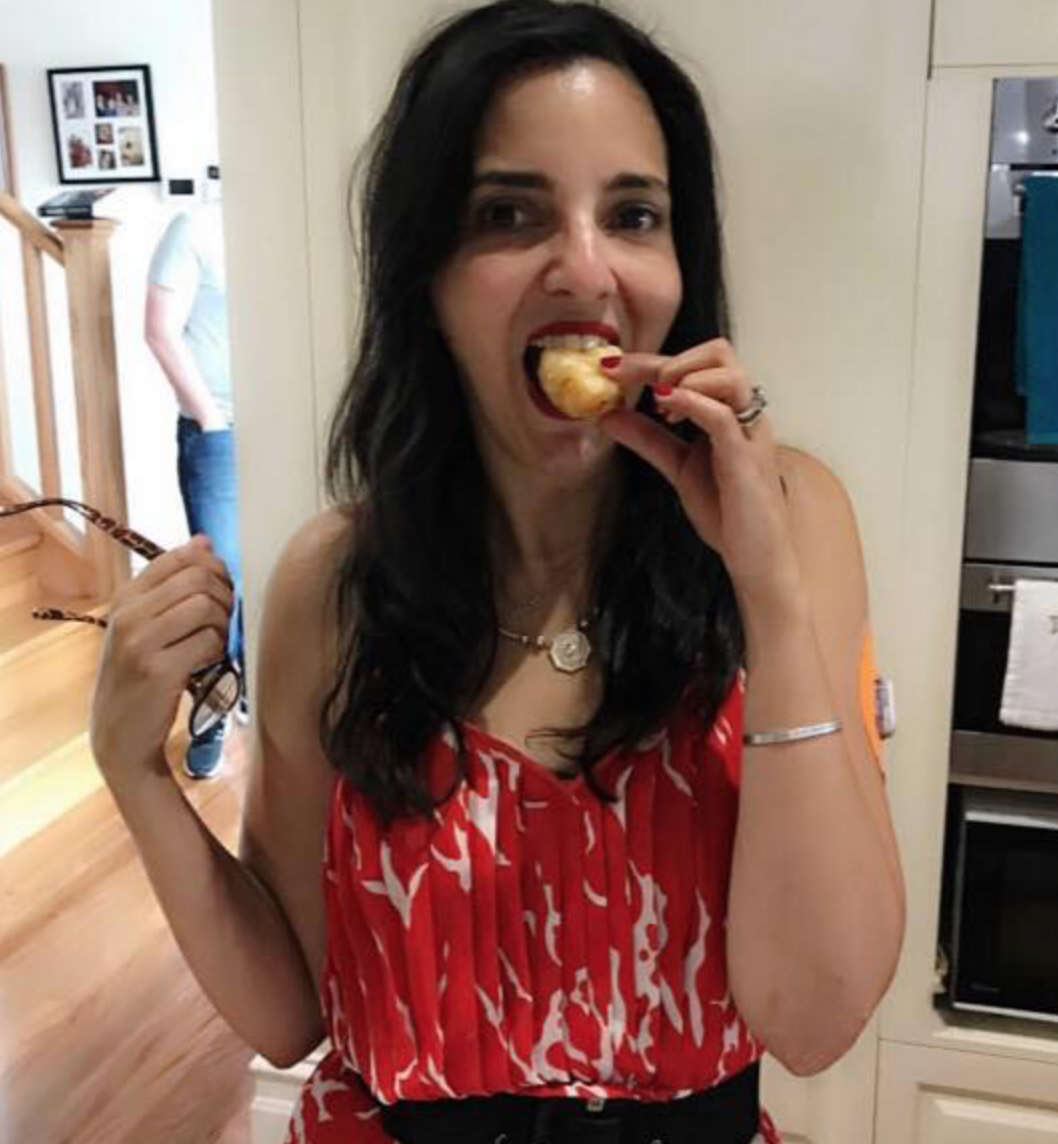
The happiest time of the year is when mum serves up zippoli. What a time to celebrate being from an Italian family!
The diabetes world remains comfortingly – and frustratingly – static at times. There are constants that shape each year, but there are also changes. Some are positive, some lead me to wonder just who is making decisions that impact on PWD and why do they seem so far removed from the realities of living with this condition?
I’m ready to draw a line under 2018 – a bold, thick, solid line – farewelling the year with the knowledge that there will always be some things about diabetes I know to be true.
Diabetes is hard. The relentlessness of it doesn’t really subside. As much as we have tools to try to make things easier, it permeates, something I realised back in July when the wind was knocked out of me as diabetes unleashed itself into every part of me, taking hold and trying to pull me under.
There is no silver bullet. Loop does seem magical to me, but my diabetes is still there. It is just here in a different way – a new normal.
The inequalities of diabetes continue to be an important theme throughout our community and we can’t turn our backs to the fact that access to the most basic of diabetes medications and treatments remains out of reach to many. There is no one way to advocate for change, and I commend everyone working at the front line to improve the situation.
Which brings me to the point where I remind everyone that it is absolutely not too late to make a donation – however small or large – to Life for a Child. Saving the life of a young person at Xmas time seems like an absolute no-brainer to me.
Peer support remains a cornerstone of my diabetes management toolkit. Of course the shape of that support changes – I’ve met some incredible new people this year and been involved in some remarkable projects. At the same time, there have been some important collaborations with diabetes friends I’ve known for some time. It’s those diabetes friends that continue to help me make sense of my own diabetes, make me realise that my village is global, and know that wherever I turn, someone will have my back. I can’t explain just how reassuring that is.
Despite feeling that there have been times that the community has been splintered and a little disjointed, I still believe that the diabetes community is something positive. I also know that it can take time to find your tribe in there, and accept that not everyone has to be best buddies. But when you do find those people who you just click with (and that doesn’t mean agreeing on everything, by the way) you do everything you can to hold on to them, because that’s where the magic of working with peers happens.
While co-design seems to have become a bit of a buzz phrase, there are some examples of it that just make diabetes activities and projects so much better! This year, I’ve had some incredible opportunities to work on projects with a vast array of stakeholders and what can be achieved is incredible.
Sometimes, (a lot of the time?) we need humour in diabetes. And sweary birds. Finding Effin’ Birds earlier this year was a source of such joy and happiness, especially as I realised that (unintentionally) the clever folk behind it have made it all about living with diabetes. I cannot tell you how many moments I have come across one of their pics on my social media feeds and it has perfectly nailed my diabetes mood.
We can’t be afraid to have conversations that can be considered difficult. This was the foundation of the Australian Diabetes Social Media Summit this year, but it went far beyond that. Women, diabetes and sexual health remains an issue that needs a lot more attention. And we need to keep talking about mental health and diabetes.
Language matters. Whatever people believe, the way we speak – and think – about diabetes has far reaching effects. It affects everything from the treatment we receive, the public’s perception of diabetes, where fundraising dollars are allocated and how governments fund diabetes.
And so, I think it is fitting that I round out the year and this post with one of the things I am so proud and honoured to have been involved in. It is one of the best examples of co-design; it involves diabetes peers, it acknowledges that diabetes can be a difficult monster to live with, and it holds people with diabetes up. Oh – and it reminds us that absolutely, completely, utterly, #LanguageMatters.
I’m taking a little break from Diabetogenic to do … well… to do nothing. That’s what I have ahead of me for the next three or so weeks. No plane travel, no speaking engagements, no media, no dealing with the diabetes things that get me down. Except, of course, my own diabetes thing. But I asked Santa for a pleasant few weeks of diabetes being kind to me. I’m sure that’s what I’ll be getting under the tree. As long has he can work out how to wrap it.
I hope that everyone has a lovely festive season. I do know for many it is a really difficult time of the year. Thank you to everyone for reading and sharing and commenting. I’ll be back some time in January. Ready to go again, and to rant and rave, celebrate, and shamelessly talk about what’s going on in my diabetes world. I hope to see you then.
It’s Research Wednesday again. Still not a thing, although Jane Speight from the @ACBRD disagreed with me after I said that last time, so maybe it is a thing?
Anyway, here are a few research studies you may be interested in getting involved in. Remember, participating in research is a great way to help contribute to and shape diabetes care, as well as provide insights that only those of us living with (or around) diabetes truly can. Please do consider getting involved if you can.
Women Loopers in Australia – we need you!
The Australian Centre for Behavioural Research in Diabetes is currently recruiting women for a research project on DIYAPS.
This one has been open for a while and for some reason lots of blokes have participated, but we need some women to get involved. Women are a truly significant part of the DIY world. I know that when I want information about DIYAPS, the first person I look to is Dana Lewis. And for Loop specific info, Katie DiSimone. I also know that there are a lot of women loopers in Australia. And we need you!
So – if you are female, living in Australia, aged 18 years or over, have had type 1 diabetes for at least a year, and using Loop, OpenAPS or AndroidAPS , please consider getting involved. This study involves a phone interview which will take 45 to 60 minutes, and you’ll be asked about your looping views and experiences.
CLICK HERE TO CONTACT THE PROJECT MANAGER FOR FURTHER INFORMATION
(Disclosure: I’m involved in this study.)
Loopers everywhere – we need you!
The OPEN project is a collaboration of international patient innovators, clinicians, social and computer scientists and advocacy organisation investigating DIYAPS. The first piece of work from this consortium is called DIWHY (get it?) which is looking to provide a better understanding of the reasons that people with diabetes decide to take the DIYAPS road, as well as examine barriers and motivators to building and using these systems.
You can participate in DIWHY by taking the online survey which is open to adults with diabetes as well as parents/carers of children with diabetes. The survey is available in English and German.
CLICK HERE TO FIND OUT MORE AND DO THE SURVEY
(Disclosure: I’m involved in this one too…)
Social media and diabetes care
Jacqueline, from the University of Hamburg, is currently looking for people to complete an online survey to help with her Masters thesis. She is looking at the importance and use of social media in diabetes.
The survey is anonymous and will take you about ten minutes to complete.
Still open – new mums with diabetes
Women with type 1, type 2 or gestational diabetes who are either pregnant or have been pregnant in the last year are still needed for a survey from the NHMRC Clinical Trials Centre at Sydney Medical School (from the University of Sydney).
This is a twenty minute survey and the aim of the research is to better understand the glucose monitoring preferences and experiences of women with diabetes during (or planning for) pregnancy.
I really couldn’t find a better title for this post. Other ideas were a bit sweary, so I’m going with this, because that is the sound I seem to be making with increasing frequency when I look at online encounters.
I probably should acknowledge that it’s mid-December. I’m tired and a little grouchy and so is everyone else. I am ready for a holiday and to be away from the daily grind. I need quiet, and some downtime, and a break from the crap that a lot of the time I’d barely notice, but now seems amplified and awful. I know I’m not the only one.
But even with that caveat, this year, more than any other, I have found myself needing to deliberately and consciously switch off from the diabetes online world.
Two occasions stand out for me. The first was back over the Easter period when Dexcom UK and Ireland dared to suggest people with diabetes post a selfie with an Easter egg. That sent the low-carb community into a frenzy because obviously daring to take a photo with an Easter egg (which, incidentally, no one said had to be made of chocolate), was the same as committing some sort of crime against humanity. The fact that each photo was attracting a £10donation to Life for a Child was completely lost in the carb-deprived anger.
And the second was during ADA when some in the community once again jumped on the outrage bandwagon for, as it turned out, no good reason.
These have not been isolated incidents, and the latest explosion happened on the Diabetes Australia Facebook page just the other day. (So, by way of disclosure, I work for Diabetes Australia, but I don’t have anything to do with the daily running of any of our social platforms, In fact, I don’t even have the passwords to most of them.)
What happened? Well, last week one of the team shared an article from Diabetes Daily about Xmas gifting for friends and family with diabetes. I read the article. It wasn’t the first or only piece I’d read recently about diabetes-related giving, but this was the one that was shared.
Anyway, apparently this article is hugely insulting and offensive. Yeah, I know. I had trouble joining the dots too, but some people really, really took offense to the idea that a gift with a diabetes focus should even be considered.
The comments after the article were quite nasty, including horrid remarks to and about the author. This is completely and utterly uncalled for. The writer is a person – a person with diabetes as it turns out. One of our own. Yet the comments about, and to, her were awful.
If I’m honest, I don’t really want a pair of ‘diabetic socks’, in exactly the same way, I don’t want the gift of a Michael Bublé Xmas album. But you don’t see me ranting and raving and yelling at the staff in JB HiFi because, apparently, they think that’s what a woman in her forties wants for Xmas.
You know what? If you don’t like the idea of giving or receiving a diabetes-themed gift (or Michael Bublé), don’t do it. Melinda Seed wrote a great piece last year about why she thinks it’s a bad idea and offered some suggestions that, quite frankly, I’d be happy to find under the tree on Xmas morning. Her piece is not aggressive, it’s not mean spirited. It’s her well-considered viewpoint on why she wouldn’t really appreciate being given a ‘diabetic cookbook’. (Oh, and she managed to get the words weird-arse and diarrhoea in one sentence, which made me laugh out loud. Probably more than Mel intended.)
This sort of commentary is great because it provides a different perspective, once again showing that we don’t all have to agree to get along. But when the response is aggression and nastiness and rudeness, all that does is divide the community.
I feel that there has been quite a bit of that this year. I do know that it’s always been there to a degree. But this year? This year it seems to have been taken up a level. Maybe I’m just tuned into it more. Maybe I’m just over it more. Maybe my resilience around this kind of stuff just isn’t what it used to be.
So, for the sake of my sanity, the ‘block’ function has had more of a run this year than ever before. And, I’ve discovered and made a lot of use of the mute button. Not seeing negativity or aggression, or people who seem to just want to complain, constantly coming up in my stream is refreshing.
But the best thing I do when I see something that isn’t necessarily aligned with my diabetes philosophy? I scroll on by. That’s the only action necessary. Scroll on by.

I wrote this piece a couple of years ago about how to get through festive season feasting, but it absolutely still rings true. So I thought I’d share it again with a few tweaks. And remind everyone (including myself) that food doesn’t have a moral compass point, and that we can and should enjoy whatever we choose eat during the holiday period without guilt or regret.
________________________________
You may not have noticed, but the festive season is upon us. (Actually, according to Woolies, the festive season has been upon us since the first week of September which was when I first saw mince pies on their shelves. As Louden Wainwright III says ‘It’s a season, it’s a marathon….’)
Anyway, it’s the festive season and with it comes lots of messaging about eating with diabetes during this time of the year. Now, I’d like to leave my diabetes behind whilst eating during the holidays, but I’ve come to learn that diabetes is a shit and doesn’t work that way. Because, diabetes IS for Christmas….and every other bloody day of the year as well. Happy holidays!
I saw an article this morning about how to keep your eating and drinking in check during Xmas and other parties, and by the time I finished reading, I was weeping uncontrollably and wanted to curl up in the foetal position in the corner and not emerge until February. I also wanted a drink, but it was 6.45am and I was feeling the judge-y eyes of the writer staring at me and the Moscow Mule I was about to make for breakfast.
All articles about diabetes and festive-season-eating demand limiting everything – alcohol, food, happiness. Quite frankly, limiting alcohol at family gatherings is not an option for many people, which seems to be lost in this particular article’s horrific and laughable suggestion of taking your own water to water down drinks. (I lost the will to live at that suggestion.)
Obviously, a blow-out is best avoided, but that is wise even if you don’t have diabetes. There is nothing worse than feeling as though you literally cannot move from the sofa – mostly because it means you could be stuck sitting next to a distant relative who wants to tell you, in detail, about their recent adventure in passing kidney stones, or (worse) about their neighbour who died from diabetes-related complications. Diabetes: it’s the gift that keeps on giving.
So, here are some of the things I’ll be doing to survive the next few weeks.
- Acknowledge that this time of year is about food and that is okay. This is definitely the case for my family, and I am already counting down the days until I gorge myself on my mother’s freshly made zippoli.
- Throw any thoughts of guilt out the window (along with suggestions of BYO H2O).
- Make a game out of my CGM by seeing if I can spell out any swear words in the ‘ain’t no mountain high enough/valley low enough’ trace.
- Remember that even though I have diabetes, I have every right to enjoy whatever I feel like eating. Or don’t feel like eating. The low(er) carb thing may or may not stick over the festive period. Obviously, my mother’s zippoli are carb- and fat-laden parcels of perfection, so the low(er) carb thing can fuck right off once they are set down in front of me, but I probably will still avoid other carb-y things because dealing with high glucose levels or inadvertently overdosing on insulin does not a festive occasion make.
- Seriously, give me a huge bowl of cherries for dessert and I am a happy chicken. (The non-watered-down alcohol has probably helped get me to that state, but cherries also make me undeniably happy.)
- Brush up on my responses to ’Should you be eating that?’, which (thankfully) I probably won’t need to use anyway. Funny how I only ever needed to hit someone once over the head with a spoon after they asked me that…
- Find red and green Sharpies and write ‘My Diabetes; My Rules’ in festive script on the inside of my hand to remind me to do whatever works for me. And to shove in the face of anyone who does actually ask ‘Should you be eating that?’
- Thank the Xmas angels that Brunetti in Carlton is open on Xmas morning, meaning that we can make the ten-minute dash there, drink coffee and eat pastries before the onslaught of family, food and festivities.
- Make a donation to Life for a Child because not everyone gets to decide if they will use extra insulin to cover the second slice of passionfruit pav.
This blog is not about giving advice, but I am going to give some now as I believe this is possibly one of the best ways to survive until the end of the year:
Don’t read any articles telling you to eat nothing but cardboard or watered-down grog. Or suggesting you take your own plate of crudités to parties. I don’t care that it’s a French word, it just means carrot sticks. And having spent the festive season in France, I can tell you no one was serving carrot sticks for the family Xmas dinner. Plus, if I’d taken my own, I probably would have been mocked in French, and not been allowed to drink any of the delicious non-watered-down red wine or bûche de Noël for dessert.
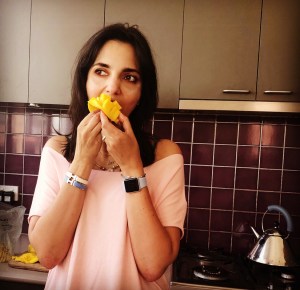
Aussie festive season = mango season
I always thought that the whole concept of maternal instinct was a load of bollocks. People kept telling me that once I was a mother I would understand it, but I didn’t believe it, especially after our twenty week scan. I was absolutely positive our little kidlet was a boy, so much so that I had refused to even consider girls’ names. ‘Oscar Harry,’ I would say when anyone asked. ‘We’re sorted. That’s what he’ll be named.’ When the sonographer told me that she was 99.9 percent sure that the baby half way through gestating was a girl my first response was ‘She’s going to get teased at school with a name like Oscar.’
As it turns out, maternal instinct is a thing, something I worked out pretty damn quickly when I learnt how to decipher between a ‘this-is-just-me-being-a-baby-and-not-having-words-yet-but-can-I-please-have-some-cuddles’ cry and a ‘this-is-something-serious-mum-please-take-action’ cry.
The way I see it, maternal instinct is just another name for intuition. And that is something we all have. What we do with it though – and just how tuned in we are to our own instinct – is completely individual.
Some of us have a finely-tuned ear, able to pick up whatever our intuition is telling us, never second guessing it and simply accepting and acting accordingly.
Others hear it, ignore it, try to convince ourselves of something more convenient. Because sometimes it’s just easier to believe what we want about a situation or a person than to try to work out what doesn’t feel quite right.
That intuition can be a life saver. But it doesn’t work in isolation.
I wrote a few weeks ago about how my resilience level contributes to how well I respond to situations around me. And it seems that there is a very distinct connection between how resilient I feel and just how much I pay attention to what my instinct is gently whispering. Or yelling.
When my resilience levels are high, I listen to any and all messages of intuition and trust what I am hearing unreservedly. If it is telling me something, I believe it and act accordingly. When not feeling resilient, there is other noise in there. And that results in me either not recognising what my instinct is telling me, or I just outright ignore it.
My diabetes intuition has been put through its paces over the years. It’s what tells me that a pump line needs changing, even though it feels fine. It knows when to calibrate according to Dexcom instructions, rather than the more lackadaisical approach I take most days. It alerts me to an off CGM reading, suggesting I double check with a glucose reading.
When I pay attention, it pays dividends. Clean and new pump line in and glucose levels continue along their merry way, as compared with a site that is producing numbers that can only be because insulin absorption is not happening properly – even if I don’t want to believe it. A well-calibrated Dex equals numbers I know I can implicitly trust rather than double guessing every number I see. Double checked CGM number – even if it is smack bang in line with what my glucose meter tells me – gives me the confidence that Loop can and should continue to hum along quietly and do its thing.
It’s not rocket science. It’s just paying attention to what my intuition is telling me, instead of trying to explain (or rather, excuse) things away with pretty much anything else I can think of. Because, you know, if it walks, swims and quacks…well, you know the rest.
I know there have been times when I’ve certainly almost deliberately ignored my intuition, instead convincing myself that something, or someone isn’t necessarily what appears before me. Sometimes, it takes a while – often far too long – to realise that I should have listened to my intuition in the first place just believed and accepted what it was saying. It can be easy to get swept up – especially when I am not feeling resilient enough to see what is right there in front of me.
And then I wonder how the fuck duck I missed it in the first place.

Look, I could write a whole post here about why and how you can just put aside the idea of buying silly little Xmas gifts for Lois in accounting, and how Reginald in HR really doesn’t need more boxes of Lindt balls because people only truly like one type (dark chocolate for me) and the rest get thrown out.
I could remind you that it’s freaking hot in Australia right now, so the idea of gifting a rose, basil and chai scented candle is ridiculous because why would anyone want to light it and add another heat source to their already overheated house? (Also, stop making candles scented with chai.)
I could moan about how I despise the whole idea of Kris Kringle/Secret Santa, because honestly, I do. It’s nothing more than a waste of time and money.
I could tell you that I am pretty sure that the $30 gift voucher you are thinking of shoving into an envelope for Uncle Angelo is going to languish in a drawer and probably be forgotten.
I could tell you that the book of inspirational quotes that you are going to buy for the cousin you only see once a year will never be opened – and probably be re-gifted (possible back to you) next year.
You know, so I don’t need to tell you, that the half-wilted poinsettia you’re buying at the last minute at Woolies as a gift for the person hosting one of the three hundred Xmas drinks things you’re going to will wind up in the bin after the next three-day heatwave because your host can’t remember to water themselves, much less a seasonal plant.
I could urge you to put down the bath bomb because no one, and I mean NO ONE, needs or wants a bath bomb.
I could do all these things. But there’s no need; I’ve done it before and you know it all. If you really need to read those posts: here’s one. And here’s another. And Grumps has written about it here.
Basically, the message is the same. Think about forgoing those little gifts, and instead make a donation to Life for a Child, and know that THIS gift is actually meaningful. And by meaningful, I mean it will save the life of a young person with diabetes. That’s right: Save. Their. Life.
Insulin is expensive. And yet the dollars you were going to spend on a pretty mindless gift will provide life-saving insulin for around six months. Which sounds a lot better, right?
Good thing you know all this, and I don’t need to write about it again. And it’s also a good thing that you know all you need to do is click here to save a life.
P.S.

Is there a more contentious issue when it comes to diabetes than food? Possibly, but when it comes to what we eat as part of our diabetes management plan, there is a lot to wade through.
For those who have had diabetes for more than a few years, it is highly likely that guidelines will have shifted, if not outright changed directions. The food plan that was ‘in’ for me at diagnosis is different to what is recommended now. In the last twenty years I have heard and read so many different ideas about the best ways to eat to ensure optimal diabetes health. My head has spun – and so has my stomach at times – with the chopping and changing ideas. To be honest, I can’t keep up.
Plus, we live in a world where everyone from celebrity chefs to movie starts are health gurus, tricking us into believing they have the answer to nutritional nirvana… if we just take this super elixir or this mushroom and cacao supplement. (Yes – I’m looking at you Ms Paltrow. Shush now, please. )
The DEEPtalk event last week was under the ‘mealtime challenges’ banner, but it covered more than just what happens when we sit down to eat. Because, we all know there is much more to food than sustenance and the sum of a nutrition panel. If that was the case, we’d be happy eating things that looked and tasted like, and had the texture of cardboard.
Considerations around the food we eat are social, political and environmental. We need to think about what we will be doing with that energy we have going in. It has to look, smell and taste appealing. Food triggers memories and deep emotions. But it can also be a source of difficulties. The eight different topics at DEEPtalk took in a lot of those different issues.
Phylissa Deroze welcomed us to her holiday table, enticing us with a seemingly endless buffet of delicious foods. But that festive spread became an obstacle course as she explained how difficult it could be to ensure she felt she was being true to eating the foods that she felt she wanted – and needed to eat – while dealing with the challenges of food pushers. ‘The two main ingredients in holiday food is carbs and love,’ Phylissa told us. As it turns out, both challenge her diabetes management.
Speaking of carbs, Antje Thiel reminded that just thinking about carbs when trying to assess how food impacts glucose levels was naïve and short-sighted. She listed a veritable shopping list of other factors that need to be measured. From hormones, to the timing of eating to the weather…these factors (plus a hell of a lot more) all impact in some way.
Quinn Fisher and Leighann Calentine shared the stage together and did a great tag-team presentation about how being a kid, and now teen, trumps diabetes any day, announcing early in the talk ‘Cake is totally bolus worthy!’ which seems as good a motto as any by which to live one’s life. Quinn is 14 and has had diabetes since she was three, and her family’s practical approach to how she manages things like sleepovers and birthday parties makes good sense.
Sara Moback spoke about a topic that simply does not get enough airtime: diabetes and eating disorders. She shared the story of her anorexia nervosa diagnosis and the treatment she received following that diagnosis. And she also reminded us that the focus on food, and the constant striving for a perfectly straight, unmoving CGM trace are surely contributing factors to why girls and women with type 1 diabetes are twice as likely to develop an eating disorder.
Paul Louis Fouesnant’s presentation had my heart racing as he explained how he managed his diabetes and the fears of low glucose levels after a broken down car left him stranded for a couple of days in remote Madagascar. Clearly he is the type of person you want around in emergency situations: he can make fruit puree from foraged berries. Paul Louis’ presentation was about the challenges of travelling to countries where food may be a little different to what we are used to. But he is firmly of the belief that you try everything in front of you – and enjoy your travels.
Bruno Helman introduced us to his vegan life with type 1 diabetes, explaining the road he took to becoming vegan and how he manages his training to run marathons. (Oh, and when I say ‘marathons’, I mean 27 in a year. As you do…) For me, Bruno’s talk probably challenged many of the ideas about diabetes eating than any of the others, simply because it was the most different to the eating plans that I have subscribed to over the years. As someone who absolutely loves vegetables, and incorporates them into every single meal, I still think there is a lot more I can do to increase the plant-based component of what I’m eating. (And I don’t just mean more carrot cake..)
Melanie Stephenson eloquently shared how she moved from adding marathon running to sprinting, and how she carb loads to ensure that she performs at her peak on race days. Can I say how refreshing it was to hear someone talking about carbs as nothing more than a form of nutrition, rather than something to be demonised and feared. Mel and some friends decided that not only would they run a half marathon, but they’d also break the world record for the number of people with diabetes running in it. They did that in June this year.
And finally, Bastian Hauck rounded out the event, using one of the best analogies for diabetes management that I have ever heard. The audience was mesmerised as he challenged everyone – except those of us with diabetes – to commit to a week, and then a month of daily dental flossing. With caveats: it had to happen twice daily at 8am and 8pm. Oh, and any other time food or drink was consumed. Plus, the correct amount of floss needed to be used each time: 5cm for each 10grams of carbs…no more, no less. And, of course, people were required to keep a record of all they ate. How many people in the room were prepared to even try this challenge? One. That’s right…one person. Thanks, Doug!
Eight topics; nine speakers. And this just barely scratched the surface of the different ways food can be used as part of a diabetes management approach.
My job was to introduce the event, the speakers and tie together the theme for the event. In other words, I had the easiest job for the day.
I listened to each DEEPtalk twice – once during the rehearsal and then for the official event. And they brought home the message that there is no one size fits all to eating when it comes to diabetes, in exactly the same way that there is no one way to do any aspect of diabetes management. The speakers also showed that food is never, ever only going to be about diabetes. Sometimes, an apple is just an apple, not 15g or 20g of carbs, requiring <X> units of insulin.
Guidelines are all very well. I understand that they are based on best practise and evidence. I also understand that HCPs like guidelines because they make things so much easier. But for those of us living with diabetes…our days are not lived according to guidelines or checklists or evidence. Our lives are lived by morning coffees, and neighbours dropping in for cake, and someone bringing cookies into work, and mango season. And, damn it, I just want that piece of chocolate/pizza/watermelon…
DEEPtalk showed us how just a handful of people with diabetes manage the challenges, success and joys of everyday eating. We all have our stories about what works for us. I love that this event allowed people to share them in a safe and non-judgemental way. We need a lot more of that.
If you’ve not watched the DEEPtalks yet and would like to catch up, the link is can be found in this post.
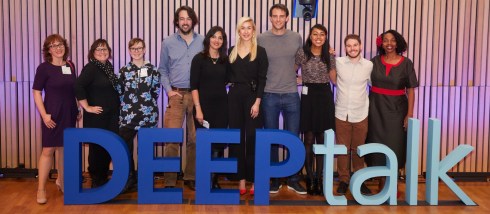
L-R: Antje, Leighann, Quinn, Bastian, me, Sara, Paul Louis, Melanie, Bruno, Phylissa
DISCLOSURE
The DEEPtalk event was hosted by Novo Nordisk and was held at one of their facilities in Copenhagen. I was invited by the Global Patient Relations Team to moderate the event. Novo covered costs for my (premium economy) flights (I used my own frequent flyer miles to upgrade flights) and two nights’ accommodation as well as transfers and meals while I was in Copenhagen. There is no expectation from the Global Patient Relations Team (or Novo Nordisk more broadly) that I will write about the event or other activities held while I was in Copenhagen and what I do write is mine. All mine.
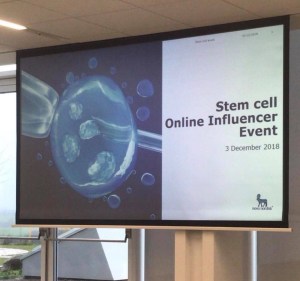
On Monday morning, I was invited to an event at the Novo Nordisk facility in Malov to hear about the latest in diabetes and stem cell research. (Disclosures at the end of the post as always.)
We heard from researchers from the site, as well as Sanjay Dutta from JDRF, and were given a tour of the labs to get a better understanding of the research process. Going into this event, I knew very little about stem cell research and its application in curing diabetes. (I should point out I still know very little…) Before I write more, I do want to highlight that the ethical sensitivity of stem cell research was addressed, although was not a focus of the event. It is undeniable that there are some people who refuse to accept stem cell research, or any treatments that come from it. I am not one of those people, but I was pleased to see the researchers acknowledging that this is an issue for many people around the world.
One of the speakers was Novo researcher Louise Winkel who gave a fantastic overview of stem cell research and how it applies to type 1 diabetes. If Louise was a senior school biology teacher, her students would all go on to study science at tertiary level. She made it interesting, understandable, and translated just what this very technical area of research could mean to those of us living with diabetes.

Jacob Sten Petersen shared how he has been working with Novo in diabetes research for 27 years. That’s a lot of time examining and investigating type 1 diabetes, trying to get a better understanding of just how diabetes works. Despite all the years of experience, and all the time spent with leading researchers and healthcare professionals, Jacob made a point of saying that it wasn’t until he actually met people with diabetes that he realised just how little he truly understood about life with diabetes.
That understanding increased exponentially when his young daughter was diagnosed with diabetes. You might think that having a child diagnosed with diabetes after you’ve given most of your career to researching it may make things a little easier. But listening to Jacob tell the story of his daughter’s diagnosis it was clear that the impact and devastation was no less at all.
As Jacob outlined the timeline of research, I was a little startled when he starting talking about this being the way forward to curing diabetes. I was even more startled at just how confidently, and almost casually, Jacob was talking about the cure. He was putting timeframes out there, saying that he firmly believed that no one in the room would die from, or because of, type 1 diabetes. I could tell that I wasn’t the only one surprised by this declaration.
Both Louise and Jacob were discussed the challenges of finding treatments, and ultimately a cure, for type 1 diabetes. Plus, there is the autoimmune response – you remember, the one that destroyed our beta cells in the first place – that needs to be addressed. Encapsulation will assist with that, but that also has challenges that need to be overcome. (It probably should not have come as a surprise when Louise told us the beta cells are the most difficult and sensitive cells, posing a number of trials, including how they stop secreting insulin the second oxygen concentration drops. Precious? You bet!)
However, despite the difficulties, Louise and Jacob were very clear about their goal and where their research was going: to cure type 1 diabetes.
I am very wary when it comes to talk of a diabetes cure. I don’t know one person with type 1 diabetes who has not heard some version of ‘The cure is just around the corner’. Sometimes that’s quantified with a timeframe. The old ‘five years’ chestnut is popular. At diagnosis, I was told five years; ten at the most. Well, here I am at twenty years and either I’ve not turned the right corner, or my first endocrinologist was being over-optimistic. I think it is probably the latter.
But I thought I’d made peace and accepted that that there would not be a cure in my lifetime, instead turning my hope – I have so much hope – towards better treatments, smarter devices, improved meds. I do not feel sadness or despair when I say I don’t believe I will be cured. I feel hopeful that thanks to ongoing research, my life will be less and less limited by diabetes.
Yet here I was, holding onto each word, and unlocking the part of my mind that I had, perhaps reluctantly, packed away many years ago. Would I allow myself to even think that a cure in my lifetime was a possibility?
The event concluded with a panel discussion, and as questions were invited, I raised my hand to ask how we balance talk about curing type 1 diabetes with managing expectations. Hope is important, but so is not being disappointed.
The discussion that followed was candid. I loved that the researchers could understand my apprehension – and that of a number of others in the room who also shared their reluctance to use the word cure. And that ‘cure’ meant different things to different people.
Because: what is a cure? I don’t think there is a simple answer to that. For some, it would be a fully functioning closed-loop automated insulin delivery device. But that would still involve an element of ‘user input’. Even if calibrations are not required, there will still be the need to change sensors, refill cartridges, change infusion sets.
For others, a fully implantable closed loop device which only needs ‘topping up’ with insulin occasionally would be considered a cure.
I know people who have had islet cell transplants, and pancreas transplants, but they require immunosuppression therapy and I don’t know that necessarily constitutes a cure.
Encapsulation may negate the need for immunosuppression, but would the cells need to be topped up…and how frequently would that need to happen? Would glucose checking still be required?
It is subjective and each person with diabetes would have different criteria they use to accept what is and what isn’t a cure. I don’t know what my criteria is yet.
I like the idea of not dying with – and certainly not dying from – type 1 diabetes. Do I think that is a reality? I don’t know. I feel that my adamant claim that there will not be a cure in my lifetime has been challenged this week and I’m okay with that. Because what hasn’t been challenged is the hope I have.
If in my lifetime with diabetes, the day to day tasks are reduced, the emotional burden is lessened, the fear and anxiety can be diminished, treatment of diabetes-related complications improves, then I feel that I am still somehow out in front. I may not be cured. But each step forward is a step in the right direction. Even if I don’t make it the finishing line and handed a cure.
DISCLOSURE
The DEEPtalk event was hosted by Novo Nordisk and was held at one of their facilities in Copenhagen. I was invited by the Global Patient Relations Team to moderate the event. Novo covered costs for my (premium economy) flights (I used my own frequent flyer miles to upgrade flights) and two nights’ accommodation as well as transfers and meals while I was in Copenhagen.
I was also invited to attend an information event where Novo employees spoke about current stem cell research in diabetes.
There is no expectation from the Global Patient Relations Team (or Novo Nordisk more broadly) that I will write about the event or other activities held while I was in Copenhagen and what I do write is mine. This summary of the stem cell event and presentations is all my own interpretation and has not been reviewed by Novo Nordisk prior to publication.





 Diabetogenic