
You are currently browsing the category archive for the ‘Diabetes’ category.
Let’s imagine, just for a moment, that a television program or newspaper claimed that there was a cure or treatment for type 1 diabetes that you could brew in your kitchen with a few pantry items.
It’s not really all that hard to pretend that this scenario is real: almost every week there is something somewhere that claims to be a way to treat diabetes, and sometimes, this mythical treatment is for type 1 diabetes.
What happens when we see this? Well, usually, it starts with some low level ranty outrage from a first responder who caught the piece and feels that they need to share it with the diabetes world (hashtag – DOC).
Then, as it gains momentum, others get onboard, because we all love a little SoMe outrage. Inevitably, there will be some comments about how ‘This might work for type 2 diabetes, but I/my child has type 1 diabetes, and I/they did nothing to cause it and this is the serious type of diabetes so stop it now.’ (Because adding some ‘type wars’ to the discussion is always helpful.)
There will be blog posts written about it (possibly/probably by me) and someone will demand an audience with the reporter, so they stop perpetuating myths about type 1 diabetes.
Right?
The outrage can be exhausting, but I do get it. We don’t want people to simplify our condition, of have people thinking that there is an easy fix. We want people to understand that it is hard work to manage diabetes and that every time there is a claim that it can be easily treated, people move further away from what it is really like. We want people to know that, so we talk about it loudly and everywhere.
So, after watching the ridiculous claims from Medicine or Myth the other night, I turned to Twitter to see what people were saying about the idea that hemp kombucha was miracle cure or to hear the criticisms about the poor study design of the trial.
Was there a barrage of people questioning the idea that simply drinking 100ml of a fermented drink a day could possibly be all it is going to take to treat the incredibly complex health condition that is type 2 diabetes? Or tweet after tweet probing whether the ‘trial’ that decided that we’re on a winner with Kombucha would pass any sort of test? Was there a choir suggesting that this was really all a lot of hocus pocus and it was undermining just how serious type 2 diabetes is – and how hard it is to treat it?
There was now tweet from Jane Speight…

…and that was pretty much it. (It is a very fine tweet, and that #sciencefiction hashtag deserves accolades!)
And there was no one up in arms about the way the merry band of doctors was talking about type 2 diabetes in such sensationalist and stigmatising ways. If they had been talking about type 1 diabetes, our response would have been swift.
What we saw on this program this week is actually dangerous. We can’t dismiss it as yet another ridiculous claim from a nut like Pete Evans, or Sarah Wilson, or the latest footballer’s wife. We can’t attribute it to an Instagram wellness guru. Instead, we saw three qualified healthcare professionals – a neurosurgeon, a GP and an immunologist; healthcare professionals that people trust with medical advice.
And – showing some bias here – perhaps it would have been easier to dismiss and discredit the whole show if it was broadcast on a more traditional tabloid program such as A Current Affair. An SBS show, with three Australian practising HCPs? People will think this is legitimate.
The way Medicine or Myth whitewashed type 2 diabetes was a disgrace. And as diabetes advocates, we should be calling out this sort of garbage, the same way we would ludicrous claims about type 1 diabetes treatments.

Totally unrelated, but I live in the most hipster street in the most hipster suburb of Melbourne and there is a place on my street that brews and sells seventeen different types of kombucha.
I love working out of the same office as Jane Speight. It means that I have a friend just down the corridor, plus I have this idea that being around her and the ACBRD team makes me smarter. (Admittedly, I am the only one who thinks that.)
Jane may not be quite as excited by the working arrangements, especially on the not rare occasions where I appear at her door and go on some rant that she didn’t ask for. (‘Jane! Have you seen <insert latest thing that is pissing me off>? Let me tell you all my thoughts about it right now.’)
So, the other day, when Jane appeared at my door wanting to talk (rant) about hemp kombucha, I was more than ready to sit back and listen. For a change.
Yes…
Hemp kombucha.
There is a television show on SBS in Australia called Medicine or Myth. I’d never seen it, however I did know that Dr Charlie Teo is one of the hosts. Charlie is a well-known and controversial neurosurgeon. He is joined by GP, Dr Ginni Mansberg and associate professor in immunology, Dr Ashraful Haque. They are the trio directing the show, which sees Aussie pitching home-grown treatments for treating all that ails them.
I had not ever come across the other two hosts before, but a Twitter search showed that Ashraful is interested in host-parasite interactions (and guitars). The first bit made no sense, but I like guitars. Ginni also hosts (the horribly named) Embarrassing Bodies Down Under, and is a ‘passionate anti-aging skincare geek’. I don’t know about you, but I generally don’t go to my GP for advice on how to reduce fine lines and wrinkles, but maybe I’m being narrow-minded.
The episode that screened this week featured John Leith who was diagnosed with type 2 diabetes a couple of years ago. And that brings us to hemp kombucha.
Within about thirty seconds of watching the segment I had already dismissed it as complete and utter rubbish. In fact, the second that John referred to hemp as a ‘superfood’ I rolled my eyes so far back into my head that I almost blacked out.
I then grabbed a piece of paper and started making notes of all the misconceptions about diabetes that were being thrown around. I’m not going to list them all here, because I have more important coffee to drink, but if Ginni Mansberg is your GP, find another one now. Her statement that ‘Poorly controlled diabetes will [….] destroy your feet’ followed by saying that an A1c of under 10% is what ‘diabetics should aim for’ was enough to set me off yelling at the computer screen.
But back to John and his magical mystery kombucha. Apparently, it cured his diabetes. That’s right, after five or six weeks of drinking this glucose busting elixir, his glucose levels were back in range. The three experts – and I am now using this term loosely – were astounded, and to make sure we knew that, made acceptable TV astounded noises. In fact, they were so caught up also making acceptable TV astounded faces that not one of them asked if the corresponding reduction of food portions, increased fresh food or boosted exercise plan could have contributed (i.e. caused) the improved glucose numbers John was seeing.
In fact, John’s claims were enough for this merry band of HCPs to send the hemp kombucha off to trial – another term I am now using very loosely. According to the voice-over person narrating the program in a serious voice, trials are run by an independent scientific team experienced in clinical research who recruit carefully selected participants.
According to the next segment, those carefully selected participants included three people: two with type 2 diabetes and one with ‘pre-diabetes’. They all drank 100ml of hemp kombucha a day and then recorded their BGL on day 1, 3 and 7 of the week-long trial.
I know. Robust.
The results were astonishing. Apparently, blood glucose results came down on average 0.8mmol/l, with 75% of participants (out of a total of 3?) reporting improvement in glucose results.
I have so.many.questions.
We were not told if the participants were doing any else to manage their diabetes. Were they taking medication? Were they on a specific eating plan? Were they exercising? Had any of them lost any weight during that week? Why did the trial (really? trial??) only run a week? Is it reasonable to suggest that three data points is really enough to confirm that a treatment is successful?
I can’t answer any of these because none of this was revealed in the program.
However, it was enough for the hosts to claim that they were excited about this as a treatment for type 2 diabetes.
Let’s just think about that for a moment. This ridiculously shambolic and hopeless experiment was enough for three healthcare professionals to suggest that hemp kombucha is something people with diabetes should consider…and that the scientific community should sit up and pay attention. All this without a glance to the fact that John and his n=1 claims are also associated with a hemp kombucha business, and the least vigorous trial I have ever heard.
You know, this really could work for some people. Complementary therapies do have a place in modern medicine. Many have been studied extensively to see how they can augment science-based treatments. However, before any HCP even thinks about mentioning them, they need to be able to point to some evidence. Three people and three blood glucose checks is not evidence. It’s a twenty-minute segment in a sensationalist crappy television program.
Look, I don’t really want to link to this train wreck of a story, but I think that you need to watch it yourself to appreciate just how ridiculous it is. So here you go. (I’m sorry.)
Belle Gibson has been pretty much universally shamed for her claims that she was able to cure her cancer by ignoring medical treatments, instead using diet and alternative therapies.
We question (as we should) the validity of curing conditions such as autism with specific diets; epilepsy with light therapy, and asthma with reiki.
Anti-vaxxers are called out (although not enough) for their claims that pixie dust and sun-charged crystals will protect their darling, perfect offspring, and that injecting toxic toxins of toxicity is a waste of time that only serves to line the pockets of BigPharma. And Governments, who are in the pockets of BigPharma. (It must be really crowded in those BigPharma pockets…)
(Soon to be former) US Democrat presidential-nominee Marianne Williamson added her voice to the throng of lunatics back in 2009 when she claimed that vaccine-prevented diseases are insignificant, and that god will protect us as long as we pour his love over our immune systems. I’m still trying to work out: 1. Where to get my dose of god’s love (my pharmacy doesn’t seem to have it listed on their website) and 2. How the fuck I’m meant to administer it to my already over-sensitive immune system. It’s likely to self-combust.
Main stream press unfortunately does give voice to these fools, but thankfully, the voices of science – you know, those that actually understand and believe in real science-based evidence – are loud and clear in their condemnation of charlatan claims.
Of course, diabetes isn’t immune (autoimmune?) from these sorts of claims. I still regularly show this ridiculous Khloe Khardashian claim klaim that kumcumbers kure diabetes when explaining how so-called wellness gurus (or reality television stars) infiltrate – and influence – what we know actually works as a treatment for diabetes.
And the delightful cinnamon cure-all gets rolled out at every possible moment.
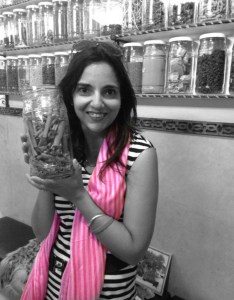
Marrakech 2013: holding the cure in my hands.
But what happens when there is evidence showing something that challenges what we have long-held to be true means we do need to sit up and listen…but it is being communicated in a way that could potentially be more damaging than beneficial?
We are hearing more and more that there is evidence to support that type 2 diabetes can be ‘cured’ and put into ‘remission’. I am not looking at the science here; I do understand that there is a growing body of evidence to show that for some people, a very strict low-calorie eating plan can mean that people see in range glucose levels.
This is being hailed as positive, but where I start to feel uncomfortable is when this is reported in the mainstream media as a cure, which is often how it is touted. Other words that seem to be bandied about are ‘remission’ and ‘reversal’
But is it a cure? Is type 2 diabetes able to be truly reversed or put into remission? Because that is how I am seeing this presented with very little question.
As ever, language matters. Using the word ‘cure’ suggests that a health condition is fixed, forever gone away. That is not what is happening here.
Remission, when used in the context of cancer, is not an absolute. There are stages to remission. Partial remission suggests that treatment may be ceased as long as the cancer doesn’t grow again. No evidence of cancer in scans and other examinations is referred to as complete remission.
In diabetes, remission and cure are used to suggest that glucose levels return to ‘normal’ levels, (i.e. those seen in people not living with diabetes), usually because something has happened – the person lost weight, changed the way they are eating, increased their exercise etc. And this happens because people followed a treatment plan. What happens if they stop that treatment? And how long will this treatment continue to work this way? Does it mean that they no longer have any of the concerns that occupy the hearts and minds of people with diabetes?
Just as in cancer – and in other conditions – some people respond to treatments better than others do. When the media says type 2 diabetes can be cured or put into remission with these treatments, there is never any nuance to that statement, explaining what that means. No one talks about the non-modifiable risk factors that play a huge part in type 2 diabetes.
The last thing we want to do is for those who don’t see the results promised – cure! remission! – is for them to feel that they have failed. There is already too much of that in diabetes…especially in type 2 diabetes. (This never happens in cancer. If a treatment doesn’t work, the person is not told they have failed.)
The words we use do matter. How we are communicating these new treatments for people with type 2 diabetes is important. We need to remember that these treatments will not work for everyone and it is never okay to make people with type 2 diabetes feel responsible if they don’t work for them, or that they haven’t tried hard enough. Or that they haven’t wanted it hard enough.
If there is one trait that drives me absolutely batty, it’s passive aggressiveness. I suspect part of that is to do with my directness – I am very good at being clear about how I am feeling and what I need. Skirting around an issue or saying things indirectly and being obtuse in the hope that others will understand what is going on just annoys me. Why make people guess when I can just tell them?
And of course, social media provides the most perfect platform to excel at passive aggressive behaviours: ‘vague booking’ and ‘sub-tweeting’ are the habits de jour of those who employ passive aggressive behaviours. I just swear too much and pointedly say pretty much everything that is going on in my head. Without a filter. Have I mentioned recently that I’m a delight?
So, naturally, I have the most passive aggressive of all health conditions possible; the health condition that appears one way, when really there is so much more going on. This is the health condition that likes to leave pathetic little hints as to what is going on, but rarely decides to be direct about anything.
Let me introduce you to diabetes where the passive aggressive comes in different forms.
We see this at diagnosis. Sometimes, there’s shitloads of stuff going on behind the scenes, but nothing outward (hello all the people walking around with undiagnosed type 2 diabetes), or it does give little suggestions, but those symptoms could also be another million other things (hello to all the people who were told their type 1 diabetes was just a cold/UTI/tummy virus etc etc.).
There are rarely super, super visible, really obvious and unmistakeable signs that scream loudly ‘THIS IS DIABETES’, which would be really useful because we know that early diagnosis and treatment means better outcomes.
Also, there’s impaired hypo awareness. For those of us living with this particularly fun type of hypoglycaemia, we have our lows, but diabetes has found a way to hide the symptoms away. That’s right, don’t actually let us know that we’re low (even though previously there were lots of symptoms), just go about letting us believe that everything is okay.
Or those times when we are convinced that we are low and are exhibiting all the classic signs, only to realise that actually, no, right now I am either sitting right in that sweet spot; or high as a freaking kite and downing that juice would really not have been a great idea. At all.
Diabetes complications can give the silent treatment for years, and conversely, there are weird symptoms that mimic the onset of a complications, setting us up for sleepless nights of worry, only to find out that actually, there is nothing sinister there.
But perhaps the most frustrating and maddening way that diabetes exhibits is passive aggressiveness is the way it makes us appear to others. Mostly, we look perfectly fine and good and that all is well I the world, when really, it is doing all it can in the background to make it so that we are not.
Living with a health condition that doesn’t communicate effectively (and deliberately in a wishy-washy manner at times) really is one of the things I like least about it. It’s no wonder that often we don’t realise that there is something wrong, because everything seems okay, or the message we’re getting is that nothing has changed. Being blamed for this is unfair, and yet that’s the way the cards fall.
I don’t really know how to overcome this particular trait of diabetes, but I have been known to silently scream ‘Tell me what you mean’when it seems to be deliberately confusing and not responding the way I would expect. Really, that’s all I’m asking for: clarity, no ambiguity, directness. And a health condition that isn’t trying to drive me to despair by not just telling me what I need to do and responding accordingly. It’s not too much to ask.

Passive aggressiveness is never the answer. However, I do love this cartoon. Because Poe puns are hilarious! (Click for artist details.)
My favourite answer to give when someone asks me how I went at any diabetes-related medical appointment is ‘Nothing to report.’ I love being able to say that things are boring. If there is ever a time in my life that I want to be unexceptional and routine, it is when I am hearing or sharing news about my diabetes.
For as long as I live with diabetes, I want to forever be told ‘It’s nothing,’ or ‘There’s nothing.’ I want there to be nothing there when my eyes are screened; nothing to report when I have my kidney function checked; nothing new, nothing scary, nothing to worry about.
The thing is: to get to nothing, we put in a lot of effort. We push ourselves and do things over and over and over and over. Because we’re told if we do all the things, all the time, nothing will happen.
But sometimes, despite all that effort, it’s not nothing; it’s something.
We have done everything possible – everything we possibly can – and we walk in and expect to hear another nothing. But instead, this time we’re told there’s something and we can’t help but wonder why we didn’t do more.
That’s just how diabetes works. There is no rhyme or reason. There is nothing fair about it. But we keep doing it – whatever we can manage at that particular moment.
And we ask and hope for nothing – absolutely nothing – in return. Except our health.
Which, as it turns out, is absolutely everything.

Hoping for nothing.
Ten years ago, we stumbled across a little out of the way restaurant in a small backstreet of Florence. It was run by a couple and the food was sublime – beautiful Italian dishes served without fanfare, just simple flavours that let the freshness of the food shine through.
So, last month, returning to Florence for meetings, I made sure that one night was spent there and was pleased to find that the food was once again perfect. Mains done and plates cleared away, the waiter came to take our dessert orders and followed up asking if anyone wanted coffee.
All had been going so well. Until this…
‘I’ll have a latte please,’ said someone at the table. It was an innocent enough request, but I knew where this was going.
The waiter looked horrified. ‘No!’ he said indignantly. I’d ordered an espresso, knowing there would be no response other than a nod. But the idea of a caffè latte at this time of night, after a meal, was not getting past him.
Clearly, our waiter felt that it was part of his job to enforce the Italian gastronomic rule of no milky coffees after 10.30am. This was an abomination, as far as he was concerned, and he was having none of this flouting the rules business in his restaurant. I suspect that if someone had asked for a sprinkle of Parmigiano-Reggiano over their spaghetti con vongole his response would have been the same.
Perhaps his response would usually have had the customer slinking back in their chair and ordering an accepted coffee-based post-dinner drink. But this was a table of people with diabetes and telling us that we can’t break the rules never goes down well. Because breaking rules is how we survive. And jeez, we get defiant when people tell us that we can’t. Rule books states that injections should never been given through clothes? Watch how easily this needle goes right through my jeans. Rule books claims the only place that CGM sensors must be worn is on the stomach? I’ll just roll up my sleeve and put it there, thanks. Rule book instructs single use of all diabetes consumables? Let’s see just how many times this insulin pump cartridge can be refilled before getting stuck.
We learn the rules and then turn them upside down and inside out to work for us to help our endless search to make diabetes that tiny bit more manageable and forget expecting us to say sorry for doing it our own way. We make no apologies for taking what some may consider short cuts, instead sharing them with our diabetes peers because everyone deserves a break with this condition if there is a way! And sometimes we just do things in a different way because we like it better.
The waiter in our restaurant looked to me to back him up. I think he assumed that my decent Italian accent that he’d heard when I ordered meant that I was across Italian food rules and that he had an ally. I wasn’t surprised at his response – I do know the food rules – but I treat them in equal measure with respect and contempt, just as I do diabetes rules. I understand why they are there, and sometimes I’ll abide by them. But if I want a milky coffee after my meal because that’s what I feel like, you bet I’m going to order it.
I shrugged my shoulders at the waiter, I’m sure disappointing him that I wasn’t going to back him up. ‘Un latte?’ he asked disbelievingly. ‘Si,’ I confirmed, and then clarified. ‘Con caffè.’ The last thing I wanted was the delivery of nothing more than a glass of warm milk to the table and all that was going to ensue following that.
All our lives we are told there are rules and some of them are just stupid: blue and green should never be seen, unless there’s a colour in between. Never wear pink and red together. Others don’t allow for personal choice: don’t order a steak well done… (or a milky coffee after dinner). And some forget that those rules are connected with something that is boring, tedious, unpleasant, frightening and sometimes downright horrible: every single diabetes rule.
Sure, sometimes rules are there for safety, and we all want to be safe. Living with diabetes doesn’t suddenly make us reckless and not interested in being healthy and safe.
There are some rules that we know are just non-negotiable and we will begrudgingly follow those. But the ones that we think are ridiculous, or we have found a work around to? Those are the ones we’ll do whatever we can to shake up or lose.
Our tiramisu desserts were delivered to us, and so were our coffees, including the caffè latte, which the waiter placed down while shaking his head and making ‘tsk tsk’ sounds. Thirty seconds later, he reappeared and placed down a shot of grappa, making some comment about this being needed to cancel out the coffee.
I smiled up at him, because that’s how Italians do it. (I know – I’ve spent 45 years doing things the opposite to how my Italian father thinks I should do them!) They’ll let you know they’re not happy with you, and absolutely don’t approve of your obviously wrong decision making. And they’ll remind you at every chance that they have.
And then? Then they’ll somehow offer a final fuck-you-and-fuck-your-bad-choices. And, really, there is nothing better than some oesophagus-destroying hard liquor to get that point across!
Viva Italia!
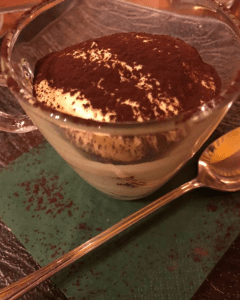
Perfect tiramisu.
DISLCOSURE
I was in Florence for DOCLab Advisory meetings. My flight to Florence from Amsterdam and two nights’ accommodation were covered by Lilly. The attitude during this meal was all courtesy of the rather cheeky waiter.
Wandering the streets of SoHo, there is a shop with windows covered in neon signs.
And look! One that is a perfect mantra for diabetes.

Diabetes is all about the unexpected. And the moment we think we have it all worked out, and know just what to expect, something completely, utterly, totally unexpected happens.
That’s one thing we can expect.
One thing that is somewhat of a consolation while dealing with jet lag, is that while I’m not sleeping in the middle of the night, Twitter is right there keeping me company! There is always someone from the DOC up and ready for a chat. And if I don’t feel like chatting (because honestly, at 3am when I’ve not had enough sleep, stringing words together is a challenge), there are always things to read.
And that is great.
Also great is when people jump on board to support each other, or cheer when others are involved in an exciting initiative. (Seeing people in the DOC welcome and embrace the amazing young advocates from the Philippines as they have launched their online activities is one such example.) There is comfort in the reliability of the way people respond in those situations.
But then there is frustration in the reliability of how people react and complain about being left out when it seems some folks in the DOC are doing something. It may be an event, a conference, or people just doing stuff like starting peer support campaigns. It could be people giving talks, writing pieces or coming together on advisory committees.
I wrote a whole thing about this at 3am. Words were strung together, and I started getting strung out, so I deleted it after wise counsel from a Twitter friend who reminded me that sometimes just writing stuff down is therapy enough. (Thank you to that wise person.)
She is right.
What is also right is that there is an Effin’ Birds moment for everything in life. Even when you don’t think there is and you put a call out, the nice folk at Effin’ Birds direct you and then deliver. And it’s perfect.

The longest queue in the exhibition hall at ADA was not people waiting to see an exciting new therapy breakthrough in diabetes. It was not interest in the latest shiny and bright new device. It was not even a line for free coffee.
 No. The longest queue was for on the spot A1c checks. Two booths were doing them – Abbott and A1cNow Systems. Abbott had run out after a couple of days, but the A1cNow folks managed to keep up with the demand at their booth.
A couple of my mates with diabetes and I had commented at the never-ending line of HCPs so eager to know their A1c. Why was this the attraction of the exhibition hall?
On the final day the exhibition hall was open, I was doing a last wander around. End of conference fatigue was clearly settling in – the reps on the stands were a little less enthusiastic about approaching people walking by, and conference delegates had lost the pep in their step and seemed to be drifting a little aimlessly. Or maybe people just needed more coffee. But despite the reduced buzz, I saw that yet again (or maybe still) there was still a queue snaking its way around the A1cNow stand.
‘I need to try to understand why they are doing this,’ I said to the friend I was wandering around with. ‘Let’s go and ask them.’
So, we introduced ourselves to a few of the people standing in line. They were health professionals and were happy to chat.
‘So,’ I started. ‘I guess I’m trying to understand just why you are wanting to get your A1c checked. Do any of you have diabetes?’
They all shook their heads. Their responses ranged from ‘I’m just curious’ to ‘It’s free and I many as well have it done.’ One person said, ‘I have a family history of diabetes.’
One of them asked me why I was asking. ‘I’m really understand to know why there seems to be such a keen desire to know what your A1c is when it kind of doesn’t really matter. I generally avoid getting mine done and I am meant to have it checked every three months. I know people with diabetes who have gone years not having theirs checked. For us there is a lot tied up in it. We feel judged by it. It’s often presented as a way to measure our success as a person with diabetes. We are told we are ‘good’ or ‘bad’ depending on that number. I don’t know too many people with diabetes who would voluntarily line up to get it done really.’
Back home, and I was talking about this with my gorgeous neighbour.‘It was the longest queue at the conference. More people wanted their A1c than to get a coffee!’ (Admittedly, this could have something to do with the state of coffee in the US, but maybe not.)
My neighbour rolled her eyes. ‘It’s like at parties when someone sees you do a blood sugar check and wants theirs done. You know – they get all excited and hold out their hands ‘Do me. Do me!’and then you do and it’s four or five and then you do it again and it’s still four or five, and they’re all excited and ask, ‘That’s good, right.’ And then yell out to everyone about how ‘good’ their number is and then they see the 14 on the meter when you do yours and shake their heads and tell everyone how crap that is.’
She’s right. That’s EXACTLY how it happens!
But returning to ADA… I thanked the HCPs waiting patiently in line and walked away, sighing. I wasn’t getting my A1c checked, there was no need for me to be there. Because getting that done takes the right mindset, and a strength that I just wasn’t feeling at that point. I hadn’t psyched myself up and given myself the pep talk I need before having that measurement handed to me.
And then, it all circled around to another example of ‘doing diabetes’ at different conferences, and my similar annoyance at the long lines for hypo simulators. Or my outright displeasure at people whacking diabetes devices on their bodies to learn what living with diabetes is all about.
Setting aside the very high likelihood that I am turning into a grouchy old woman, I really think that these sorts of exercises are problematic for PWD. No one in that A1c queue was feeling any anxiety about the number the machine was going to spit out. I asked if they were worried and they all shook their heads. It was just a thing to do at a diabetes conference for them. Most likely, they were going to come out with an in range number that they would forget as soon as they walked to the next stand.
Hypo simulators make people feel a little wonky for about five minutes after they get out of them and then they are back on solid ground, not thinking about what is really going on with their glucose levels and how they will affect them for the remainder of the day.
And after wearing a pump or a CGM for a week, it can be returned and never thought of again.
I have been criticised when I have said that it is only people with diabetes who truly understand the impact of diabetes on our lives. I’m willing to wear and own the comments I make. I say this without malice or by trying to limit or minimise the experiences of those living around us. I just don’t understand why there is this idea that by ‘doing diabetes’ or rather doing some of things we have to do as part of our diabetes is really useful.
I would love it that if of HCPs lining up to have a pointless A1c check done, they had sessions in the booth given by PWD where we had a chance to speak about why some of us are so anxious when it comes time to having ours checked. We could offer suggestions about how to talk about results in a way that makes us not feel measured or judged.
And instead of hypo simulators, how about a panel of people with diabetes explaining just how we feel about hypos and how they affect us. When I did this at HypoRESOLVE, the researchers and clinicians were astounded and surprised at what I had to say.
There are a lot of ways that people not living with diabetes, but living around it, or working in it can get a better understanding of how we truly feel about having diabetes in our lives. I just don’t think that a one minute, five minute or even weeklong exercise is the right way to get that insight. The best way is to listen to us.
 Our household is very sad today because last night we had to say good bye to our beautiful Jasper pup. Jasper came to live with us as a puppy almost sixteen years ago. We already had a little white dog called Lucy who had very much been Aaron’s and my fur baby. But we were planning for a human baby and felt that Lucy needed another four legged friend for when our attention was drawn to a new baby. As it turns out, Jasper came home to us just after my first miscarriage and his gorgeous puppy antics were a welcome distraction from the pain I was feeling.
Jasper was one of those dogs that had to be in everything. Until he went deaf about three years ago, he had this innate ability to hear even the smallest piece of food being accidentally dropped on the floor. If I uttered the word ‘Oops’ while in the kitchen, he would be at my side in a flash cleaning up whatever I’d knocked to the floor. He was social, funny, and an absolute delight to have around.
In recent years, we had noticed that he was really getting old. He had become a bit of a grumpy old man, only wanting to be around his family, and not really interested in the other pups or cat we have running our family. He was happy to sit at our feet and just be there. In the last few months, he had become less mobile, and yesterday, he finally couldn’t walk at all. We knew it was time.
It is never easy saying good bye to a family pet. Jasper had been a constant companion for a long time. We used to tell the kid that we had a last in first out policy, and Jasper had been there longer than she had. He was very, very loved by us all, and today, our home is a little quieter and our hearts are a lot heavier.
So, today I’m revisiting an old post of when our gorgeous little pup accidentally became a diabetes alert dog, waking me when I was low. This wasn’t a one off – he did it again a few weeks after I wrote this piece (and I shared that here). I’m sad to say that Jasper’s hypo detecting abilities were not especially reliable, but I still do think that he was a wonderdog in his own special way.
We love you, Jasper. Thank you for bringing so much joy to our family. We are going to miss you very, very much.
We have two dogs and one cat. (Ed – actually, that number grew to three dogs and one cat because clearly we are soft touches when it comes to tiny puppies…) They are fluffy, cute and very much part of our family. And while I like to think that they are wonder animals, they’re really not. Bella, the Maltese/poodle cross used to sleep under the coffee table and every time she woke up, hit her head. She did this for three years. Until we got rid of the coffee table. Jasper, who is getting old now, has only one thing on his mind – food. He’ll eat anything, including the green leaves at the top of a strawberry and watermelon rind. Cherry the cat is, as most cats, quite brilliant, and manages her staff (the three humans of the house) in typical cat aloofness with a side of purring cuddles thrown in so we remember how much we love her.
Gorgeous? Yes. Smart? Not so much.
For years of I’ve heard stories of dogs and cats that can sense if their owners’ BGL is dropping. Clever hypo alert dogs are being used by people with impaired hypo awareness to notify them of undetected lows. I’d read these stories. And then think of our little pets whose skills don’t go much beyond sleeping, eating and looking cute. I was resigned to the fact that none of our pets would save me in a sticky situation. Except, I think that the other night, Jasper may have done just that.
Until recently, Jasper slept at the end of the bed. A new, higher mattress and his old age have meant that jumping up was becoming harder and harder. Instead of effortlessly leaping up, he would run from side to side of the bed, front paws on the mattress, his boofy head popping up, looking a little like a meerkat as he waited for one of the humans to lift him up. After getting sick and tired of this routine, we bought him a bed and he now sleeps in a corner of the room.
The other night, I put myself to bed early and promptly fell asleep. After about an hour, I stirred because Jasper was doing his meerkat impersonation, but only on my side of the bed. Suddenly I felt him gently tapping at me. I told him to leave me alone and go back to his bed. But he refused. Dozing in and out of sleep, I could feel his paw on my arm and then he stared whining.
Finally, wide awake and annoyed at being woken, I started to get out of bed, thinking he needed to be let out or wanted his water bowl filled. As soon as I stood up, it hit me. I was low. Really low. I slumped back on the bed and grabbed the lolly jar from the bedside table and threw down a handful of jelly snakes. Jasper sat down at my feet, watching me earnestly. As I started to feel a little less woozy and could sense my BGLs coming up, Jasper padded back over to his bed, got himself comfortable and fell back asleep.
I ate a couple more jelly snakes and checked my BGL. It was back in range. I could hear him snoring gently in his corner and ten minutes later, as I started falling back asleep, I thought that maybe he is a wonderdog after all.

Jasper the Wonderdog





 Diabetogenic