
You are currently browsing the category archive for the ‘Communication’ category.
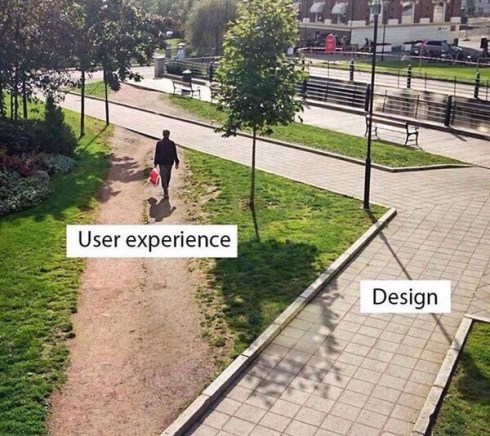
This photo* sums up why I do what I do, and why many people think I sound like a broken record, with a vocabulary of a mere seven words. Specifically, these seven words: ‘Have you spoken to people with diabetes?’
Because so often, the answer is ‘No’. Or ‘No – we’ll be doing that after we have had some meetings.‘ Or ‘Yes – we spoke to you‘ at which point I remind them that I pointed out when they did indeed speak to me that they should find other people with diabetes to speak with. Because I am but one person and speak for no one other than me. (Or, perhaps, another woman in her 40s who loves Nutella, boots, coffee, lives in inner-Melbourne, waves her hands around madly while speaking reallyreallyreallyreally fast, can recite Marx Bros movies from start to end, has what some would call an irrational fear of birds (and butterflies), can sing (badly) pretty much any song from the 1980s, has over 25 striped t-shirts in her cupboard and is battling an eleven year old daughter who has decided that she too loves stripes and wants to borrow all her mother’s clothes.)
Most people are not like that. (Fortunately.)
Anyway, this picture also demonstrates that those who have the privilege of designing services, activities, programs, settings for people with diabetes often miss the point – perhaps not by much, but nonetheless, they miss it. It’s usually because they forgot to ask us, or asked as too late, or didn’t keep coming back and asking and checking in. And then, when we don’t use what they design, we are branded ‘non-compliant’ or ‘disengaged‘ or ‘not interested in our health’, when the truth of the matter is that their design (without our input) just doesn’t fit our needs.
I have given so many talks and written so many pieces about this. But perhaps all I need is this on a t-shirt, tattooed to my arm (forehead?) and on the back of my business cards. Don’t design before speaking to the user. It’s actually really easy!
(*I don’t know the source of this photo, but if anyone does, please let me know so I can credit appropriately.)
There is a dance I do with diabetes each and every day. I praise, celebrate and highlight the good; I avoid, shut out and ignore the bad. The things that scare me are pushed away – as deep as they can go. When they threaten to rise to the surface, I do the equivalent of sticking my fingers in my ears and start chanting ‘la, la, la’ so they recede to where they belong. Out of sight. Out of mind.
I’ve done this for as long as I’ve had diabetes. From day one, I pushed away the ugly and scary images of diabetes complications. I conveniently ignored the warnings and threats. Obviously. Because no one wants to be scared or warned or threatened the day they find out they have a life-long chronic health condition. Or ever.
I am scared. Diabetes scares me a lot. It always has, but for some reason, it is more at the moment. I don’t know why. Nothing has changed. There has not been a frightening experience or a noticeable change in anything. But as days and weeks and months and years as a person with diabetes gets crossed off some imaginary calendar, I am suddenly feeling that it is a countdown to where the really difficult things start.
I worry about what each passing hour is doing to my body and to my mind. If I’m being particularly forgetful, I wonder if it is because my head is so full of diabetes considerations that there is no room for a synonym for fear (dread, anxiety, terror, dismay alarm….) or recalling what day my kid has library each week.
But thinking about it more, I think the fear comes from the lies we are sold about our diabetes. I was promised the day I was diagnosed by a lovely, but most likely completely out of touch doctor, that diabetes is a matter of maths and that if you do the equations properly, it can be easily controlled.
Diabetes can’t be controlled, and with each moment of failure – and there are many and they are constant – I have feared the consequences. And I fear diabetes. With each missed calculation or out-of-range number or confusion about how the hell this thing really works, I see failure. And fear.
Diabetes is not a matter of maths, and the idea that I can control it results in a constant state of high alert as I pretend to be a body part that, when working, is pretty damn perfect. I am not perfect. In any way. And neither is the way I manage my diabetes. It’s messed up. And I’m messed up about it.
And now, as always, there are the fears. And they seem bigger and bolder all the time. I fear diabetes-related complications – long- and short-term. I fear losing the ability to take care of myself and care for others. I fear diabetes becoming so intrusive that I am unable to do anything else. And I fear diabetes becoming the first, last and only thing others think about when they see me. Perhaps most of all, I fear diabetes becoming the first, last and only thing I think about when I see me…
I wonder just how differently I would feel about diabetes – the known and unknown – if I was told at diagnosis that I would get this wrong more times than I got it right. And that was perfectly okay, understandable and acceptable. I wonder how much less significant the feelings of failure would be. And how much more in check my fears would be.
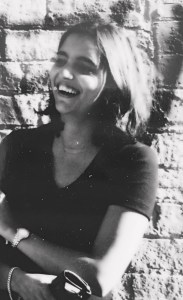
9 March, 1998. 37 days before diagnosis.
I’m back home after three days on the Gold Coast for part of this year’s Australia Diabetes Society – Australian Diabetes Educators Association conference. More to come next week, when I’ll try to pull together my very messy notes.
For today, here are some pictures!

As I took the stage to chair one of two sessions at the Roche Educators Day in Tuesday, I realised I had already been up for seven hours. It was only 11am. Sentences were difficult until my fourth coffee of the day kicked in!

On the job. Professor Steven Boyages’ talk: A connected ecosystem for healthcare professionals & their patients’ was full of practical tips about using technology to support people with diabetes.
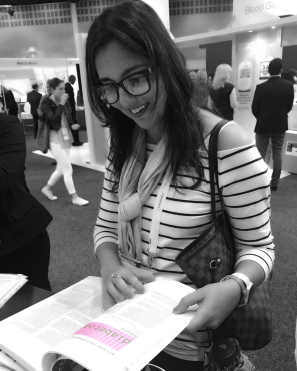
This was the moment I opened the new NDSS Diabetes and Emotional Health Handbook (for health professionals supporting people with diabetes) and I saw Diabetogenic on page 24! Thanks for capturing, Professor Jane Speight!
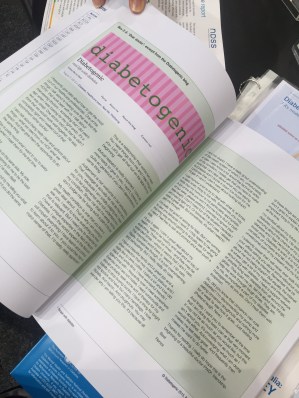
Proud moment!
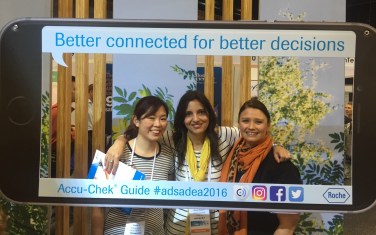
Advocates running amok. We actually behaved ourselves quite well. Mostly.

Although, we were mighty busy! Three of the top four influencers at the conference happen to be consumer advocates, sharing information from the conference specifically with the intention of reaching other PWD who could not be in the room.
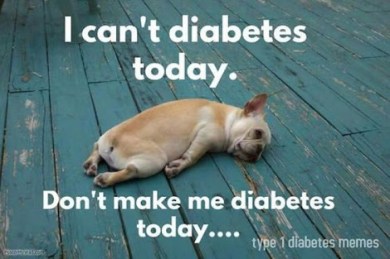
Martha Funnell used this in her talk on day one. Sums up many, many days!
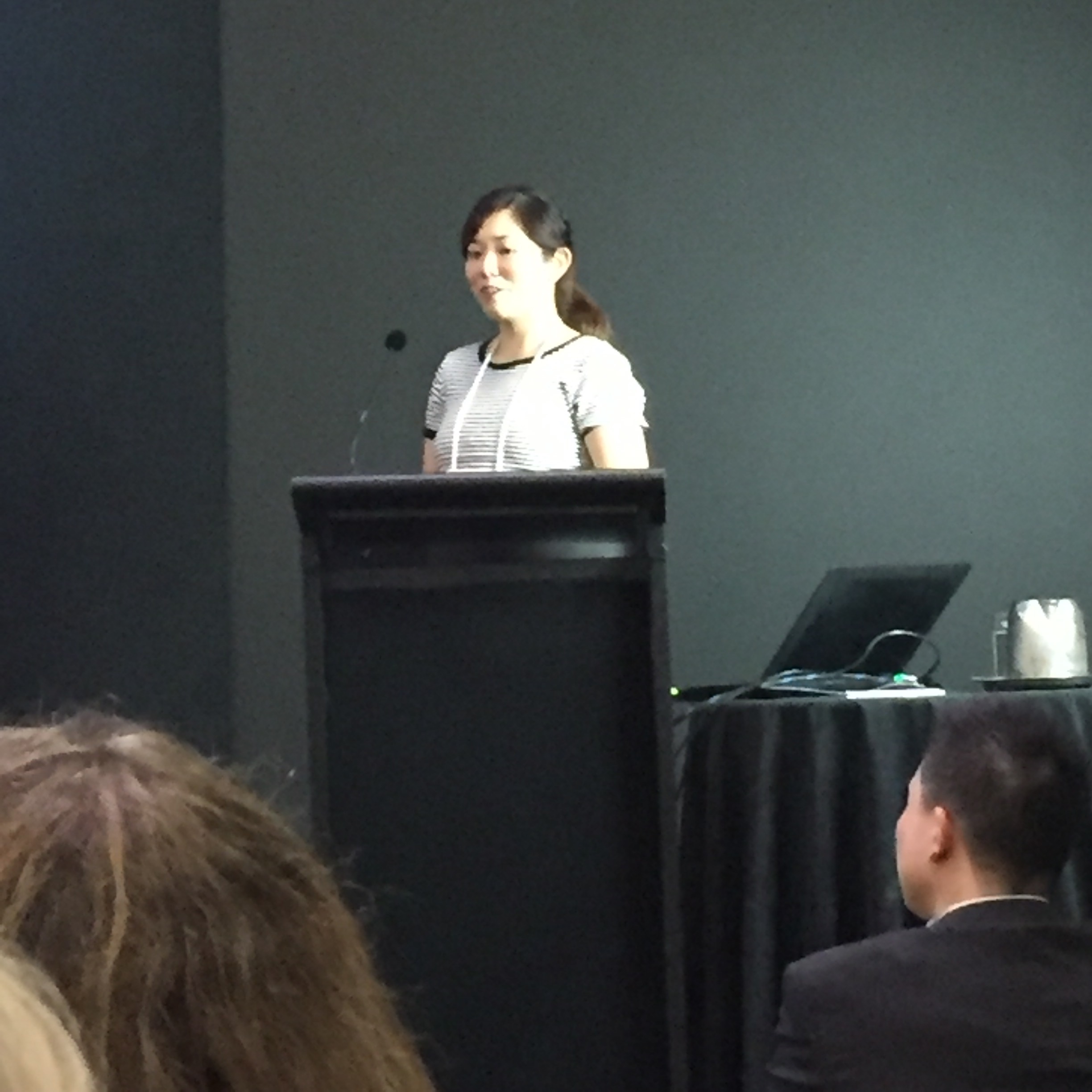
Rather proud of this special young lass. Here’s Ashley presenting on her work focussing on the needs of young people with type 1 diabetes.
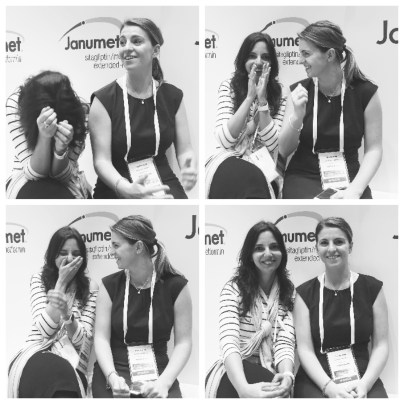
This is a combination of jet lag and exhaustion. (Jet lag belonged to Harriet.)

The NDSS stand looked very bright thanks to these beautiful resources from the Young People with Diabetes Program.
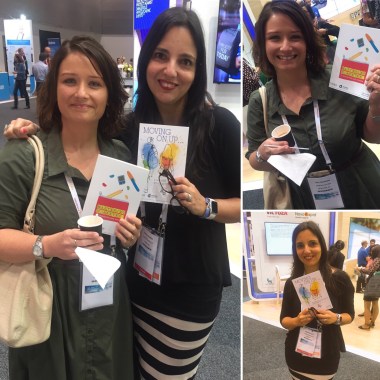
And another proud moment. Kim’s outstanding work on the national roll out of Mastering Diabetes means this resource is in the hands of those who need it most: children with type 1 diabetes, their families and schools. Well done, Kim! (And I’m holding Moving on Up which I am equally proud of!)
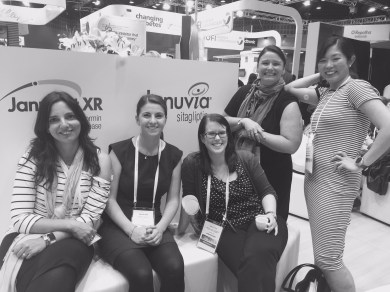
Spot the diabetes devices….

Gold Coast.
Proper wrap up coming next week. Enjoy your weekend. I know I certainly will! (But you can play catch up by checking out all the #ADSADEA2016 tweets.)
I had a call the other day from one of my favourite diabetes HCPs who is writing about diabetes and female sexual health. I wanted to shout ‘Halle-fucking-luiah!’ but didn’t because I am polite and never swear.
Anyway. The reason I was so excited to hear this is because when it comes to diabetes and sex, women rarely get a look in. Let me reframe that. When it comes to information about diabetes and sexual health, women rarely get a look in. (Hopefully women with diabetes who are wanting sex are getting plenty of looks in…so to speak…Yeah, this is not going to be awkward at all, is it?)
When talking about the complications of diabetes, erectile dysfunction*** frequently is mentioned. It is actually one of the things that often get men to the doctor because, well, because…erectile dysfunction. There is information about it and it is a well acknowledged complication of diabetes in men.
But women also report problems with sexual function, yet there is very little information about it and it is spoken about very, very rarely. Or, when it is, it’s discussed around changes in sexual function relating to menopause, which may be an issue for all women – diabetes or not. I guess the thinking is that ‘this is when it is likely to be a problem, so let’s talk about it now’, which doesn’t really help those who may have concerns with sex and sexual function earlier than menopause.
So today, let’s talk about women’s health and diabetes – all of it, including the sex stuff.
(For the record, there is no kissing and telling in this piece. There will be no personal sharing of sex stories. This is for everyone’s benefit! Plus, I learnt that it is not cool to discuss my sex life in a public forum after I once mentioned in a talk to a group of first year med students that I hypo pretty much every time after sex, and then made some silly comment about it being because my partner was so good in bed. This would have been fine if it all stayed in the room. The next night, when out for dinner, a group of Uni students came up to me and told me that they had been at my talk the day before and it was great. Then they looked at my husband who was innocently eating a plate of pasta and one of them said ‘Well done, mate.’ I was mortified. Anyway, let’s move on…)
So, what is out there now for women who want some information about diabetes and sex? Well, while working at Diabetes Victoria we developed a nifty and gorgeous looking booklet which talks about contraception choices. It’s called Sexual Health and Contraceptive Choices for Young Women with Type 1 Diabetes, and I can’t for the life of me find it online, but if you can get a copy, it’s terrific!
There are also some great Australian resources available on diabetes and pregnancy – both for women with type 1 and type 2 diabetes – which provide information about pre-conception planning as well as what happens after conception, during the pregnancy, during delivery and post-partem.
There is some (limited) information about diabetes and breastfeeding. (So wish there had been more eleven years ago because, seriously, I bumbled my way through for almost 24 months and it was horrid at times, diabetes-wise…)
But where is the stuff about everyday diabetes and women’s health and sex – not necessary tied up with trying to get pregnant. (We’ll ignore the ‘tied up’ comment there, okay?)
On the day I was diagnosed, a lovely diabetes educator told me that sex is exercise. Exercise often causes hypos. Hypos are not fun. Not fun kills the sex stuff. Moral of story – keep jelly beans beside bed. I was terrified that I was going to pass out during sex and that it was going to be unpleasant for everyone involved. (Not that there would be a cast of thousands…)
Yawn – it was boring information and it made me think that in future, sex was going to very unsexy. What I wanted to hear was ‘you absolutely can still have sex and, if you want to, you absolutely should. There are some things you might want to consider such as the possibility of going low… I’m talking about your blood sugar, get your mind out of the gutter, Renza, and wipe that smile off your face… so Nutella body paint is a good idea.’
Now that would have made me smile, think of Nutella as a medical necessity and therefore how diabetes now justified me keeping a jar of Nutella by the bed. And on the kitchen table. In the bathroom… basically anywhere! As an emergency contingency, of course.
No one ever spoke to me about what orgasms may do to my BGL. Nor was I told much (in fact, anything!) about how high BGLs might impact on sexual function.
And then there is the minefield that is body image and diabetes, and thinking about how we feel about ourselves and its impact on how much we want to have sex. Or how it makes us feel when we are actually having sex.
Plus, the visible signs of out so-called invisible illness impact on how we feel about undressing in front of someone. I have scars all over my abdomen and hips from heeling pump sites. There is usually a CGM sensor strapped to my arm and a pump cannula in my tummy or hip. There are dregs of tape from old sensors and sites and sometimes tiny bruises. There are tubes and a little vibrating machine (pump, people…I’m talking about my pump).
All of these things point to the fact that I am not perfect and that my body is not perfect and that I need devices and drugs to keep me ticking along. This makes me feel crap at times, wonder what my partner is thinking and want to hide all the reminders that I am not a perfect woman away. This sucks even in my situation where I am married and have had the same partner since diagnosis. Add to that the idea of exposing and explaining all this to someone new and you bet that will impact on how one feels about one’s body and the very idea of sex.
I remember being warned a million times about how women with diabetes MUST PLAN PREGNANCY. And this is excellent advice. However, it made me so terrified of getting pregnant with a sub-perfect A1c. I learnt that fear is an absolute libido-killer. Even when pregnancy would have been welcomed, I was terrified to fall pregnant before I’d been given the green light by my endo.
…which for a while made me feel like there were more than just the two of us in the room trying to make a baby when we were…well…trying to make a baby.
My diabetes loomed overhead, and every moment, I was petrified of my BGL. I started pondering ridiculous things like ‘If I conceive right now and my BGL is not in range, what will that mean? Is it possible that my baby may not have eyelashes if that happens?’ Way to go being drawn out of the moment and into a weird space of imagining babies without eyelashes and how they would hate me forever and ever, and never be able to wear mascara.
So, who do you talk about if you want to have a chat about diabetes and sex? I have never ever been asked about my sexual health from any of my healthcare professionals. Of course there have been discussions about contraception and pregnancy planning and actually being pregnant. But no one has ever said ‘Does your diabetes in any way impact on how you feel about sex? Or do you think diabetes might impact on actually having sex?’
For the record, (and this is a personal bit), I did find that my attitude to sex changed after I was diagnosed. I am sure that was connected to how I felt about my body, so there was some psychological stuff I needed (and continue) to work through, but there was also a noticeable difference in actual function and how I felt. I couldn’t find any information about it, so naturally, thought it was just me.
Of course, it wasn’t. And as soon as I spoke to a group of women the same age as me who were all experiencing similar things, I felt heaps better. But it took me a long time to find those women and feel comfortable speaking about it (yay for prosecco!).
I don’t really have any answers in this, but I wanted to write to start a discussion. I know of many women who say that they believe diabetes has an impact on their sex life – both physically and emotionally. Also, I have come to understand that if it is an issue for one, it is usually an issue for many. Anything anyone want to share? Feel free to do so – anonymously if easier.
***LANGUAGE DIGRESSION
Erectile DYSFUNCTION? Can we please come up with a different term for this? Dysfunction sounds like failure – or at least like a penis has failed. It has not.
I was super late for last night’s #OzDOC tweetchat, coming in for the second half of the lively discussion. The questions were about how HCPs can engage on healthcare social media (HCSM), and the answers were to assist physician Dr Kevin Lee who is presenting this very topic at the ADS-ADEA conference on the Gold Coast later this month.
In recent years, I have given and heard many talks about why HCPs might want to consider using SoMe as a tool to engage with PWD (or, more broadly – people with any health conditions), and also how they may find SoMe useful to engage with other diabetes HCPs.
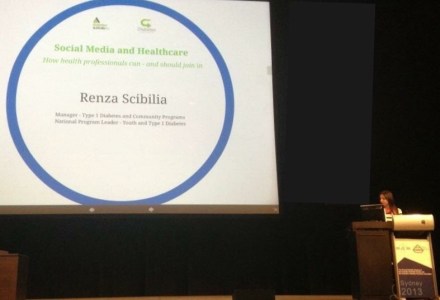
Presenting at the 2013 ADS-ADEA meeting about social media and healthcare.
Maybe it’s just me, but I am bemused that usually these presentations are targeted at such an ‘entry’ level. Social media is not new. Healthcare social media is not new. And yet, the presentations about HCSM at most medical conferences all have a ‘101’ feel to them, as though it is emerging technology and a revolutionary and new way to communicate. It is neither of these!
In fact, communities gathering on social media is just peer support 2.0. (Which is what I wrote here. Three years ago….)
And yet, the anxiety around it is still present.
I suspect that there are several reasons for this nervousness.
Firstly, by its very nature, SoMe is unregulated, and I will fight to the death to say this is a good thing, not something to fear. Its organic, unstructured and unpredictable nature is part of its power.
Even in a facilitated forum, (such as as tweetchat), there is only limited control held by the moderator – and a good moderator knows that their role is sometimes to sit back and watch (and encourage) the flow of, and tangents in, the discussion – that is often where the magic happens!
HCPs considering venturing into the patient-held HCSM space (different from interacting with their peers) need to consider what they plan to do once there. Are they going to be providing advice? Or do they want to engage in discussions? Perhaps they just want to quietly lurk, using it as a learning experience.
Whatever they choose do to, simply stepping in and having a look around will, hopefully, alleviate many of the concerns and fears they have about HCSM – especially once they understand there is no mystery to this way of communicating.
But I really do think that it is not our role as PWD using HCSM to provide a comfortable space for HCPs. And we shouldn’t feel the need to moderate our discussion for fear of who is listening in.
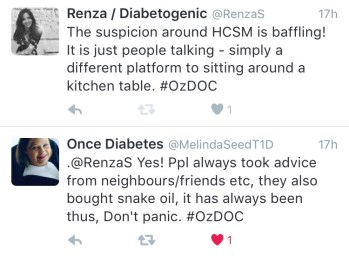
I have always considered social media to simply be a different way for having a conversation. There is no mystery behind it and there is nothing to fear. This thread from last night’s tweetchat sums this up perfectly! (Thanks, @MelindaSeed!)
Last night, I was the ‘here’s one we prepared earlier’ on a panel discussing CGM technology. The audience was all healthcare professionals – mostly DEs, but some dietitians, RNs and also a GP-in-training (so much yay to him for coming along!).
I love being in the room for these events! I wrote about my last experience giving the same talk here. I cannot speak highly enough of the two experts on the panel last night. Dr Peter Goss – who spoke at the last one of these events – is what I would call a disrupter in the diabetes healthcare space and, honestly, all the power to him. He may ruffle some feathers with his sometimes unorthodox approach, but it is undeniable that he is a champion for kids and teens (and young adults) with type 1 diabetes. Also on the panel was A/Professor David O’Neal who is best described as a truly awesome endo (I have heard that from every single person I know who sees him as their endo) and an absolutely brilliant mind. His expertise in diabetes tech is second to none and he is genuinely interested in how the technology can safely, efficiently and effectively be incorporated into the lives of people living with diabetes.
I know that all sounds rather effusive. But I need to point out that they are remarkable. And that they are the sorts of HCPs you want on your side if you are a person with diabetes.
Because now I am going to talk about language and why I pulled them up a little bit after we all did our presentations and sat on the stage ready to answer questions from the audience.
As happens frequently when I am in the room with a group of healthcare professionals, the conversation turned to language. Okay, I made that happen. In fact, the words I used were ‘I’m going to hijack this conversation because we really need to talk about language here.’
One of my biggest pet peeves is the jokey, and somewhat snide, comments made about people with diabetes making up numbers in their diabetes log books. Because, it’s not a joke. It’s not something for HCPs to roll their eyes over and dismiss as ‘non-compliant’ behaviour.
The word that was used for PWD who make up numbers in their books was ‘fakers’. I cringed the moment I heard the word. And cringed even more at the audience’s response – laughter, heads shaking from side to side and knowing looks. I looked around the room and knew that we would be talking about this later on in the evening!
As I pointed out when the panel was seated on the stage, I absolutely did this. And I was incredibly good at it – different coloured pens, splotches of blood on the pages, dog-eared corners of the book. Once, I even splattered a few drops of juice, because on that particular page, I was having a lot of lows and I thought the juice would make it look more authentic.
Now, let’s all just remember for a moment that I was diagnosed as an adult. This wasn’t insolent teenager behaviour. This was a woman in her mid-twenties who was terrified of disappointing and being judged by the HCP to whom she would be handing the grotty book and its made up numbers.
I told the room my story of this last night and there was laughter – because the way I spoke about it was amusing. It was a cheeky anecdote. But at the time, it wasn’t funny. I was scared, I hated checking my BGL, I was paralysed by numbers that didn’t make sense and I didn’t know what to do about it. So I lied. Of course my HCPs knew that. And I knew my HCP knew.
But the question is about WHY people do this. The discussion needs to stop being about diabetes at that point, because really, managing BGLs and most other diabetes tasks is not the issue here. The issue is distress, anxiety, fear. And, in my case, I felt desperate.
One of the panellists made the point that the reason that he brought it up was because HCPs need to know what to do when someone is ‘faking’ their numbers. He’s right. I completely agree. And then there needs to be understanding of how to approach it, which is likely to be different with each PWD.
For me, it took until I found a HCP who I felt I could trust – one who wouldn’t judge the numbers that were out of range (which one HCP always circled in red pen, making me feel even more like a delinquent adolescent) – and was interested in knowing what was stopping me from feeling able to check my BGL.
When we worked through that, I was better equipped to not only regularly check my BGL, but also to deal with the numbers and act upon them. I came to understand that a number was nothing more than a piece of information that I could use to make a treatment decision – not an indication of me being a good or bad person.
Language does matter. And words count for a lot. Using the word ‘faker’ in this context is loaded with judgement and accusation, and even if that is not the intention, it made me – a person with diabetes – feel very uncomfortable. But mostly, it fails to consider the real problem at hand which is not that a PWD is making up numbers in a book. It is why they feel the need to do that.
The contradictions in diabetes are complex and confuse my little mind sometimes. Today is one of those days.
Getting the message that diabetes is serious – and needs to be taken seriously – is sometimes messed up in our determination to show that diabetes won’t stop us from being superheroes. In our proverbial capes*, we do amazing things; we are brilliant; we advocate; we inform. All while pretending to be a pancreas.
We use language that empowers us and makes others see us as forces with which to be reckoned. I say I live with diabetes (often saying I live well with diabetes, never struggle with it. I refuse to even suggest for a minute that I am suffering with or from diabetes and will correct anyone who suggests otherwise.
But is that undermining the seriousness of it? And is it ignoring the days where it does seem like a battle – and an uphill one at that.
I refer to diabetes as a condition, never a disease. Is that the right terminology? And why do I do that?
According to this piece at Health Writer Hub a disease is an …’ abnormality in systemic function…that causes both physical and emotional signs and symptoms’. A condition is …’an abnormal state of health that interferes with the usual activities or feeling of wellbeing’. Both are actually correct when talking about diabetes, and yet I (and many others) object to using the term disease.
Perhaps we don’t want to be thought of as ‘diseased’ or as if there is something wrong with us and ‘disease’ does suggest that.
We want people to think we are superheroes who manage to not only thrive and excel with the condition (disease?) we have been dealt, but also demand that they don’t think of us as any different to everyone else and are given the same opportunities and choices.
Are we doing ourselves a disservice by appearing so ‘in control’ and, dare I say it, ‘normal’, when there is truly nothing normal about having to pretend to be an internal organ, day in day out?
I don’t for a minute want to stop being the empowered, confident, secure and capable person I am. But sometimes I do feel that in all my cheerleading efforts, I sometimes forget – or rather refuse to admit – that it can be tough.
And mostly, I wonder, and fear, that if we all are making diabetes look so easy to manage and impact us in such insignificant ways, do others not see and understand the urgency that we feel every single day in our desire to make things better? Who needs a cure if we look so bloody happy and competent with our little condition?
I am the first to admit that my name is not especially easy to remember. Or spell. Or even pronounce. I blame my parents. They could have called me Cindy. That would have been easier. And I would have managed to find cups, drink bottles, novelty number plates and key rings with my name printed across them. Plus, Miss Helena would have seen me through the Romper Room window.
My first name is pronounced as it is spelt: Ren-za. My surname is a little more difficult. It’s pronounced Shi-bil-ia. This is mighty confusing because it is spelt Scibilia, so people usually think it starts with a ‘sk’ sound. For some unknown reason, they often add an ‘r’ so it becomes ‘Scribbler’.
I have been doing lots of radio interviews in recent weeks and the media monitoring that arrives in my inbox in the last week has reminded me just how tough people find my name.
One day, I was apparently ‘Brenda Chevalier’; another, ‘Peta Shivanya’. Today, I had to correct a radio presenter who was calling me ‘Wendel’. These errors caused much humour and many fabulous comments from friends when I posted them on a couple of my social media pages. (I would like to point out that none these mistakes come close to my all-time favourite: ‘Wendy Lichtenstein’. That chick sounds fierce!)
I get it – my name is not typical. Most people will never have heard my surname before and even I have not met another Renza. But here’s the thing. When I do an interview, the radio station has received an email with my name spelt out. They have probably had a conversation with a media advisor or PR person who has clearly said my name. And then, once I get on the phone I not only say, but spell my name very clearly and explain how to pronounce my surname.
So what does this demonstrate? Well, it shows once again that no matter how much care you take to give the right information, it will be interpreted however people choose to interpret it. This is one of the issues with diabetes in the media. The number of times we see and hear diabetes being misreported is horrendous. In fact, it is a rare occurrence for the facts to be correct, the images to be appropriate and the details finessed.
I take a lot of care to prepare the person interviewing me. They are usually sent the Diabetes Australia Language Position Statement prior to speaking to me for the first time. I make a particular point of clearly stating that I do not want to be referred to as a ‘sufferer’ and would prefer to not be called (a) ‘diabetic’. And yet, it inevitably happens!
When it is important to state the different types of diabetes and explain how type 1 and type 2 differ, I always take great care to do that. And yet, there appears to be an inability (or perhaps, lack of care) from the reporter to actually get the facts right.
I’ve stopped getting annoyed when people in the media get my name wrong. If it happens around me, I politely correct them and move on. I’ve still got a way to go before I stop getting annoyed when people in the media get diabetes wrong but mostly that is because I believe it often contributes to the stigma associated with the condition I live with.
But I have learnt to not take it personally. Even when it is my own name that is being butchered!
Twitter is a great source of discussion and yesterday this tweet from a diabetes consultant in the UK certainly did start an interesting conversation that had me thinking.
I should point out a couple of things before going any further. The tweet, asking if lack of guidance in social media is a concern, was in response to a tweet from someone else who shared a post from a Facebook page about insulin omission for weight loss. This is a very serious issue – one that I have written about here, (and elsewhere), and worked on a lot in the last decade or so.
Also, the consultant was absolutely not suggesting that social media is a ‘bad’ thing, and he is actually an advocate and user of online platforms, so this is not about the individual. It is about the issue at large.
Obviously, I am a huge fan of social media. Apart from finding online – and more broadly, peer – support an important part of my own personal diabetes management, I have built a significant part of my career extolling the benefits of online connections and the value of sourcing information and support from others living with diabetes.
The changing landscape of diabetes information and support over the last ten or so years has been significant. With more and more available online, and more and more people being online, there has been a real shift from healthcare professionals being the keepers of information and deciding what people with diabetes SHOULD know to a more egalitarian framework from which to source what we need.
While some may believe this to be the end of civilisation as we know it, (dramatic, I know), I consider this change terrific, because instead of having very controlled and conservative information on offer, there is now a veritable smorgasbord of material – and knowledge – from which consumers can pick and choose. Personally – I love being able to do that. Hearing personal experiences and picking up tips and tricks about day-to-day life with diabetes contribute to me making decisions about how to manage my own condition.
One of the suggestions frequently made about how to safely use SoMe is for it to be better moderated. My argument is that the power and value of SoMe platforms is that it is not moderated. Being free to share my ideas and experiences without fear (or perhaps care?) of judgement is not only useful, but also cathartic. And getting feedback from my peers often provides a different lens through which I can view a situation. Much of what I have learnt would not be found in the pages of a textbook, or offered in the office of a HCP. And that’s fine – there are other very valuable and important considerations that are shared in that context.
The idea of moderating online support – or any peer support, actually – is about control. It can be packaged up into a nice parcel of ‘protecting’ the person seeking the information, but that is not only patronising, but also incredibly demeaning. There is enough of that going on in more traditional settings – peer support is where there is freedom from that control – and a freedom to explore different ideas.
For me, peer support has always been about finding my tribe and learning from them. It has been about finding a source of sustenance and care that makes me feel better about my situation. It’s never been about replacing or substituting what I get from my HCPs.
So what is the role of HCPs in our support space? My belief is that it is a place for them to learn. There are times that it may be appropriate – and even encouraged – for HCPs to step in and share. On Facebook, one of Australia’s leading CDEs frequently comments and adds to conversations in closed diabetes groups. Her professional advice is always spot on – never judgemental – and her personal perspective (she has diabetes herself) shows just how it is possible to blend the ‘What-I’m-told-I-should-do’ with the ‘And-this-is-what-works-in-real-life’.
But not everyone who wants to be involved in this space has diabetes, nor should we expect them to. But I think for me, I have a very clear understanding of online and peer support works – and what everyone’s role is. When this works well, it works because it is being led by PWD; they (we!) are the ones driving the discussion and the focus. It’s not dangerous. We don’t need guidance. Because it is our space and we own it.

What peer support means to me,
In one of my #DBlogWeek posts last week, I wrote that for the sake of my own mental health, I have learnt to not compare myself with others.
I was thinking of this the other day when I was involved in a conversation with a woman newly diagnosed with diabetes. She told me that she was really upset at the response from a close family member who, when told about the diagnosis and how distressed she was, responded with ‘It could be worse. At least it’s not cancer.’
I’ve had that said to me. Several times. And it is one of the most offensive things I have heard. I don’t really know how to respond to it, because it’s true, I don’t have cancer. But I do have diabetes and that is pretty bloody horrible sometimes. (For the record, I equally dislike the idea of responding with ‘At least it’s not cancer. There is a chance of remission with cancer; type 1 is for life…’)
I get just as annoyed when it happens in our community. ‘At least it’s not type 1,’ is something I have heard said to people with type 2, diminishing the challenges they may face.
When I was anxious about my impending cataract surgery a few years ago, I was told ‘It’s nothing. At least you don’t have to have laser or have your eyeball injected.” Again, that’s true. But I was still terrified and had every right to be.
When discussing a nasty hypo ‘At least you didn’t lose consciousness and wake up to a roomful of paramedics.’ Sure, I remained conscious throughout the low I had last week. But I needed help to treat it and it happened in front of my kid. She was scared which really upsets me and makes me feel guilty.
When our experiences are belittled or minimised, it means we may stop sharing them. No one wants to be told they are being a drama queen and that it could always be worse. Of course it could be worse, but that doesn’t mean what you are dealing with doesn’t suck.
I have had diabetes for 18 years now. I have not had to deal with debilitating complications. I have not had to spend weeks in hospital because of my diabetes. But does that mean that my fears and concerns and anxieties are any less relevant than someone whose experiences are different?
And that’s why you will never hear me say to someone newly diagnosed ‘At least you have just been diagnosed. Just wait until you have had diabetes as long as me and <this or that> happens,’ because everyone’s experience is different and that newly diagnosed person may have their own concerns at that particular time. Or not. Which is also fine.
I had a healthcare professional once tell me that at least I didn’t have diabetes ‘too terribly’, because I worked, had a child and travelled. It was one of those (incredibly rare) moments where I was stunned into silence. I was torn between wanting to say ‘Well, surely that makes what I’ve achieved all the more incredible‘ and stabbing her with a fork. I said (and did) nothing.
There is no ‘at least...’ when it comes to diabetes. There is no discussion about how it ‘could be worse’. Because the truth is, it could be a whole lot better. I could NOT have diabetes.





 Diabetogenic
