
You are currently browsing the category archive for the ‘Advocacy’ category.
One of my favourite memes on social media is the response to people who tell the world they’re taking a break from or leaving social media groups or platforms: ‘This is not an airport. There is no need to announce departures.’ (Aussie airports at the moment are full of cancelled flights, so departure announcements seem to be few and far between, but I digress.)
And so, I didn’t announce that I was taking a little break from the online world. It wasn’t really planned. But it has coincided with a couple of weeks break from work and it’s been nice to step away a little and just be. Plus, it’s given me a lot of time to write and write and write and smash deadlines for some of the freelance work I never seem to have enough time to get done. (My submission emails inevitably start with ‘I’m so sorry for the delay in getting this to you…’) But here on Diabetogenic, I’m the editor, so delays are only holding me up and it would be weird to apologise to myself for repeatedly missing deadlines, especially when I don’t even have deadlines (mostly because I don’t set them because I know I’d never meet them) and there I go digressing again and is it any wonder I get nothing done?!
Having said that, I’ve received dozens of emails from people asking when to expect a new post, so to everyone who has messaged or wondered: ‘I’m so sorry for the delay in getting this to you…’.
But here I am back again, with a heap of great things I’ve seen recently and I want to share them here in a bit of an interweb jumble!
I’m writing
Yes, I know it’s weird to share my own writing on my own blog, but whatever! Plus,, there is nothing wrong with a bit of self-promotion. I’m back writing for diaTribe and absolutely delighted to have had these two pieces published recently.
This one is about how it’s important to tell stories of people with diabetes who choose to not run marathons or climb mountains in amongst stories of those who do.
And this one is about a new type 1 diabetes screening program for Australian children. I write about the reservations I had about having my daughter screened when she was little, but how things might be very different with research like this. The response to this article has been lovely and a lot of parents with diabetes have reached out to say that they have had similar concerns and feelings to those I articulate in the post.
Advocacy through art
I’m a huge fan of Jenna Cantamessa’s artwork, and this beautiful image and accompanying post is one of the reasons why! Click on the artwork to be taken to the TypeOneVibes Instagram account to read Jenna’s words.

Stripped Supply
I’m always happy to promote smart women doing smart things and so let me introduce you to Ashley from Stripped Safely.
When Ashley’s boyfriend was diagnosed with type 1 diabetes, she realised there was a gap in the market when it comes to mail ordering NDSS supplies. Remember the old days when we used to be able to easily place an order online and have our pump lines or BGL strips delivered straight to our front door? Well, Ashley is making that happen again. It’s a subscription service and is super easy to use. Details about how to use Stripped Supply here.
Gong
You bet I’m proud to share this! Diabetes Australia’s Heads Up on Diabetes campaign recently received an award from the Australian Patients Association. The campaign was recognised as the Best Patients’ Campaign and how wonderful that shining a spotlight on diabetes and mental in such a powerful way has been awarded.
I’ll just say that while it is truly amazing to be acknowledged in this way, the real measure for me of the success of a campaign is how the diabetes community responds and it was clear from year one of this three-year campaign that people with diabetes from across the world absolutely loved it, as evidenced by the number of times the campaign videos were shared online. Oh, and there’s something quite incredible about sitting in a conference room and seeing our work played back to us by someone from outside the organisation. Yeah – that’s happened a number of times!
The Human Trial
So much buzz in the diabetes world at the moment about the incredible documentary out of the US, The Human Trial. Until 9 September, you can stream the film for free by going to this link. You will be prompted to make a donation if you can. All funds raised go to diabetes research.
More about this documentary soon.
Advocacy through poetry 1
At the recent Australian Diabetes Congress, I had the honour and pleasure of chairing a session with an brilliant array of diabetes advocates from Australia and across the world. One of the speakers was Ash Byrne who began her presentation with an incredibly powerful poem and then went on to speak about the mental health burdens of diabetes. You can see Ash readying her poem, Invisible, at this Facebook link.
Advocacy through poetry 2
Aussie diabetes advocate and #dedoc° voice, Leon Tribe shared this poem on Twitter earlier this week which beautifully explains the power of language and communication between people with diabetes and our healthcare professionals. (You may need to click on the image to read the poem more easily.)

Stigma – diabetes and beyond
‘I have a new thing, and I didn’t want to talk about it. In part, because of stigma. Mostly, because of stigma.’
This is the start of a powerful post from Dana Lewis where she shares how the stigma that comes with diabetes has influenced how she feels about being diagnosed with another autoimmune disease. Read it here.
TEDx does diabetes advocacy
I’ve been a long-time fan of Grainne Flynn’s advocacy work and have shared her posts here before. Recently, she did a TED Talk about grassroots advocacy. It is all shades of brilliant and an absolute joy to watch. So… watch!
#dedoc° is busy!
There is a lot going on in the world of #dedoc°! Here’s just a taste of upcoming events that everyone can get involved in. Plus, the #dedoc° voices program will be kicking off again later this month at EASD with a cohort of new voices and alumni on the ground in Stockholm as well as following along virtually.
I’m so excited to be part of the #dedoc° symposium at EASD! Delivering a community led and focused symposium as part of the scientific program at a professional is a Big.Deal. We’re continuing to live and breathe #NothingAboutUsWithoutUs in the most impressive ways!

Disclosures
As always, I am thrilled to share things that I’ve found interesting, but disclosures are important. I’ve not been asked to share anything you see here, but figure if I find something interesting (or feel like doing same shameless self-promotion) you might too. I also figure that being transparent is important as is reminding you to consider my bias when sharing things.
- I am a paid contributor to diaTribe
- I am the Head of Communities & International Affairs at Diabetes Australia
- I am the Global Head of Advocacy at #dedoc°
Psst…forgotten something?
If you’re in the northern hemisphere right now, you’re possibly all caught up in the sunshine, splashing around at the beach or spending time off work just taking time out. If you’re from the southern hemisphere, you’re either smart and have taken a holiday to Europe because EVERYONE.IS.IN.EUROPE.RIGHT.NOW, or under fifteen quilts in front of a roaring fire, counting down the days until it gets warmer. Sadly, I’m in the latter group.
I get it. Things slip by either way.
But! You only have a few days left to make sure you don’t miss out on applying for a #dedoc° voices scholarship. Wherever you are, a scholarship means you have something to look forward to in a couple of months’ time and the absolute thrill of either virtually or in-person attending a global diabetes conference or two. That’s right – TWO! EASD (European diabetes conference) and ISPAD (paediatric diabetes conference) are the next international conferences on the diabetes conference calendar. Both will be hybrid, with the in-person locations being Stockholm and Abu Dhabi respectively.
We’re well over two years into the #dedoc° voices program now, and the awesome thing about it is that it’s not just about the few days of the conference where you get to learn from incredible researchers and clinicians, while waving the lived experience flag and being surrounded by others with diabetes. I mean, that is all pretty great. But being a #dedoc° voice goes way beyond that! Once you receive a scholarship you are part of a network of remarkable diabetes advocates from across the world, and this network is the most supportive, encouraging, brilliant group of people, always ready to help. Every single week, I see people reaching out for support and advice and the responses are swift and many. I’ve not seen a single example of anything other than support, and have watched advocates truly flourish as they have worked with others, developed mentoring relationships and been supported to do brilliant things.
Unless you’re part of the program, you wouldn’t know this. And here’s the deal: anyone can become part of it. The #dedoc° voices program is open to people from across the world and everyone is in with an equal chance. You just need to spend some time completing an application. It is a competitive process, and places are limited. The people who get accepted are the ones who have taken some time with their application and really been able to demonstrate just how they are going to #PayItForward to their diabetes community if successful. No one is a shoe in; having a high follower count on socials means nothing if your application is sub-par. We take people who are new to the diabetes advocacy space, and are looking for a hand carving out their space, as well as seasoned advocates who are keen to work with others and become part of a global network, outside their own country.
So, get on it! Click on the image below, fill in the form and join us! You get to work on your advocacy while giving back to the community, all while wearing the #NothingAboutUsWithoutUs badge. How amazing is that?!

More on #diabetogenic about the #dedoc° voices program:
#dedoc° voices helping people with diabetes get into professional conferences
How #dedoc° voices supported people with diabetes in Ukraine
More on why to apply to join the #dedoc voices program
Disclosure
I have been an advisor for a number of years, and am now working with them as Head of Advocacy.
There are days working in diabetes advocacy that are pretty special and today is one of those days.
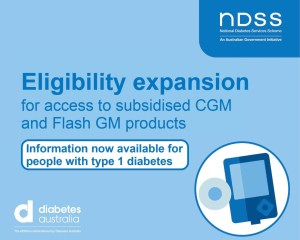
Because from today, all Australians with type 1 diabetes are eligible for subsidised CGM products. That means, all 130,000 Aussies with type 1 can access affordable CGM and Flash GM in the same way as all other diabetes supplies.
It’s July 1 and kick off is today, so there are likely to be some hiccoughs. And it’s going to take some time for everyone involved – from those of us with diabetes, our HCPs and pharmacies, plus anyone else – to become fluent in it all.
All the information is on the NDSS website, and I know it seems that there is heaps of detail (there is), but it’s worth taking the time to work out which group you are in and understand the process that will be required for you to access subsidised CGM.
I know that there are some people who are a little (a lot) annoyed that one of the regulations that has been put in place. Some people who are new to the NDSS CGM scheme won’t need to see a HCP before being eligible to access subsidised supplies. The rules to be in that group are as follow:
- Must be already using CGM or Flash GM
- Must have ordered CGM or Flash products from the supplier between 1 January 2022 and 1 June 2022
If this is you, there is an easy form to fill in, requiring just a few details including the product you intend to use so that the NDSS can validate that you have indeed ordered within the required timeframe. If you’ve ordered outside that timeframe, you’ll need to have your eligibility form completed by a HCP.
These rules will mean that some people with diabetes who have been using CGM for some time, but have not placed an order with a supplier between 1 Jan and 1 June, will not be fast-tracked, and will need to wait until they next see their HCP to fill in the required form (or have their HCP fill it in online before their next appointment).
I’m in that situation. Despite having used CGM for over 10 years (long before most diabetes HCPs even knew what CGM was!), I will still need to see a HCP to have my form filled in. I’ve been using expired G5 sensors or G6 sensors donated or purchased from pharmacies or others with diabetes for the last couple of years. I did place an order recently to take advantage of a super cheap offer that had been made to lure users, but that was after 1 June.
While frustrating (and I know a lot of people who have found themselves in the same situation), I do understand why it’s necessary. I have heard of dozens and dozens of people who have never used CGM or Flash, who jumped in to get the super cheap introductory offer AMSL were offering for Dexcom G6, and others who ordered a free Libre sensor.
Sure, we can argue that people with diabetes are able to work out how to use tech without HCP instruction, and that probably the case for most people. But there are some people who might find it difficult and that might mean they are not able to get the best out of the device. There is no point using any sort of diabetes technology if it’s not being used properly and I say that as someone who used a pump for the first three years without decent training and education and, because there were so few pumpers around at the time, no peer learning opportunities back then. I was self-funding in 2001 when I started, paying around $300 a month and getting absolutely nothing of value out of it. What a waste of money.
The NDSS is a taxpayer funded initiative and I guess, as a taxpayer, it’s reasonable to want to know that those accessing it are benefiting from it as much as possible.
If we can look beyond the initial teething issues that are inevitable and step back to look at the big picture, Australia’s entry into the #CGMForAll people with type 1 diabetes is incredible and stands up when compared with what is available elsewhere in the world.
There criteria is pretty broad meaning that absolutely no one with type 1 diabetes should miss out. And while initial forms need to be completed by a HCP for many, there isn’t an assessment process that becomes a barrier to access. I have friends with diabetes in other parts of the world where in writing there appears to be #CGMforAll, but the reality is that HCPs wield a lot of power before that becomes a reality. The hoop jumping here in Australia is relatively minor (even with the matter mentioned earlier in this post).
I certainly think that within a few months everyone who wants to access CGM through the NDSS will have been able to. And in a couple of years’ time, subsidised CGM access will just be part of what we get here in Australia, and will be expected. I suspect, however, that the ten plus years of advocacy I’ve been involved in won’t be forgotten. This win has been hard fought. But jeez was it worth it!
DISCLOSURE
I work for Diabetes Australia who administers the NDSS on behalf of the Australian Government. I do not work in the NDSS team. My access to the NDSS CGM initiative is the same as for every other person with type 1 diabetes in Australia – I’ll be seeing my endocrinologist at the end of July to get her to complete the relevant form so I can access subsidised product.
One of the real pleasures of working in the health sector has been learning from people outside the diabetes space. So much of my work is contained to the goings on in the World of Diabetes, but it is always fascinating to hear from people who are dealing with different health conditions.
And so, it is no wonder that I was enthralled during an event I was involved in for APPA a few months ago. One of the things I really appreciated about this webinar was APPA bringing in discussions about person-centred care, person-centricity, and the role of lived experience in medical affairs. It’s a tricky area thanks to obstructive codes that often act as a barrier to real engagement and involvement from those of us with lived experience.
I was thrilled to hear from Richard Vines, Founder and CEO of Rare Cancers Australia, especially his thoughts about the role of people with lived experience of rare cancers in his organisation’s advocacy efforts.
Richard spoke about how active and involved families of people with lived experience of rare cancers are in their advocacy efforts. He told a lovely tale of the myriad notes and small gifts in the (now previous) health minister’s office that had been sent to him from families who he’d met through the organisation’s lobbying and advocacy campaigns, thanking him for increasing funding and helping raise awareness of rare cancers and the challenges faced by people diagnosed with one. Richard shared that involving and including those people in all their activities was key to his charity’s success. It didn’t surprise me one bit that his attitudes closely mirrored the ‘Nothing About Us Without Us’ calls that form part of my daily advocacy.
The APPA event was back in March, and it coincided with the handing down of the Australian Federal Budget. I, along with many other people with diabetes, were devastated to learn that there was no funding allocated to broadening access to the NDSS CGM initiative. That, of course, came a month later as an election promise, but at the time, we didn’t know that.
Before that bipartisan election promise, many people with diabetes had dual frustrations of being blocked from affordable access while at the same time knowing that there have been Living Evidence Guidelines for type 1 diabetes technology for over a year now that clearly state that CGM is recommended for all adults with T1D (over BGL monitoring).
It makes no sense that professional and lived experience bodies have taken the latest and best evidence to provide guidelines for the best use of technology in the management of type 1 diabetes only to have limited funding to make it a reality. But I wondered just how many people the health minister had heard from – really heard from – to understand that. I wonder if he has letters of thanks from people with diabetes in his office.
The message that came home loud and strong from Richard Vines was that advocacy success is more likely when there is strong representation from those with lived experience to round out the story provided by evidence and guidelines. Hearts and minds. Minds and hearts.
We need more ‘hearts stuff’ from those that generally use evidence to support their case, and more ‘mind stuff’ from those who generally use lived experience to support theirs. And the lived experience must come – it can only come – from those with real skin in the game, not those adjunct to it, or claiming to speak for it.
Disclosure
I was invited to be a panellist for this Australian Pharmaceutical Professionals Association webinar and volunteered my time.
Throughout ATTD I got to repeatedly tell an origin story that led us to this year’s #dedoc° symposium. I’ve told the story here before, but I’m going to again for anyone new, or anyone who is after a refresher.
It’s 2015 and EASD in Stockholm. A group of people with diabetes are crowded together in the overheated backroom of a cafe in the centre of the city. Organising and leading this catch up is Bastian Hauck who, just a few years earlier, brought people from the german-based diabetes community together online (in tweet chats) and for in person events. His idea here was that anyone with diabetes, or connected to the conference, from anywhere in the world, could pop in and share what they were up to that was benefitting their corner of the diabetes world. I’ll add that this was a slightly turbulent time in some parts of the DOC in Europe. Local online communities were feeling the effects of some bitter rifts. #docday° wasn’t about that, and it wasn’t about where you were from either. It was about providing a platform for people with diabetes to network and share and give and get support.
And that’s exactly what happened. Honestly, I can’t remember all that much of what was spoken about. I do remember diabetes advocate from Sweden, Josephine, unabashedly stripping down to her underwear to show off the latest AnnaPS designs – a range of clothing created especially to comfortably and conveniently house diabetes devices. It won’t come as a surprise to many people that I spoke about language and communication, and the work Diabetes Australia was doing in this space and how it was the diabetes community that was helping spread the word.
I also remember the cardamom buns speckled with sugar pearls, but this is not relevant to the story, and purely serving as a reminder to find a recipe and make some.
So there we were, far away from the actual conference (because most of the advocates who were there didn’t have registration badges to get in), and very separate from where the HCPs were talking about … well … talking about us.
Twelve months later EASD moved to Munich. This time, Bastian had managed to negotiate with the event organisers for a room at the conference centre. Most of the advocates who were there for other satellite events had secured registrations badges, and could easily access all spaces. Now, instead of needing to schlep across town to meet, we had a dedicated space for a couple of hours. It also means that HCPs could pop into the event in between sessions. And a few did!
This has been the model for #docday° at EASD and, more recently, ATTD as well. The meetups were held at the conference centre and each time the number of HCPs would grow. It worked! Until, of course COVID threw a spanner in all the diabetes conference works. And so, we moved online to virtual gatherings which turned out to be quite amazing as it opened up the floor to a lot of advocates who ordinarily might not be able to access the meetings in Europe.
And that brings us to this year. The first large international diabetes conference was back on – after a couple of reschedules and location changes. And with it would, of course, be the global #dedoc° community, but this time, rather than a satellite or adjacent session, it would be part of the scientific program. There on the website was the first ever #dedoc° symposium. This was (is!) HUGE! It marks a real change in how and where people with diabetes, our stories and our position is considered at what has in the past been the domain of health professionals and researchers.
When you live by the motto ‘Nothing about us without us’ this is a very comfortable place to be. Bastian and the #dedoc° team and supporters had moved the needle, and shown that people with diabetes can be incorporated into these conferences with ease. The program for the session was determined by what have been key discussions in the diabetes community for some time: access, stigma and DIY technologies. And guess what? Those very topics were also mentioned by HCPs in other sessions.
There have been well over a dozen #docday° events now. There has been conversation after conversation after conversation about how to better include people with diabetes in these sorts of events in a meaningful way. There has been community working together to make it happen. And here we are.
For the record, the room was full to overflowing. And the vast majority of the people there were not people with diabetes. Healthcare professionals and researchers made the conscious decision to walk into Hall 118 at 3pm on Wednesday 27 April to hear from the diabetes community; to learn from the diabetes community.
If you missed it, here it is! The other amazing thing about this Symposium was that, unlike all other sessions, it wasn’t only open to people who had registered for ATTD. It was live streamed across #dedoc° socials and is available now for anyone to watch on demand. So, watch now! It was such an honour to be asked to moderate this session and to be able to present the three incredibly speakers from the diabetes community. Right where they – where we – belong.
DISCLOSURE
My flights and accommodation have been covered by #dedoc°, where I have been an advisor for a number of years, and am now working with them as Head of Advocacy.
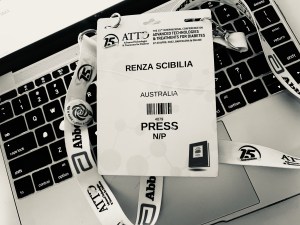
Thanks to ATTD for providing me with a press pass to attend the conference.
I’ve always thought that being pushed out of my comfort zone is a good thing. There’s something to be said about feeling uncomfortable and being stretched outside the boundaries of familiarity.
And so, with that in mind, I jumped on a plane and flew to Barcelona for ATTD. If you read my last post, you’ll know it was nowhere near as easy and flippant as that last sentence sounds.
A lot of the stresses I had before I left ended up amounting to nothing. There were no endless queues at the airport, or crowds who didn’t understand keeping 1.5 metres apart. Almost everyone was wearing a mask. Security was even more of a breeze than usual (apparently laptops and other devices don’t need to be removed from carry-on luggage anymore), and, requesting a pat down rather than walking through the full body scanner was met with a nod and a smile.
Everyone wore masks boarding the plane and most seemed to leave them on throughout the flight. This isn’t something to treat lightly. The first flight alone was almost 15 hours long! My mask was removed only while drinking and eating, staying on snugly while I slept.
While there were no formal requirements for a supervised COVID test to enter Spain or return to Australia, my daily tests did cause 15 mins of countdown anxiety. One evening, someone messaged me to tell me that she had tested positive. We’d had a breakfast meeting the previous morning. I calmed my initial response (which was to freak out and burst into tears) by remembering that we’d all been masked up apart from the minutes we were eating.
When I arrived in Barcelona, I had been cautioned of convoluted arrival procedures and extra queues to check health and vaccination status. Before leaving, I’d had warnings and reminders from the airline and friends already there to make sure I’d completed my online Spain Travel Pass because the QR code would be needed. Except, it wasn’t. Passport control took under than 90 seconds. And my code wouldn’t scan for the woman checking my pass. ‘Where are you from,’ she asked me. When I said Australia, she laughed and told me just to go get my bag. (Clearly, she wasn’t up to date with our COVID numbers…)
Luckily, the people I spent most of my time with were all on the same page as me when it came to masking. We were not the norm. Most people were not masked up. I realised that when I walked into a hotel restaurant to meet someone a couple of hours after I arrived, and again as I walked into the conference centre on the Wednesday afternoon. As I stood on the stage to welcome everyone to the #dedoc° symposium, I was grateful to be greeted by a sea of masks with fewer than ten people in the packed crowd choosing to not wear one. And a couple of them searched in their bags for one after I and first speaker, Dana Lewis, thanked people for masking up.
I have to say it did surprise me to see so few healthcare professionals wearing masks, and eagerly reaching out to hug or shake hands when we met. I actually was okay with giving people I know a hug, but we always asked first. I adopted a weird kind of hopping around to avoid people I don’t know too well as they approached, instead extending my elbow.
I went into last week with a very clear idea of how I was going to, at all costs, avoid people. I’ve held tightly onto health measures (masking, distance, lots of hand washing, meeting people outdoors) since the pandemic began, and there was no way I was going to be partying like it was Feb 2020 just because I was back in Spain.
But there was a moment that I did throw a little caution to the wind. The evening I arrived, after my first meeting, I got in the elevator to the rooftop of the hotel where I was staying. It was the same place all the #dedoc° voices were, and they were having an informal meet up on the roof. I walked out, and a few of them – the ones I know well – screamed and charged at me. And instead of freezing and freaking out, I teared up and was happy to just be enveloped by them all. I was wearing a mask and, in that moment, that as enough.
Since I have returned home, I’ve been asked dozens of times what it’s like travelling and being at a conference again and how I coped. The answer isn’t straight forward.
Travelling again was terrifying. I didn’t enjoy being in transit at all. I struggled with there being so many people around me. And I was uncomfortable with the unpredictability of the whole situation. But I focused on the bits I could control and did my best to just deal with it.
Being at a face-to-face diabetes conference was in equal measure exhilarating and difficult. Being able to have in real life conversations with people about their advocacy and how they have been going is different to messaging or Zooming – it just is. Bumping into people in conference centre hallways starts conversations that absolutely wouldn’t have happened otherwise. And it’s those conversations that often lead to collaborations and new projects. I predicted in my last post that the muscle memory of a real-life conference would return without much effort, and I was right.
The equation for me is this: the good outweighed the bad. The moments of joy and delight dwarfed the moments of terror. The feeling of being part of something – that truly global diabetes community of truly incredible diabetes advocates and healthcare professionals and researchers – returned with a fierceness I wasn’t expecting. I felt at home and where I belonged, and the moments of anxiety – sometimes almost paralysing – were overcome by knowing that. And the peer support was immense. I didn’t realise just how much I needed that contact again.
I’m not going to be rushing back to the same conference and travel schedule I had built in 2019 – it’s not sustainable in so many ways. And there is a lot of risk assessment going on. I won’t be at ADA this year, but EASD is on the cards. Carefully chosen meetings with clear goals and plans are worthwhile.
The world is definitely a different place. But within those differences is the comfort of knowing that the diabetes world – the diabetes advocacy community – has absolutely not stopped doing what it does best. As I stood in corridors speaking with people and plotting and planning, or took the stage to chair a session, or caught up with people after hours on rooftops, I realised that it’s going to take a lot more than a global pandemic to stop the passion and dedication and determination of those who have one thing in mind and one thing in common: improving lives of people with diabetes.
DISCLOSURE
My flights and accommodation have been covered by #dedoc°, where I have been an advisor for a number of years, and am no working with them as Head of Advocacy.
Thanks to ATTD for providing me with a press pass to attend the conference.
Before the world changed, I was in Qantas’ top five per cent of travellers. They told me this in an email, as though it was worth celebrating – they actually used the word ‘congratulations’ in the opening paragraph. To me, it just represented all the time I spent on aeroplanes. In 2019, I did ten long-haul flights for work and one for pleasure. I couldn’t tell you how many domestic flights I took but suspect it would be close to fifty. I had a tally at one point of the number of airbridges I’d walked but stopped counting when I got to 100 because I was feeling sad about it. 2020 was shaping up to be the same, but then that global pandemic thing happened and grounded pretty much all flights in and out of Australia. And me along with them.
But before then, I was what you would call a seasoned traveller. I could pack in ten minutes, while going through my mental checklist to make sure I had all the diabetes supplies I’d require, as well as regular-people things. I was brilliant at calculating future time zone gymnastics so I wouldn’t find myself woken at 3am with an expired sensor or empty pump reservoir.
I had my airport routines timed down to the minute. I knew I needed a cab at my house exactly 60 minutes before a domestic flight. That would give me enough time to breeze through the express security aisles, walk straight into the Qantas Business Lounge, order a takeaway coffee, walk to the gate, and get on the plane, just in time to watch the Qantas safety video that (lied) told me there was good coffee onboard.
International flights needed a little extra time. I’d arrive at the airport no more than 90 minutes before flight time. Speed through the First Class check in (no, I was not flying first class, but Platinum status – thanks to all the flying – meant I was treated as though I was. At least until I boarded the flight!), dive for the shortest e-passport queue and speed-walk through duty free and find a window seat in the First Class lounge and wait for my flight to be called.
I was that person at the airport who could tell which queues were moving quickest, understood that unpacking laptops/phones/removing jewellery PRIOR to getting to the front of the queue kept things moving, knew the best seats in the lounge, was recognised by lounge staff (the Qantas Business domestic lounge baristas knew my coffee order; I could easily get a pre-flight massage in the international lounge). Flying was tedious, tiresome, and far too frequent, but I had it worked out.
Right now, I’m at the airport, about to board an international flight for the first time since I returned home from ATTD in Madrid in February 2020. Getting to this point has been stressful.
I’m terrified of people and I’m guessing there will be some on the plane with me. I don’t like my new passport photo. I’m beyond terrified at the thought of being away from home. I’m scared about getting COVID and not being able to return home. I’m confused about COVID requirements. I’m concerned about diabetes being a shit while in transit, even though that’s really not something I’ve had to contend with in the past. I’ve been worried all week that I’ve forgotten how to travel!
It took me forever to work out what to pack. I checked, double checked and triple checked diabetes supplies, packing them, and then unpacking them over and over. I couldn’t work out which charging adaptors I needed. I finally shut my suitcase, (after spending an age deciding just the right one to use), which I know has far too many changes of clothes, but I’ve lost the knack of throwing together a ‘conference capsule’ of just the right things to wear for just the right number of days.
I couldn’t remember the layout of the airport – I walked by the elevator for the lounge and somehow found myself at a deserted part of the airport before I realised I was lost. I was worried about crazy-long airport queues but was pleasantly surprised at the efficiency of the whole check in process, so probably didn’t need the extra hour I gave myself to make sure I wasn’t running late.
I feel like one of those people at airports who holds up everyone else because they don’t know when to have their passport ready and open at the right page, or their shoes off, or to unload everything from their pockets before going through the scanner. You know, one of those people that used to drive me to despair back before the world changed.
As it turns out, the whole process of getting through security and passport control was effortless. My pump, CGM and OrangeLink were barely noted during the security pat-down. The only difference with 2022 travel as compared with 2020 travel is that I’m sporting a pink mask and had to show my vaccination certificate. I walked into the Qantas Lounge and was greeted with a ‘Welcome back’, and I nearly burst into tears.
I can see my plane out the window from the lounge (I still remembered where the best seats are!) and have had my last Melbourne coffee for a week. I managed to deal with a little hypo (thanks to all the extra steps from getting lost!) without too much drama. It all feels oddly familiar and completely alien at the same time.
In just over 25 hours, I’ll be in Barcelona. A real life conference seems so strange still, but I have a feeling that muscle memory is going to be strong there, and being around an incredible network of diabetes advocates (follow the #dedoc° voices!) is going to be an endless source of support and inspiration. Through it all – the anxiety and the stress of getting to this point – I’m so excited! Let’s see what ATTD 2022 has in store!

DISCLOSURE
My flights and accommodation have been covered by #dedoc, where I have been an advisor for a number of years, and am no working with them as Head of Advocacy.
Thanks to ATTD for providing me with a press pass to attend the conference.
What were you doing 15 years or so ago? I can’t tell you what I was doing at exactly this moment back then, but I can tell you that it is when I started working on getting CGM access for all Australians with type 1 diabetes. Back then, CGM was relatively new here. It was only used by people with type 1 diabetes and, just as now, the out-of-pocket expenses were significant. But, we knew that there was emerging evidence to show that this tech was life-changing, and we knew that there was no time like right then to start discussions about what a funding scheme would look like.
When I talk about the slow burn of diabetes advocacy, this is what I mean. We’ve had wins along the way, but until this morning, it’s understandable that a lot of adults with type 1 diabetes felt quite forgotten with the subsidies that were available.
But today we’re celebrating. In a big way. We started working on the announcement yesterday when we heard that there would be an announcement today – #CGM4All was moving from just being a hashtag to a reality if the Coalition was returned to government. Within hours of this morning’s announcement, the ALP said they would match that promise.
Isn’t bipartisanship a beautiful word?
Breaking it down, what does this mean? It means that nothing changes for people who already have access to fully-subsidised CGM and Flash GM through the NDSS CGM Initiative. For those of us who have missed out up until now, the Initiative will be expanded; we will have access to the scheme, and there will be a co-pay. Details are sketchy around that, but the announcement is that the maximum out-of-pocket expense will be $32.50 per month. Right now, those on a subscription for Dexcom G6 would be paying $330 per month.
So, this is a lot less!
By the way, we’ve been here before. Back in 2016, we had bipartisan support for introducing CGM funding. At the time, the ALP promised funding for all people with type 1 diabetes who met the criteria which was firmly based on clinical need. The Coalition’s promise was for kids, which is exactly what happened when the first iteration of the NDSS GCM initiative became a reality in April 2017. There have been further expansions – for people with diabetes planning for pregnancy and while pregnant, and for those holding a healthcare card. But not for everyone.
Back to those first meetings fifteen years ago – this was the dream. #CGM4All.
With my Diabetes Australia hat on, I can say I am incredibly proud of our advocacy work. I look to the dedicated people who I’ve sat in meeting after meeting after meeting with, modelling different scenarios, workshopping proposals, celebrating the wins, and commiserating the frustrations.
And with my person with diabetes hat on, I can say that alongside the tears of joy I shed this morning when the bipartisan support was announced, there was relief and gratitude.
#CGM4All people with type 1 diabetes. Oh, happy day!

Comment: there are definitely others with diabetes who benefit from CGM technologies. I’m not done until access is equitable. Today I’m celebrating. But then…then it‘s back on the advocacy trail looking at how to support other cohorts.
Disclosure
I am the Head of Communities and International Affairs at Diabetes Australia.
Just a few weeks ago, this happened:
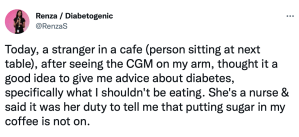
Because, for some people, seeing a stranger ‘doing diabetes’ is all it takes to jump right on in and offer a piece of wisdom, when really, the right thing to do is simply look away and say nothing. My response is generally quite brusque, leaving no room for misinterpreting my complete and utter lack of interest in furthering the conversation.
That experience, along with another intrusion from a stranger yesterday had me wondering why some folks think it’s fine to be so insensitive, and curious about how other people deal with this sort of crap.
Somewhat serendipitously, I stumbled across Up To Us, an art exhibition which is ‘Bringing women together to design the world we want’. The works I’ve already seen shared online all look great – centring women in a way that brings awareness to issues and problems that are relevant to women. But it was the artwork contributed by Unsolicited Advice Project that grabbed my attention. I mean, look at this!

The Unsolicited Advice Project is the creative brainchild of two Australian artists. Their website explains their work like this:
As chronically ill and disabled people, we receive a lot of unsolicited advice. We know people mean well, but it often feels dismissive, unproductive and condescending. There are ways to have more productive and empathetic conversations, and they probably look different for everybody.
Oh, but isn’t that right?!
You can read all about the The Unsolicited Advice Project here and follow on Instagram here. There is an absolutely hilarious Instagram stories ‘unsolicited advice generator’ effect that you can have a play with too, which churns out advice that is representative of the sort of ‘Have you tried…?’ rubbish that people like to offer.
I’ve taken to stopping people as soon as they utter the three words: ‘Have you tried…?’ because their offerings will be from one of two camps. 1. Something I know about and am possibly already doing; or 2. A meme from Dr Oz Mehmet or Dr Mark Hyman or it involves some ‘wellness hack’ that I have absolutely no interest in hearing about.
I love what The Unsolicited Advice Project is. I love the way it is using art as advocacy to highlight an issue that so many people with chronic health conditions face frequently and which often adds am additional burden to just getting on with our lives. I love that as people walk through the exhibition and see this, they start to understand how unwelcome many people find this sort of unwanted and uncalled for advice. I love how this might make people think twice about diabetesplaining the health condition I self-manage and inevitably know more about than they do. I love that it might discourage people from seeing diabetes as something for which there is a quick fix.
And I love the idea of this as a conversation starter for the broader community about how to engage people with chronic health conditions or disabilities in ways that generate respect, and are led by the community.
As if to prove the point of yesterday’s post, I’ve received dozens of lovely messages from people about how supportive they’ve found others with diabetes, and how building each other up is a cornerstone of the work they are involved in.
And as someone said to me today when I told them how many people had reached out: ‘I’m not surprised …’
Neither am I. That community support is on show everywhere you look right now. And no more so than with community efforts to support our diabetes brothers and sisters affected by the war in Ukraine.

#SpareaRose for Ukraine has now been running for about two and a half weeks. Over $115,000 has been raised in community donations, plus another $80,000 or so in corporate matching. Just a reminder: this is a community initiative. There are four people doing a few things behind the scenes, but really, it’s the community that drives this campaign each and every year – BY the community, FOR the community.
The Dedoc voices community, a group of people with diabetes, has been instrumental in sharing details of #SpareARose for Ukraine once it had been launched. They have also been sharing other extraordinary efforts they’ve been involved in, and here are just some of them.
Meet: Dawn
Dedoc voice from Northern Ireland, and diabetes advocate extraordinaire, Dawn has been working with a group of people in NI, collecting support and supplies from the community to be packaged up and sent on to people with diabetes affected by the war.
We have been given disposable and reusable pens, more than 5000 units of insulin in cartridges and vials, glucometers, test strips, glucagon, hypo treats, pen needles, pump supplies for Medtronic and AccuChek pumps, and lancets galore.
We’ve also had a donation of disposable pens from women with GDM who have had their babies. The support and generosity has been truly phenomenal. Two of us took the items we had to a diabuddy for collection by Ukrainian Doctors. These Doctors have also been given an ambulance to take into Poland and were also guaranteed transport for supplies by RyanAir into Poland more details about the medical team can be found here
If you would like to help, there is a go fund me page which you can access by clicking here.
(I can only imagine the supply of lancets are for a joke?)
Meet: Weronika
You may know Weronika better as Blue Sugar Cube on Insta and Twitter and seen her gorgeous artwork. She is a dedoc voice and an advocate from Poland, living in Belgium.
Weronika shared with me what she has been doing in what can only be described as a community AND family effort!
Together with Polish Diabetes Association, I organized a collection of diabetes supplies in Belgium for Ukrainian PWD.
Of course, the diabetes community didn’t disappoint, and many people instantly wanted to help. It took only 5 days to fill two huge boxes of glucose meters, test strips, insulin pens and needles, insulin pump equipment, sensors, and hypo snacks!
My dear husband helped me sort and pack everything. We already sent the two boxes to Poland via a driver who was so noble to take them to Poland for free.
All diabetes articles will be delivered to the Headquarters of the Polish Diabetes Association in Warsaw (with the help of my in-laws) from where they will be distributed as needed.
Packages are still arriving, and we are organizing the next shipment soon…
Meet: Caro
Caro has been a dedoc voice at a number of conferences now, and is a terrific advocate for technology use for people with diabetes. Here is what she has been doing in Germany.
At our looper meet up with PWD from around the city of Cologne, we collected supplies for people in Ukraine. As we have a Russian member who has Ukrainian friends, the motivation to support was even bigger. These personal contacts and their reports about the situation in Ukraine make us sad and stunned.
Another member of our group had connections to an organisation from Düsseldorf – they get trucks to Ukraine (even equipped with a fridge and able to cool insulin and other medical equipment).
Third way we support the Ukraine was to send insulin to the country via the organisation ‘Insulin zum Leben’ (the German Insulin for Life affiliate) which we are supporting already for many years.
At this meet up we collected all stuff we knew that could be needed, sorted it, labelled and packed it. Insulin, test trips, cannulas, USB charger, Hypo snacks, dressing materials, painkiller etc. We all know, supporting via the official organisations is the best way to support – and we do that.
Meet: Ineska
As well as being involved in dedoc voices, Ineska from Croatia is an IDF YLD and part of the Type1EU community. Together with the Zagreb Diabetes Association she has alerted Croatian Red Cross, Ukraine embassy in Zagreb and pharmacies across Croatia to reach out of people from Ukraine who had come into Croatia, so they can be provided with help.
Ineska shared some examples of the help that’s been requested:
Firstly, we got a call from Croatian policeman who was going to pick some kids and mothers on a border of Ukraine. He told us that he got a request from the Red for diabetes equipment of any kind, but specially insulin. We collected supplies within 3 hours with our diabuddies!
Then yesterday we got a call from Croatian Red Cross that they have a girl with diabetes, and she needs pump materials.
Also, we got a call from pharmacy that someone from Ukraine is asking to buy diabetes equipment, also for pump, but they can’t give it to them, because they need to have a prescription.
So, at the end we got so many calls, and this is only in ‘small’ country of Croatia. We are so glad, that with this one step we could help so much.
There are others in the dedoc voices chat that are sharing their stories of community efforts they are involved in. Leon from Australia is providing frequent updates from Medicines Sans Frontieres and sharing relevant links to different aid groups. Others are asking for contacts in different countries to pass on urgent messages. As always, the group is coming together to support each other with the aim of helping others with diabetes who are facing impossible challenges right now.
In yesterday’s post, I wrote about the community supports and looks out for each other. Spare a Rose is a great example of that. For ten years, people from all corners of the diabetes community have made it their own. It’s not about supporting the volunteers behind the scenes. It’s about doing a huge thing and supporting others with diabetes. Together. Because that’s what a community does.
You can still apply for to join the #dedoc° voices program at the upcoming ATTD conference. But be quick as applications close on 20 March. Click on the image below to be taken to the application form.

Disclaimer
I am an advisor to the #dedoc° voices program. I do not receive any payment for this role.





 Diabetogenic