
You are currently browsing the category archive for the ‘Advocacy’ category.
Happy International Women’s Day!
This year, more than ever, it feels like we need this day. In fact, sometimes, it seems that the world is not a great place for women and that rather than advancing and continuing in our quest for equality, we are actually going backwards.
When we have governments – usually led by men – still thinking that they have a say with what women do to and with our bodies, making decisions about, and placing restrictions on our reproductive options and confusing health reform with the limiting of choices, we know that we’re not even close to things being fair for women.
My world is very shaped by women. Exhibit A: just a few of the women and girls who I’m lucky enough to call friends, family and colleagues, many of whom I’ve met through my diabetes life.
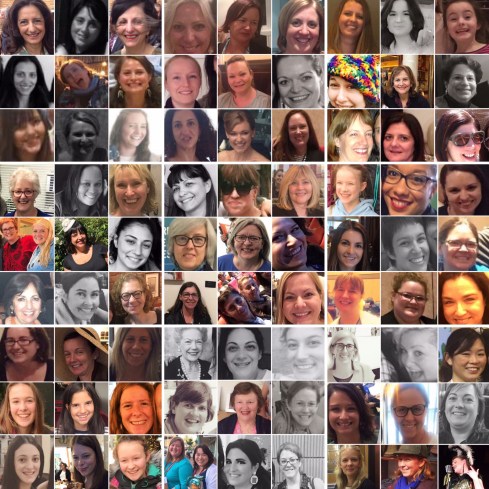
Exhibit A
But for me, International Women’s Day is about far more than my own world.
This year, the International Diabetes Federation has decided that the theme for November’s World Diabetes Day will be Women and Diabetes. In an effort to draw attention to the specific challenges faced by women with diabetes across the globe, the IDF will develop a range of materials to support women. There will be an entire stream at the IDF Congress in Abu Dhabi at the end of this year dedicated to women and children’s health.
Currently, there are almost 200 million women across the world living with diabetes and 40% of them are of reproductive age. That is a lot of pregnancies potentially impacted by diabetes. The need for safe, evidence-based, pre-pregnancy care for women with pre-existing diabetes is essential to improve outcomes for women and their babies. And this needs to start early. With half of cases of hyperglycaemia in pregnancy occurring in women under 30 years, girls and young women with diabetes need to have access to education and information about the importance of pregnancy planning.
Women’s health and diabetes has always been a special interest area of mine. My first big project when I started working in diabetes organisations was to help develop a diabetes and pregnancy booklet.
But pregnancy is not the only health issue for women with diabetes. There are a lot of other concerns and issues that need to be addressed, and I am looking forward to what the IDF do later in the year.
So today I’m celebrating – and saluting – women around the world – especially my own daughter who sent me a clip of the women teachers from her school performing ‘I am Woman’. And checking out some really important women’s health-related sites (some links below). Go get your green, purple and white on and celebrate the day!
Diabetes Sisters is a fabulous organisation based in the US and run by two of the women who appear in the collage above. It’s led by Anna Norton (CEO) and Sarah Mart (Director of Operations) who are exactly the kind of women you want on your team. I’m lucky to call them friends.
T1 International has this piece about the Sonia Nabeta Foundation.
And, today is the perfect day to do the The Jean Hailes annual Women’s Health Survey and help shape women’s health in Australia.
Last week, I spent three and a half days in Paris at the Advanced Technologies and Treatments for Diabetes (ATTD) international conference. It was the 10th ATTD meeting, and the first that I had attended. I have been to my fair share of diabetes conferences both here and around the world, but this one was definitely different. The narrow focus on technology meant that most of the attendees shared an affinity for tech-geekiness.
I was there as part of the Roche Blogger Networking #DiabetesMeetup event, (my disclosures are at the end of this post), which was a remarkable day with about 40 bloggers from across Europe. Lots more about that in coming days.
As I sat in sessions and wandered around the exhibition hall, I found myself becoming increasingly uncomfortable. The combination of being enthused, enthralled and excited (alliteration!!) at new tech and treatment advances sat trickily alongside nagging and constant reflection about the categorically un-level playing field that is diabetes around the world.
How could I happily be sitting there, hearing about automated insulin delivery devices, the value of CGM use, implantable CGM sensors that last for 90 days and big data when I had just spent weeks imploring people to donate to Spare a Rose, Save a Child? I am an ambassador for Insulin for Life Global and despair at the thought that people are dying because they can’t access insulin. And even in first world countries, access to insulin is, for some, not a given, and the thought of accessing the sorts of technologies I was hearing about may as well be a fairy-tale.
The divide between those of us in the room – those able to use the technology – and those for whom access to any sort of diabetes tech was gaping and seems to be getting bigger by the minute.
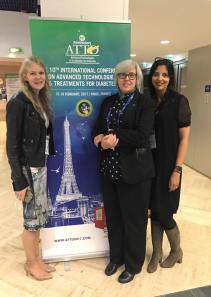
Fabulous Professor Alicia Jenkins with Annie Astle and me.
I walked out of a brilliant session about automated clinical decision support systems. It was morning tea time, so there was a break in sessions and I thought I’d find a quiet corner to try to get my head straight about how I was feeling. I looked up and there was Professor Alicia Jenkins. I knew that she was just the person to help me sort myself out!
Alicia is an Australian endocrinologist. She is a remarkable clinician, researcher and one of the best presenters on diabetes I have ever heard. Plus, she is a lovely, lovely person. Alicia is also the President of Insulin for Life Global.
I mentioned to her how uneasy I was feeling and she agreed, but with typical (and welcome) Alicia reflection, she helped me find some perspective. She reminded me that most people at the conference are very conscious of the divide, and that even while talking about the latest advances, there was still a lot of talk about access and reimbursement. There was acknowledgement that the divide is real and needs to be addressed. I looked at her – someone who is such a huge advocate for, and expert in, technology and new treatments – and realised that, actually, we can be across both aspects of diabetes care; that just because we are excited about the latest (and expensive) technologies doesn’t mean we don’t care and want to do something to help improve access of basic diabetes supplies.
By the end of the conference, on the very long trip home, I kept thinking back to our conversation. I realised that as much as it would make things simpler, I just can’t compartmentalise my own diabetes situation and how I feel about access for others. I struggle with this, because one of the really important things for me to have done all the time I’ve worked in the diabetes space has been to separate my own experience from others’.
But in this instance I can’t just leave it at ‘this is my experience and this is someone else’s’ and I think that may actually be a positive. I do find it uncomfortable. I feel guilty that I can afford and access whatever I need when so many cannot. I feel it in Australia amongst my peers and I feel it when I read about those in other countries. (Really, you should read the brilliant profiles T1 International are sharing at the moment, which give a beautifully (and sometimes harsh) personal perspective to access issues.)
I struggle with my privilege and have a constant feeling that I am not doing enough. But these feelings are a good thing. Because I can always do more. I SHOULD always do more.
I will never stop writing about these issues here and elsewhere, or talking about them. I will keep putting my money where my mouth is, because words are not enough. And I will keep advocating, using my voice and working with people trying to make a difference, until there is no difference at all between what we can all access.
Because it’s still February, I would like to urge you again to please, if you can, make a donation to the Spare a Rose campaign. For the cost of one rose (about AUD$6), you can provide insulin for a month to a child in a developing country. (Also, I should mention that last week, I was invited to join the Spare a Rose, Save a Child team; an invitation I accepted immediately.)
Disclosures
My flights and accommodation costs to attend the Roche Blogger #DiabetesMeetUp were covered by Roche Diabetes Care (Global). They also provided me with press registration to attend ATTD. My agreement to attend their blogger day did not include any commitment from me, or expectation from them, to write about the day or their products, however I will be sharing my thoughts on the event here. Plus, you can read my live tweets from the event via my Twitter stream.
‘Why do you even care what’s happening in America? It doesn’t affect you, does it?’
I’ve been astounded to hear a few people ask me this question after finding out that the kidlet and I participated in the Women’s March a few weeks ago, or after hearing me speak about the current situation in the US with the Trump Administration threatening to repeal the Affordable Care Act, and allowing insurers to discriminate against those with pre-existing health conditions.
I care a lot about what is happening in America at the moment. Without a doubt, my main focus is what is going on with healthcare and insurance, (however today, I am stunned, dismayed at Betsy DeVos’ confirmation as Education Secretary, but that is mostly because I cannot believe that someone who thinks guns have a place in schools ‘because of, you know, grizzlies’ is in charge of education).
Does it affect me directly? Well, probably not. But it is incredibly naïve of us to think that what happens in the US is completely irrelevant here in Australia. We know our politicians look to the US for policy direction. Our new Health Minister, in his maiden speech to Parliament, put forward the case for the adoption of a healthcare system more in-line with the US-system.
Of course what is going on in America affects us, but, actually, that’s not the point.
The real point is that I care because it’s about people. Not only that, it’s about the most vulnerable people. And like it or not, people with chronic health conditions are vulnerable. We are high-level users of healthcare, we face more discrimination and we cost more to the system. We can be hit where it hurts: easily and unfairly.
Of course, within this group there are some more vulnerable than others.
In the same way, I’ve had people ask me why I care so much about insulin access around the world, which seems like such a callous thing to even think, much less say out loud, when you remember that the life expectancy for a child diagnosed with type 1 diabetes in sub-Sahara Africa is 12 months. I actually still struggle to get my head around that really.
I care because I am a global citizen and I care because my social responsibility is to those less fortunate. I care because when my brothers and sisters around the world are struggling because they can’t access diabetes care, it hurts us all. I care because when I hear that instead of protecting the most vulnerable – as they should – governments are building walls (no pun intended) to make it more difficult, more frustrating and more tiring, the response should never be ‘oh well’, it should be ‘What.Can.I.Do?’ I care because diabetes is hard enough without having to fear being turned away from A&E or from other treatment. I care because no one should die because they can’t easily and affordably access a drug that has been around for 95 fucking years.
Of course I marched last month and you can bet that I will be doing it again. And you bet that I will be standing alongside my friends in the US as they fight one of the hardest battles they’ve ever faced just to be able to access healthcare, and my friends from around the world too as they fight access issues. And I will continue to make donations to charities helping those who cannot access insulin and be an Ambassador for Insulin For Life Global as they continue their excellent and necessary work.
But if you really think that it’s all too far away, so it won’t touch us, then perhaps you might like to do something to help people closer to home. As someone delicately reminded me last week, it is not only people in developing countries who struggle to access diabetes healthcare and drugs, and whose outcomes are far, far poorer than those of us living firmly inside a privilege bubble.
Get involved with or make a donation to an Australian-based charity if you would prefer to do something to help those closer to home.
We should all care because when others are disempowered, it means they are not able to get the best care or expect the best outcomes. And we do something because we can; and if we can, we should. That is what being socially responsible is all about.

Flowers die; children shouldn’t. Make a donation to Spare a Rose, Save a Child, and Life for a Child today. Click on the rose to take you straight to the donation page. Simples!
When I spend time with friends in the US, they often take great delight in the words I use or the way I pronounce things. Apparently, there is much to amuse in the Australian-English language. In New York back in January, when speaking with friends about our voting practices, I explained the concept of the ‘sausage sizzle’. Our friends were looking at each other clearly wondering if we were serious, or completely making things up (i.e. fair dinkum or having a lend of them). It is my aim to have as many of my DOC friends as possible using ‘frocked up’ whenever they speak about dressing a little fancily!
And, somewhat oddly, it is in America that I am (apparently) most difficult to understand. I know I speak very, very fast and the frequent waving of hands can be distracting. I’ve learnt to adapt with some things (spelling my name when ordering coffee, I say ‘zee’ instead of ‘zed’) and try to adapt to the local lexicon (trash instead of rubbish / gas instead of petrol / Waldo instead of Wally* etc.) and try to slow down the speed with which I speak.
It’s February which means one thing and one thing only. It’s a month of red roses. That’s right, it’s time again for Spare a Rose, Save a Child.
I could tell you all about it again, but let me leave it to Manny and Graham who, once they get over the language barrier, do a great job of explaining the whole idea behind Spare a Rose…
I make a monthly donation to Life for a Child via this campaign. Each month AUD$6 comes out of my account and directly deposited into theirs. Six bucks. Basically, that’s a coffee and a half. So, the equation is this:

That’s right: for what it costs me to purchase 1.5 coffees, a child in a developing country survives for another month.
Every February, I urge people to consider donating to Spare a Rose Save a Child – either as a one off on Valentine’s day, or to set up making a monthly donation. And this year, with all that is going on in a very messed-up world, here is one small way to feel that you are helping out someone who really, truly needs it.
‘Inshulin’ or ‘inssulin’. It doesn’t matter how you say it. Just help a kid in need get some!

*IT’S FREAKING WALLY, NOT WALDO!
With millions of people across the globe, I marched for women’s rights on Saturday. Alongside my beautiful daughter – who is growing into a fearless and fierce activist herself – I stood in solidarity with my sisters from all continents of the world, as we called for protection of our rights.

Solidarity Sisters!
It was beautiful in Melbourne – a true mid-Summer day with stunning clear blue skies and a hot sun overhead. We stood on the steps of the State Library – my favourite place in the city – and listened as women from all walks shared their stories and urged us to stand up, rise up and never give up.
After a while, the kidlet and I walked to the back of the crowd, looking for some shade. We found a park bench and she looked for a vantage point to get a look at the rally and wander around to take some photos as I sat down at the other end of the bench to calibrate my CGM.
I quickly pricked my finger and squeezed blood onto the strip. When the number came up, I entered it into the Dex app on my phone.
The woman sitting next to me on the park bench smiled over at me. ‘Me too,’ she said, holding up the bag of jelly beans she was eating.
I beamed back at her. ‘Are you okay? The heat isn’t helping, is it?’
‘I’ll be fine. Just need a few minutes before the march starts. I’ll be okay.’
I smiled again and stood up. ‘We always are, right? Enjoy the march.’
‘I will,’ she said. ‘And you too. One foot in front of the other.’
I nodded. ‘It’s the only way.’
I walked over to the kidlet and we made our way back through the crowd.

#WomensMarchMelbourne
On 11 January in 1922, a 14-year-old boy in Toronto was given the first insulin injection to treat diabetes. His name was Leonard Thompson, and he lived for another 13 years, before dying of pneumonia when he was 27 years old.
When he was given insulin for the first time, Leonard was on the only treatment available at the time for those diagnosed with type 1 diabetes. He was on a starvation diet, and he was close to death, drifting in and out of a coma because of diabetic ketoacidosis.
There are dates each year that trigger reminder lessons in the discovery of insulin. On those days, I say a silent thank you to Banting and Best for their work, grateful to them for my life and I peek into my refrigerator at the vials of insulin within easy reach for when they are needed.
But I also feel a great sense of sadness and frustration, because today, ninety-five years after Leonard Thompson was given his first insulin injection, this miracle drug is still inaccessible to so many people with diabetes. And people are dying, suffering in the way that Leonard was before he was given the drug for the first time.
Yes, I said ‘suffering’. And I don’t use that word. I don’t suffer from diabetes – I live with it. But make no mistake, someone who cannot access insulin and is dying from diabetic ketoacidosis is suffering. They are in pain; their body is in distress. They are dying.
The playing field is so un-level and that is simply not fair. So if you are able to – if you are one of the fortunate ones with insulin in your fridge, please do consider donating to those who are not.
Insulin for Life Global needs donations to fund transport costs for delivering insulin to those most in need. AUD$12.50 will cover the cost of sending two weeks’ worth of insulin.
Around Valentine’s Day each year, Spare a Rose suggests sending 11 instead of 12 roses. The AUD$6 saved provides insulin for a month to child with diabetes through the IDF’s Life for a Child program.
And for AUD$10, T1 International will send out their advocacy toolkit to five people with type 1 diabetes, providing information about how they can stand up for their rights.
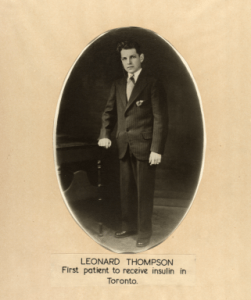 (Click image for source)
Last week, my Timehop app reminded me of this snapshot in time.
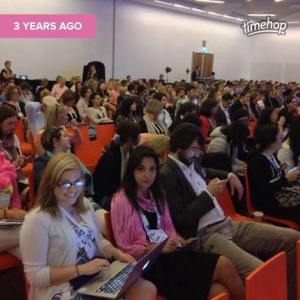
This photo was taken at the 2013 International Diabetes Federation’s World Diabetes Congress in Melbourne, and that look on my face is of pure anger. I was listening to a speaker – a doctor – referring to ‘non-compliant diabetics’ as he was telling of the ‘poor outcomes’ of ‘patients’ in his practise.
The old language chestnut came up again on the second day of the #MayoInOZ conference during the innovation showcase was held. In this session, nine speakers were each given five minutes to present how they are using social and digital tools to improve healthcare. (This is where Kim spoke about #OzDOC and how healthcare professionals use the hourly tweetchat as an opportunity to engage and learn from people with diabetes.)
The final speaker in the innovation sessions was a late addition and it was great to see diabetes again being represented. I know I am biased, but I do always get excited when I see diabetes on the program!
Andy Benson from Coffs Endocrine and Diabetes Centre presented on the project she has been working on: telling the story of diabetes in a series of documentaries to be screened on the BBC.
So, first things first. I love this idea. I am a huge fan of having diabetes out in the ‘public’ space, pulling it out from diabetes groups and diabetes-specific forums, because in most of these cases, we’re preaching to the converted. It’s one of the reasons I love writing for Mamamia Women’s Network where I know that most of the readers probably don’t already have a connection to diabetes.
If these documentaries are screened on the BBC, imagine the audience! It is so refreshing to see people thinking outside the box and looking for ways to present to a new audience – and to tell stories, real stories of real people who actually live each day with diabetes.
Andy showed two short video clips from the still-in-development documentaries. As healthcare professionals on screen spoke about diabetes, I automatically prickled, my language and stigma sensors being alerted straight away.
I wasn’t the only one. In a room with two other diabetes advocates – Kim, Melinda Seed (Once Diabetes), as well as several very vocal health advocates and activists, there was a sense of discomfort at what we were seeing.
I inhaled – maybe ‘gasped’ is a better word – when one of the HCPs used the words ‘diabetes plague’ in his introductory words. There was an undeniable sense of blaming the person with diabetes in the words being used and the sentiments being expressed.
The Twitter conversation from both people in the room and those following along was honest and candid. And, quite frankly, it was uncomfortable too. Andy had disclosed that she has type 1 diabetes, and I didn’t want to be actively criticising the work of a fellow PWD.
However, I could not keep quiet either. When Andy came over to chat after her talk, we had a very open discussion. I was probably quite blunt in my comments.
It is not okay to use language that is stigmatising. The format of the information being presented (i.e. unscripted interviews) doesn’t preclude anyone from being courteous and respectful, and I don’t believe that PWD were being treated either courteously or respectfully in the way about which we were being spoken.
I understand that there is a desire for authenticity and genuineness when interviewing documentary ‘talent’, however it is possible to be clear from the outset that language needs to be respectful at all times. Not sure where to begin with this? How about the Diabetes Australia Language Position Statement which actually provides suggestions for inclusive, non-stigmatising language?
I think it is really important to acknowledge that the road to satisfaction in the way we use language that is inclusive and non-stigmatising is a very, very long one. Also, I genuinely don’t believe that there was any malice intended on the part of the film makers or the interviewees.
We also need to acknowledge that the language used in what has been (and many would argue continues to be) a patriarchal health system is entrenched in the thinking of many – it was part of their training and is a habit that will take time to break. But by acknowledging it, we are not saying it is okay.
As I said, I love the idea that diabetes is a topic for a documentary that is being made for a non-diabetes-specific audience. However, if those people walk away thinking that my healthcare condition is a burden to society (and therefore I am too!) or that they believe it is okay to continue to use words that stigmatise, then there is the potential for this work to do more harm than good.
And finally, a call to not only the coordinators and owners of this work, but to all who are developing any sort of health information using any sort of platform: talk to people with the condition. Lots of them. It is not okay to have one token consumer representative; there should be many – as many as (if not more than) any other expert being consulted.
A couple of weeks ago now, I was incredibly fortunate to win a scholarship to attend the Mayo Clinic’s Healthcare and Social Media Summit in Melbourne. I’m a little slow in getting anything out about it, because…well because November. But November is over! And finally, the first of the few posts I’ve started is here and the others are coming. #Tardy
Five scholarships were offered for consumers to attend, and I was encouraged to apply. So, I diligently filled in my application, hitting ‘submit’ moments before the deadline. (Not to self – always have an up-to-date bio available!) And then, the week before the conference, I squealed aloud in a meeting when I received the email, letting me know my application was successful.

The scholarship recipients. (Click photo for source.)
Before the event even started, there was online chatter about making sure the consumer reps in the room connected. Which we did! Before and throughout the conference, calls to ‘find your tribe’ resonated, and I certainly felt I had found mine! It was an absolute delight to meet and an honour to wave the consumer flag alongside Carly, Mel, Liat and Belinda.
And others in the tribe made me realise just how high the bar is set! Lisa Ramshaw, event organiser, is a force of nature. There is no other word for her enthusiasm and dedication to healthcare social media. I suspect Melissa Cadzow has #patientsincluded tattooed on her body somewhere so great is her commitment to the inclusion of consumers in all activities that affect us!
Kim giving her talk
And of course, the five-minute presentation in the innovation showcase from Kim Henshaw about OzDOC presented another strong consumer voice to the event. Kim spoke about how healthcare professionals use the weekly tweetchat as a platform to learn and engage with consumers. Kim did the OzDOC community proud with her talk, using her time to accurately crystalise the very essence of the power and influence of an online network.
It’s these people that are the reason I love these sorts of conferences – and their like-minded attitude, and endless promotion of the importance of the consumer voice and the value of using social to connect, inform and support. This is mostly a huge positive, but it does get me thinking that the people who should also be in the room probably aren’t. Organisation CEOs need to be better represented to be taken on the journey of why HCSM cannot be dismissed as ‘the way of the future, so we’ll get to it soon’, but rather ‘It’s here. We need to Do.It.Now.’ This would inform a true real top down / bottom up approach to embracing healthcare social media within their organisations.

The diabetes contingent: Me, Kim and Mel
The underlying message of the conference – at least for me – was reinforcement of something that I have known and promoted for a long time: health social networks bring people together. Before online social platforms, we did it face-to-face. The message of the ‘modern day kitchen table’ was brought home to me again and again and again, and I understood that the barriers to using social are absolutely not insurmountable – despite feeling that way at times with all the justifying we seem to have to do.
And the message of ‘Connected communities get more done’, rang so true. I thought to the first morning of the conference when I was late because I’d been moderating an hour of the 24 hour World Diabetes Day tweetchat, talking diabetes stigma with people from all over the world, affected by diabetes. I thought to the Spare a Rose; Save a Child campaign. I thought about #DSMA and #DeDOC and #OzDOC and all the ways that our own diabetes community connects to get things done.
My conference fees for the two days of the #MayoInOz conference were covered through the consumer scholarship program. I was not expected to write anything in exchange for the scholarship. Thank you to the organisers of the event, Consumer Health Forum Australia and Melissa Cadzow for the scholarship. You can read more about the conference by clicking on this link for tweets.

Yesterday, I went to the fridge and pulled out a fresh vial of insulin. I used it to refill my insulin pump and then placed the mostly-full vial in my bag. As it was the second to last vial from my current prescription, I called my local pharmacy and asked if they could order me in a repeat of my prescription.
And then I wandered to a favourite café for breakfast and didn’t think about it again. I knew that the following day I’d receive a call from the pharmacist telling me that my insulin was waiting for me and I’d go in on my way home from work, fork over $40 and be set for another three or so months.
Rocking my new Insulin for Life Global tee. So honoured to be an ambassador for this worthy cause.
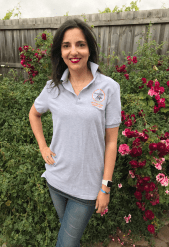
That’s not how it works in a lot of other places around the world. And it’s why when I was contacted by Joanna Sader from Insulin for Life Global asking me to be an Ambassador for the organisation, I didn’t hesitate before answering ‘Of course!’
Insulin for Life has been around for a long time. I remember when I was very new to the diabetes organisation world hearing all about it from the organisation’s founder Ron Raab. And then, a couple of years ago, I saw a wonderful documentary, Sweet 16, about the program, made by a young woman from Canada.
The organisation has continued to expand over the years, and today, on World Diabetes Day, is launching Insulin for Life Global (IFL Global). The organisation contributes to international efforts providing insulin to people unable to afford or access insulin or diabetes supplies in developing countries.
IFL Global, through its country affiliates, collects in-date and unneeded insulin and diabetes supplies, distributing them to developing countries, where they are distributed free of charge. It also fundraises to support transport costs, which is the biggest barrier to keeping the operation going.
You can learn more about the program by going to their new website and by watching the video below.
How can you help? Glad you asked! There are many ways you can get involved including making a one-off or regular donations, promoting their work through your networks or donating unused, in-date insulin and diabetes supplies. Details about how you can contribute to IFL Global can be found here.
I write a lot about remembering to look outside our bubble of privilege. Insulin for Life Global is another player in the space reminding us that diabetes drugs and supplies are not a right for all. And we can – and should – do something to help. Our diabetes brothers and sisters around the world do not deserve to die because they cannot access the life-saving drugs so many of us take for granted.
A couple of weeks ago, I spent a very uncomfortable hour talking to someone who was telling me that the very idea of sending any sort of health aid to another country was horrendous because the situation here in Australia is so dire. They went on to say that the refused to support programs helping people in other countries access insulin and diabetes supplies because that was the responsibility of the government of that country.
I’ve thought about the conversation a lot. And then today, on my TimeHop app, this post from last year came up. I wish I had remembered these words then because I sat there mute after trying to explain why it’s important that we help others who are not as fortunate as we are here in Australia and being cut off and told I didn’t know what I was talking about. I decided that there was simply no point in trying to argue.
So today, I thought I’d share the post. Remembering to look outside our own bubble is always important, And today -especially today – it seems even more critical.
_____________________________________________________________________________________
I speak a lot about the challenges of living with diabetes. Sometimes, the challenges don’t directly relate to me, but I can still see and understand that the diabetes experience is different to anyone and one person’s easy-peasy-lemon-squeezy is another person’s anxiety- and stress-inducing concern.
One of the things that perplexes and annoys me is people who are unable to see diabetes outside of their own bubble. Frequently these people fail to see that just because they don’t need information about <insert topic here> that doesn’t mean everyone has access to or an understanding of it.
Sometimes, when I was involved in running an activity or speaking about a topic at an event, people say that they have never had any problems with that, so why would we speak about it – completely ignoring the fact that for lots of people living with diabetes this is an issue that is of concern.
I ‘work in diabetes’ (which sounds ridiculous, but you know what I mean) and the last person’s diabetes that gets considered when I am at work and thinking of developing programs is my own. If I thought, for one minute, that my experience of living with diabetes mirrors most others, then I’d be utterly naïve and not doing my job. That’s why working and engaging with, and listening to as wide a range of people affected by diabetes as possible is critical to delivering services that are of use.
(Because, let’s be honest, if it really were all about me, I’d spend lots of time and effort working with the leather crafters at Hermes to help me design a perfect diabetes bag. Because: shallow. And lots of stuff.)
And you know if you just rolled your eyes at that last comment because you have found (or designed) the perfect bag and think it is waste of time to speak about it because it doesn’t affect you, then a) stop it, and b) can you tell me where to get one? Thanks.
With World Diabetes Day next week, it’s a great time to think about how others deal with diabetes, what they know, what they don’t, what their concerns may be.
If I only cared about what was going on in my diabetes bubble, I wouldn’t write so much about campaigns like #Insulin4All. You can read all about the campaign here, and my post about it during the lead up to 2014’s WDD.
I have never had trouble accessing insulin. But that doesn’t mean that I don’t care about those who do.




 Diabetogenic