
What a treat it was to have the International Diabetes Federation Western Pacific Region (WPR) Congress in my hometown of Melbourne last week. Even more of a treat was to see people with lived experience and expertise of diabetes feature so prominently in the planning of the event, and on stages across the Melbourne Convention and Exhibition Centre.
I’ll begin by disclosing that I was the Chair of Stream 1, the Living with Diabetes Stream. When I was invited to take on this voluntary position, I was very specific about what I would need. The first was a committee made up of people with diabetes from across the WPR. The names that were first suggested to me were mostly Australian and looked and sounded like me and many were associated with diabetes professional organisations. I struck all the names off the list and started again. There are #dedoc° voices from across the WPR and it was so terrific to invite some of them to play an integral part in putting together a program showcasing the amazing work of advocates, grassroots community efforts, and stories of life with diabetes across the region.
After months of programming, we had an agenda that was a great balance of diverse stories and experiences. #dedoc° has a lot to answer for – the number of people in the stream who are alumni of the voices program was significant. (As were the many shout outs to Bastian across the week.)
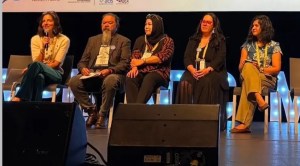
Really centring people with diabetes resulted in stories that had people talking in corridors long after sessions ended. We structured each session to begin with short presentations and then moved to longer panel discussions to give the speakers the opportunity to engage with each other and deep dive into their work and experiences. We never got through all the questions from the audience, who were hungry to understand more. There was laughter at times – people with diabetes have the most wicked sense of humour when trying to get across their points! – and tears. In the numerous sessions I chaired, I reminded attendees of the emotional labour and emotional trauma it takes to relive and share our stories and to offer suggestions for how healthcare systems can better serve us. Trying to find solutions for the very systems that fail us is hard work. I think that should be emphasised more often.
It was also wonderful to see people with diabetes included in sessions across the other streams. There is so much power in bringing the lived experience into discussions about research, clinical and health outcomes, and education programs. I heard some incredible feedback from audience members in those sessions who said having someone with diabetes included in the discussion added a depth and perspective that is missed when they are excluded. Eleventy out of ten to the stream leads who followed through on their commitment to include lived experience and expertise in their programs. What a great example of how to be an ally! You bet we see those efforts and applaud them.
As ever, there are opportunities to improve engagement. I was disappointed at the complete absence of lived experience in a session that was about what good consumer and community involvement in diabetes research looks like. Make it make sense to me and explain how that conversation can happen without people with diabetes? And presentations about co-design that did not bother to include someone with diabetes in the session were also a miss. These glitches showed that #NothingAboutUsWithoutUs is not embedded across the diabetes world – not by a long shot – and it seems to remain the responsibility of people with diabetes to do the hard work and jump up and down when the mark has been missed. That’s just more emotional labour for us.
I was also disappointed at a comment about an organisation ‘using people with diabetes to provide input into research’. Language matters. People with diabetes are not there to ‘used’. We are there to engage and be engaged, to lead, to co-design, to inform, to guide, to influence. When someone tells you who they are, believe them, and the comment ‘use people with diabetes to provide input’ is tokenism at best. Taking advantage of community at worst. Thinking that it’s a great example of inclusion and engagement is offensive.
And I was frustrated when sessions about lived experience and expertise of diabetes were hijacked by audience members who used the open Q&A and comment time to talk themselves up. When the floor is open and the panel on stage has lived experience, it’s not an invitation to grab the mic and centre yourself or your organisation. Listening skills are somewhat amiss in some corners of the diabetes world, it seems.
The wash up from a very busy week of conferencing is overwhelming support for the strong representation and contribution of people with diabetes throughout the congress. A number of people have asked me if it is likely that the annual Australian Diabetes Congress will follow on from this year and introduce a living with diabetes stream. What a sterling idea, and one that I’d certainly love to see. It’s this sort of feedback that I’m holding on to now as we debrief and recover from the busy week. And look to how we can build on the momentum of truly and meaningfully engaging community in Australian diabetes conferences.




Leave a comment
Comments feed for this article