I woke up on Saturday morning and for an exquisite 15 seconds, I didn’t remember the night before. Then I moved. Then my body remembered.

Gingerly, I swung my legs to the side of the bed so I could get up and to go to the bathroom. The pain under my left breast was making it difficult for me to breathe, much less move.

My feet gently touched the ground and I pushed myself to standing. I steadied myself and once certain I wasn’t going to fall over, I walked to the bathroom. Flashes from the night before running through my head.

Awake. Asleep. Awake. Asleep.

Forcing food down my throat, falling back to sleep.

Waking and feeling like I was drowning.

Not being able to remember which way to turn from our bedroom. 

Trying to stand up to get to the kitchen and not being able to support myself.

Finding myself in the kitchen staring at an empty bottle of orange juice. 

It was the middle of the night. The kidlet was, thankfully sound asleep and didn’t stir, despite my crashing and clumsy movements. At one point, I dropped a glass on the wooden kitchen floors, but even the loud crash didn’t wake her.

Aaron was at a gig and still hours from home.

After almost two hours, I started vomiting. My BGL was still sitting under 3mmol/l. I lay down on the bed and thought that I would need to get to the hospital.

Eventually, I called my parents and asked them to come over, thinking that one could stay with our daughter while the other took me to A&E.

By the time they arrived, I was a mess. I couldn’t stop crying; I felt nauseous and faint; my heart was beating fast and hard in my chest and I breathing was difficult.

‘Renz, darling. What do you want us to do?’ they asked. ‘Do you want to go to the hospital?’

I didn’t know. I didn’t know what was the right thing to do. I couldn’t concentrate enough to make a decision. I was distracted and kept thinking about what would have happened if I had passed out on the floor in the hallway, crashed to the ground and had the kidlet wake to find me there. I felt guilty for getting my parents out of bed and out of their house in the middle of the night to rescue me – and then not be able to tell them what I wanted and what I needed.

I decided not to go to A&E. The thought of having to spend at least 6 hours on an emergency room bed was even more overwhelming than having to continue to deal with what was going on. The danger period seemed to be over – at least I was remaining conscious now.

At 3am, my BGL had finally hit 3.2mmol/l. It was three hours since I first woke and started eating. I still didn’t feel confident enough to sleep even though I was exhausted. I turned on the television, just in time to see Ryan Reynolds being attacked by a snake in Buried.

At 4am, just as the movie ended, my BGL was 4.1mmol/l. I felt it safe enough to go to bed.

I spent most of Saturday dozing, trying to rid my body of the aching and exhaustion and my mind of feelings of desperation. But they remained.

I had a constant headache that moved in waves from dull to pulsating. I needed to rest after doing anything remotely energetic. I mowed the front lawn – not more than a postage stamp of grass – and needed to lie down for half an hour afterwards. Pushing the hand mower back and forwards caused the pain in my ribs to throb.

I ached all over, I felt fragile and tears kept forming in my eyes. I looked at my daughter and had to keep pushing away the thought of her finding me unconscious.

By Sunday morning, after a good night’s sleep, I felt a lot better. I still had a dull ache in my head and a twinge in my left ribs. But overall, I felt better. My body had started to heal and I felt like I had some energy back.

I spent Sunday afternoon at a local street festival, enveloped by gorgeous food, loud music and bright colours. We sat and watched some Bollywood dancing and then climbed the stairs to an upstairs bar to hear a hard swinging big band belt out some Frank Sinatra (and this). Occasional flashes of being hypo would pop into my head and I’d smother them by distracting myself with the energy around me.

Today, a couple of days later, there are no lasting physical scars. The pain has gone. The nausea has gone. And the headache is no longer there.

But I am so fragile. I feel damaged and I feel broken and I feel beaten. I am frayed with exhaustion.

And yet. It’s another day. And I’m here. On I go.

I’m home today with a bug. Bored out of my brain, I’ve spent too much time scrolling mindlessly through Facebook. This is never a good idea when I have time on my hands.

Usually when using Facebook, I don’t click through on things that are either stupid, or about the colour of a dress. (#TotallyTeamBlueAndBlack) I have learnt that looking at anything that is going to trigger eye rolls and anger in me is better left alone.

But today, with wasting time being about as much as I can manage, I saw something flash up on one of the pages that I follow that I ordinarily would not have clicked on. Ordinarily, I would have muttered under my breath about lunatic posts and moved on.

The post was extolling the evils of coffee. Now, caffeine is my drug of choice. I can’t live without it. Wait, that should probably read insulin. INSULIN is my drug of choice and I can’t live without it.

But coffee is my heart starter; it’s lure is what gets me out the door in the morning. The first sip of coffee each day is a jolt that kick starts me into a functioning, coherent human being. Or, at least the illusion of one.

So, I don’t take kindly to anyone telling me that it is the root of all evil.

This is where the ‘time on my hands’ thing went wrong. I clicked through to the source of this information and found myself in the middle of a site dedicated to telling the world – nay, lying to the world – about how pretty much everything is killing us.

In addition to caffeine being the reason for our untimely deaths, here are just a few other things that are sending us to early graves:

  • Vaccines (especially the HPV vaccination)
  • Medications
  • Antibiotics
  • Red meat
  • Dairy foods
  • Doughnuts
  • Gluten
  • Caesarean births
  • Doctors and other health professionals
  • Hospitals
  • Sugar (of course)
  • Grains

When I got to a lovely poster that the site encouraged we print out and stick on our (nothing but organic kale and kumbucha tea containing) refrigerator, I knew it was time to throw my iPad across the room. The poster claimed that that ‘food is healthcare and medicine is sickcare’.

Every day, more and more of these sites crop up. Once the domain of pseudo-healthcare professionals, now anyone with a green smoothie maker and Internet access can set themself up as a ‘wellness consultant‘, create a website and convince readers of the credibility of the lunacy presented.

After losing about 30 minutes of my life clicking through the site, I put my iPad down. I thought about what I need in my life to feel well and healthy. I thought about how lucky I am to be able to access medication and devices and coffee and fresh food and doughnuts and a flu shot later this month and our healthcare system.

These are the things that are well-making. All these things. The choices I make, the decisions I make, the things I do. Nothing is killing me, there is no conspiracy by anyone to make me sick. It’s just common sense. Something that is sadly lacking from any of these so-called wellness sites.

Although diabetes is not all about numbers, sometimes, numbers tell an interesting story.

TYPE 1 IN AUSTRALIA

Each quarter, the NDSS releases a snapshot of diabetes in Australia.

And each quarter, even though I know it to be true, the numbers referring to people living with type 1 diabetes in Australia astounds me. Type 1 is considered by many as a childhood health condition. But look at this:

NDSS T1

National Diabetes Services Scheme stats – 31 December 2014

Only 11 per cent of the almost 118,000 people living with type 1 in Australia is 20 years or under. In other words, over 104,000 people with type 1 diabetes are 21 years or older.

We need to remember this when we are talking about diabetes in the media and to policy makers. Kids with type 1 diabetes grow up to be adults with type 1 diabetes, so for every support service or program focused on children, we need to think about what adults with diabetes – at every age and stage of their lives – will need.

And we need to  think about painting the whole picture when advocating for people with type 1 diabetes.

ROSES SPARED; CHILDREN SAVED

Here are some feel good numbers for you. The 2015 Spare a Rose, Save a Child campaign has wrapped up and a total of $24,229 was raised. This equates 401 children kept alive this year.

This campaign is coordinated and run using social media. THIS is how social media is used for good. THIS is why social media is about a lot more than Kim Kardashian’s latest haircut. THIS is what people with diabetes do when we come together. THIS is what online communities are about.

DID I TAKE MY INSULIN?

It’s been a long time since used insulin pens, but I can still remember the number of times I would look at my pen with a puzzled look on my face trying to remember if I had bolused for the meal I was eating, or if I’d taken my long acting insulin.

Timesulin is a nifty little device that simply snaps onto your insulin pen, replacing the cap you are currently using. Every time you replace the Timesulin cap, it resets to let you know when you last took your insulin.

And the great news is that it is now (finally!!) available in Australia. Details here.

IF DIABETES WAS A COUNTRY….

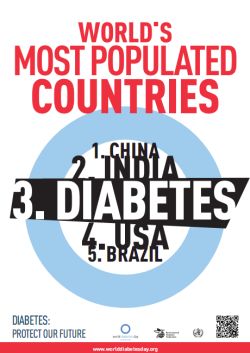
This is an oldie, but a goodie. The IDF released this really simple infographic that tells the story of the number of people with diabetes across the world.

IDF Countries

That’s right: the People’s Republic of Diabetes is the third most populous country in all the world! Can we get a flag please? And a national anthem?

THE NUMBER 1

But you know what? Using numbers to explain the diabetes epidemic or pandemic or whatever other word we use to try to convey the magnitude of the issue is a little irrelevant if you are one of those people actually living with diabetes.

Because sometimes seeing how big the issue is only makes us (and everyone else in the world) want to bury our head in the sand, afraid that we can’t deal with a problem so bloody big.

While it’s important to know just how many people are affected by diabetes and what that means, it is also important to remember that it’s individuals, with individual needs, living with this day in and day out.

Sometimes, it’s okay to say ‘it’s all about me.’ Because when living with this condition, it really is.

MY FAVOURITE NUMBER

5.5

Ha! Oh, and I checked three times and each result was the same. Which is really important, because while numbers may not matter, accuracy does!

Most days, I wear bangles. Today, I am listening to them too.

Have a look at pretty much any diabetes website, and the instructions for treating a low blood sugar will look something like this:

Eat six jelly beans OR 100ml of lemonade (not diet) OR three teaspoons of sugar. Wait 10 minutes, recheck your BGL and if still low, treat again.

That is lovely and pretty and neat and sensible.

Hypos are not lovely and pretty and neat and sensible.

And hypo-brain cannot compute anything, much less how to measure out 100ml of liquid. Or how to count to six.

Also, waiting 10 minutes when you are pretty sure that you are about to die unless you mainline sugar is not gonna happen.

The reality of treating a hypo is messy, disorganised and agitated. It might look a little like this:

Eat six jelly beans. Then another six. Then another six. Oh, what the hell, eat all the jelly beans in the house.

Find lemonade. Try to open bottle. Cannot open bottle because cannot work out which end is the top and which end is the bottom of bottle. Eventually work that out and with superior hypo-strength, open bottle easily. Because you have been shaking bottle (trying to work out which end is up), lemonade explodes and splashes everywhere. Skull whatever is left in the bottle. Lick counter top of all lemonade. Look at the floor and consider licking the floor, but realise the dog beat you to it.

Open fridge and see that there is a juice popper in there. Unable to work out how to use the straw, so grab a sharp knife (possibly stabbing yourself in the process) and pierce a hole in the top of the box. Throw head back and squeeze contents of juice box into your mouth, and down your face and down your top (all the while convincing yourself that of course you look like a sexy swimsuit model in a soft-drink commercial!).

See a jar of Nutella on the countertop. Open it. Grab a spoon. Look at spoon. Realise spoon is superfluous. Use fingers and scoop chocolate-hazelnut goodness directly into your mouth. And around your mouth. And probably in your hair. And up your nose.

Decide it might be the time to check your BGL now. Meter shows result of 34.5mmol/l. You realise the blood on the strip is mixed with Nutella, lemonade, juice and jelly bean residue and therefore probably not accurate. Wash hands; wipe on legs. Re-check. 2.9mmol/l.

Clearly you are still about to die.

Open pantry door and curse yourself for all the healthy food in there. Grab a bowl of cereal, grab milk from fridge and pour over cereal, and force it down your throat, wishing that you had Crunchy Nut Cornflakes or Coco Pops instead of stupid, healthy high-fibre crap that tastes like cardboard, but you have convinced the kidlet is delicious and the best possible start to the day.

See half-empty packet of dried apricots. Cannot ever remember buying a packet of dried apricots. Cannot focus eyes to see use-by date on packet of dried apricots, but assume they do not ever go off. Eat three of them before realising that dried apricots should probably be orange in colour, not grey. Throw remainder of packet back in cupboard. For use when next time low.

Notice a jar of honey. Open, throw head back, squeeze jar, emptying about 100ml down the back of your throat. Choke slightly.

Eat five nectarines. Swallow stones of two of them.

Pull flower off stem of gladioli in middle of kitchen table. Start to eat. Just because.

Look at sponge on sink and wonder if there would be any glucose stored in there that could help get this effing low over and done with. Consider eating it.

Start spooning sugar directly from sugar bowl into mouth. Lose count at spoon number 15.

Check BGL. 3.4mmol/l. Looking good! Decide to make toast just to be sure.

Eat toast spread 1 inch thick with jam. Also eat a dozen spoonfuls of jam straight from the jar. For good measure.

Collapse on nearest chair, realising you have just eaten your body weight in glucose. But still wonder if you have beaten this low.

THAT is the reality of treating a hypo: the frantic, adrenalin-fuelled grab for anything and everything in sight. There is no concept of having to deal with the aftermath – because we believe that if we don’t eat and eat and eat there will be no aftermath. With our heart thumping, our blood rushing and all our senses on heightened alert, we eat until we either cannot eat another thing, or feel confident that we have eaten enough to bring our BGL back up to a safe level.

To feel safe. That’s all we want. Desperately want. To feel safe.


Last Friday evening, I checked my BGL. As the result flashed on the screen, I stopped for a minute, thinking.

I scrolled back through the results for the last two days. And found there were not many at all: I had four results from Thursday morning; nothing after that on Thursday; one on Friday morning (just before driving my daughter to school); and the one I had just done.

It had been a difficult couple of days. I was distracted, which had resulted in diabetes falling to the wayside.

I took a deep breath. This wasn’t something to worry about. It had been a relatively simple day, diabetes-wise. I hadn’t had any nasty hypos or felt myself going high. I’d barely eaten, which actually would have helped keep my BGLs steady. Nothing terrible had happened.

All in all, I wasn’t worried about the 36 hours of minimal self-care.

But I was worried at how easily I had slipped back into it.

I’ve been working really hard at getting my diabetes management back to a level that makes me feel content. I THINK about my diabetes more; I’ve given it more focus.

And because I truly believe that numbers are nothing more than a snapshot of what is going on at that exact moment in time, the actual results are not the aim of the game for me. The aim is to increase the number of checks and then to respond accordingly.

Out-of-target numbers don’t get me upset or angry. I just deal with them, pleased that I actually know what is going on!

This is progress. And it’s good.

What is not good is the ease in which I just stopped. Or at least, cut back and stopped thinking about diabetes. My mind was overly occupied with other things. Amongst all the background noise, diabetes slipped.

I have come to understand that the continuum of diabetes burnout does not start and end at the point where self-care slips or stops and then starts again. There is a slide towards burnout and coming out of it takes time. And if the burnout has been going on for a while – as in my case – habits need to be broken, or new ones need to be made.

The habits I had formed of minimal self-care come back very easily if I am distracted. Losing focus of diabetes happens effortlessly.

Managing diabetes is about so much more than the numbers and the checking and the self-care. It is about perspective and focus. The positive in this is that I quickly realised I’d started to lose focus. And even more positive is that I wanted to rein it back in.

A couple of weeks ago, I met a young child with diabetes. This was one cute kid who was clearly going to be boss of the world when she grew up. And a zoo keeper. I know this because she told me as much.

She has lived with type 1 diabetes for over half her life – she told me that too. And she also told me that now, as a big grade one kid, there were things that she was doing to take care of her diabetes on her own.

‘Want me to show you?’ She asked me.

You bet!’ I said

She checked her BGL for me, talking me through it. ‘I use this to get the blood out of my finger. And then the blood goes here. Did you hear that beep? And here is the number. It says 8. That means I don’t need to do anything right now.’

Then she went off on a tangent and counted to 125 for me, which I told her was very impressive.

She showed me her pump and was very excited when I showed her mine, although disappointed that mine was boring and charcoal while hers was covered in a bright pink skin. ‘You should buy one for your pump. Your pump is not very interesting. It would be much nicer if you looked at something bright instead of boring. And more fashionable.’ I think she tut-tutted me as she shook her head at my lack of inventiveness when it came to pump decoration.

I won back some points when I showed her the bright purse I keep my meter in. ‘I guess that’s nice,’ she told me, and then found something else to show me.

‘I eat these lollies sometimes when I am low. My teacher has a big jar of them in the cupboard in the classroom. She has to keep them on the top shelf because I caught Matty eating them one day. He got in trouble, but it’s not his fault that he doesn’t know that I need them when I go low. Where do you keep your lollies?’

I told her that I have them in my bag, usually. And on my bedside table. ‘In a jar with a blue lid’, I explained, suddenly desperate to win some cred with this kid!

She nodded and seemed to approve of this answer. ‘Blue is okay,’ she announced.

‘Do you know that I am going to be a zoo keeper when I grow up?’ She asked me.

‘That sounds like a great idea and a very cool job,’ I said, and I told her that I have always wanted a pet tiger.

‘You can’t have a pet tiger,’ she said, sternly. ‘They are not good pets. You should know that.’

I told her she was right.

‘If I’m not a zoo keeper, I might be a doctor. I’ll help kids with diabetes. That would be good too.’

‘Sure,’ I said. ‘Maybe you might find a cure for diabetes.’

She looked at me with what I can only describe as the sassiest look I have ever seen.

She shook her head. And spoke to me very slowly, like I was a bit simple, staring at me straight in the eye.

‘Why does everyone think that a cure is the best thing? As long as I can be a zoo keeper, I don’t care about having diabetes. Tigers don’t care if I have diabetes.’

This kid? She is 6 years old. And she has it together more than most adults I know.

The plan was simple – take the train into White Night; start at the northern end of the city, head south, check out all the attractions we came across and jump back on the train when we’d had enough. I figured that 11pm would be that point.

As it turns out, I was sitting in Hamer Hall at 11pm, watching Ghostly Machines and not even starting to feel at the ‘enough’ point.

In fact, I had my second wind!

Only an hour earlier, however, I was sure I was about to fall asleep standing up.

Around 7pm, just before we left home, I checked my BGL. It was sitting quite pretty at 6.2mmol/l. But because I am an incredibly smart and experienced person with diabetes, two thoughts ran through my mind:

  1. It’s warm outside – really warm. I will probably – nay, certainly – go low.
  2. Don’t forget hypo supplies.

Fast forward about five minutes as we were walking to the train station. ‘Hey,‘ I turned to my beautiful friend, neighbour and partner in missing islet cell crime. ‘Do you have any hypo stuff? I left mine on the kitchen bench.’ (See? Incredibly smart and experienced with diabetes.)

I was fine – I wasn’t low. But as soon as we got off the train, I decided that the three kids’ idea (i.e. constant pleas) of slurpees was a really, really, really good one and would serve two purposes – cool us down and stave off any approaching lows.

Half an hour post slurpee, I checked my BGL and the sugary drink had done more than prevent a low –  22.1mmol/l. Nice! Really nice.

White night4So I bolused accordingly and didn’t think about it again for a bit, in the back of my mind thinking that I needed to make sure that the correction bolus did its trick.
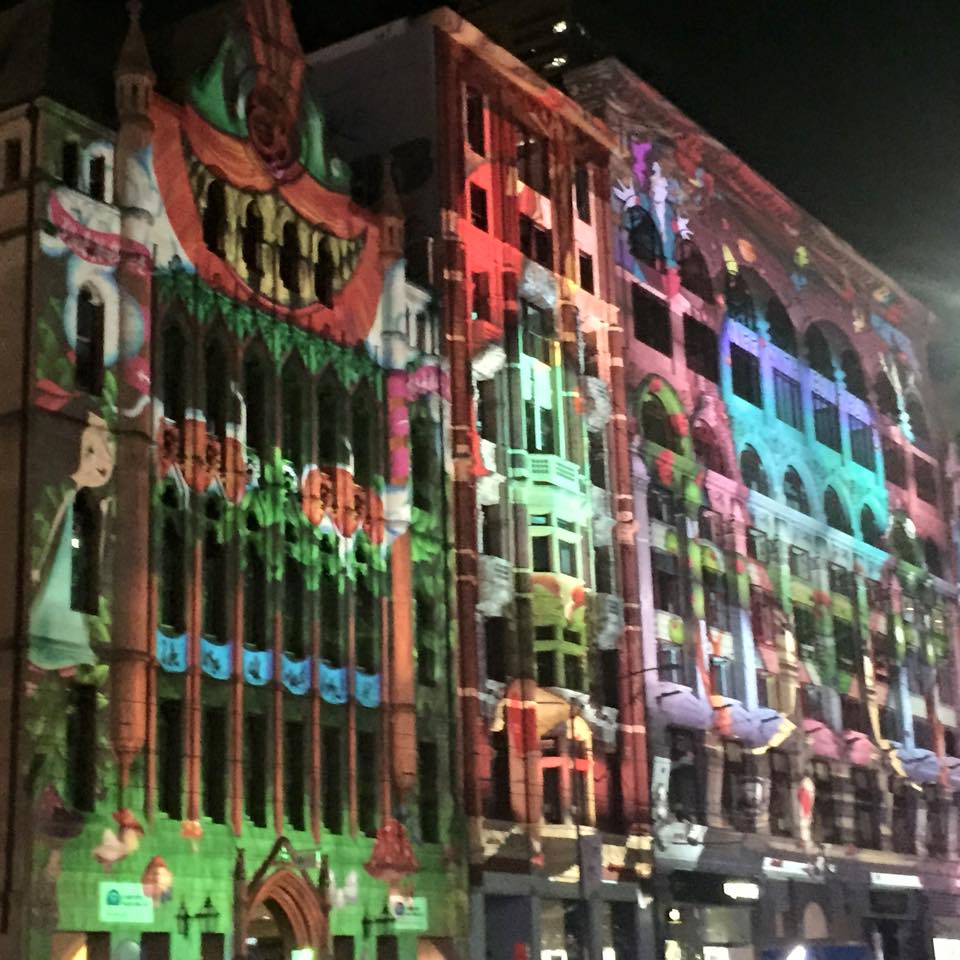
We meandered along the Yarra, marvelled at the beautiful lily pads and watched them light up as dusk hit.

We watched the Bollywood dancers sashaying to wonderful music as they floated down the river on a barge, flashes of light flooding the Yarra’s banks in pink.

And we stopped by the food trucks for a quick snack. It was about 9.30pm by this time and we were all absolutely killing it! There was no sign of tiring yet. And I was feeling fine, so I figured that my BGL was fine.

White night3Next stop was the National Gallery of Victoria and it was here, sitting on a carousel in the foyer area that a wave of exhaustion hit. It was sudden – so sudden! I started yawning and couldn’t stop. My legs felt heavy and my head was fuzzy.

‘I think I’m fading,’ I announced. ‘How about we stop for a coffee?’

We made our way to the café outside the Arts Centre. My head was getting fuzzier by the minute and the yawning was incessant. My mouth felt dry.

We sat down, waiting for our drinks and I pulled out my meter. ‘I think I must be really high. My body feels like lead. My BGLs must be stratospheric!’

Because I am smart and good at diabetes, I knew this would be the case. My mouth was dry, my legs were aching. I knew that there would be a number in the 20s. I knew that I was going to need a super correction bolus and two litres of water to deal with the thirst. In fact, I thought I could probably just pull out my pump and give myself a few units of insulin, up my basal rate for an hour or two and then I’d be right.

Because I’m good at diabetes.

White night2As it turned out, I’m really not. My meter read 2.9mmol/l. I grabbed the soft drink that had just been placed on the table, gave an apologetic look to the kid who was about to drink it, (kids of mums with diabetes don’t even look phased when this happens!), and skulled half of it.

I dumped three sugars in my coffee and skulled that too.

I wasn’t high. I was low. Really low.

It was hot, we had been walking, I hadn’t had a drink since the slurpee (about two and a half hours earlier) – all things I didn’t factor into contributing to feeling thirst.

Within about 10 minutes, I was buzzing again. The yawning had stopped. I was wide awake and sugar-fuelled!

We headed into Hamer Hall and watched an incredible show of light, sound and movement on the empty stage. And then walked along Flinders Street, the beautiful old buildings lit up like magic. We wandered through a Melbourne laneway, lay down on the cobblestones and watched the projection on the roof of a building. And we heard more music and saw more movement.

I checked my BGL when we got home at around 1am:  6.2mmol/l. Exactly the same as when we left home. In six hours, my BGLs had put on a show, fluctuating between 2.9 and 22.1, starting and ending in the same place. I still had a great night. I still saw some amazing things. White Night 2015 was fabulous – despite the diabetes show.

White Night 2015.

White Night 2015. Beautiful, magical Melbourne.

Take this quiz to find out if you are an expert in your diabetes!

1. How long have you had diabetes?

Long enough.

Too long.

No idea. I’m drinking to forget.

3,456 days; 22 hours; 3 minutes; 14 seconds….15 seconds….16 seconds….

2. Complete this sentence: Diabetes is like….

A rainbow. All bright colours and a pot of gold at the end.

Disneyland. The happiest place on earth!

The best thing that has ever happened to me!
It sucks. It just plain sucks.
3. A unicorn walks into a diabetes support group meeting. You…

Call it Pricker and make it the group’s mascot.

Collect tears from it and cure your diabetes. That will work, right?

Find out if it knows anyone from the Forbidden Forest in Harry Potter.

Check my BGL.

4. Can you eat that?

F*ck off

No; I hate tripe.

Yep; pass me a spoon.

Does it have berries in it? Yes? Then I’ll pass. I’d like to remain Hep A free.

5. Water is to sieve as XX is to diabetes?

Money

Money

Money

Money

6. How many people with diabetes does it take to change a light globe?

Get over yourself. I use the word ‘diabetic’.

I use candlelight. I can’t afford a light globe; my CGM costs are too high.

15. Any excuse for a diabetes support group get-together!

Not sure. Let me call my endo and I’ll get back to you.

7. You see another PWD in a café. What do you do?

Enough with the PWD crap!

Squeal, leap across the table, tell that you will be friends forever – whether they like it or not! (Wait…that could just be me….)

Nothing, but keep a close eye on them to check out their gear.

Make a big deal of pulling out your pump/meter/pens hoping they will notice and start talking to you.

8. Complete this sentence: An insulin pump is….

A little device that delivers insulin.

A nightmare to try to accommodate when wearing a tight frock.

More demanding that a new puppy – all the beeping & alarms drive me crazy.

No idea? What is it?

9. Do you know other people with diabetes

No; I avoid them like the plague.

Yes.

There are other people with diabetes?

Yes. I moved house so I could have one as a neighbour. (Wait – that could just be me….)

10. Complete this sentence: Nutella is….

A chocolate, hazelnut spread

The work of the devil. (FYI – If you select this, we can never be friends.)

The. Greatest. Thing. Ever.

The solution to all the world’s problems.

RESULTS

Well done – you are an expert in your diabetes. All answers are correct. Or incorrect! Frustrating right? Just like diabetes.

Share your results

I’ve loved this song for a very, very long time. My favourite version is the cover from Irish band, Solas. Here it is.

Here’s something you can do if you want to waste a shed load of time and never ever sleep again. Google ‘healthy eating’. Or use it as a search term on Facebook, Twitter, Instagram or any other SoMe site.

Actually, don’t.

Because what you get is an absolute minefield of pop psychology, fad foods, promises of everything under the sun and very little that is actually of use.

Everyone will define healthy eating in different ways. For some, it is a plant-based diet; for others it is high fat, low carb; for others it is Nutella on toast. Whatever floats your (steam) boat.

So what’s my concern? Well, it comes back to the kidlet and her healthy lunchbox project that is a focus area of study for this term. For homework this week, she has to draw up a meal plan – seven days of breakfast, lunch and dinner as well as snacks.

She had made a great start – two days complete. For breakfast, she had porridge and berries for one morning, and cereal and fruit salad for the next; lunch one day was a salad and ham sandwich, a piece of cheese and an apple, and a couple of sushi rolls with raw salmon, avocado and cucumber, and watermelon for the other. Dinner on one day was a chicken stir fry with broccoli and green beans with noodles, and homemade pizza the next. Snacks included fruit, yoghurt, homemade cookies and ice cream (of course).

It all looked pretty good; it kinda looked liked what we eat at home.

‘I’m stuck,’ she announced. ‘I can’t think of other things to write.’ She refused my idea of repeating some meals – even after I reminded her that her breakfasts on most school days look pretty similar, as do her school lunches.

So, I suggested that we have a look online for some ideas. While she got on with some other homework, I thought I’d try to find some sites that would be safe for her to use. And kids love pictures, so I thought I’d start with Instagram.

Big mistake. Huge.

Photo after photo tagged as healthy eating showed images of green drinks (in mason jars), diet juices (in mason jars), fad foods masking themselves as ‘super foods’, claims of clean eating, boasts of detoxing, restrictive diets. And kale. Bucket loads of kale. The photos were often interspersed with pics of (mostly) women in yoga gear taking selfies in front of the mirror.

And the comments on these photos take on an eerily similar theme. Cult-like declarations of #nourishment and #RawFoodRevolution and #KaleQueen.

This wasn’t about health. This wasn’t about a healthy relationship with food either. This was about restricting food choices and making health claims that are actually not healthy.

I shut my iPad, and walked to the bookshelf where a bazillion cookbooks stand – I buy them somewhat compulsively. I found a couple by Donna Hay and Nigella Lawson, and handed them to our daughter.

Here you go, sweetie, let’s look through here. And we may come up with some things to make over the weekend too.’

The recipes included simple pastas, pies, noodle dishes, warming braises, soups and delicious looking desserts. There was a wide variety of ingredients and cooking styles. The food looked great and interesting and tasty.

I know that I seem to be harping on about this at the moment. Part of that is because when there is a ten year old in the house who is spending a lot of time thinking about food in a different way than ever before, I am conscious of how her beautiful mind is shaping a relationship with food that will last her lifetime.

Whilst I may not particularly like what I see when I look at my body in the mirror, this has not manifested into an unhealthy relationship with food. I love food, and see it as a positive, fabulous part of life. How did my mum make that happen? How do I make sure that I encourage the same thinking about food in our little girl at a time when there is so much out there doing its very best to work against me?

Dinner prep.

Dinner prep.

I read this piece by Mike Hoskins (mate, fellow coffee addict, all ‘round good guy) over at Diabetes Mine yesterday where he looked at the use of the word ‘diabetic’. The piece is actually from December last year, but I missed it in the excitement that was New York in December.

I don’t use it. I don’t refer to myself as ‘diabetic’ or ‘a diabetic’. I am a person with diabetes. As far as economy of language goes, it’s a pain, especially when you only have 140 characters to play with. But PWD seems to be pretty widely recognised in my circles.

Perhaps it’s been drummed into me at work, perhaps it’s political correctness gone mad. Regardless, you will not read or hear me use the word diabetic as a label for myself or others with diabetes.

Mike’s article was quite timely as last week I had a little incident that got me more than a little heated.

I was on the phone with VicRoads. This was not an enjoyable experience by any means. I was cut off four times; the four people who answered my call(s) gave me incorrect information and then, when I asked to speak with a medical review case worker, I had someone return my call who was incredibly rude, aggressive and disrespectful. She constantly interrupted me and refused to answer my questions. And gave me the wrong information.

(For context – I was trying to get some clarification as to why I was required to submit an eye exam report along with my medical review.)

‘I was wondering why I am required to submit an eye exam report,’ I explained as the reason for my call.

‘Insulin-dependent diabetics have to must submit a biennial eye exam,’  was the response.

I asked where this is stated in the Guidelines. She would not (could not?) answer this question. She just kept saying (very aggressively) ‘It is a requirement for all insulin-dependent diabetics.’

Now, I am willing to concede that I was pissed off and that if I didn’t have my back up I probably would have let things slide and been happy to continue the discussion about our differing interpretations of the Guidelines.

But I was pissed off. I was annoyed that the medical officer was being rude and patronising and not being helpful. And I was annoyed that she was giving out false information – information that if people didn’t know better could cost a lot of time and (potentially) money for no reason.

So I stopped her.

‘Excuse me,’ I said (and I promise I was being polite and not patronising). ‘Please don’t use the term diabetic. I don’t like it. I would prefer if you used person with diabetes.’

Yes, okay. I know how prissy this sounds. I know how pedantic and, quite frankly, nit-picky I was being.  I really do.

But she was being rude and she was spitting out the word as though it was something dirty – that there was something wrong with me.

Without missing a beat, she replied with ‘But you are. You are a diabetic.’ She almost yelled it at me.

The conversation didn’t get any better.

I have diabetes. I own it. I am out, loud and proud about it. But it’s my diabetes and my rules. And my rules include how people speak about me and about my diabetes. They do it with respect, they do it politely and they show courtesy. None of these things were demonstrated. The word ‘diabetic’ was being used here spitefully, and as a label that I felt diminished me.

I don’t care if people with diabetes refer to themselves as (a) diabetic. And I don’t even really mind when other people with diabetes refer to me as (a) diabetic. But it is never done with any judgement. It never pigeon holes someone. And it is never done disrespectfully.

Words matter. I say it all the time and I realise it more and more each day.  While it’s a highly personal choice as to the words we each use to describe our ‘diabetes-selves’, using language that is accepted by everyone – and doesn’t have the potential to insult – is clearly a better way.

And here it is. Again. The Diabetes Australia Language Position Statement. And yes, I sent a copy of this to VicRoads as soon as I got off the phone.

Follow Diabetogenic on WordPress.com

Enter your email address to follow this blog and receive notifications of new posts by email.

Read about Renza

Archives