
You are currently browsing the category archive for the ‘Family’ category.
Today, I gave a talk to healthcare professionals at a hospital in outer Melbourne. I was invited months ago after the organisers heard me speak at another event, and they wanted me to speak about living with diabetes.
As I said in the introduction to my talk, I am dead boring. Plus, I am only one voice. So, to create some balance and some interest, I reached out through Facebook and asked this:

As usual, the online community didn’t disappoint. I had over forty responses and weaved them into my presentation, adding real impact to what I was saying, reinforcing my comments with the comments of others walking a similar path of life with diabetes.
I started by asking the audience a question…
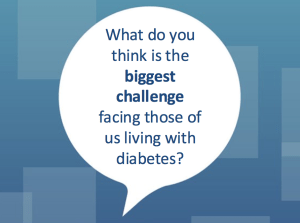
And then I said that I would be talking about life with diabetes. Except, I reminded the audience that life with diabetes was very different depending on where in the world you were diagnosed and that my story is about my ‘first world diabetes’ and I checked my privilege almost as a disclaimer.
I used that point in my talk as an opportunity to speak about those who cannot access or afford insulin and how this is simply, not okay. I could sense the surprise in the room as I said that people are dying because of lack of access.
Then I spoke about what diabetes is to me and here is what I said:

It’s boring and tedious and frustrating.

It’s made me an expert. And that we need our HCPs to acknowledge the hours and hours and effort we put into managing our own brand of diabetes and the expertise we develop from living so closely with this condition.

It’s about humour – because laughing is a tool I use to get through this and that’s okay.
 It’s about words, because language matters and sticks with us forever.
It’s about stigma. I asked if they could think of another condition that was so stigmatised and surrounded by blame – and that while we experience it with type 1 diabetes, I said that I believed my brothers and sisters with type 2 diabetes have it so much worse.

It’s invisible – despite the bright blue patch surrounding my Dexcom, most of the time it is hidden away and not on show for all to see.

It’s about people and community and the DOC and the people that are like the air I breathe – without whom I would not be managing at all.

It’s about my family. And then I explained, fighting back tears, that this is the hardest part of life with diabetes for me. I’ve written about it a lot, spoken about it often. But thinking about how diabetes impacts on Aaron and the kidlet breaks – absolutely shatters – my heart into pieces. The worry I cause my parents makes me feel guilty and resentful. And every day I regret the time I told my sister that my life expectancy had been cut thanks to my type 1 diagnosis because I will never forget the look in her eyes indicating the pain I had just caused her.
I answered a couple of questions and then my talk was done. I thanked the audience for listening, stepped down from the stage, took a deep breath. Someone came up to me as I was gathering my bags and said that she learnt more about real life with diabetes in that talk than in all her years nursing.
This is the power of story telling. The comments I read out and shared have so much power in them. We need to keep telling our stories, turning the way we talk about diabetes on its head. It’s not about the numbers, the tools or anything else. It is about people.
Thank you so much to everyone who shared their comments with me on my Facebook post yesterday and today.
In the lead up to our daughter being born, I was told that it was most likely that she would need to go to the special care nursery immediately after she was delivered because of low blood sugar. This had been the case for most of the dozens of other women with type 1 I’d spoken to beforehand, and I was resigned to the fact that there would not be many cuddles for a day or two.
The reality was a little different. As soon as she was delivered, her heel was pricked and her blood glucose was checked. ‘She’s good to go straight to your room,’ said the paediatrician charged with making sure our precious baby was all okay. He placed her in my arms so I could drink in the beautiful little munchkin
‘No; wait. She needs to go to special care. I have diabetes, remember?’ I said, as I lay on the table being stitched up after the C-section, looking in awe at the wriggling, full-cheeked munchkin who had just been lifted from my body.
‘Her blood sugar is fine,’ the paediatrician smiled at me. ‘Aaron can take her to your room and as soon as you are out of recovery you can join them. Lots of cuddles this morning – skin to skin contact is good for you both! We’ll keep an eye on her and do hourly BG checks to make sure she is okay.’
An hour later, I was stitched up, out of recovery and wheeled back into my room where Aaron was sitting holding our new daughter. He stood up and brought her over to me, positioning her on my chest and I pulled away my hospital gown and her swaddling so I could feel her against me.
With the help of a wonderful nurse, we started to learn how to breastfeed. There in my arms was our daughter. I couldn’t stop staring at her and couldn’t believe she was finally with us.
My endo walked into the room to meet her, and see how I was doing at the same moment another nurse walked in to do the first BGL check. As I held our baby, I cringed at the lancet going into her tiny, tiny heel and the tiny, tiny whimper she made.
I looked at the nurse and saw her turn white. “She needs to go to special care. Now. Her BGL is really low.’
My ever-calm endo, looked at the result. ‘I don’t think that is right. Can you check again? Maybe using Renza’s meter?’
‘No!’ said the nurse, starting to panic. ‘She needs to go right now.’ And she snatched the baby from my arms, put her back in her crib and headed quickly out of the room.
‘Go with her!’ I said to Aaron, but he was already on his feet scurrying after our baby girl.
I was in shock. What had just happened? Our baby had been peacefully snuggling with me, drinking in some of the tiny bits of colostrum she could manage. What was the problem?
In the special care nursery, Aaron watched as the doctors and nurses tried and tried and tried to get an IV line into our tiny newborn baby before they finally decided to just give her some formula.
As it turns out, her BGL was fine. They needn’t have bothered trying with the IV. The meter used on the ward was probably faulty. She could have stayed with me and all would have been okay.
But I wasn’t upset – or surprised – because I understood exactly what I was seeing. This was hypo anxiety from healthcare professionals and I’d seen it before.
When in hospital having my appendix out, a nurse walked in when I was checking my BGL. When she saw the 4.2mmol/l on the meter, she insisted a drink two glasses of juice and eat a sandwich, despite my protestations that I was fine and a few jelly beans would more than do the trick to keep me in the safe zone. She stood there watching me as I forced the juice and food down my throat.
In A&E once, an emergency doctor wanted me to disconnect my pump, because it was sending me low, even though my BGL had been sitting pretty in the 5s for most of the time I was there.
Another time, at work, a diabetes educator jumped up to grab me juice and almost shoved a straw in my mouth when she noticed by CGM trace heading downwards, even though my BGL was still 6 and I had plenty of time to treat before going low.
And it’s not just HCPs. In a meeting once, a senior staffer I’d worked with for over two years asked me if I needed a nurse to ‘help me’ after I excused myself for eating a couple of jelly beans because I was preventing a low. ‘A nurse,’ I said. ‘Why?’ I was confused at what was going on. ‘Because you are hypo. To make sure you are okay.’ And then I was more confused because what possible would have ever suggested that this very easy-to-treat hypo would need the assistance of a nurse?
There is a lot of anxiety around hypoglycaemia. Fear of hypos in people living with diabetes and their loved ones can be paralysing. I know that after a particularly nasty or sticky hypo, I get anxious about lows and I see my loved ones watching me more closely.
But I also work really hard to try to keep some perspective about managing them. And those around me know that keeping calm while I’m low and gently asking if they can do anything is helpful, but panicking is not. Interestingly, no one with diabetes has ever been flustered when they see me going low (nor I when around one of my friends having a hypo).
In each of the situations I described above, I needed to do a lot more to settle and reassure the person panicking than to manage my own low blood sugar. Having to calm down the anxieties of others is not really what I want to do while low.
Unfortunately, low blood sugar is a reality of diabetes for many people. I see it as a short term complication – something I do all I can to minimise, and treat as well as possible – that just needs to be managed. Of course, it can be scary. But doing all I can to keep calm yields far better results: I tend to not over treat and eat the whole kitchen when I am calm.
But what I want to know is why so much anxiety from those around us? If we know that the best way to manage a hypo is calmly, rationally and with measured treatment, why the panic? What are HCPs being told about hypos that send them into a spin so they overreact? And what could be done better to ensure those around us help rather than make things worse when we are low?

Calmly. Quietly.
Yesterday, I had my annual eye screening. In an endeavour to calm me as much as possible from the anxiety I feel about this annual check-up, I made plans so that it would be the same as my check every year. My dad drove me there, sitting in the waiting room while I faced my fears in the doctor’s office.
I have been going to the same eye specialist centre for 15 years. I’ve seen the same ophthalmologist the whole time and his orthoptist has been the same absolutely delightful woman. She does a super job of calming me down, checking my vision and eye pressure and popping in the dilating drops. And then she sends me off to see her boss so he can have a look at the back of my eyes.
‘The main event’ part of my appointment is always fairly similar and I am fine with that. I know what to expect, I know the order of things and I know that I will have an opportunity to talk about anything concerning me.
We start with my ophthalmologist asking me how I have been and what has changed in my life over the last 12 months. I mentioned that I had changed jobs and we had a chat about that for a moment.
Then he asks if there have been any changes with my diabetes in that period and is always pleased (as am I!) when I report on the mostly boring nature of my diabetes. At this point, he usually asks about my family and any recent travels.
And then, the eye exam. The lights go out, I rest my chin on the contraption and he spends a good 10 to 15 minutes having a look at my eyes, explaining what he is looking at, what he is looking for and, most importantly to me, what he can see.
Or – what he can’t see. I am always hoping that he can’t see any diabetes-related eye disease.
‘Remind me how old you are, Renza,’ he said as he turned the lights back on.
‘I’m turning 43 at the end of the month,’ I said, blinking furiously as my dilated pupils tried to get used to the suddenly bright overhead lights.
‘And you’ve had diabetes for 18 years, right?’ he asked.
‘Eighteen and a half…,’ I said.
‘There is absolutely no diabetes-related anything going on in your eyes, Renza. It is all good news from me. You should be really pleased.’
‘I am,’ I said, nodding. I could feel my breathing starting to return to normal, unaware until that moment that I’d been holding my breath.
‘Okay. So…I’ll see you in a year. Of course, come back sooner if there are any changes. But first, is there anything else you wanted to mention?’
‘Oh – yes!’ I suddenly remembered that I had written myself a note in my phone. ‘I have noticed that my eyes have been really watery lately – maybe in the last couple of months. I can’t go outside without tears streaming down my face. It’s a little better if I am wearing sunglasses, but not always.’
‘Let’s have a look,’ he said. ‘It could be a blocked tear duct.’
‘Wait – what are you going to do…?’ Panic was setting in again!
‘Just tilt your head back for a second and I’ll pop some drops in first. And then I’ll do what I need to do.’
I knew that it was not the moment to ask exactly what was going on. I also knew that he has been my eye specialist for 15 years and knows me and my anxieties. And I also know that I trust him completely! I could hear paper rustling – the sound of something sterile being freed from its package.
‘Renza, I want you to look right up over your head for a second.’ At that point, I saw the syringe. ‘Okay – in a second, you are going to feel some saline running down the back of your throat. Nothing to worry about.’
And at the moment I tasted the salt I realised that THERE WAS A NEEDLE IN MY EYE. AND I WAS AWAKE. And I was not screaming. Or in any pain.
‘That one is fine,’ he said. ‘Let me check the other one.’ And he repeated the procedure, again announcing all to be okay. ‘It’s all fine – nothing to worry about at all.’
‘Great,’ I said. ‘Um…did you just stick a needle in my eye?’
‘I will never say,’ he said, smiling at me.
‘I think we need to acknowledge this new phase of our relationship. I feel I have really grown as an eye patient.’ I said as I gathered up my bag. I thanked him for his time – but really I was thanking him for the awesome ‘report’ and the lovely way he deals with me.
‘I’ll see you next time, Renza. Everything is looking really good.’
I walked out of the room. My dad looked up from the magazine he was reading and stood up. ‘All okay?’ he asked. I nooded. ‘Told you!’ he said – just like he always does.
I smiled. ‘Guess what? I just had a needle stuck IN MY EYE.’ I told him. ‘Did you hear me? A NEEDLE STUCK IN MY EYE.’
I settled the account and made an appointment for the end of next year at the front desk and we got into the elevator. ‘I just had a needle in my eye,’ I said, this time quietly and mostly to myself.
‘And my eyes are all clear.’
We walked to the car. All done for another year.
Pupil still slightly dilated. But an all-clear from the ophthalmologist.
Trying to make sense of the weird link between visiting old family homes, coffee, and searching for security and safety in diabetes. Sometimes, my thought process is ridiculous!
Today is day 6,761 of living with type 1 diabetes. I don’t know why I did the calculations (by ‘did the calculations’ I mean, used timeanddate.com and put in the dates. I didn’t do it myself in my head; that would be weird and impressive), but I did and now I know. My counter is still weighted in favour of days without diabetes, but the difference is slowly but surely eroding.
 In the last ten days, I’ve visited houses from my childhood. By some weird coincidence, the house I grew up and lived in until I moved out at 21, and the house my dad grew up in and I spent countless Sunday afternoons with my extended family are both up for sale. I walked through the houses and memories flew around me, launching me back years.
Each day, I drive past the warehouse Aaron and I moved into as students and where we lived for three years, celebrating our independence with a constant flow of friends and dinner parties. Right now, it’s literally a façade and nothing more as it has fallen victim city-fringe developers. No doubt, the eight apartments that were there will be turned into a 15-storey monstrosity with nothing more than the heritage-listed façade to remind us what was once there.
These places are not about diabetes because for all or most of my time there, I did not have diabetes. The 6,761 day counter started after we moved out of our warehouse; I lived in my childhood home for only ten months with diabetes, (when diagnosed, I had moved back home, saving money to buy a house before we got married), and my grandparents’ house also only saw a few years of me living with diabetes. Their day count is heavily balanced in favour of days without diabetes.
And so, these homes are not houses of diabetes. Our apartment never saw a rogue BGL strip on the floor, insulin in the fridge, or a cupboard full of diabetes supplies. There were not huge jars of jellybeans scattered around the house, or empty juice boxes on the bedside table.
The two homes we have owned accommodated diabetes from day one. When we moved into our ‘new’ place three years ago, diabetes moved in too and was given its own space. Just as it has found a pocket of space at my parents’ house now where I open the fridge and see the exact juice box that I use to treat a low in bulk supply (that’s not because I have a billion lows; my parents have always shopped for the apocalypse!).
 It settled into my in-laws’ house in the country. We’d arrive at the farm in need of a cup of tea after a long drive and I’d open the fridge for milk to find insulin staring at me. And I’d sigh, slightly startled, as I checked to make sure it was still in date, replacing it with fresh vials from my bag if not.
For 6,761 days, diabetes has moved in with me wherever I live, taking up cupboard space that, let’s be honest, could be far better put to use by housing cashmere sweaters or striped t-shirts. It’s invaded the butter compartment of the fridge which I would prefer to be overflowing with salted Danish butter. It’s littered the floor with BGL strips, the benches with spent pump lines and the rubbish bins with the waste of diabetes consumables.
I wandered around the houses of my childhood and instead of remembering diabetes, I remembered games, and play-dates and hiding places and loud laughter around the table – and stomping, moody teenage years. It’s getting harder and harder to remember the days before diabetes, but as I stood in my old bedroom, I saw the days before the last 6,761, remembering them clearly. And at the same time, not remembering them at all.
Yesterday morning, we got up bright and early to join the excited witches, wizards and muggles for the 9.01am launch of the new Harry Potter book.
And as we stood there in Carlton, on the cold Winter weekend morning, memories of the other times we did that flashed through my mind.
I have a lot of Harry Potter themed memories. It was my mother-in-law who first introduced me to the books. She had become hooked after reading the first three, and one long weekend when we were visiting their farm, she suggested I read them. I don’t think I moved from sitting in front of the open fireplace for the rest of the time we were in Mansfield, speeding through the chapters at the rate of knots. Aaron read them as soon as I finished and together, we became hooked on the story of the ‘boy who lived’.
The fourth book had just been released, so as soon as I finished the third book, I bought a copy of that and caught up. And started the count down until the launch of the fifth book, re-reading the already released books in the lead up – a tradition that would precede the big launch day of subsequent instalments.
The launch dates of the remaining books were marked in my diaries and on the day, I’d push little kids out of the way to get my pre-ordered copy, spending the rest of the day cuddled up on the couch ploughing my way through, refusing to even glance online for fear of spoilers!
In November 2001, I counted down until the first movie came out, lining up the opening weekend to see if the film came close to capturing the magic on screen that had leapt from the pages of the books. I loved it, just as I did all the films.
In London a couple of years ago, Aaron and I (without our kid – excellent parents!) spent a day at the Warner Bros Studio where much of the movies had been filmed. I burst into tears as I turned a corner during the tour to be faced with a scaled model of Hogwarts. We drank butter beer, rode broomsticks and flew above the trees in a Ford Anglia.
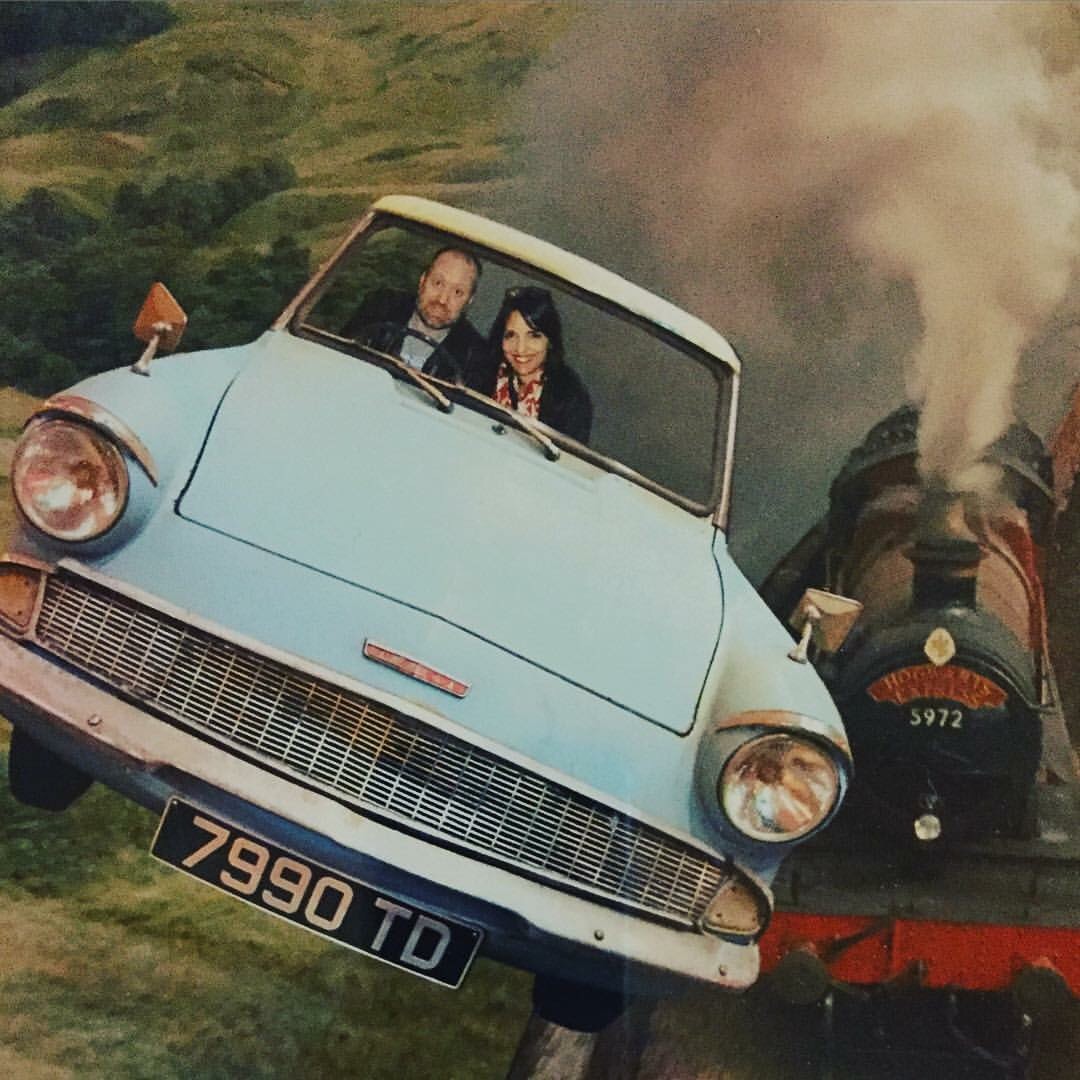
And then there was the delight and beauty of introducing our daughter to Harry Potter and watching her discover the world into which I had escaped years earlier. We loved seeing her fall in love with the stories and get carried away with the characters. Nights become a battle ground as we caught her reading with a torch under the doona after lights out because she was desperate to keep turning pages…
She loved the movies too when she was old enough to watch them – and after she had already read the books. That’s the rule in our house: books before movies!
She has other Harry Potter memories too – not only the books and the movies, but also dressing up as Hermione during book week when she was Year 1, and a visit to the Wizarding World of Harry Potter at Universal Studios in Orlando last year.
And now she will remember the launch of the eighth book where she was an active participant. She has heard our tales of the excitement of launch events and yesterday, she got into the spirit of the occasion, standing out as the only Bellatrix Lestrange in a sea of Harrys, Hermiones and Rons. (Very proud parenting moment!!)
I love that she has memories of Harry Potter and I wonder if these will be the occasions that stand out in her mind when she grows up and looks back on her childhood.
She has had some pretty incredible experiences that have made for pretty magical memories. Where does mum having diabetes fit in there? She asks me a lot of questions about diabetes that I try to answer as honestly as I can, but there is so much I want to shield from her – or at least, not have her think about.
A while ago, she asked ‘Is diabetes scary?’ and I paused before answering ‘Sometimes, but not too much.’ The truth is that it scares me senseless a lot of the time, but I don’t want her knowing that. I know I am not alone in this. My mum still tries to downplay things if she isn’t feeling great, and I am now over 40 and far less easily fooled by her ‘putting on a good face’ routine. Although, maybe I just tell myself that our 11-year-old can’t see through my lies about how I feel.
When our daughter is an adult and remembering her childhood, I don’t want her to think about diabetes. I don’t want her to think about me having to stop to deal with a ‘diabetes thing’.
I want her to remember the hours we spent reading, watching and talking about Harry Potter and having ridiculous discussions about who we would be if we were characters in the books. (I can tell when she is annoyed with me – then she says I remind her of Dolores Umbridge!)
Diabetes doesn’t get a look into our world of Harry Potter. In that world, there is no diabetes; there is no fear of complications; there are no scary lows or nasty highs. In that world, I don’t think diabetes. Because, those things don’t exist. There is magic. Only magic.


Perfect start to Mother’s Day. Just need to work out how to make this happen every day!
I had a gorgeous Mother’s Day yesterday, which included, amongst other things, breakfast in bed, a big family lunch at our place and, after everyone had gone home, an afternoon nap. It was quite glorious and I felt incredibly spoilt by my little family and fortunate to be surrounded by our extended family.
So it is with some guilt that I admit that in with all the happiness and celebrations and gifts and cards and flowers that I had moments of quiet sadness – both yesterday and in the lead up to the day.
Mother’s Day for me is about celebrating my mother who is, quite simply, the best mother in all the lands. There is no doubt about that in my mind.
It is also about being a mother and thinking about how much I love that. But in there, mixed up with the loveliness of it all, I feel pain and sadness.
I feel guilty about it because I do feel so lucky. I have a daughter and she is wonderful. I am a mother and I am so grateful. But I feel that I am missing something – or someone.
In the lead up to Mother’s Day, I was talking with a friend about how I felt and she said to me ‘At least you have your beautiful girl. A lot of people would be so thrilled with that.’ And I am thrilled with my daughter – of course I am. Feeling sad about the babies I lost does not mean that I don’t celebrate what I do have.
I ache sometimes for what could have been. I feel ungrateful even writing this, because I know and try to understand how difficult it is for women who do not have children. I read the stories about how hard Mother’s Day and other occasions are for people who don’t celebrate – for whatever reason and know that it sounds like I am ignoring how lucky I am and being greedy for wanting more.
Those quiet moments of wonder don’t stop hurting. I think about the baby that would have come before my daughter, but mostly, I think of the little ones that would have come after. I think of the one I lost two years after out little girl was born and think about how different our daughter’s childhood would have been if she had a sibling so close in age to her.
And still with so much rawness, I think of the one who would have been three now and how our family would have been turned completely on its head with the arrival of a new baby only a couple of years ago and we would still be muddling through the toddler years.
I had a dream the other night of Mother’s Day morning with Aaron and our daughter, and another little child – a three year old. I couldn’t see if it was a boy or a girl, but there was a bundling little kid also jumping on the bed, helping me unwrap my gifts and bringing me my carefully made breakfast. I kept trying to reach out for the child so I could hug him or her, but I couldn’t. The little one kept wriggling just out of reach, not showing me his or her face.
 I don’t understand these feelings. I don’t understand how I can move – almost in a heartbeat – from feeling like the luckiest mum in the world to feeling pain. But it happens and it especially happens on these days.
I hugged my girl very tightly yesterday. She is the one that my body decided to hold on to and keep; the one I was able to nourish and embrace and watch grow up. She is the reason I am someone’s mother on Mother’s Day. I truly do believe that she is so very much enough. But that doesn’t stop me from wondering ‘What if…?’
I speak and write about language a lot.
I will continue to do so, because I truly believe that the words that engulf us when we speak or hear about diabetes have a direct impact on how we feel about our condition. The emotion cannot be removed from it and negative or judgemental, stigmatising or blaming words make us feel…well….negative, judged, stigmatised and blamed.
I frequently point my finger at healthcare professionals for their use of judgemental language and the media for their use of poorly researched facts and sloppy language. And I note lazy jokes where my health condition is considered a punch line.
You may have read it here or heard it when I have given a talk (it will probably get an airing tomorrow!). And if you follow me on Twitter, it is highly likely you will have seen me tweet the link to the Diabetes Australia Language Position Statement to someone who hasn’t quite got it right.
But I have never ever been able to put into words how I feel about the language that some of our loved ones – or caregivers – use when speaking about diabetes and how it can – completely unintentionally – be damaging.
My dad – love him to pieces – sees my diabetes as an illness. He thinks that I am sick. I have spoken with him over and over about why that is not the way I see my diabetes and that I am actually incredibly healthy, and he absolutely means to harm when he uses the words he does. But they do affect me.
I sat in a meeting while low – managing perfectly well, but having explained the reason I was munching on glucose tabs – and my manager at the time asked if I needed a nurse. He was concerned, but I realised he also didn’t trust my ability to look after myself when I am more than capable – something I had demonstrated to him over and over again.
I am not the parent of a child with diabetes, so I don’t get to play in that space and comment. But I do have real concerns at times. I worry about the language that is used around kids and the way that the child’s diabetes is being represented.
So that is why when I woke this morning and read this piece over at A Sweet Life from Moira McCarthy Stanford, my words stopped. I couldn’t even think straight for a moment because every single thing she wrote resonated so strongly. I actually burst into tears. (I was low, so there was that too. But honestly, I just couldn’t believe how clearly and articulately she put into words my thoughts.)
Moira’s blog post should be required reading for anyone around someone with diabetes. She nails it. Perfectly. I urge you to read it. I urge you to share it. If you are part of a family support group, send it to all members of the group and discuss is amongst yourselves. You don’t need to agree with it all, but it is definitely worth having a robust and honest discussion about it.
If you are a parent (my parent!), I hope that you understand why these phrases and words have the potential to be damaging.
At no time would I ever dismiss the difficulty of having a loved one with diabetes. I can’t imagine what it takes to watch us living with it and not really be able to do something. I would never underestimate your role.
But sometimes, the words you use underestimate ours. Moira – thank you for not doing that.
I often think I see diabetes where there isn’t diabetes. But I didn’t realise just how much diabetes has seeped into the subconscious minds of my loved ones, too.
Last night, we were all sitting on the couch watching some TV.
There on the screen, the actress reached down and pulled something out of her bag and held it up. It was her pager. (The show was from a few years ago. Clearly.)
‘Oh,’ said Aaron after a moment, sounding confused. ‘That’s a pager.’ And then he laughed.
‘Huh?’ I said. ‘What?’ I wondered what he meant. If course it was a pager. What else could it be?
‘I thought it was an insulin pump. I thought ‘Of course it’s an insulin pump.’ Because a small box shaped thing someone is holding in their hand has to be an insulin pump.’
So apparently, it’s not just me who sees needles in tall buildings or thinks someone must have high BGLs if they drink two glasses of water in quick succession. Even if I’ve no idea if they have diabetes.
My kid sees me rattling around in my bag for something and automatically asks ‘Are you okay, mum? Are you hypo?’ expecting me to pull out a juice box or some jellybeans, when really, I’m probably just trying to find a pair of glasses.
I yawn and my mum asks me if I had a lousy ‘diabetes night’ which kept me from sleep, when really, I am probably just tired because Aaron and I were binge watching House of Cards the night before. (Oh jeez – could Claire Underwood be anymore awesome and terrifying?!)
I look distracted in a meeting and my colleague asks if she can get me anything, thinking I may be low, when really, I am probably just trying to gather my thoughts and try to pull them into something cohesive.
Or, a black square box in a show from the early 2000s is actually just a pager and not an insulin delivery device.
Normalising diabetes. It’s what happens when it is part of the landscape for almost 18 years. And those around me have had to adapt. I love them for it!
Oh, I love the Friday afternoon before a long weekend! And this morning, as I climbed into my car this was playing, thanks to my husband who was in control of the music last time I was in the car. Great way to kick of the weekend!
I tried to hide my diabetes from our kid for a long time. I didn’t want her involved in any way; I didn’t want her to know about it and I certainly didn’t want her to see it.
But as her inquisitive little mind grew and she started asking questions – lots and lots of questions – it became harder to hide things from home. I became an expert at deflecting. If she asked ‘What is it like to have diabetes?’ I would suggest we took a walk. When she asked if she would get diabetes, I would struggle to breathe and, instead of answering her question, would offer to read her a story.
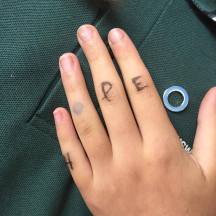
The kidlet went to school the day before WDD this year with her hope in her heart and on her hand, set to do some awareness raising of her own.
These days, I try to shield her from the truly nasty sides of diabetes (even though my nasty is comparatively quite mild) and I certainly still hide from her any fears I have. But as an eleven year old, she has an extraordinarily sensitive understanding of diabetes and she has become quite the little advocate.
All of this was playing on my mind last week as I say down to hear a presentation from Kara Maliszewski whose mum has type 1 diabetes. In the abstract to her talk, Kara says her ‘normal’ was ‘…needles in the kitchen, candies and blood sugar monitoring equipment in the handbag, insulin in the refrigerator, pump infusions in the bathroom and the constant voice in my head “insulin to treat a high, sugar to treat a low”’.
Kara spoke about how from a very young age she was involved in her mum’s diabetes care. She was taught to give her mum a spoonful of jam or a glass of juice. I am not sure what Kara meant by ‘very young age’ but it did appear from her talk that Kara’s involvement was significant from when she was very small. I felt uncomfortable about this, thinking back to my own experience of trying to protect the kidlet from all things diabetes. It is only in the last year or two I have asked her to get me a juice box from the fridge if I am really low. Even though her understanding of diabetes is excellent, I have been resolute about not giving her a part in it. Why? Because I don’t want to concern her.
But Kara said several times that her contribution to her mum’s diabetes care actually lessened the fear rather than added to it. This was at odds to my thinking – I have had the idea that by not showing the kidlet the nasty things that she simply wouldn’t know they were even there – there would be nothing for her to be afraid about.
Clearly the effects of understanding and being part of her mother’s diabetes are significantly more far reaching than just knowing what to do in the case of low blood sugar. In fact, as this tweet from Kelly Close shows, Kara believes that her contribution to her mother’s diabetes care has impacted in other ways.


The kidlet’s thoughts at the #IWishPeopleKnewThat Diabetes stand at FFL this year.
I love this about her. Is it because she is living with a parent who is dealing with a chronic health condition? Is it that AND the work I do that has increased her awareness?
I don’t know. But I do know that I spent a lot of the long flight home thinking about my motives in trying to hide my diabetes from her. Clearly I am not doing it because I feel ashamed. I think, perhaps, the motivation is selfish. I try to alleviate the guilt I feel by bringing diabetes into our family by not sharing it with Aaron and our daughter. I try to own it and hide it and keep it to myself as much as I can, because inevitably there are times I can’t do that and they have to be part of it.
What is becoming more and more apparent as she gets older, (and what was clear in Kara’s talk), is that our kids actually want to be involved – and invited to help – in our diabetes care. These kids are magic in so many ways. How privileged am I to be able to call her my own?
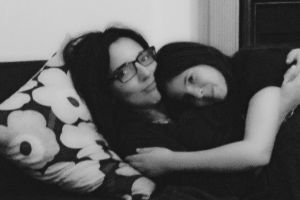
This kid. How lucky are we?





 Diabetogenic