
So what has been occupying your minds over the first few weeks of the year? Well, for a while there (and still), mine was trying to understand the veritable PR disaster of the Adelaide Writers Week (AWW). Niche? Yes. Relevant to diabetes? Also yes. In a roundabout way.
Let me set the scene. A writers festival in Australia was cancelled after one of the speakers had her invitation rescinded. The simple explanation of this is that the speaker, academic and author Dr Randa Abdel-Fattah had made some comments on social media that were deemed controversial by the AWW Board. More concerning, they connected these comments with the shootings in Bondi in December last year, effectively associating Dr Abdel-Fattah with the shooters. I’m actually not here to comment on Dr Abdel-Fattah, other than to say her treatment was appalling. There has been a lot of commentary, and if you’re not from Australia (or are from Australia but somehow managed to miss it) simply google AWW for details of what happens when decisions are made without consultation or understanding of the affected community.
I specifically want to focus on one part of the whole saga and that is the decision makers responsible for the PR nightmare. The Board of the Adelaide Festival (who is also responsible for the AWW) made the decision without the support of AWW director, Dr Louise Adler AM or her team. Dr Adler, in a letter published in the Guardian after she resigned from her role highlighted that the board was ‘composed of individuals with little experience in the arts ‘, which lead to decisions being made without cultural context and an absence of understanding consequence.
Even before I’d read Dr Alder’s compelling and commentary, the conversations I was having with friends and family were homed in on the same themes. We knew that the other writers at the festival would withdraw from the festival, one by one. We knew that Dr Adler had been treated terribly. And we were waiting for the gaslighting that would come from the Board, and anyone else involved in the decision making.
We knew, because we are a family of artists. My husband is a professional musician. My daughter is studying writing and journalism and has a part time job writing for a local newspaper. I studied music at university. Our friends are musicians, composers, writers, film makers, makers and journalists. We’d had discussions with many of them about how the Board’s lack of understanding of the arts sector, the way the community would respond, and how the community would be impacted. The words I used were ‘They have no skin in the game’, and by that I meant that not only couldn’t they see what was coming, they could also walk away relatively unscathed. Their careers were unlikely limited by their involvement in the decision and even though the entire board resigned, I would bet that it hasn’t made a dent professional standing or income.
Yet it wasn’t the arts scene that was the focus of my thoughts when I considered the AWW board, the decisions they made, the lack of insight into community response or the inevitable and highly predictable fallout.
It was, of course, diabetes.
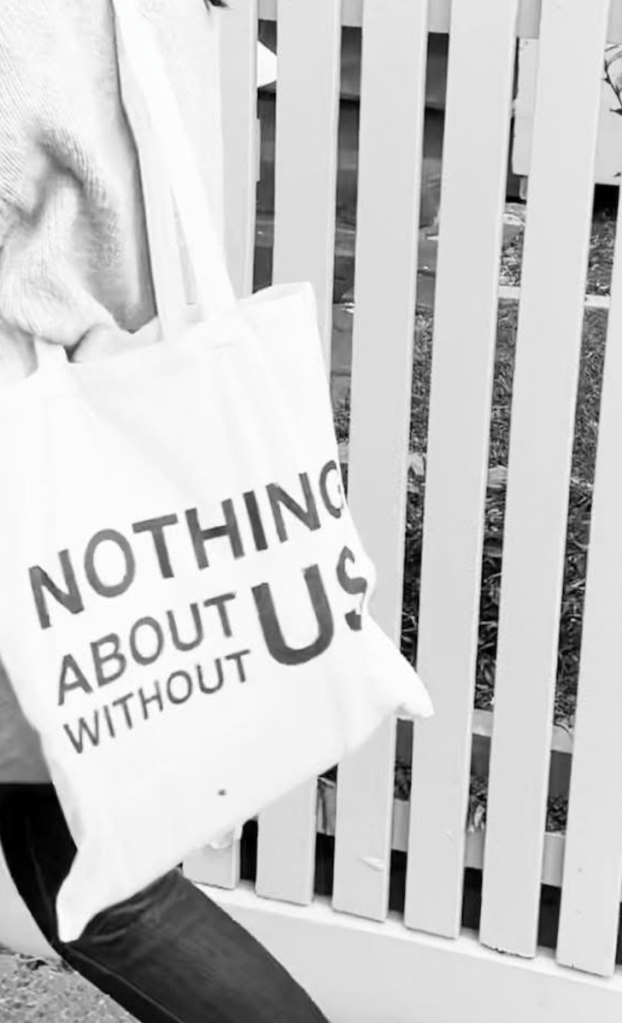
I found myself wandering around the house and on daily walks muttering ‘Nothing about us without us’ with a growing frustration that this lesson keeps having to be learnt the hard way.
It may be different communities and different contexts, but we’ve seen similar incidents play out just like this in the diabetes world for years. People with diabetes are not included in decision making processes. But then sit there, watching the fall out.
The process is the same. The positioning from the people making decisions is the same. Think about some pretty ridiculous diabetes decisions in recent years and think about who made them, and who wasn’t consulted. Think about the fallout from a particularly nasty diabetes campaign that adds to diabetes-related stigma. It’s with disbelief that I think back to campaign discussions when I was told outright that offending and upsetting people with diabetes when a campaign launched was the price to pay because we weren’t the intended audience, as if we would be magically shielded from the stigmatising messaging. And that it was an unintended consequence in efforts to inform the general public.
Those gaslighting me weren’t going to be in the firing line next time someone made some horrid comment about diabetes. It wasn’t their weekend that was going to be ruined when some smartarse in a supermarket queue or café said something about sugar causing diabetes or personal responsibility or how diabetes is a ticking time bomb.
When a decision is made that directly impacts people’s lives, surely those people should be in the room, at the table and have their voices heard the loudest. Surely. It’s so frequently not the case when diabetes decisions are made. It wasn’t the case when the AWW Board decided to cancel Dr Abdel-Fattah’s speaking engagement.
And so, the AWW was cancelled after almost all the writers on the program withdrew and the Board resigned. Interestingly, most of the Board members sit on other boards, so their status as ‘leaders’ and ‘decision makers’ doesn’t seem to be too impacted. Meanwhile, those writers have lost one of the few (and seemingly shrinking) opportunities to meet to share ideas and celebrate their community. Their incomes have been impacted. The chance to get their work in front of an audience has disappeared.
Nothing about us without us. It seems that this little catch phrase has been ignored too often, unless being used in convenient and cute attempts to demonstrate (usually lacking) community engagement. Instead, maybe it’s time to put us on boards and in leadership and decision-making positions. Maybe it’s time to actually listen to the people who know. Because our skin? It’s the one in the game more than anyone else’s. Raw, exposed and in the firing line.





 Diabetogenic
Leave a comment
Comments feed for this article