You are currently browsing the category archive for the ‘Family’ category.
Oh, did you know that next Tuesday is World Diabetes Day? There have been a few things online about it, so it may have come across your radar…
Diabetes Australia (disclosure: where I work) is running a campaign to acknowledge and recognise women living with diabetes, and women who support those of us who do.
We have developed a series of superSHEroe characters, representing just some of the amazing women affected by or working in diabetes. (The artist for these is the brilliant Claire Murray who I wrote about earlier this year. She is the creator of Megan, a wonderful diabetes superhero. Claire herself is somewhat of a superSHEro – her superpower is the ability to superbly draw and capture diabetes.)
Yesterday, we introduced the Dynamic Duo – Fantastic Frankie and her mum Lightening Lou.

I love this one so much because I feel that I have my very own Fantastic Frankie in my fabulous daughter.
My kid is my superSHEro. She has grown up around diabetes and while she doesn’t have it herself, she has undoubtedly been affected by diabetes because I live with it.
She came into this world and my diabetes meant that she needed to spend time in the special care nursery of the hospital. It meant that she needed to have her heel pricked for the first few days of her life multiple times to make sure that her glucose levels weren’t low.
She has grown up knowing to be careful of diabetes devices attached to my body when she jumps in for a cuddle. She had to learn early that there were times I simply couldn’t play with or read to her because diabetes needed my attention more urgently that she did. And she learnt to wait her turn, knowing I would always get to her; it just may have been after a juice box or jelly beans were consumed.
My superSHEro may not wear a cape or a mask, instead she’s likely to be wearing something she pinched from my closet. She may usually have her head in a Jane Austen book rather than lassoing the bad guys. She can be found lying on the grass out the front of our house with her puppy (who has no superpowers whatsoever, I’m afraid) or hanging out with her friends, listening to music rather than uncovering plots to bring down the free world.
My own superSHEro is bundled up in the mess and wonder of (two weeks from being) a teenager. She may be moody one moment, and delightfully snuggly the next. She is perpetually embarrassed by her parents, and horrified at the extent we will go as we desperately try (and fail) to prove to her just how cool we truly are.
But she can also be found grabbing me a juice when I’m low; asking me if I need anything when she notices me acting a little vague (usually just me being vague rather than anything else) or doing a spot of awareness raising and advocacy for diabetes. My diabetes isn’t hers – it doesn’t have to be and I’ve done everything in my (non super-) power to shield her from it – but she has taken it on in her own way.
Her superpower is her strength, her mind, her feistiness and fierceness, her vulnerabilities and her compassion. She takes on the world, she takes on my diabetes. And, (regretfully at times) she takes on her parents.
We wouldn’t have it any other way.

My superSHEro and her mother.
There have been many occasions in my daughter’s twelve-and-a-half years that, as we’re about to walk out the front door, we’ve looked at each other and stopped. ‘Well, one of us is going to have to change…’ one of us, usually I, say. There we are, standing there in almost identical outfits.
But despite her affinity for stripes and jeans, and oversized grey cashmere knits, and constant comments about how much we look alike, she is not me. We are different people; we like a lot of different things; she loves ice-cream and I really don’t; we have different things that bother us.
I seemed to forget that in the last couple of days and a gnawing feeling in the pit of my stomach – a problem that is mine – overtook my rational side, and I thrust it upon my girl.
This story isn’t about my kid – I am not here to tell her story. This tale is about how I dealt with my fear of her developing type 1 diabetes.
To set the scene: she has been a little under the weather. Before the end of last term, she had a head cold. Her lips were dry and cracked from having to breathe through her mouth, and she was revoltingly sniffily.
She had two very relaxing weeks at home to mark the break between semesters one and two, and returned to school last week very rested and perfectly well. And came home on day two of term complaining of a sore throat, sore head and dizziness. The next morning, she woke up with a full-blown head cold again, and she said her stomach was also a little sore and upset.
This persisted for the rest of the week and over the weekend, so I decided it was time for her to visit the GP. I made an appointment for the middle of the week and as we waited, she continued to complain of a sore stomach and some nausea. She was tired and generally poorly.
And that was where the gnawing monster started to rear its most ugly head, whispering viciously to me. ‘She’s drinking more. Isn’t she?’ came the first comments. ‘Did you notice how many times she has refilled her glass with water?’ it hissed as I stood in the kitchen throwing together dinner, and she popped in to mention something to me. ‘Didn’t your mum say something about her drinking a lot when they took her to the opera a couple of weeks ago?’ I was reminded. ‘She went straight to the bathroom the second she got home. She’s been doing that lots…’
Suddenly I found myself noting empty glasses in the house and listening out for the loo being flushed. I surreptitiously glanced at her when she walked into a room, assessing if she looked as though she’d lost any weight recently. (She didn’t.)
Eventually, as casually as I could, I asked her if she’d noticed any changes in how she was feeling. ‘Darling,’ I said, as we sat on the couch during a commercial break in Masterchef. ‘Have you noticed that you’re thirstier than usual?’ I scrolled through my phone as I asked her, not really looking at anything blur by and pretending that it was just a passing comment and I hadn’t really stopped breathing as I waited for her response. ‘Nup,’ she answered.
When she came back from the bathroom a little later in the evening, I asked her, in the same (false) off-the-cuff way if she thought she was needing to pee more frequently than usual. ‘No,’ she replied, without hesitation.
As nonchalantly as possible, I said, ‘Sweetie…I feel like…I’ve noticed that you seem to be drinking more…and maybe going to the bathroom a little more than you usually do,’ I hated myself for saying it to her and drawing her into my concern.
‘No. I haven’t.’ And she told me how many times she remembered going to the bathroom that day. She reminded me that she keeps forgetting to take a drink bottle to school and sometimes doesn’t drink anything until she gets home. (I ignored that bit of information, even though I probably should remind her to do something about that and hydrate regularly…#BadMotherMoment2198756)
I should have let it go. But I didn’t. ‘I’d really like to check your blood sugar. Would you let me do that?’
(I’m going to stop there, because even as I write this I know how I sound. And in an effort to defend my behaviour (mostly to myself rather than anyone reading) I want to point out that I have checked her blood sugar no more than about half a dozen times in her whole life. I don’t whip out a meter and jab her at the first sign of anything out of the ordinary. I just don’t do that and never have. But regardless of that fact, it doesn’t make it right that on this occasion I allowed my anxiety to spill over and start to become hers.)
In what I can only call one of my less excellent parenting moments, I asked her several times, even though she refused, until she eventually stormed from the room telling me that there was no reason for me to be feeling worried about this because she was not drinking more or peeing more.
I’ve not been able to stop thinking about the whole situation. I am horrified at how I allowed my irrational, unfounded fears to flood out of me. I am angry that the worry that is always in the back of my mind was allowed to grow and grow and unleash its full force onto my darling girl.
In the past, I have sought help from a psychologist about these fears and concerns. I know that I am irrational. I also know – of course I know – what the stats are, and the percentage chance that she will get diabetes. I also know that if she does, we are equipped to ensure that she gets the best possible care and the best possible support. I know it will not be the end of the world.
But mostly, I know that my fears are not her fears and never should be.
We went to the GP. My kid outlined her symptoms, and mentioned that I thought that she was going to the loo and drinking more than usual, but denied that was the case. Pleasingly, the GP did a urine test. All was fine.)

One of us had to change. (NYC 2014)
It’s Mother’s Day on Sunday. In recent years, as I have found aspects of the day challenging, I’ve really channelled my energy on Mother’s Day into what my own mother has given me.
I am willing to admit my bias, but I think my mother is the best Mum in the world. She’s very cool, and when I was growing up all my friends thought she was awesome. She was in her early 20s when she had me, and has always been a young Mum. That’s not to say that she always knows what the cool kids are talking about. We have many stories of absolutely hysterical things she has said and done in the belief that she was being oh-so-hip. My sister and I never stop making fun of her, which she mostly takes with good grace. Mostly…
When I was growing up, there was nothing that I felt I couldn’t talk to Mum about. She was very open and no subject was taboo. I felt comfortable speaking with her about pretty much everything, and when I had my own daughter, I knew that I wanted to have the same sort of relationship with her.
Mum instilled in me a love of food and cooking – something for which I am so grateful. Yet as great as the cakes are that I pull out of the oven, or the plates I serve up for dinner, nothing is as good as her food.
She showed me that chicken soup is truly all it takes some days to lift my spirits and fortify me for what comes next. I’ve not managed to always have a stash in the freezer for quick thawing, but I am always welcome to let myself into my parents’ house and help myself to whatever is in my freezer. And when I am under the weather – physically or emotionally – a text message of ‘I’m sending dad over with some chicken soup for you’ is an inevitability.
When I was diagnosed with diabetes, she was there, alongside me: a pillar of strength on the outside when, I knew, she would have been falling apart inside.
She taught me how to live with a chronic health condition. I have watched Mum deal with her own health conditions for over thirty years. She has done so with incredible grace, determination and resolve. Every time something new has been thrown at her, she’s rolled up her sleeves and taken it on. A couple of years ago she had a double knee replacement and the speed and intensity of her recovery was a marvel. She pushed and pushed through rehab, recovering far sooner than expected.
There may not be an instruction book for diabetes, but thanks to watching Mum live with lupus, rheumatoid arthritis and Sjögren’s syndrome meant I did sort of have a real-life manual for how to get on with life even with my new health challenge. I looked at her attitude and took it on as my own.
She’s shown me that even through the pain and fatigue and frustrations that seem to go hand-in-hand with life-long health conditions, laughing and carrying on in a silly way is absolutely okay.
But equally, she also taught me that it’s okay to cry and feel overwhelmed.
She helped me understand that even though there are times that the thought of another appointment with another doctor for another thing was just too much to deal with, it is okay to complain about it, but I just had to do it.
She taught me that self-care days that involved sitting on the couch under a quilt watching reruns of British cop shows is absolutely okay. But the next day, you get up and get back into it.
She taught me that even though there were times I didn’t want to, I had to show up – show up to my own care, to doctors’ appointments, to blood draws, to work. She might say ‘Diabetes is shit today,’ (she’s a trade unionist; my potty mouth came from her!), ‘But you have to keep going.’ She tells me all the time that life with chronic health issues is boring. And it is. It really is!
Every day, she’s made me see that even though something may look easy, living with a chronic health condition is simply not. She wears the invisibility of her health condition the way I do mine. We smile through the sadness of what could have been had we not had so many health challenges to manage.
She made me understand that not everyone is as fortunate as we are when it comes to health care accessibility and affordability. And that helping those less fortunate is a responsibility I must never shirk.
The unconditional love, support and pride she has demonstrated in spades is, of course, much appreciated. Having a prototype right there for the type of mother I want to be has been a blessing. But I appreciate so much more than that. Our health issues may be different, but it is my Mum who taught me how to thrive with diabetes. I would not be living the way I am now without her having gone ahead of me. Or without having her stand beside me, and hold me up when I’ve needed.
Happy Mother’s Day, Mum. Thanks for the chicken soup. And everything else.
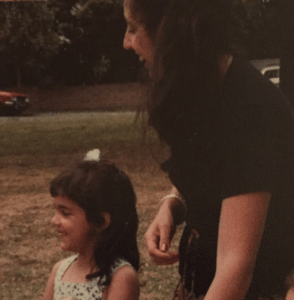
Now we are six! Mum and me at my sixth birthday party.
In the next couple of weeks, our kid gets to line up for her next round of immunisations. At twelve years of age, that means that she can look forward to chickenpox and Diphtheria-Tetanus-Pertussis boosters, and a three-dose course of the HPV vaccine.
When the consent form was sent home, she begrudgingly pulled it out of her school bag and handed it to me. ‘I have to be immunised,’ she said employing the same facial expressions reserved for Brussels sprouts.
She took one look at me and then, slightly sheepishly, said, ‘I don’t get to complain about it, do I?’
‘Nope,’ I said to her. ‘You don’t get to complain about needles because…well because…suck it up princess. No sympathy about needles from your mean mamma! And you have to be vaccinated because that’s what we do. Immunisation is safe and is a really good way to stop the spread of infectious diseases that not too long ago people died from. And herd immunity only works if…’
‘….if most people are immunised so diseases are not spread,’ she cut me off, finishing my sentence. I nodded at her proudly, signed the form and handed it back to her. ‘In your bag. Be grateful that you are being vaccinated. It’s a gift.’ (She mumbled something about it being a crappy gift, and that it would be better if she got a Readings gift voucher instead, but I ignored that.)
Over the weekend, the vaccination debate was fired up again with One Nation idiot leader, Pauline Hanson, sharing her half-brained thoughts on the issue.
I hate that I am even writing about Pauling Hanson. I despise what she stands for. Her unenlightened, racist, xenophobic, mean, ill-informed rhetoric, which is somehow interpreted as ‘she just says what many of us are thinking’, is disgusting. But her latest remarks go to show, once again, what an ignorant and dangerous fool she is.
Her comments coincided with a discussion on a type 1 diabetes Facebook page about vaccinations preceding T1D. Thankfully, smart people reminded anyone suggesting that their diabetes was a direct result of a recent vaccination that correlation does not equal causation.
I get really anxious when there is discussion about vaccinations, because the idea that this is something that can and should be debated is dangerous. There is no evidence to suggest that vaccines cause diabetes (or autism or anything else). There is, however, a lot of evidence to show that they do a shed-load of good. And if you don’t believe me, ask yourself how many cases of polio you’ve seen lately. People of my parents’ generation seemed to all know kids and adults with polio and talk about just how debilitating a condition it was. And they know first-hand of children who died of diseases such as measles or whooping cough.
This is not an ‘I have my opinion, you have yours. Let’s agree to disagree’ issue. It is, in fact, very black and white.
A number of people in the Facebook conversation commented that their (or their child’s) diagnosis coincided with a recent vaccination. But here’s the thing: type 1 diabetes doesn’t just happen. We know that it is a long and slow process.

Click for reference.
What this shows is that even if onset of diabetes occurs at (correlates with) the time of a vaccination, it cannot possibly be the cause.
When we have people in the public sphere coming out and saying irresponsible things about vaccinations, it is damaging. People will listen to Pauline Hanson rather than listen to a doctor or a researcher with decades of experience, mountains of evidence and bucket-loads (technical term) of science to support their position.
The idea that ‘everyone should do their own research’ is flawed because there is far too much pseudo-science rubbish out there and sometimes it’s hard to work out what is a relevant and respectable source and what is gobbledygook (highly technical term).
Plus, those trying to refute the benefit of vaccinations employ the age-old tactic of conspiracy theories to have people who are not particularly well informed to start to question real experts. If you have ever heard anyone suggesting: government is in the pockets of Big Pharma / the aliens are controlling us / if we just ate well and danced in the sunshine / any other hare-brained suggestion, run – don’t walk – away from them. And don’t look back.
I have been thinking about this a lot in the last couple of days. I have what I describe as an irrational fear that my kid is going to develop diabetes. It keeps me awake at night, makes me burst into tears at time and scares me like nothing else. If I, for a second, thought for just a tiny second that vaccinating my daughter increased her chances of developing diabetes, she would be unvaccinated. If I thought there was any truth at all in the rubbish that vaccines cause diabetes, I wouldn’t have let her anywhere near a vaccination needle.
But there is no evidence to support that. None at all.
Sometimes, I’m a lousy person with diabetes (PWD). I am thoughtless and unclear about what I need, have ridiculous expectations of others – and myself, and am lazy. But I’m not always like that. And I think I know what I need to do to be better.
Being a better PWD is about being true to myself. It is also about reflecting on exactly what I need and I hope to get it.
- I need to remember that diabetes is not going away
- I need to remember that the here and now is just as important as the future
- I need to remember that I don’t have to like diabetes, but I have to do diabetes
- I need to remember that the diabetes support teams around me really only have my best interest at heart, and to go easy on them when I am feeling crap
- I need to empty my bag of used glucose strips more frequently to stop the strip glitter effect that follows me wherever I go
- I need to remember that it is not anyone else’s job to understand what living with my brand of diabetes is all about
- I need to remember that the frustrating and tiresome nature of diabetes is part of the deal
- I need to be better at changing my pump line regularly
- I need my diabetes tasks to be more meaningful – quit the diabetes ennui and make smarter decisions
- And I need to own those decisions
- I need to see my endocrinologist
- I need to decide what I want to do with my current diabetes technology. There is nothing new coming onto the market that I want, but what about a DIY project to try something new? #OpenAPS anyone…?
- Or, I need to work out how to convince the people at TSlim to launch their pump here in Australia
- I need to check and adjust my basal rates
- I need to do more reading about LCHF and decide if I want to take a more committed approach or continue with the somewhat half-arsed, but manageable and satisfactory way I’m doing it now
- I need to remind myself that my tribe is always there and ask for help when I need it.
- I need to make these!
And being a better PWD is knowing what I need from my HCPs and working out how to be clear about it, rather than expecting them to just know. (I forget that Legilimency is not actually something taught at medical school. #HarryPotterDigression)
So, if I was to sit down with my HCPs (or if they were to read my blog), this is what I would say:
- I need you to listen
- I need you to tell me what you need from me as well. Even though this is my diabetes and I am setting the agenda, I do understand that you have some outcomes that you would like to see as well. Talk to me about how they may be relevant to what I am needing and how we can work together to achieve what we both need.
- I need you to be open to new ideas and suggestions. My care is driven by me because, quite simply, I know my diabetes best. I was the one who instigated pump therapy, CGM, changes to my diet and all the other things I do to help live with diabetes
- I need you to understand that you are but one piece of the puzzle that makes up my diabetes. It is certainly an important piece and the puzzle cannot be completed without you, but there are other pieces that are also important
- I need you to remember that diabetes is not who I am, even though it is the reason you and I have been brought together
- And to that – I need you to understand that I really wish we hadn’t been brought together because I hate living with diabetes
- I need you to remember that I set the rules to this diabetes game. And also, that there are no rules to this diabetes game
- I need you to understand that I feel very fortunate to have you involved in my care. I chose you because you are outstanding at what you, sparked an interest and are able to provide me what I need
- I need you to know that I really want to please you. I know that is not my job – and I know that you don’t expect it – but I genuinely don’t want to disappoint you and I am sorry when I do
- I want you to know that I respect and value your expertise and professionalism
- I need you to know that I hope you respect and value mine too.
And being a better PWD is being clear to my loved ones (who have the unfortunate and unpleasant experience of seeing me all the time – at my diabetes best and my diabetes worst) and helping them understand that:
- I need you to love me
- I need you to nod your heads when I say that diabetes sucks
- I need you to know I don’t need solutions when things are crap. But a back rub, an episode of Gilmore Girls or a trip to Brunetti will definitely make me feel better, even if they don’t actually fix the crapness
- Kid – I need you to stop borrowing my striped clothes. And make me a cup of tea every morning and keep an endless supply of your awesome chocolate brownies available in the kitchen
- Aaron – I like sparkly things and books. And somewhere, there is evidence proving that both these things have a positive impact on my diabetes. In lieu of such evidence, trust and indulge me!
- I need you to know I am sorry I have brought diabetes into our lives
- I need you to know how grateful I am to have you, even when I am grumpy and pissed because I am low, or grumpy and pissed because I am high, or grumpy and pissed because I am me.

My darling friend, Annie.
Once we remembered that there were other people on the street, we set to introducing our families to each other. Our husbands shook each other’s hands, and our girls shyly greeted each other with hugs. That was the last moment of shyness for the rest of the week.
Our families have had a week of being tourists in the most wonderful city in the world. We looked at the Manhattan skyline from across the Brooklyn Bridge; we soared to the top of the Rockefeller Building, gazing across the city as the sun started to set from dozens of stories above the ground; we sat in cafes, warming up on coffee and hot chocolate and wonderful conversation; we wandered through Central Park as snowflakes started to fall, the girls unable to believe their luck as they ran with their arms outstretched catching the snow; we saw in 2017 standing in Central Park with fireworks exploding over our heads with the promise of a new year. And throughout it all, diabetes was managed by those of us who wear our pancreas on the outside of our bodies – but didn’t for a moment affect the time we were having.

Annie and I know each other because of diabetes. She is mother to three extraordinary girls, one (Pumplette) who happens to have diabetes. I’ve linked to her blog many times here, and if you’ve not popped by yet, please do!
We often spoke about how wonderful it would be to introduce our families – although we did have some concerns at our girls actually being able to discuss their neglectful mothers who, it seems, abandon them at the drop of a hat to rush off to some diabetes conference or another.
We made it happen this week, and our girls barely paused for breath, chatting constantly, getting excited at all the city has to offer and amusing themselves with endless rounds of Banagram. Our kidlet was thrilled to have three new friends and couldn’t get enough of spending time with them.

Friends for life.
We closed our apartment door. Annie and her family headed for the elevator and I sat next to our kidlet on the couch as floods of tears started. I hugged her tight, promising that it would not be the last time that she saw the girls. I reminded her that Annie and I live on opposite sides of the world and are in contact all the time – that we speak and message and FaceTime frequently.
And I reminded her how wonderful it was that as 2016 ended and 2017 started she had made three wonderful new friends. She nodded and wiped away her tears. ‘I miss them already,’ she said. And I nodded too. Because I understand how that feels. I know the elation of seeing friends from far flung places and then, when saying farewell, not knowing when we will see each other again. But the beauty of it is that while it hurts to say goodbye, there is an endless promise of saying hello again. And I assured it that she would say hello and hug those girls again. Many, many times.
Happy New Year, everyone!

Seeing in the New Year.
You may not have noticed, but the festive season is upon us. (Actually, according to Woolies, the festive season has been upon us since the first week of September which was when I first saw mince pies on their shelves. And as Louden Wainwright III says ‘It’s a season, it’s a marathon….’ Sorry; digression.)
Anyway, it’s the festive season and with it comes lots of messaging about eating with diabetes during this time of the year. Now, I’d like to leave my diabetes behind whilst eating during the holidays, but I’ve come to learn that diabetes is a shit and doesn’t work that way. Because, diabetes IS for Christmas….and every other bloody day of the year as well. Happy holidays!
I saw an article this morning about how to keep your eating and drinking in check during Xmas and other parties, and by the time I finished reading, I was weeping uncontrollably and wanted to shoot myself. (Except not really because I’m a huge supporter of gun control and don’t own a gun.) I also wanted a drink, but it was 6.45am and I was feeling the judge-y eyes of the writer staring at me and the Moscow Mule I was about to make for breakfast.
All articles about diabetes and festive-season-eating demand limiting everything – alcohol, food, happiness. Quite frankly, limiting alcohol at family gatherings is not an option for many people, which seems to be lost in the horrific and laughable suggestion of taking your own water to water down drinks. (I lost the will to live at that suggestion.)
Obviously, a blow-out is best avoided, but that is wise even if you don’t have diabetes. There is nothing worse than feeling as though you literally cannot move from the sofa – mostly because it means you could be stuck sitting next to a distant relative who wants to tell you, in detail, about their recent adventure in passing kidney stones, or (worse) about their neighbour who died from diabetes complications. Diabetes – the gift that keeps on giving.
So, here are some of the things I’ll be doing to survive the next few weeks.
- Acknowledge that this time of year is about food and that is okay. This is definitely the case for my family, and I am already counting down the days until I gorge myself on my mother’s freshly made zippoli.
- Throw any thoughts of guilt out the window (along with suggestions of BYO H2O).
- Make a game out of my CGM by seeing if I can spell out any swear words in the ain’t no mountain high enough/valley low enough trace.
- Remember that even though I have diabetes, I have every right to enjoy whatever I feel like eating. Or don’t feel like eating. The low(er) carb thing may or may not stick over the festive period. Obviously, my mother’s zippoli are carb- and fat-laden parcels of perfection, so the low(er) carb thing can fuck right off once they are set down in front of me, but I probably will still avoid other carb-y things because dealing with high glucose levels or inadvertently overdosing on insulin does not a festive occasion make.
- Seriously, give me a huge bowl of cherries for dessert and I am a happy chicken. (The non-watered-down alcohol has probably helped get me to that state, but cherries also make me undeniably happy.)
- Brush up on my responses to ’Should you be eating that?’, which (thankfully) I probably won’t need to use anyway. Funny how I only ever needed to hit someone once over the head with a spoon after they asked me that…
- Find red and green Sharpies and write ‘My Diabetes; My Rules’ in festive script on the inside of my hand to remind me to do whatever works for me. And to shove in the face of anyone who does actually ask ‘Should you be eating that?’
- Thank the Xmas angels that Brunetti in Carlton is open on Xmas morning, meaning that we can make the ten-minute dash there, drink coffee and eat pastries before the onslaught of family, food and festivities.
- Make a donation to a diabetes-related charity because not everyone gets to decide if they will use extra insulin to cover the second slice of passionfruit pav. Here are three ideas:
This blog is not about giving advice, but I am going to give some now as I believe this is possibly one of the best ways to survive until the end of the year:
Don’t read any articles telling you to eat nothing but cardboard or watered-down grog. Or suggesting you take your own plate of crudités to parties. I don’t care that it’s a French word, it just means carrot sticks. And having spent the festive season in France, I can tell you no one was serving carrot sticks for the family Xmas dinner. Plus, if I’d taken my own, I probably would have been mocked in French, and not been allowed to drink any of the delicious non-watered-down red wine or bûche de Noël for dessert.
Here’s some Louden Wainwright III. He makes everything better. (Bonus points if you know his character in M*A*S*H…without consulting Dr Google for the answer!)
On Saturday, we gathered the family for an afternoon tea to celebrate the kidlet’s twelfth birthday.
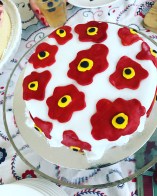 My sister arrived with the most beautiful and delicious cake. She always makes my kid’s birthday cake – has done for pretty much every party. Now, Toots has come up with some amazing cake creations over the years – 3D representations of Mary Poppins, Wizard of Oz, fairies under toadstools, teddy bear picnics, beachside parties. This year, the cake was decorated simply with the Marimekko poppy pattern – my daughter’s (and my) favourite design ever. It was the simplest, least elaborate cake Toots had ever made. But it was, in my mind, the most beautiful.
As I laid the cake on a platter, I was reminded that simple, most basic, things can have a huge impact.
Once, during a tough time, someone asked me if I was sleeping and eating, and I looked at them and shook my head. ‘Not much,’ I said. ‘It’s on the list, but there are two things ahead of it – I need to breathe and I need to hug my kid. I know that she is getting plenty of hugs so I feel that I am getting that right. And most of the time I don’t have to remind myself to breathe, although there are times that I find myself staring into space, holding my breath and I have to concentrate on exhaling. I eat a little; I sleep a little. But I breathe. And I hug her and that has to be enough. That is enough. There is no space for more.’
I have come to learn about finding space for the basics and not beating up myself for things that don’t get done. Of course, sleeping and eating matter, but I worked out that doing the minimum of those things got me through. I did what I could until I was at my limit. And then: there is no space for more. Six words of permission accepting I was full. Nothing fancy – just do the basics.
Understanding this has become essential to my survival – even when not going through a crisis period. I focus on what there is space for and that is usual the most basic and simple things. There is space for love and the people who support and value and encourage me. They understand the ebb and flow of what can be managed.
I have space for work that is fulfilling and enjoyable and challenging and I am fortunate that, almost twelve months into what I am still calling my new job, my work is all of these things; the decision to jump without a safety net is justified each and every day.
I have space for small things that bring great joy, remembering that it’s not necessarily the grand gestures or big events that necessarily have the greatest impact.
It was my birthday on Sunday and it was, quite possibly, one of the best birthdays I’ve ever had. It involved a sleep in, breakfast at our favourite place, a late lunch of dumplings, wandering around with my family and then sitting at home watching Gilmore Girls. It could not have been simpler or quieter. And it was perfect because it was exactly what I had space for.
Our beautiful girl turns twelve years old today. It’s both a lifetime and a minute in time and I sometimes look at her and still cannot believe that she is here.
When I was pregnant, I kept an online diary for a diabetes website. That site is no longer there, but I still have the diary and have been waiting for the right moment to publish it here on my blog.
Today is that day. It’s a long read – a short entry for each week of the pregnancy – but it takes me back to exactly how I was feeling and coping throughout the pregnancy. My favourite part is the last part – our baby’s arrival – which I wrote when she had been home for only days and my head was in a new-parent fog and I was desperate to try to put in words what had happened and how I felt on the day. It’s funny, because it was starting to get murky then, but today, I can remember everything about it.
We tell our daughter her birth story occasionally – often around her birthday. And in there amongst the way we felt when we first heard her cry and saw her face for the first time, is the story of how much she is wanted and the path we took to actually make that happen.
It’s all here, so please have a read if you’d like. Yesterday, when giving my talk to some healthcare professionals one of them asked if I would mind sharing how I felt when pregnant and what a diabetes pregnancy is like.
And I said: It was the most difficult thing I have ever done emotionally. It was the most intensive time of diabetes care I have ever experienced. I saw my healthcare professionals more frequently than I saw my friends and family. I was checking my BGL over 20 times a day – there was no CGM here then. I had never felt such anxiety or fear as I did at that time. But equally, it was the most magical time because in amongst all the diabetes stuff, was my daughter and now – now all I think about is how it was the best thing I could ever have done.
Twelve years old and growing up into such an amazing young woman. I could only have hoped on the day she was born that she would be as wonderful as she is today. Happy birthday to our magical girl. I never thought I would be able to love her more than I did the day she was born and yet, somehow, that love just keeps growing. We’re so excited to see what you do next darling. And we’ll be right there alongside you, continuing to cheer you on.




 Diabetogenic