D blog week 2015 banner


It’s Diabetes Blog Week! Thanks to Karen from Bitter~Sweet Diabetes for coming up with and coordinating this exciting annual event. It’s a great chance to discover other diabetes bloggers from around the world. Here’s my fourth entry for the week!

Welcome to Diabetogenic Live! Here is my first ever (and possibly/probably last ever) vlog. I’m talking about the changes I’d like see in the Land of Diabetes (which is nowhere near as much fund as the Land of Goodies or the Land of Birthdays or the Land of Do-As-You-Please).

A few words of warning before we start:

  1. I speak really fast.
  2. And I wave my hands around a lot.
  3. I speak really fast.

D blog week 2015 banner

It’s Diabetes Blog Week! Thanks to Karen from Bitter~Sweet Diabetes for coming up with and coordinating this exciting annual event. It’s a great chance to discover other diabetes bloggers from around the world. Here’s my third entry for the week!

Last week, as I skimmed through the topics for this year’s #DBlogWeek and saw Wednesday’s prompt, I gasped. It was an involuntary, sharp, sudden intake of breath and, somehow, it felt painful. I knew what I would write about. I knew I needed to write about this. It’s not only about diabetes, but then, it is, because everything when it comes to my health and my body is intrinsically linked to diabetes.

You see, it is time to let go. It is time to somehow acknowledge that I need to say good bye. It is time to release the pain and the hurt and the ache that, although it will to a degree always remain, is suffocating me in many ways. I need to unfurl it from the tight, protected ball that is so deeply placed inside of me and liberate myself from the hold it has.

Even though it is time to say goodbye to the pain, to the loss and the grief, I don’t want to. It’s not that I am bidding goodbye to the baby that, every day, I think about, or to forget about the loss.  But it is time to farewell the dream. 

It has been time for a while now, but I have held on stubbornly, resolutely, fiercely because I feel so sad and like I failed this little person before they could come into the world. By not letting go, I’ve somehow kept them alive and safe – at least in my heart and my mind. By feeling the pain, I have found a connection that was lost. 

And I’ve wanted to hold on to the dream of what could have been, and to spend daydream-y chunks of time each day imagining and wondering of little faces with long eyelashes and tiny heads of hair and miniature fingers wrapped around mine and the deep, even breathing of a sleeping baby. Because the baby was mine – was made from me, of me – and I didn’t get to actually see his face, brush the hair from her eyes, feel his fingers gently squeeze mine, hear and count her beautiful breaths.

I’ve held on for reasons that are confused and confusing and selfish and tied up with my very being. It makes me question everything I know of myself. Is this giving up? Is letting go giving up? Is it dishonouring the memory of my son or daughter? Have I stopped caring? Am I admitting defeat? Or acknowledging my shattered, damaged, broken body has won?

I don’t know and I will work through that over the next few months – with the some professional help.

But it is time. So. I say good bye. And it is time to start to forgive myself.

D blog week 2015 banner

It’s Diabetes Blog Week! Thanks to Karen from Bitter~Sweet Diabetes for coming up with and coordinating this exciting annual event. It’s a great chance to discover other diabetes bloggers from around the world. Here’s my second entry for the week!

I am an open book. I am an over sharer. I have no filter. I frequently blurt out things that people really don’t need to know. ‘I’m just going to have a pee’, I might exclaim, getting up from the table and rushing to the bathroom when really, a simple, ‘Excuse me for a moment,’ would have sufficed. I find ice-breaker exercises at work meetings excruciatingly difficult because I can rarely think of one thing that no one knows about me or something interesting about me that I haven’t shared.

I wish I could say that I only share stories that paint me in a positive light, where I am all elegance and class, and look like I have it all together. But apart from being a complete and utter lie (seriously, the word ‘klutz’ was invented for me), it would give a really false sense of what diabetes is about. So you get the embarrassing and hopeless and ridiculous. You get the stupid and the nonsensical and the repeated mistakes. All of it. I am sorry.

But, having said that, there are things that I do not write about on my blog, or even speak about with others. There actually are parts of living with diabetes that are difficult to write about because I don’t like how they makes me sound.

There are days that diabetes feels overwhelming. Of course I write about that. (Oh, don’t I write about that?!) But what you probably won’t see me write about – and what I rarely talk about – is that sometimes I think that I have been dealt a really lousy hand when it comes to my health.

I don’t compare conditions – you will never hear me say that I have it worse than you, or, conversely, that we should just get over ourselves because it’s only diabetes and it could be worse. (By the way, don’t ever, ever, ever say to someone with diabetes – or anything else for that matter – ‘It could be worse’. Seriously. Just don’t.)

But you know what? There are days – usually after a bout of nasty, recurring lows; or vulgar, unforgiving highs; or this freaking burnout that seems to have moved in permanently – that I do really want to say ‘Enough! It’s not my turn anymore’.

And the reason I don’t share this is because apart from making me sound pathetic, I can’t allow myself to get into the sort of funk where I just feel sorry for myself. It’s too easy to start to believe it; it’s too easy to start to think that I really do have it tough, that it really is unfair.

The truth is, it’s not unfair. It’s just life. We all have crosses to bear, health issues to manage, shitty things that happen. And I don’t want to be the person who focuses on the crap when there is, somewhere in there, some sort of silver lining – often in the shape of a jar of Nutella.

every jar of nutella


D blog week 2015 banner


It’s Diabetes Blog Week! Thanks to Karen from Bitter~Sweet Diabetes for coming up with and coordinating this exciting annual event. It’s a great chance to discover other diabetes bloggers from around the world. Here’s my first entry for the week!

I honestly believe it when I say that diabetes hasn’t stopped me from doing anything. I was diagnosed at 24 years at a really busy time where I was making plans, dreaming of my future and beginning to really think about who I wanted to be in this world.

And those plans I was making all happened. And the dreams came true. And I found my place in the world.

There are, however, some things of which I am particularly proud. The red velvet cake I made for Mother’s Day afternoon tea yesterday should probably get a mention. My book and boot collection make me proud as punch! I can recite pretty much the whole of Marx Bros’ A Night at the Opera. I can whip pretty much anyone at air hockey. But these things were never in question. I was always going to manage to achieve them. Diabetes or not.

But diabetes did make me wonder about some of the things I wanted to achieve. The dream of becoming a mum felt, for some time, as though it were slipping away. With diabetes mixed up in other serious health issues, getting pregnant – and staying that way – was something I thought would never happen . But that dream too came true in the form of a chubby-cheeked little baby girl who I am so privileged and lucky to call my daughter.

Diabetes doesn’t factor into the planning and shaping of my dreams and hopes. I wonder if it just makes me more desperate and determined to achieve. Is it despite or because of diabetes that we make plans – some large, some small – and then go all out to reach them?

because i'm crazy enough

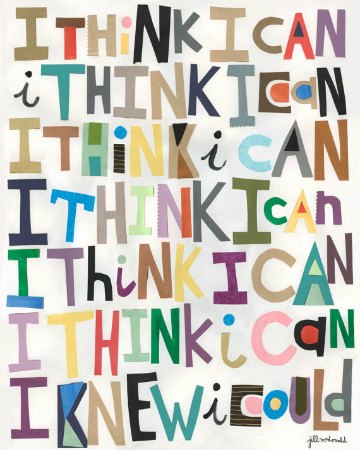
I get the power of self talk and I also like to be positive. My diabetes has allowed that to a degree. It has played out in a way that hasn’t stopped me. Saying ‘I can’ has always ended up in ‘I did’ because, as well as being determined, the diabetes barriers have been minimal.

But that may not always be the case. I hope that if –when? – diabetes does throw up more challenges and makes things more difficult, I never stop dreaming and planning and hoping. I hope I never stop saying ‘I can do this’ – or even more so, ‘I did this’.

ithinkican

Diabetes is really not a topic of conversation much for me when outside of work. And outside of this blog. I know – hard to believe. But when I am around friends or with my family, there may be a passing comment, but it rarely dominates discussion.

Having said that, we had our neighbours over for dinner last weekend and the ‘Pumpless in Vienna’ story got an airing – and not by me! It was interesting to hear it told from the perspective of one of the main characters in the story.

And then yesterday, while I was in Geelong, I had lunch with my team mate Kim (this is Kim!) and not once in our hour long chat did we speak about diabetes. Not once. In fact, it wasn’t until I got up to leave and mentioned to the waitress that I would love to continue to sit by the fire, but had to rush off to give a talk, and she asked me what the talk was about, did the word ‘diabetes’ come up.

‘Oh. Is it about type 1 or type 2 diabetes?’ she asked. Kim and I looked at each other with surprise – and a little delight. ‘Well, in this case both. But usually we work with people with type 1 diabetes,’ I said. ‘Our waitress over there has type 1 diabetes,’ she continued. It’s possible that Kim and I squealed at that point. ‘I’m so annoyed that I need to leave now – I’d love to chat with her. But Kim here isn’t going anywhere!’ And out I walked. I hope they had a chance to catch up!

I love a good diabetes in the wild story!

Other things occupying my small mind this week.

Cards to send when you don’t know what to say

I love these! They have been all over my social media feeds. They are such a wonderful idea. Emily McDowell has created empathy cards for people with serious health conditions.

I love the one that says ‘I’m really sorry I haven’t been in touch. I didn’t know what to say’ because often that is the case. We don’t know what to say. But if we have a friend going through a tough time, it’s not about us or our awkwardness. This card shows that even though you feel clumsy with words, you are thinking of your friend.

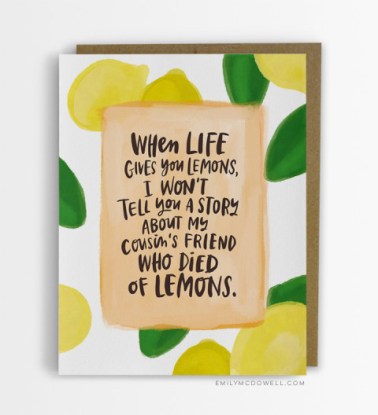
This is my favourite – and probably most relevant to diabetes. Please don’t tell me about you grandmother who lost her limbs because of lemons. Okay?

Life gives you lemons

Numbers mean nothing on their own

I had a very cool Twitter exchange with the super clever Dr Rick Kausman after I tweeted a link to this terrific piece he wrote for The Conversation this week. Numbers (in this article’s case weight) only ever tell part of the story – and often not the most important part!

Quick! Time’s running out for MILES 2

Diabetes MILES 2 is about to close. Do it. Do it now! (Read about it. Read about it here!)

There is a place for Dr Google in our healthcare teams.

While seeking medical advice exclusively from Dr Google isn’t the best idea, there is no denying that the internet and social media are indeed a significant source of information that really can benefit people living with health conditions. I hear blogs are a good source of information and support. Apparently. So I’ve heard.

Have a read of this great piece from MD Joyce Lee. I think she gets it right when she says this:

Healthcare, wake up. It’s not the 1990s anymore. 
Social media, google, and the internet ARE medical therapy.

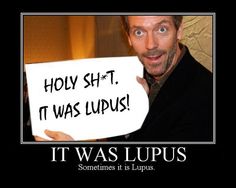
Dr House was wrong 

What do you know about Lupus? Dr House seems to believe that ‘It’s never lupus’, but actually, sometimes it is. I’ve grown up with an understanding of this autoimmune condition. My gorgeous mum has been living with it kicking its arse for more than 30 years.

Here’s some information to brush up your basic lupus knowledge. And considering that May is Lupus Awareness Month, now is a good time to get some facts!


Sorry - couldn't help myself.

Sorry – couldn’t help myself.

Taking a diabetes break

Well kind of. There are some lucky teens taking an artificial pancreas for a spin in the real world as part of a study being run out of Yale. Read all about it!

There will be no sleep

Next week is Diabetes Blog week. It’s gonna be huge!

Happy Mother’s day, Mum!

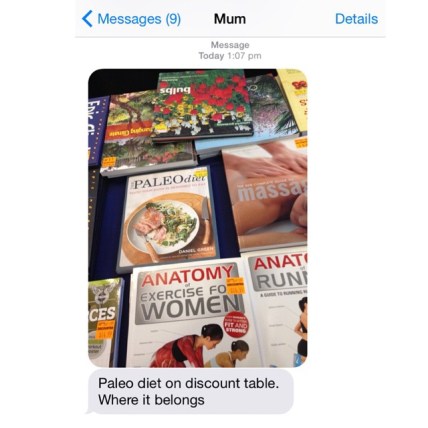
My Mum is brilliant. She really is. And when she sent me this text message bagging the paleo diet, she hit new levels of brilliance.

mum pete evans

Happy Mother’s Day, Mum. If I can be half the mother you are, I’ll be doing well. Love you. x

It feels like a Ray Charles kind of day.

Today, I travelled to Geelong to hang out with Kim and have lunch speak at the Barwon Region Diabetes Health Professionals Group about diabetes and language.

I have given lots of talks about the importance of language when speaking to and about people with diabetes. It is such an important issue and I am always pleased when I am asked to present on this topic.

When I was preparing for today’s talk, I looked over all the blog posts I’ve written here (and on other blogs too) about this issue and I realised that there were many. So very many.

There was this one – the post I wrote following the launch of the Diabetes Australia Language Position Statement.

There was this post where I asked if people consider diabetes a disability and if the word offends them in any way when referring to diabetes.

And this one where I took a couple of ward nurses to task for daring to use the words non-compliant and diabetic in the same sentence.

Also here is a post about someone calling me a diabetic. They really shouldn’t have.

There was this whole post that focused on the word ‘sufferer’ – still a word that I despise!

I discussed a lot about the importance of language specifically relating to diabetes, but I wanted to explore further today. I talked about the language of health, pointing to how I thought Healthy Weight Week missed the boat with the name of the initiative and also the language of food and of the ‘wellness industry‘.

The group was really engaged – lots of terrific discussions and questions and ideas being thrown around, which I love when I am presenting not only because it means less for me to do, but because I love to hear ideas from others and learn about what works for them. This was a really sensitive group. They were very switched on and understood that not only is language important, but the way they use it needs to be tailored to the person they are working with.

We also talked about language extending to more than just what they say. Their waiting rooms need to reflect the same sensitivity being demonstrated in the consultation room. I recalled the incident of the launch of the Diabetes MILES study where in the waiting room of a diabetes clinic was a horrid poster about foot care showing foot ulcers and amputations.

It was a terrific discussion and I am so grateful whenever I spend time with health professionals who are just so damn considerate and respectful when speaking about diabetes. And I am also grateful that they are seeking the consumer/patient/client/PWD (yes, we discussed that too!) perspective.

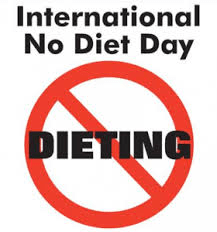
It’s International No Diet Day! No Diet Day promotes and celebrates natural beauty and diversity. People are found in all shapes and sizes and there is no one ideal. It also encourages people to stop dieting for the day and put aside all weight loss plans or food restriction practices and put an end to weight discrimination.

There are lots of ways that we can celebrate No Diet Day. But for me and my family, it will be just another day of eating the way we always do – mostly fresh food, lots of coffee (for the grownups, not the kidlet!) and, in all likelihood, something with some Nutella spread over it at some point of the day.

And I will also be thinking a lot about diabetes-related eating disorders and how common they are amongst people living with diabetes.

No Diet Day

I applaud these sorts of awareness campaigns, but the danger is that in the positive messaging, there is still a risk of shaming. No Diet Day is not about shaming people who are thin. When reading up about No Diet Day, I came across a lot of materials that were celebrating ‘real women’ and ‘real bodies’, claiming that real women have curves. This actually doesn’t advance the cause it all. All women are real women. Whatever shape or size you are, if you have a vagina, you’re a woman. Go get that on a t-shirt!

I guess the thing that we can all take away from today is remembering that diets don’t work. That’s the bottom line. Diets Do Not Work. So with that in mind, perhaps we should be aiming for every day to be No Diet Day. I know I certainly do.

In other news, jump over to the Diabetes Victoria blog where today I’ve written the second in a series about the consultation that is underway around the development of the new Australian National Diabetes Strategy. You still have 11 days to complete the online survey and I really urge you to take the time and provide some feedback.

Yesterday, as I sat in the waiting room to see my endo, I couldn’t help but feel that I was walking into a wasted appointment. I had seen her about six weeks earlier and left with promises to myself of being more engaged with my diabetes care. I promised I would have my blood work done. I thought about goals and how I could work to achieve them.

And yet, there I was, waiting to go in and wondering what the hell I had to say to her. There would be no discussion of lab results. I haven’t gone to pathology to have the checks done. There wouldn’t be any pulling out of data for me to show her – I hadn’t been logging anything. I was pretty much in the same state of mind about my diabetes as I had been last time I sat waiting to go in to see her.

I was wasting her time and I felt really bad about it. Not that she would ever tell me that. In fact, not that she would even be thinking that. But it’s how I felt. I have such respect for this endocrinologist, and I felt that in some ways I was actually being disrespectful in showing up so unprepared.

There were no tears yesterday. But there was an honest and open admission from me that I need help. I have tried everything I know to try and pull myself out of the motivation slump I have been in for so long. There are been periods where things seem to be better and I am able to make more of an effort, but they are fleeting and before long, I am back to feeling burnt out.

Let me be clear – I am not completely ignoring my diabetes. I am bolusing insulin at all the appropriate times; I check my blood sugar, albeit nowhere near as much as I know I need to – or that I would like to; I have started seeing my endo again. I eat well. At no time has diabetes completely fallen off the radar. But it certainly has deviated from being as much of a focus as I would like.

It’s not the mechanics of diabetes that is the problem. It is the trouble-shooting and problem solving and thinking about diabetes in a way that makes me feel confident that I am dealing with my health and wellbeing as much as my blood sugars. But I’m not doing that. I’m in a fog of burnout from which I now know I am unable to emerge without some real help.

I can pinpoint the source of the burnout; I can trace its progression; I can see why it happened. I understand all of that. I understand that dealing with the loss of our baby following a miscarriage and all the things that happened around it were often all I could deal with – both at the time and for periods since then too. But even though I have words to explain how this has happened, I don’t have actions to get me out of it.

I’ve tried. I’ve tried everything I could think of – all the techniques that have worked in the past. But I suspect that the combination of grief and the longevity of this burnout have resulted in me simply not being able to fix it alone. I need help.

I also believe that tied up in all of this is the way that I am feeling about my body and its failings. Because I do feel I have failed. Or at least my body failed me – again – when I miscarried. I really did think that I was ‘over’ it and was moving on, but not a day goes by where I don’t, in some way, feel sad and broken about it. I don’t know how to stop feeling this way. Again, I need help.

So, I asked for a referral to someone who can help me work though things – someone to help with strategies. I have been in therapy before; I know that it will help. It’s not a quick fix – I know that too.

I am trying to be all Pollyanna-ish about this and make grand ‘the first step is the hardest’ statements. And I am being positive and saying that it is certainly a step in the right direction. It’s going to take time. It’s going to take effort. Perhaps I am ready for that now. I know I certainly haven’t been to date. But maybe – hopefully – I am now.

I’m back on the bandwagon today. Or back on my high horse. Or back on my soap box. Whatever analogy you want to use, I’m on something. But I’m always on message!

Last week we heard a story of the tragic and just so very sad death of a beautiful little boy with type 1 diabetes. According to media reports, seven year old Aiden Fenton, who had type 1 diabetes, was taken, by his parents, to a hotel in Sydney, where he was denied food and insulin and slapped repeatedly as part of a barbaric treatment meant to cure him of his type 1 diabetes.

This is a tragedy. There is no other word for it.

The theory behind this brutal treatment is that repeatedly slapping the body builds heat, which will allow ‘chi’ to flow which results in toxins to be released. This will, apparently, cure what ails you.

And while this may be the extreme, what we have here is yet another example of ridiculous assertions by people claiming to have an understanding of health and wellbeing. But there is no understanding. There is no science behind these claims. There is no evidence to suggest that they work.

There’s that word again: ‘toxin’. It’s a favourite with many wellness experts and Instagram diet and fitness frauds who seem to have forgotten that the body has a fabulously powerful and clever organ called the liver. They should Google it – they’ll get pictures to go with explanations of the role this organ plays in the body and its connection to ‘toxins’. Pictures like this one:

detox liver

You’re welcome.

Thankfully, there are others – many others – much smarter and with much better reach than I asking questions and calling out these dangerous cults.

Yesterday, the CSIRO (I think we can pretty much bet they are all about science) tweeted this.

CSIRO tweet.png

Yes please; I’ll take one in a 10.

Helen Razer wrote a fabulous (and very swear-y) piece a few weeks ago about the stupidity of the paleo movement and other dangerous messages being regularly expounded by equally dangerous idiots wellness experts. You should read it (language warning again in case those sorts of things offend you.) My favourite line is the caption used under a photo of Pete Evans: ‘Stupid is the new science’. Yes – I want that on a t-shirt, too.

And take a few minutes – well ten and a half – and watch the brilliance of Tim Minchin with this fabulous animated short of his poem ‘Storm’.

Minchin first wrote this as a jazz-backed beat poem for a live show. From there, it was the animated short was made and, most recently, a graphic novel which I’ll be purchasing next time I head to my favourite books store, Readings. You can read how the poem came about in this piece Minchin wrote for The Guardian.

Yes, I know. I keep harping on about the same things. But alternative therapies and the ‘wellness movement’ are responsible for a little boy’s death. They fuel eating disorders, they confuse people, they deliberately and intentionally target the vulnerable who are desperate for answers and cures. And there is no evidence to support that they work in any way. In fact, they harm. A little boy is dead. Just keep thinking about that.

ACBRD5Last night, I had the privilege of attending the fifth anniversary celebrations for the Australian Centre for Behavioural Research in Diabetes. The event was held at my favourite Melbourne building – the State Library – so I was able to get my geek girl on and wander the stacks before heading to the reception.

I have written frequently about the ACBRD because I am a huge fan and supporter of their work. Before the Centre was established, there was very limited attention being given to the psychosocial impacts of living with diabetes. Diabetes was presented as a numbers game. People with diabetes were talking about what living with diabetes actually meant – we understand the day-to-day implications and the distress and the burnout and the fear and the anxiety. But there was no one dedicated to researching these things.

Much work has been completed since the Centre started. All of it is of great value, but there are certainly some stand-out pieces for me:

  • The Diabetes Australia Language Position Statement, led by the ACBRD, which was launched back in 2011, is a much-needed ‘guide’ to assist journalists and HCP understand how to speak about and to people with diabetes. I can’t think of the number of times I have emailed, tweeted, handed-out a copy of this report to someone who has referred to PWD as non-compliant, a ‘diabetes sufferer’ or something equally damaging!
  • Dr Jessica Browne, Research Fellow, has been leading a world-first program researching the social stigma of diabetes. Reaching far and wide (Washington Post, anyone?) it is so wonderful to have evidence supporting what we have heard from PWD for so long – diabetes is stigmatising and that we often feel blamed and judged for having this condition. I’ve said it a million times and I will continue to say it until the stigma stops – ‘No one asks to get diabetes.’
  • The Diabetes MILES report still remains an important body of work. It was the first time that the psychological wellbeing of people with diabetes was investigated and the results confirmed what people living with diabetes already knew – emotional problems associated with living with diabetes are common, considerable and a very real part of living with diabetes.

The thing I love about the Centre is that in addition to conducting research and publishing articles, they actually provide practical tips and advice to HCPs about how to address these issues and concerns. And most pleasingly, they speak directly to and consult with people with diabetes.

As I explained in my talk last night, I have been lucky enough to present alongside Foundation Director Jane Speight on numerous occasions. The way this works is that I get up, rant, rave, wave my hands around and talk about the ‘living with it’ experience and then Jane gets up, speaks incredibly eloquently and provides the evidence to support what I have said. (So, thanks for making me look good, Jane!)

The always eloquent Professor Jane Speight. And me. Waving my arms around.

It was an honour to be able to celebrate the Centre’s first five years’ successes last night. Congratulations to all the ACBRD staff. Looking forward to seeing what you all do next!

Follow Diabetogenic on WordPress.com

Enter your email address to follow this blog and receive notifications of new posts by email.

Read about Renza

Archives