
You are currently browsing the category archive for the ‘Uncategorized’ category.
Yesterday, Mia Freedman wrote a beautiful piece about grief and how people often don’t know how to deal with it. She also wrote about how we deal with grief as time passes and the tragic episode moves further and further into the past.
It got me thinking to diabetes. When I was diagnosed a lot of what I was told was pretty matter-of-fact. ‘You eat this, you check your sugars, you inject insulin’ and ‘If you don’t you’ll get this (insert graphic picture or graphic description of any complication)’. It was all very off-you-go-and-deal-with-it-now-you-have-the-facts.
There was no talk about how I might actually feel.
About three years after I was diagnosed, I developed some other short-term health problems that may or may not have had anything to do with diabetes. They did have quite a lot to do with physical pain and during this period, I learnt that I don’t handle constant pain very well. I spent 6 weeks in hospital as the source of the pain was identified and treated. Long story short – it was a really dark time for me.
My very clever endo, who had her hand in my care during this period, referred me to a psychiatrist. She said that she thought it would be a good idea for me to have someone to speak with. I remember the first time I saw him. I was still in hospital and in he walked. I was in bed doing one of the stupid exercises that was supposed to help me manage the pain, but really just annoyed me.
He sat down and we had a chat. He wanted to know about the pain and why I was feeling so low. We talked about how I’d managed to deal with a diagnosis of a life-long chronic health condition, yet was struggling to deal with something that was going to have an end-point even if at that moment I couldn’t think past the pain.
I started seeing him each week and it was after about a month that he said to me ‘you know, it’s okay to grieve about having been diagnosed with diabetes.’ I can remember that moment with such clarity. I looked at him and felt unable to breathe. I started to focus on my rapidly increasing heart rate and gulped air into my lungs. And burst into tears. As I caught my breath and my heart beat returned to normal I felt as if a huge weight had been lifted.
Grieving because we are diagnosed with diabetes should be acknowledged as part of the process of discovering our new life. It’s not being pitiful or pessimistic. Or thinking that life will only be depressing and not worth living. It’s not about being morose or tragic or hopeless. It’s about acknowledging that life will be different to how it was. There was a life before diabetes. I imagine for young kids with diabetes, it’s their parents who will remember this time and grieve what a diagnosis of diabetes means for their child.
I remember my life before diabetes. Less and less of that is clear and I can’t remember a time where I wasn’t haunted by the thoughts of what diabetes could possibly do to me as I grow older. My ‘what-I’m-scared-off’ is all tied up with diabetes.
No, we don’t get over it. We do, perhaps, get ‘used’ to it and stop thinking so much about life before. We do start to do new things to help us manage as best we can, and soon they stop being ‘different’ and ‘scary’ and just become routine. The well thought out changes we make to our lifestyle become second nature and we stop considering them as new.
Diabetes as a reality isn’t all terrible; it isn’t all bad news. Life with diabetes can be everything that you had ever imagined – just with the caveat of diabetes being there. Grieving about it is okay, especially at the time of diagnosis. I’ve learnt that there will be times that I grieve again – never as strongly as the time in the doctor’s office when I was given permission to let the grief come to the surface, but still, there are times when I do catch my breath and think ‘remember when….’
Living well with diabetes. That’s how I like people to think of me. And how I like to think of myself.
But there are occasions – rarely, although sometimes more frequent – where I do feel living with a life-long health condition that is there every minute of every day start to creep over me and a sense of dread and worry plant themselves at the back of my mind. For me, this is part of diabetes burnout. It’s a feeling of being overwhelmed by what diabetes is right now but even more, what diabetes could be in the future. How will my faulty pancreas and my autoimmune problems play out in my life?
And is there any point worrying? At the moment, things seem to be tracking along well. Annual complications screenings tell me that I am doing okay and I’ve read some research that shows people with diabetes are living longer and longer.
So why the dread and anxiety and is there any point? And even more, is it possible to change the way that we think about diabetes?
When I was first diagnosed, the smell of insulin would fill me with dismay. The very scent would remind me of the horrid, scary photos the doctor showed me within the hours of being told I have type 1 diabetes. An invisible force would reshape me from the vibrant 24-year-old I was at the time to a withdrawn, sick, shell of the person I really was. For months I felt this way and every time I gave myself a shot, it was like I was slowly drowning.
But that all changed one day. I drew up two units to squirt through the air before jabbing myself and said ‘Urgh. I hate the smell of insulin. It’s everywhere – I feel like it’s what I smell of now.’ Aaron who was sitting next to me looked up and said simply and matter-of-factly, ‘I don’t hate it. It’s the smell that keeps you alive.’
And just like that, the smell of insulin went from being a death sentence to life saving. It never bothered me again. Keeping the perspective of diabetes in its rightful place is not easy and there will always be times that we feel like it is heading in the wrong direction. We just need to find ways – and people – to say things to help us get back on track.
‘Supposing a tree fell down, Pooh, when we were underneath it?’
‘Supposing it didn’t,’ said Pooh.
After careful thought Piglet was comforted by this.A.A. Milne

It’s No D Day today. You can read all about it here, but basically, it’s a day where we don’t think, talk and write about diabetes. I love this idea because as a diabetes blogger who also works at a diabetes organisation, who also Iives with type 1 diabetes, who also spends a lot of time talking about diabetes in the social media (and ‘real’) world, I know how easy it is to become all comsumed by diabetes. But not today. Today it’s about Rome.
Jet lag is a bitch, but it does have its benefits. On our first full day in Rome we were out the door before 7am and watched the city wake up. Our apartment was a short stroll from the Spanish Steps. The afternoon before when we’d arrived, our driver had to battle his way throught the crowds to our tiny via. There were people everywhere – tourists with huge cameras, kids with gelati the size of their heads, locals pushing their way through the crowds and annoying men shoving roses into the faces of unsuspecting women and then demanding their partners hand over a few euro. It was chaos; it was loud; it is Italy and I love it.
But at first light, the area around the Spanish Steps was empty apart from a council worker hosing down the area, getting it ready for the onslaught. We saw a few nuns walking together, possibly on their way to an early morning service. The coffee bar owners were just starting to open their doors and set out the morning pastries.
We walked into the first open cafe we saw, stood at the bar and drank our perfect morning coffees and munched on crunchy cornetti filled with creamy custard.
Fuelled by caffeine and sugar, we walked. We started with the Trevi Fountain and were the only two people standing there. We snapped photos, read the signs and listened to the water flow. Together, we threw in coins – the legend promises we will now return to Rome.
We sat at the fountain, the spray from the water hitting our faces in the cool morning air. Slowly, other people started arriving, so we up and left and continued our walk. We wandered down little streets, stopped in different campi and watched as Rome woke up. We pointed out signs, statues and looked in closed shop windows.
And then, we turned a corner and before our eyes was the Colosseum.
It was after 9am by this time and the steets were starting to fill up again. The tables outside cafes were full. There was noise, laughter, talking.
I feel at home in Italy, which is ridiculous considering that I was born and raised in Australia by parents who moved here when they were tiny children. But it makes sense to me. The craziness of it and what looks like complete and utter disorganisation is actually ordered chaos. It works for the people who live there. Yes, it may take an hour to buy stamps at the post office (this did really happen – Aaron returned home to our apartment defeated, but at least our postcards home were mailed), and yes, it may take the woman at the gelati bar ten minutes to hand you your gelati because she’s talking to someone about her boyfriend and keeps walking away from the counter to tell her story, and yes, it is possible that you will get hit by a motorino scooting on the footpath.
But this is Italy. It’s beautiful. It’s crazy. It’s loud. And when I am there I feel my senses on fire and I am more alive than anywhere else. I just love being there. Love.

The Spanish Steps as Rome wakes up.
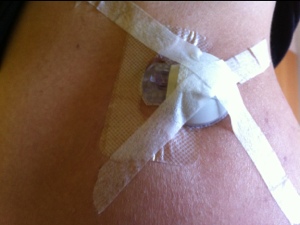
What do you do when you’ve left the CGM cover tape at home? Why, get creative with sticking plaster!
Today is Diabetes Art Day. You can read about Leanne Thill‘s brilliant initiative here, but generally, it’s a day to be creative and do something artistic. All in the name of diabetes awareness. I love people who think outside the square and try to get diabetes front and centre by doing something different and a little ‘out there’.
So, I decided to celebrate Diabetes Art Day by looking at some incredible art. I’m in Rome at the moment with my husband for a week’s holiday before heading to Berlin for the European Association for the Study if Diabetes conference. I couldn’t think of a better way to mark the day than to visit the Sistine Chapel.
This was my first visit and I don’t think I was prepared for the sensory overload as we meandered through the Vatican and made our way into the Sistine Chapel. We walked in, surrounded by dozens and dozens of other people. And then, as if all overcome by a sudden force, everyone raised their heads to the celling. It was breathtakingly beautiful.
No photos are allowed in the Sistine Chapel, but here is the most famous fresco there.

Looking at such beauty on a day dedicated to raising diabetes awareness has given me tingles. I may have trouble drawing a stick-figure, but I’ve still celebrated this day, and once again feel part of the diabetes community that I know will be coming together to recognise the day in their own way.
And thank you, diabetes, for a lovely low whilst in one of the Vatican galleries. Diabetes has a way of making sure you remember it’s there. Every day.


I presented at an event on Saturday for Diabetes Australia – Vic. The topic was Access All Areas and I talked about making sure that people knew about (and knew how to access) health professionals, the healthcare system, online information and peer support. I ended with a brief discussion about language and ‘owning’ our diabetes.
I am not a fan of PowerPoint. I think it takes away from the presentation and discussion, and directs all focus onto a screen, rather than allowing people to interact with the group. But I’ve learnt that audiences expect something – anything – on a screen, and think I’ve been lazy if I don’t have slides for them.
So, I did what I usually do – I found pictures, used few words and showed a couple of short videos. And I asked the audience a lot of questions! (Hey – it was Saturday morning and I’d had barely enough coffee to wake up. There was no way I could do all the work myself.)
As I was putting together my brief PowerPoint, I searched for some ‘Keep Calm’ posters that had something to do with diabetes. Who knew there were so many! So, here are some of my absolute favourites (click on the poster to be taken to where they were found).
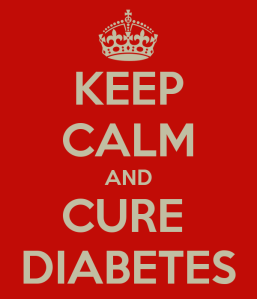
A good one to start!

This one? I want it on a t-shirt!

Being a huge pump advocate, I love this one!

From the very clever Karen Graffeo at Bitter~Sweet Diabetes. (And I need this engraved on my pump as a reminder!)
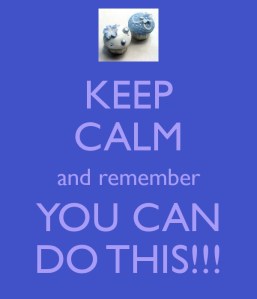
Yes, you can. And so can I.

A love a good play one words. Thanks to Mike Durbin from My Diabetic Heart who created this one.

Wear blue on Fridays has become a great habit! This one Sue over at RFamHere’s Ramblings,

Just. Do. It
And finally, and perhaps my favourite…..

Happy place…..
You can make your own ‘Keep Calm’ poster by clicking here.
I feel like I’m drowning at the moment as I try to catch up after almost a week away at the Australia Diabetes Educators Association (ADEA) conference and prepare for two weeks away: R&R in Rome (love a bit of alliteration!) for a week followed by the European Association for the Study of Diabetes (EASD) conference in Berlin.
But I do want to mention some of the highlights (of which there were many) from the ADEA conference on the Gold Coast.
So, here’s the dot-point (read, lazy) special!
- It was refreshing, reassuring and may have made me yell out ‘FINALLY!’ several times to see some focus on diabetes wellbeing at this conference.
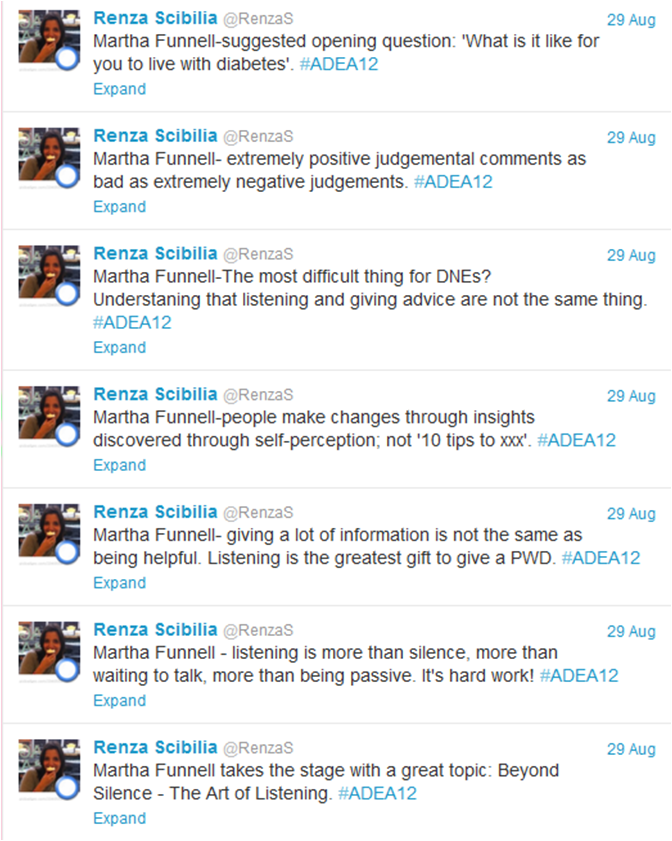
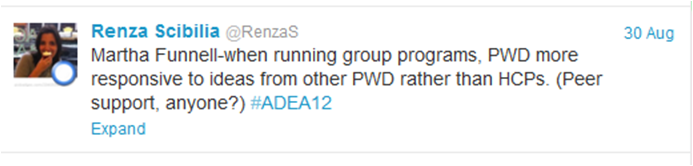
- The plenary speech on the first day was given by Dr. Martha Funnell, MS, RN, CDE from Michigan Diabetes Research & Training Center. Let me begin by saying she’s amazing. Let me continue by saying that I saw all four of her presentations about patient engagement, patient-centred care and communication. If every health professional there could take on three of her key points I reckon there would be some pretty happy PWD!
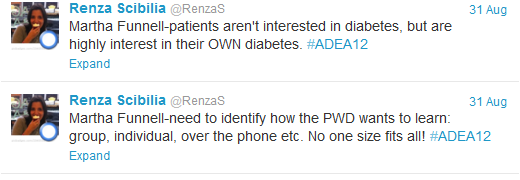
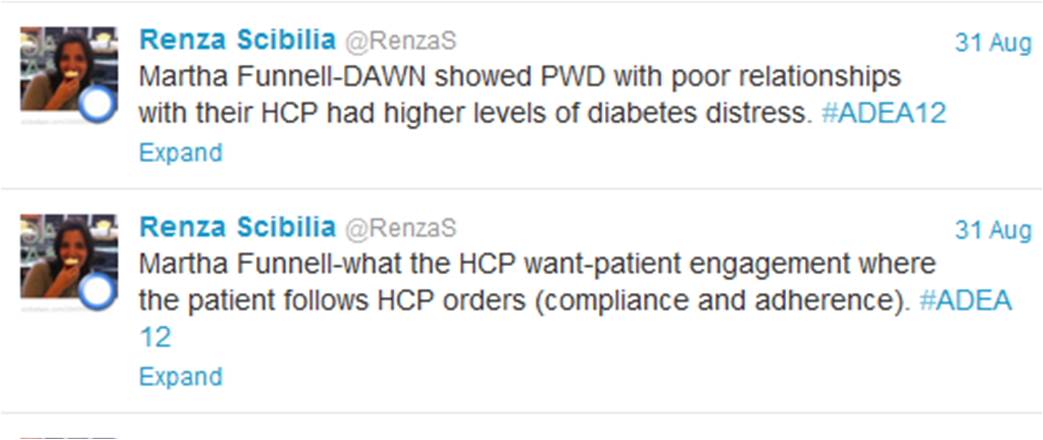
Here are some of my favourite Martha Funnell–focussed tweets:
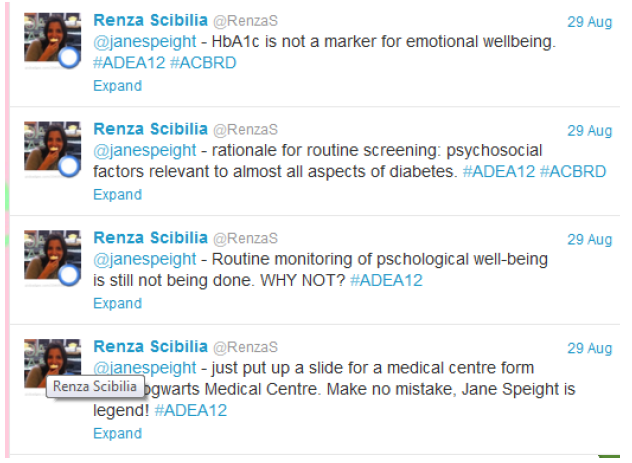
- If there was an award for MVP, surely the Australian Centre for Behavioural Research in Diabetes (ACBRD) would have taken it out! Ten posters, four presentations and their own symposium on the last day. And Professor Jane Speight gets extra points for including a Harry Potter reference in her presentation.
- Dr Helen Murphy from the University of Cambridge Metabolic Research Laboratories gave a fascinating presention at an Australian Diabetes in Pregnancy Society lecture which focussed on technology used in diabetes and pregnancy. How’s this for an amazing concept: three BGL tests for the WHOLE OF YOUR PREGNANCY! That’s what was going on in the 1970s.
- An incredible team from the Australian Diabetes Society (ADS) launched the Enhancing Your Consulting Skills education resource for endocrinology trainees. This resource focusses on type 1 diabetes and will provide trainees with a balanced, informed and better understanding of type 1 diabetes. There’s much to love about this concept – not the least of which is that the project team consulted with people with diabetes. And have referenced consumer blogs (like this one!) and sites as places to get information.
OK – and now for the stuff that left me wondering….
- How is it possible that with over one million Australians living with diabetes, I was the only consumer representative/advocate (who is not a health professional) at the event, which means that this consumer blog is the only one writing about it?
- When will health professionals stop making sniggering comments about how people with diabetes ‘lie’, ‘make up’ or simply ‘refuse’ to fill in their diabetes log books? Surely the discussion is not so much about this happening, but rather why PWD feel they need to do this. Judgement much, anyone? Grumpy Renza tweet about it here:

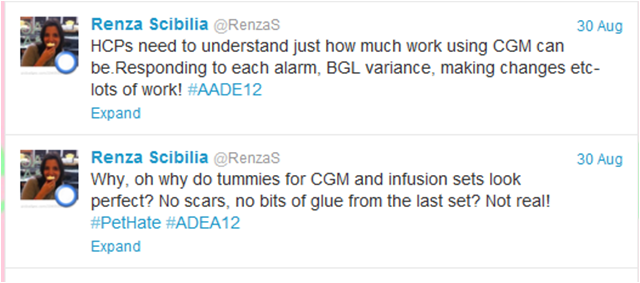
- I love technology to bits! And diabetes technology makes me swoon a little. BUT! The downside is that using new technologies can be A LOT OF WORK! And this can lead to burnout. This needs to be addressed. It’s not.
- I continue to find it frustrating and disappointing that consumers – people actually living with diabetes – generally don’t get to hear most of the international speakers. A big shout out to Medtronic ANZ for running consumer sessions with their international invited guest, Dr Steven Wittlin from the University of Rochester Medical Centre. And if there’s any doubt that people with diabetes are hungry for these types of sessions, perhaps knowing that 170 people braved the Melbourne cold to hear him speak at a DA-Vic/Medtronic co-hosted event will alleviate any concerns. It’s such a shame that Martha Funnell and Helen Murphy along with many others did not get to share their expertise with people living with diabetes.
- After Helen Murphy’s brilliant presentation, I got up to leave, my head filled with hope and excitement only to hear this from two health professionals walking out ‘Really – it would just be easier if we could lock pregnant women with diabetes in hospital for their pregnancy so we can make sure they’re behaving.’ Cue – Renza hyperventilating as she tried to not explode.
You can catch up on a brief wrap-up here;
And watch all of Jane Speight’s interview here:
Overall, it was a great conference with many highlights. But I think I’ll finish this post with another tweet from one of Martha Funnell’s session:
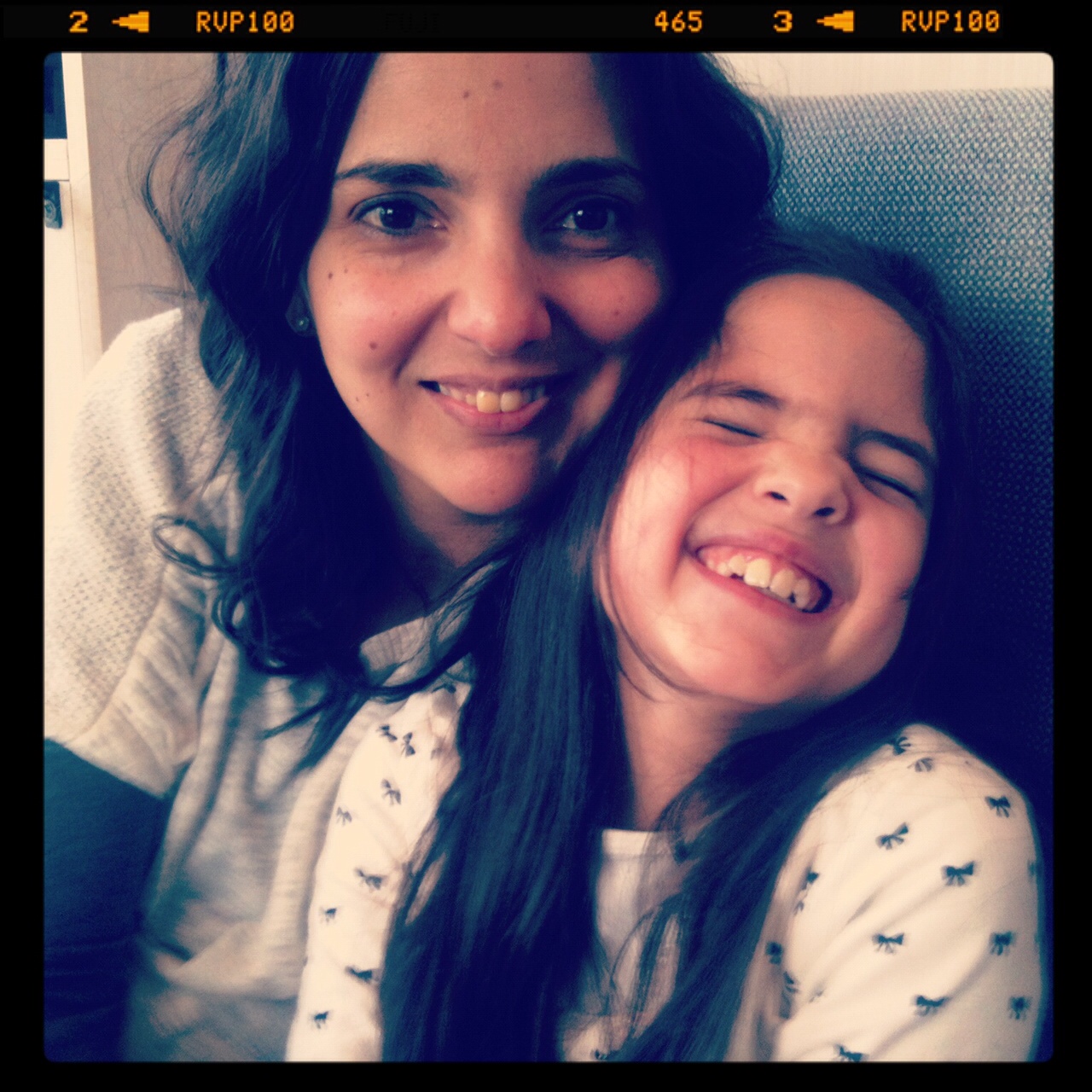
My daughter is amazing. She is smart, bright, beautiful, funny and has an incredible sense of what is right. For an almost-eight year old, she is incredibly mature and, thanks to spending a lot of time with adults and travelling the globe, she has a pretty broad view of the world.
But today, she is sad and my heart is breaking at the reason for her tears.
She wants a brother or sister. Desperately. I am not surprised at her telling me this today; she has mentioned it on numerous occasions. Often as a throw-away comment, other times as a pleading question. Perhaps the way I’ve dealt with it has been too flippant, or I haven’t paid enough attention to just how much she is affected by our family situation. ‘Oh, mummy decided that after you came along she was perfectly happy and didn’t want another baby’ or ‘You have all our attention and love – that’s pretty special, isn’t it?’ or the more truthful, but not really complete ‘It was very hard for mummy to have a healthy baby. I am so lucky to have you’. The underlying story is that my diabetes is a reason that our daughter does not have a sibling.
And to a degree, that is true. But really, diabetes is not the reason that I didn’t have another child. Well, not the only reason. After finally getting pregnant (following fertility treatment and many months of trying) I had a miscarriage. It was the saddest, darkest period in my life. I mourned the loss of the baby I wanted so, so desperately but, at ten weeks, had died. I felt my body was useless – the same body that had taken me so long to get pregnant had not been able to carry a baby. Useless, hopeless and more broken than I could imagine.
My doctors assured me, reassured me and were certain that diabetes was not the reason for my miscarriage. I had achieved an ‘in-target’ A1c prior to conceiving, I monitored my BGL diligently and adjusted insulin accordingly, I ate well, I don’t smoke: I ticked all the ‘having a healthy baby’ boxes. And still something went wrong.
Today, with the benefit of time, I know that this was just ‘one of those things’. But at the time, I had a need to ‘blame’ something or someone. So I blamed diabetes.
And I made a deal – not sure with who; maybe myself. But I decided that one healthy baby was all that I would ask for. Once I was able to conceive, grow and deliver a healthy baby I would not ask for anything further; not be greedy; not push my luck.
It took another eight months for me to get pregnant and I spent the next 38 weeks waiting for something to go wrong. The fact that I delivered a healthy, wonderful, beautiful baby girl was nothing short of a miracle to me. It still is.
When our daughter was almost two, my sister-in-law had her second child and suddenly, I had a nephew. He was (he is) beautiful and I dared to think about having another baby. I once again did all the ‘right things’ – saw my ob/gyn, had all the pre-pregnancy tests done, made sure my A1c was under 6.5%. Tick, tick, tick. And then, first month of trying, I got pregnant. My husband and I could not believe our luck. We were having another baby. For a few weeks we planned, decided to renovate our house, wondered how we would love another child as much as the one we had, dreamed of what this one would look like.
But then I miscarried again. I was sad – I went home after the D&C and hugged my daughter closely to me – but certainly not as bereft as after the first miscarriage. I once again felt that my body was broken and that I was not accepting its limitations. And I remembered the bargain I’d made. At that point, I knew that I would not try again and that I would be forever happy with our family of three.
By choice or by fate? Sometimes I feel that having only one child was not something I decided to do. My body has limitations and diabetes is one of them. Is it the reason that I have only one child? Probably not the only reason; but certainly, definitely, absolutely one of them.
So today, I explained this to my daughter. I spoke about the miscarriages in a way an almost-eight year old could understand; I told her how much her daddy and I wanted her; I explained that our family is perfect for us; I explained that she is loved . She took it in, thought about it and looked at me through teary eyes. ‘I really want a baby brother or sister,’ she said to me. ‘But more than that, I wish you didn’t have diabetes.’
My daughter is amazing.
Amazing.
Today I’m writing over at Diabetes Vic’s blog where I look at pump therapy in Australia.





 Diabetogenic